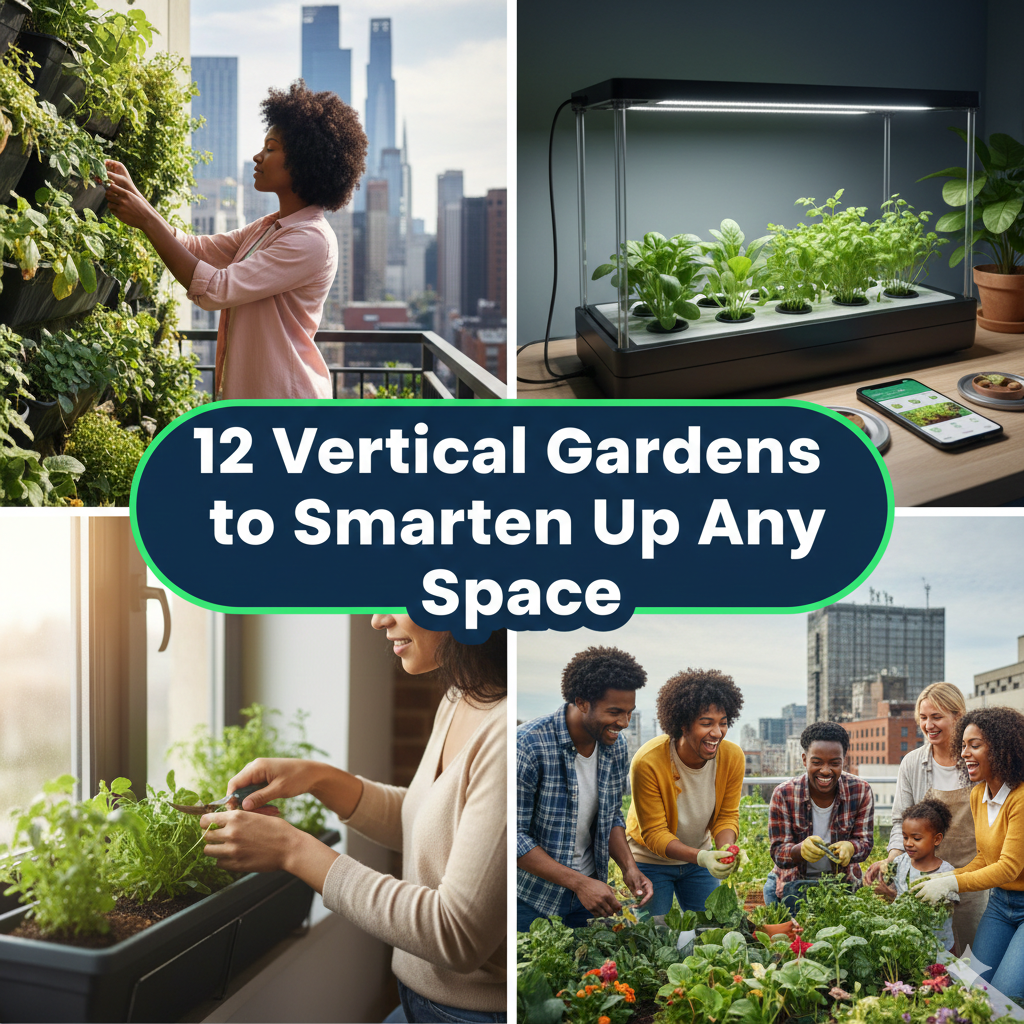
Why Growing Up Makes More Sense Than Growing Out
You love plants. But space? That’s a different story.
If you reside in small apartments or have limited open spaces with little contact to the earth, vertical gardens are your solution. Rather than spreading plants out across the ground, you stack them up — on walls and fences, trellises and more.
The result? More green. Less footprint.
Vertical gardens have seen a flurry of interest in the past decade. And it’s easy to see why. They save space, enhance curb appeal, purify indoor air and can even grow your food. You don’t need a green thumb or deep pockets to begin.
This guide explores 12 creative vertical garden ideas — some easy DIY hacks, others beautiful living walls. All of them are practical, creative and completely achievable.
Let’s grow upward.
What Exactly Is a Vertical Garden?
A vertical garden is any system in which plants grow on a vertical surface instead of flat ground. Think walls, panels, hanging structures or stacked shelves.
They can be:
- Inside — hung on the walls, set next to windows
- Outdoors — at fences, patios, balconies
- Free-standing — towers or shelving units you can move around
They’re perfect for flowers, herbs, vegetables, succulents and even small fruiting plants. There are nearly infinite design possibilities.
In Brief: Why Vertical Gardens Are Good for You
| Benefits | Why It Matters |
|---|---|
| Space-saving | Ideal for small-sized homes, balconies and apartments |
| Improved air quality | Plants help to filter and remove toxins present in all indoor spaces |
| Insulation | Increases thermal insulation; green walls have also been found to reduce heat inside the buildings |
| Aesthetic appeal | Brightens up space instantly |
| Food production | Makes it possible to grow your own herbs and veggies in as little space as available |
| Mental wellness | Being around plants brings down stress |
| Noise reduction | Dense plant walls absorb sound |
12 Smart Vertical Garden Ideas
1. Pallet Gardens — The Budget-Friendly Classic
Got an old wooden pallet? You’ve got a garden.
Perhaps one of the most common vertical garden ideas out there is a pallet garden — and with good reason. They’re cheap, they’re easy to build and when done correctly, they actually look quite good.
How to make one:
- Smooth the pallet with sandpaper to get rid of any splinters
- Attach landscape fabric to the back and bottom
- Press potting mix between slats
- Embed herbs, succulents or small flowering plants in the openings
- Leave it flat for 2–3 weeks, then stand upright
Lean it against a wall or attach it to a fence. Paint it for extra flair.
Suitable plants for pallets: Lettuce, strawberries, herbs, sedums and petunias
💡 Pro Tip: The pallet should be marked “HT” (heat treated), not “MB” (methyl bromide). MB pallets use harmful chemicals.
2. Pocket Planters — Hang It, Fill It, Love It
Felt or fabric pocket planters are one of the simplest vertical garden ideas for novice gardeners. You just hang them on a wall, stuff each pocket with soil and stick in a plant.
They’re light, inexpensive and come in tons of sizes.
Why they work so well:
- Great drainage through breathable fabric
- One pocket contains one plant, which makes maintenance easy
- Great for herbs like basil, mint, cilantro and thyme
- Ideal for indoors near a sunny kitchen window
Pocket planters can be found online for less than $20. Or sew your own using old denim or burlap.
Pair with: A drip irrigation strip hidden behind the pockets for hands-free watering.
3. Trellis Walls — Let the Climbers Do All the Work
A trellis is a grid-style structure that allows climbing plants to grow naturally upward. It’s one of the lowest-effort vertical garden ideas around because the plants do most of the decorating themselves.
Add a trellis on a bare fence or exterior wall. Train climbing plants to weave through the grid.
Top climbing plants for trellises:
| Plant | Type | Notes |
|---|---|---|
| Climbing roses | Flowering | Beautiful fragrance |
| Jasmine | Flowering vine | Fragrant, fast-growing |
| Clematis | Vine | Bright, colorful blooms |
| Cucumber | Vegetable | Edible + decorative |
| Pole beans | Vegetable | Great food producer |
| Ivy | Foliage | Evergreen + low effort |
Trellises can be made of wood, metal or bamboo. Use a black steel grid for a modern look. Opt for bamboo or reclaimed wood for a rustic garden feel.
4. Stacked Planter Towers — Layers of Life
Stacked planter towers are precisely what they sound like. You stack several planter rings or tiers on top of one another, creating a tall column of greenery.
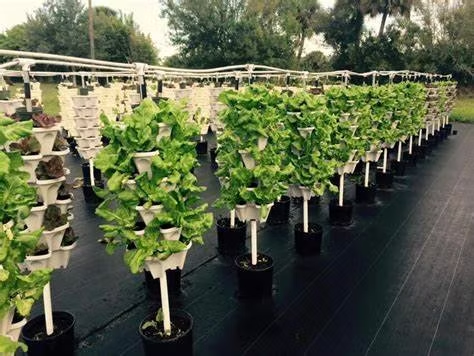
These are particularly popular for strawberries and herbs since each layer gets exposure to sunlight, and the plants cascade nicely downward.
Options include:
- Commercially available stackable planter towers (typically plastic or terracotta)
- Homemade versions with terracotta pots of different sizes stacked on top of each other
- Hollow PVC pipe towers drilled with holes for individual plants
Best for: Strawberries, herbs, succulents, lettuce and flowering annuals
Put them on a patio, balcony or next to a door. They’re small enough to go just about anywhere.
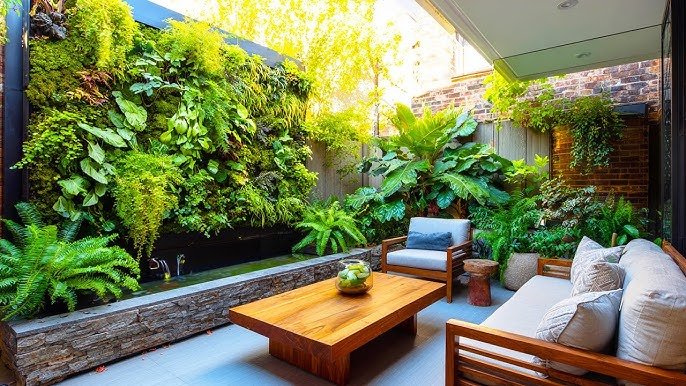
5. Living Wall Panels — The Statement Feature
If you want to make a bold statement, a living wall panel is your answer.
Living walls (also known as “green walls” or “moss walls”) are panels consisting entirely of plants. They can be indoors or outdoors and vary from DIY models to full professional installations.
Two main types:
- Soil-based panels — Pockets or cells contain soil and root plants. Needs regular watering and feeding.
- Hydroponic panels — No soil. Plants grow in a nutrient-water solution. Cleaner, often used indoors.
Cost range:
| Type | Approximate Cost |
|---|---|
| Small DIY panel (2×4 ft) | $50–$150 |
| Mid-size prefab panel | $200–$600 |
| Large professional installation | $1,000–$10,000+ |
Living walls create a beautiful environment in living rooms, office receptions, restaurant walls and outdoor entertainment areas. Even a small panel can turn a dull wall into a jaw-dropping feature.
6. Repurposed Rain Gutters — Quirky, Creative and Clever
Here’s a vertical garden idea that shocks anyone who sees it — rain gutters used as planters.
Attach sections of vinyl or aluminum gutters horizontally to a wall, fence or wooden frame at varied heights. Fill with soil and plant shallow-rooted crops such as lettuce, herbs or flowers.
Why it’s brilliant:
- Extremely inexpensive — gutters cost only a few dollars per foot
- Modular — add as many rows as you need
- Looks surprisingly stylish, especially with white or black gutters next to a wooden fence
- Ideal for salad greens that don’t require deep soil
Installation tip: Drill drainage holes every 6 inches along the bottom to avoid waterlogging.
This idea works particularly well on a plain wood fence in the backyard. It’s functional and doubles as garden art.
7. Shoe Organizers — Small Space? No Problem
Over-the-door shoe organizers are one of those genius vertical garden ideas that cost almost nothing. Those fabric pockets meant for shoes? They hold plants too.
Hang one on a fence, wall or balcony railing. Fill each pocket with potting mix and insert herbs or small succulents.
This works especially well for:
- Renters who cannot drill holes into the walls
- Balcony gardeners with strict weight limits
- Newcomers to vertical gardening
- Kids’ herb gardens (fun and educational!)
If you’re working with a small outdoor space, Small Balcony Garden has some brilliant ideas for making the most of compact areas — well worth a browse before you start planting.
You can grab a clear plastic shoe organizer for $5–$10. Use the clear ones so you can keep an eye on soil moisture levels through the pockets.
Watering tip: Water slowly and allow each pocket to drain before moving on to the next row.
8. A-Frame Ladder Planters — Rustic and Rearrangeable
An old wooden ladder makes a lovely freestanding vertical planter. Lean it against a wall and set potted plants on each rung. Or paint it white and use it as a decorative indoor plant display.
You don’t even need a real ladder. Purchase an unfinished A-frame plant stand from a home store for $30–$80.
Why gardeners love this idea:
- Completely portable — move it anywhere, anytime
- No drilling or wall mounting required
- Looks elegant on a porch, balcony or in a living room
- Each rung can hold a different type of plant
Styling tip: Vary the sizes and textures of your plants for a more interesting, layered appearance. Place trailing plants on upper rungs so they naturally cascade down.
9. Vertical Herb Walls — Fresh Flavors at Your Fingertips
Why purchase herbs at the supermarket when they can flourish inches from your kitchen?
A vertical herb wall is one of the most practical vertical garden ideas, especially for home cooks. Install a small shelving system, pegboard or pocket planter on a kitchen wall near a window. Pack it with your most-used herbs.
Best herbs for indoor vertical gardens:
| Herb | Light Need | Water Need | Great For |
|---|---|---|---|
| Basil | Full sun | Moderate | Pasta, salads |
| Mint | Partial shade | High | Drinks, desserts |
| Parsley | Partial sun | Moderate | Garnishes, sauces |
| Chives | Full sun | Low | Eggs, soups |
| Thyme | Full sun | Low | Roasted meats |
| Cilantro | Partial sun | Moderate | Mexican, Asian dishes |
Use individual small pots for herbs so you can easily rotate or swap them out. For even simpler maintenance, use a self-watering insert.
10. Fence Planter Clips — The Invisible System
Not every vertical garden idea has to be intricate. The simplest solution is often the best one.
Fence planter clips are small brackets that hook over a fence rail and hold a pot. No tools. No screws. No permanent changes. Just clip and plant.
Why this idea shines:
- Works on any fence — wood, vinyl, metal
- Zero commitment (great for renters)
- Mix and match pots of any color and style
- Add or remove planters anytime
Use them to line a garden fence with colorful flowers, create a living privacy screen with bushy plants or grow a row of herbs along a sunny fence line.
You can purchase fence planter clips from most garden centers for approximately $5–$15 per clip.
11. Hanging Terrariums — Tiny Worlds, Big Impact
For vertical garden enthusiasts who want something truly special, hanging terrariums pack drama and elegance into a small space.
Glass geometric terrariums or hanging globe planters suspended at varying heights create a gorgeous 3D vertical garden — no wall mounting required.
Plants that thrive in terrariums:
- Air plants (tillandsia) — no soil required at all
- Succulents — low water needs, great visual shapes
- Moss — lush, low-maintenance, looks stunning
- Small ferns — love the humid glass environment
Hang them in clusters near a window using hooks and macramé cord or clear fishing line. Vary the heights to add depth and visual interest.
Bonus: Hanging terrariums are also perfect for rental homes, office spaces and even above dining tables as living centerpieces.
12. Modular Vertical Garden Systems — The High-Tech Option
If you want a more polished, scalable setup, modular vertical garden systems are worth considering. These are pre-engineered panels, tiles or wall-mounted containers designed to interlock and expand.
Brands like Wooly Pocket, GroVert and Florafelt offer systems that come with built-in irrigation, felt pockets and mounting hardware. You can start small and add panels over time.
Key features of modular systems:
- Consistent, professional look
- Built-in water reservoir or drip irrigation
- Scalable — grow your garden as large as you want
- Ideal for large walls, office lobbies or outdoor facades
These systems cost more upfront but save time and reduce water waste. For serious vertical gardeners or commercial spaces, they are a great investment.
According to the Royal Horticultural Society, vertical gardens can also help support biodiversity by providing habitats for insects and pollinators — making them as good for nature as they are for your home.
How to Choose the Right Vertical Garden Idea for You
Not every idea suits every situation. Use this quick guide to find your best match:
| Your Situation | Best Vertical Garden Style |
|---|---|
| Small balcony, no drilling | Shoe organizer, fence clips, ladder planter |
| Indoor kitchen garden | Pocket planters, herb wall, gutter shelves |
| Bold outdoor feature | Living wall panel, trellis wall |
| Budget under $20 | Pallet garden, shoe organizer |
| Beginner gardener | Pocket planters, stacked towers |
| Food growing focus | Herb wall, gutter planters, trellis (cucumbers/beans) |
| High-end or commercial space | Modular system, hydroponic living wall |
How to Keep Your Vertical Garden Happy
Even the most ingenious vertical garden idea can fail without the right care routine. Here’s what to keep in mind:
Watering: Vertical gardens dry out faster than ground beds. Check moisture daily, particularly during hot months. Drip irrigation systems save time and avoid over- or under-watering.
Sunlight: Understand the light exposure of your wall before planting. South-facing walls receive the most sun. North-facing walls are best for shade-loving plants like ferns and mint.
Soil: Use lightweight potting mix — never heavy garden soil. Dense soil inhibits drainage and can pull down wall-mounted systems over time.
Fertilizing: Plants in small containers drain nutrients far more quickly. Apply liquid fertilizer every 2–4 weeks throughout the growing season.
Weight: Always make sure your wall, fence or structure can support the full weight of wet soil and plants before mounting anything.
FAQs About Vertical Garden Ideas
What is the simplest vertical garden to begin with?
Pocket planters and pallet gardens are the most manageable for beginners. They’re inexpensive, demand few tools and are quite forgiving as you learn.
Can vertical gardens be used indoors?
Absolutely. Indoor vertical gardens work great with herbs, succulents, air plants and ferns. Ensure your plants receive an adequate amount of natural or artificial light.
How much do vertical gardens cost?
Costs vary widely. A shoe organizer garden can cost under $10. A commercial modular living wall system costs thousands of dollars. The average DIY vertical garden falls between $20 and $150.
Do vertical gardens need special soil?
Yes. Always use lightweight potting mix, never regular garden soil. Heavy soil doesn’t drain well in vertical setups and can wear down structures over time.
Which vegetables grow well in vertical gardens?
Lettuce, spinach, herbs, cucumbers, pole beans, cherry tomatoes and strawberries all do well. Choose plants with compact or trailing growth habits.
How do I water a vertical garden without making a mess?
Use drip irrigation strips or self-watering inserts. You can also water lightly at the top and allow gravity to pull moisture down through each layer. Place a tray at the bottom to collect excess water.
Can I create a vertical garden on a rented apartment balcony?
Yes! Think non-invasive options: fence clips, freestanding ladder planters, hanging terrariums and shoe organizer pocket gardens. They leave zero damage and are easy to move.
Green Walls, Brighter Days
Vertical garden ideas aren’t only about looks — though they fulfil that promise beautifully. They’re about maximizing every inch that you own.
Whether you’re growing herbs for dinner, creating a relaxing green corner in your living room, or transforming a bare backyard fence into something truly beautiful — there’s a vertical garden style to suit your space, your budget and your skill level.
Start small. One pallet. One pocket planter. One row of herb pots on a fence.
Once you see how much life a vertical garden brings to a space, you won’t want to stop. The walls are your canvas. Fill them with green.