Think about stepping outside and picking fresh food growing in your garden — not just in summer, but also fall, winter, and spring.
Sounds too good to be true? It’s not.
The conventional wisdom is that gardening is a warm-weather activity. You sow in spring, harvest in summer, and then you bide your time till the next year. But that’s a myth. The right crops can help your garden provide food all year round.
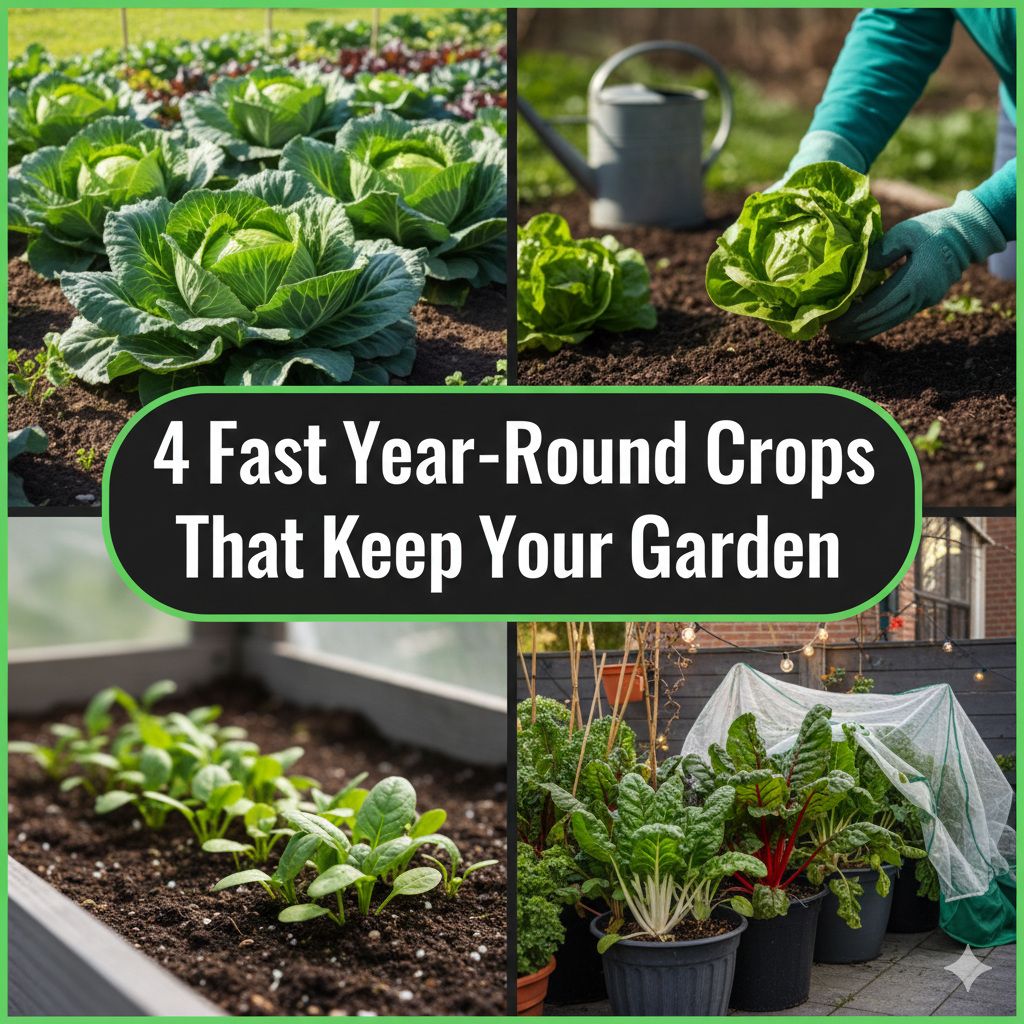
This guide outlines 4 fast year-round crops that have a short turnaround, don’t take much space, and can adjust with the seasons. These crops will work for you whether you’re a novice with a tiny balcony or an old hand with a whole backyard.
Let’s dig in.
Why Most Gardeners Leave Half of Their Gardens Empty
Here’s a maddening fact: the average home garden lies dormant for five to seven months each year.
That’s wasted space. Wasted water. Wasted effort.
The majority of gardeners are limited to warm-season crops — tomatoes, peppers, cucumbers. These are heat-loving plants that die when temperatures drop. So as summer ebbs, the garden falls silent.
But there’s a whole, more copious and varied world of crops that actually like cooler temperatures. Some even grow through frost. Some can even be grown indoors under the most basic grow lights while it’s freezing outside.
The trick is selecting the right crops for the right season — and varieties that grow quickly, so you don’t feel like you’re waiting forever on a harvest.
That is what this article is all about.
What Does It Mean for a Crop to Be “Year-Round” and “Fast”?
Before we discuss specific crops, let’s manage expectations.
A year-round crop is defined as one that can be:
- Grown in different seasons (not just summer)
- Continually replanted for an uninterrupted harvest
- Adapted to growing indoors when the weather is too extreme outdoors
A fast crop is one that:
- Matures in 60 days or less for most varieties
- Grows quickly enough to allow for multiple planting seasons within the same year
- Doesn’t require years of waiting (unlike fruit trees or asparagus)
Add those two together — fast-growing and year-round adaptable — and you get truly productive crops no matter what month it is.
Here’s a shorthand before we get to the deep dive:
| Crop | Days to Harvest | Best Seasons | Grow Indoors? |
|---|---|---|---|
| Lettuce | 30–60 days | Spring, Fall, Winter | Yes |
| Radishes | 22–30 days | Spring, Fall, Winter | Yes |
| Spinach | 40–50 days | Spring, Fall, Winter | Yes |
| Green Onions | 20–30 days (from sets) | All seasons | Yes |
Crop #1 — Lettuce: The Garden’s Most Reliable Year-Round Producer
Why Lettuce Is a Year-Round Superstar
Lettuce is the beginner crop of them all. It grows quickly, requires little room, and produces foliage you can cut over and over.
But what most people don’t know is that lettuce actually hates summer heat. It bolts — that is, it sends up a flower stalk and turns bitter — as temperatures consistently exceed 75°F.
That makes lettuce one of the best cool-season crops. It flourishes in spring and fall. And with the right conditions, it thrives indoors in winter as well.
When and How to Plant Lettuce
Spring planting: Sow seeds indoors 4–6 weeks before your last frost date. It can handle light frost, so you can plant it earlier than most other crops.
Fall planting: Plant seeds 6–8 weeks prior to your first fall frost. When temperatures decrease, lettuce grows gradually but consistently.
Winter growing: Bring containers inside near a bright south-facing window, or use an inexpensive LED grow light for 12–14 hours per day.
Summer tip: Look for heat-tolerant types such as ‘Jericho’ or ‘Nevada,’ and provide afternoon shade. They’ve got a couple of weeks before they bolt.
Lettuce Growing Basics
| Factor | What Lettuce Needs |
|---|---|
| Sunlight | 6 hours (tolerates partial shade) |
| Soil temp for germination | 40–75°F |
| Watering | Consistently moist, not waterlogged |
| Container size | At least 6 inches deep |
| Spacing | 6–8 inches apart (loose-leaf types) |
| Harvest method | Cut outer leaves, leave center to regrow |
The “Cut and Come Again” Method
This is the secret to getting the most out of your lettuce.
Instead of uprooting the entire plant, simply snip the outer leaves when they’re about 4–6 inches tall. Leave the inner leaves and root intact. The plant will continue growing new leaves for weeks — even months.
This technique turns one planting into a continuous harvest. It’s a prime reason lettuce ranks among the top fast year-round crops for any garden.
Best Lettuce Varieties for Year-Round Growing
- Buttercrunch — Tender, mild; great for spring and fall
- Black Seeded Simpson — Quick-growing loose-leaf, harvest in 45 days
- Winter Density — Compact romaine type, withstands cold exceptionally
- Tom Thumb — Great for containers and indoor growing
- Jericho — Best for summer heat tolerance
Crop #2 — Radishes: The Fastest Vegetable You Will Ever Grow
22 Days From Seed to Table
No other vegetable on this list grows faster than the radish. Some varieties take only 22 days to be ready to eat after planting.
That’s less than a month. Faster than most people can pay attention.
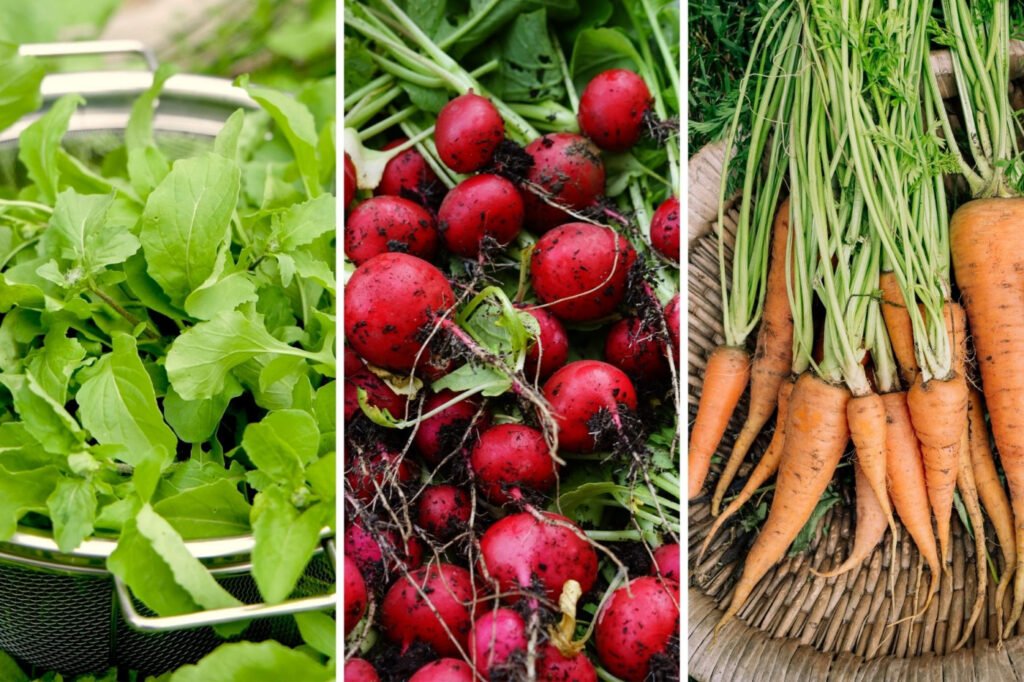
Radishes tend to be thought of as a dull or “filler” vegetable. But they deserve way more respect. They’re crisp, peppery, and surprisingly versatile in the kitchen. And because they mature so quickly, you can sow them every couple of weeks for an endless supply.
They’re also super useful for beginner gardeners. When you plant radish seeds, they germinate in 3–5 days and give you that instant gardener’s reward that keeps new growers motivated.
Growing Radishes Through the Seasons
Spring: Sow as soon as soil can be worked — even 4–6 weeks before last frost. Radishes love cool soil.
Summer: Most radishes bolt rapidly in heat. Grow only long-season daikon types during summer, or focus on other crops instead.
Fall: Radishes shine in fall. Sow in late summer for a fall harvest. Cool temperatures make them sweeter and crunchier.
Winter: If you live in a mild climate (USDA zones 8–10), radishes can grow outdoors all winter. Otherwise, grow them in containers indoors.
Radish Growing Quick Guide
| Factor | Details |
|---|---|
| Days to harvest | 22–30 days (spring/fall types) |
| Soil temperature | 50–65°F ideal |
| Sunlight | Full sun to partial shade |
| Spacing | 2–3 inches apart |
| Depth to plant seed | ½ inch deep |
| Common problem | Bolting in heat — plant early or late |
Beyond the Basic Red Radish
The small, round, red radish is likely the most common variety most people know. But there’s a whole universe of interesting radish varieties worth exploring:
- Cherry Belle — Classic round red, ready in 22 days
- French Breakfast — Elongated and mild; great for salads
- Daikon — Large white Asian radish, matures in 50–70 days, more heat-tolerant
- Watermelon Radish — Green outside, bright pink inside; harvest in 50–60 days
- Black Spanish — Winter radish; stores well for months
The daikon and winter varieties are especially useful for year-round growing as they fill in the seasonal gaps left by quick spring and fall types.
Succession Planting: The Radish Grower’s Secret
Radishes mature so quickly that they go from perfect to pithy (hollow and tough) in a matter of days if left too long in the ground.
The solution? Succession planting. Plant a small batch of seeds every 7–10 days. This provides you a steady stream without the feast-or-famine situation.
Using this method, a small raised bed or container can produce an almost uninterrupted supply of radishes from early spring into late fall.
Crop #3 — Spinach: The Cold-Weather Powerhouse
The Crop That Laughs at Frost
Spinach is one of the toughest leafy greens you can grow. Mature spinach plants can survive temperatures as low as 15°F — well below freezing.
This makes spinach an invaluable plant for extending your garden season into late fall and even winter in many climates. While other crops wither and die, spinach just keeps going.
It’s also packed with nutrients — iron, magnesium, and vitamins A, C, and K — making it one of the most rewarding fast year-round crops you can add to your garden.
Spinach Through the Seasons
Spring: Spinach is among the first crops you can plant. Direct sow 4–6 weeks before the last frost in the garden. It germinates in cool soil (as low as 35°F).
Summer: This is spinach’s weak spot. It bolts fast in heat and long daylight hours. In summer, try heat-tolerant varieties or grow it in the shade of taller plants.
Fall: This is truly spinach’s best season. Seeds planted in late summer yield a bountiful fall harvest. The days are getting shorter and temperatures are cooling — exactly what spinach craves.
Winter: In zones 6 and above, spinach can overwinter under a simple cold frame or row cover. The plants go semi-dormant in deep cold but bounce back on warm days.
Spinach Growing Basics
| Factor | What Spinach Needs |
|---|---|
| Days to harvest | 40–50 days (full leaf) |
| Sunlight | 6 hours (tolerates shade better than most) |
| Soil temperature | 35–65°F for germination |
| Watering | Regular, consistent moisture |
| Spacing | 3–6 inches apart |
| Container depth | 6–8 inches minimum |
The Cold Frame Trick for Winter Spinach
A cold frame is essentially a bottomless box with a clear lid — a mini greenhouse. It’s nearly free to build or buy.
Here’s how to use it for winter spinach:
- Plant spinach seeds in early fall, around 6 weeks before your first hard frost.
- Allow plants to grow until they’re 3–4 inches tall.
- Cover with your cold frame before the first frost hits.
- On warm days above 40°F, crack open the lid to prevent overheating.
- Pick outer leaves through fall and into winter on mild days.
With this simple technique, you can grow fresh spinach in December and January in most of the continental United States.
Best Spinach Varieties for Year-Round Success
- Bloomsdale Long Standing — Bolt-resistant; ideal for spring and fall
- Tyee — Very cold-hardy; great for fall and winter
- Carmel — Heat-tolerant; extends summer growing
- Space — Smooth leaves; fast-growing and resistant to downy mildew
- Regiment — Vigorous growth; ideal for succession planting
Crop #4 — Green Onions: Grow Them Anywhere, Anytime
The Most Underrated Year-Round Crop
Green onions — also known as scallions or spring onions — may be the most underrated crop in the home garden.
They’re easy to grow. They take almost no space. When grown from sets (small bulbs) instead of seeds, they can be harvested in as little as 20–30 days. And they thrive in containers, raised beds, or even a glass of water on your kitchen counter.
That last part is not a joke. You can regrow green onions from the white root ends you would ordinarily toss in the compost. Simply set them in a glass with an inch of water, place on a sunny windowsill, and watch them regrow within days.
Growing Green Onions in Every Season
Spring: Direct sow or plant sets as soon as the ground is workable. Green onions tolerate frost well.
Summer: They flourish in the summer heat. Water consistently and harvest before they grow too thick and pungent.
Fall: Plant a batch in early fall for a late-season harvest. They shrug off light frost without any protection.
Winter: Grow in containers indoors year-round. A 6-inch pot on a sunny windowsill generates a perpetual supply of fresh green onions for your kitchen.
Green Onion Growing Snapshot
| Factor | Details |
|---|---|
| Days to harvest | 20–30 days (from sets), 60–70 days (from seed) |
| Sunlight | Full sun; tolerates partial shade |
| Soil type | Well-draining, loose soil |
| Watering | Moderate — don’t overwater |
| Container size | At least 6 inches deep |
| Indoor growing | Excellent on a sunny windowsill |
Three Ways to Grow Green Onions Year-Round
Method 1: From seed. Plant seeds ¼ inch deep, 1 inch apart. Thin to 3 inches apart as they mature. Much slower, but you get the most variety choices.
Method 2: From sets. Plant small onion bulbs 1 inch deep, 3 inches apart. Much faster than seeds — harvest in 3–4 weeks.
Method 3: From kitchen scraps. Save the root end (roughly 1 inch) of store-bought green onions. Soak in water or plant directly into soil. New green tops regrow in days. This is the quickest and cheapest method of all.
Succession Planting for a Non-Stop Harvest
Green onions, like radishes, benefit from succession planting. Sow a small new batch every 2–3 weeks. This staggers your harvest so you always have fresh green onions on hand without a huge glut all at once.
One 12-inch container with three rotating batches will keep a household in fresh green onions for almost forever.
How to Plan a Year-Round Garden With These 4 Crops
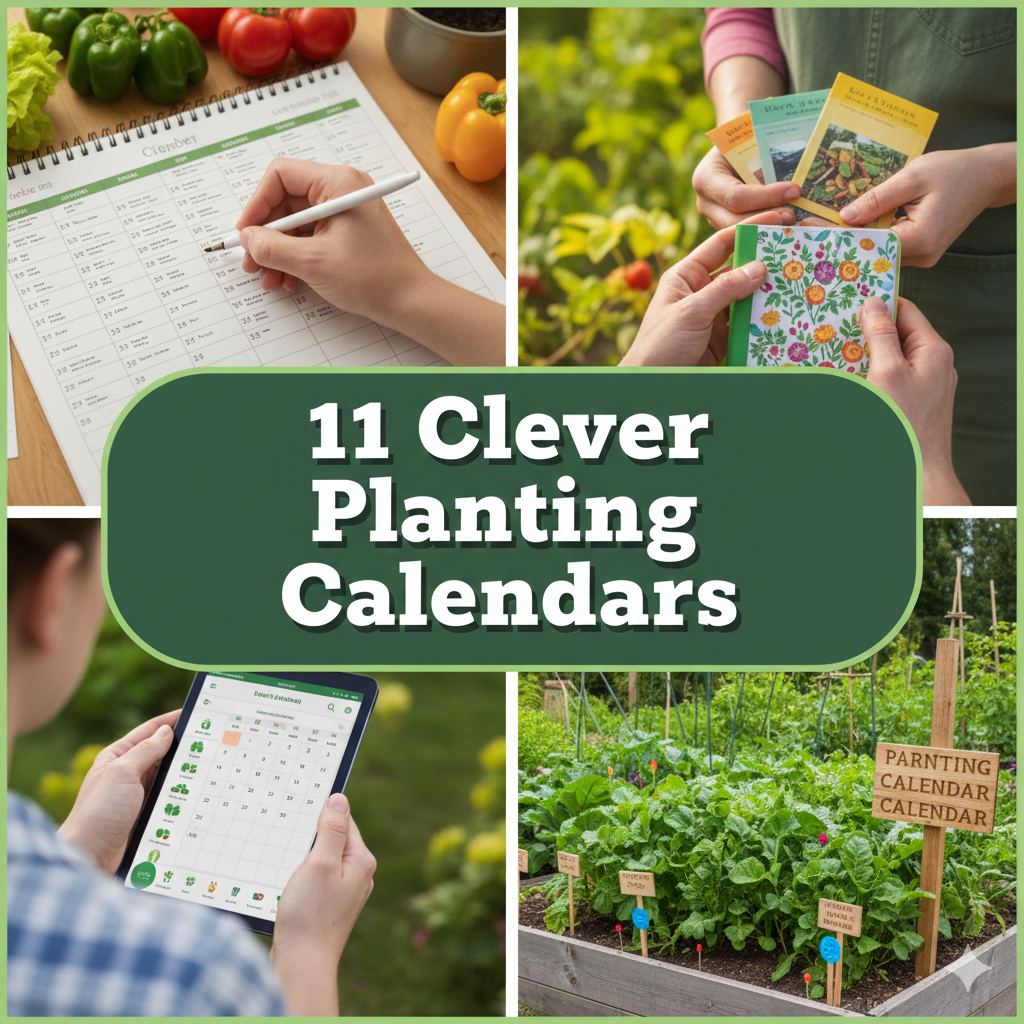
Now that you know about each crop, let’s combine it all. Below is a simple planting calendar that shows when to grow each crop over the course of the year.
Year-Round Planting Calendar
| Month | Crop to Plant | Where to Grow |
|---|---|---|
| January | Lettuce, Green Onions | Indoors/grow light |
| February | Spinach, Lettuce | Indoors, then cold frame |
| March | Radishes, Spinach, Lettuce | Outdoors (direct sow) |
| April | All 4 crops | Outdoors |
| May | Radishes, Green Onions | Outdoors |
| June | Green Onions, Daikon Radish | Outdoors |
| July | Spinach (shade), Green Onions | Outdoors (partial shade) |
| August | Spinach, Lettuce, Radishes | Outdoors (fall crop) |
| September | All 4 crops | Outdoors |
| October | Spinach, Lettuce, Green Onions | Cold frame/outdoors |
| November | Spinach, Lettuce | Cold frame |
| December | Lettuce, Green Onions | Indoors/grow light |
This calendar is a rough guide. Adjust for your particular climate and USDA hardiness zone.
Tools and Supplies That Help You Grow Year-Round
Growing these crops requires minimal gear. But a few simple tools help smooth things out.
Cold frames: These protect cool-season crops from frost and extend your season by 4–6 weeks in both spring and fall. Basic DIY models can be built for less than $20.
Grow lights: A basic LED grow light allows you to germinate seeds indoors weeks earlier and keep growing through winter. Full-spectrum lights are what you want — they promote healthy leaf growth without getting expensive.
Container garden setup: All four of these crops thrive in pots and containers. This is great if your space is limited. For more ideas on growing food in small spaces, Small Balcony Garden offers excellent tips on maximizing limited growing areas.
Row covers: Lightweight fabric coverings used to shield plants from frost, pests, and fierce wind. They’re cheap, reusable, and among the most useful tools a year-round grower can have.
Seed starting trays: For getting young plants started indoors when it’s still too early to plant outside.
Mistakes Common to New Year-Round Growers
Even easy crops can disappoint if you fall into these common traps:
Waiting too long in the season to plant. Cool-season crops like lettuce and spinach must be planted early enough to mature before summer heat arrives. Look up your local frost dates and count backward from there.
Overwatering indoors. Crops grown inside tend to dry out more slowly than outdoor crops. Check soil moisture before watering. Overly wet soil causes root rot and wilted plants.
Not succession planting. If you plant everything at once, you will have one big harvest followed by nothing. Plant every 1–3 weeks for staggered production.
Skipping thinning. Overcrowded plants compete for nutrients and yield poorly. Thin seedlings to the suggested spacing even if it seems wasteful — it’s not.
Giving up after one failed planting. Every gardener loses crops sometimes. Timing, weather, and pests don’t always cooperate. Try again with a new batch. Quick crops give you quick second chances.
FAQs About Fast Year-Round Crops
Q: Is it possible to grow vegetables in winter? Yes — particularly with cool-season crops such as lettuce, spinach, and green onions. A cold frame or indoor setup with a grow light makes it very doable in all but the coldest climates.
Q: Which of the 4 crops is easiest for a total beginner? The most forgiving is green onions. You can even regrow them from kitchen scraps in a glass of water — no garden needed. Radishes are a very close second, due to their speed and ease.
Q: How much space do I need to grow these crops year-round? Very little. All four crops thrive in containers as small as 6 inches deep. Even a single 4×4 raised bed or a few pots on a balcony is plenty to get you started.
Q: Do these crops require a lot of fertilizer? Not really. A good-quality potting mix or garden soil with compost mixed in provides most of what these crops need. A light liquid fertilizer every 2–3 weeks during active growth helps keep container plants productive.
Q: What’s the best way to store harvested crops? Lettuce and spinach keep best in the fridge, wrapped loosely in a damp paper towel inside a bag — up to a week. Radishes last 1–2 weeks refrigerated. Green onions last about a week wrapped in a damp cloth. For longer storage, radishes can be kept in a cool root cellar for weeks.
Q: Can children help grow these crops? Absolutely. Radishes and green onions are especially good for kids because they grow so fast — kids can see progress being made within days. For the best experience, let them plant, water, and harvest their own small container.
Q: Should I use special soil for year-round growing? Not special, but good. Use a well-draining mix with plenty of organic matter. A quality potting mix works perfectly for containers. Steer clear of heavy clay soil — it retains moisture too long and suffocates roots.
Final Thought: Your Garden Doesn’t Have to Hibernate Half the Year
Gardens go dormant for months at a time. But yours doesn’t have to.
With these 4 fast year-round crops — lettuce, radishes, spinach, and green onions — you have everything necessary to harvest fresh food every season. They’re quick, they’re forgiving, and they work in almost any space.
Start small if you need to. Pick one crop. Plant a small container. See what happens.
The best gardeners aren’t the ones with the most space or the longest history of growing things. They’re the ones who keep planting, keep learning, and keep harvesting — all year long.
Your garden is waiting. Pick a crop and get growing.