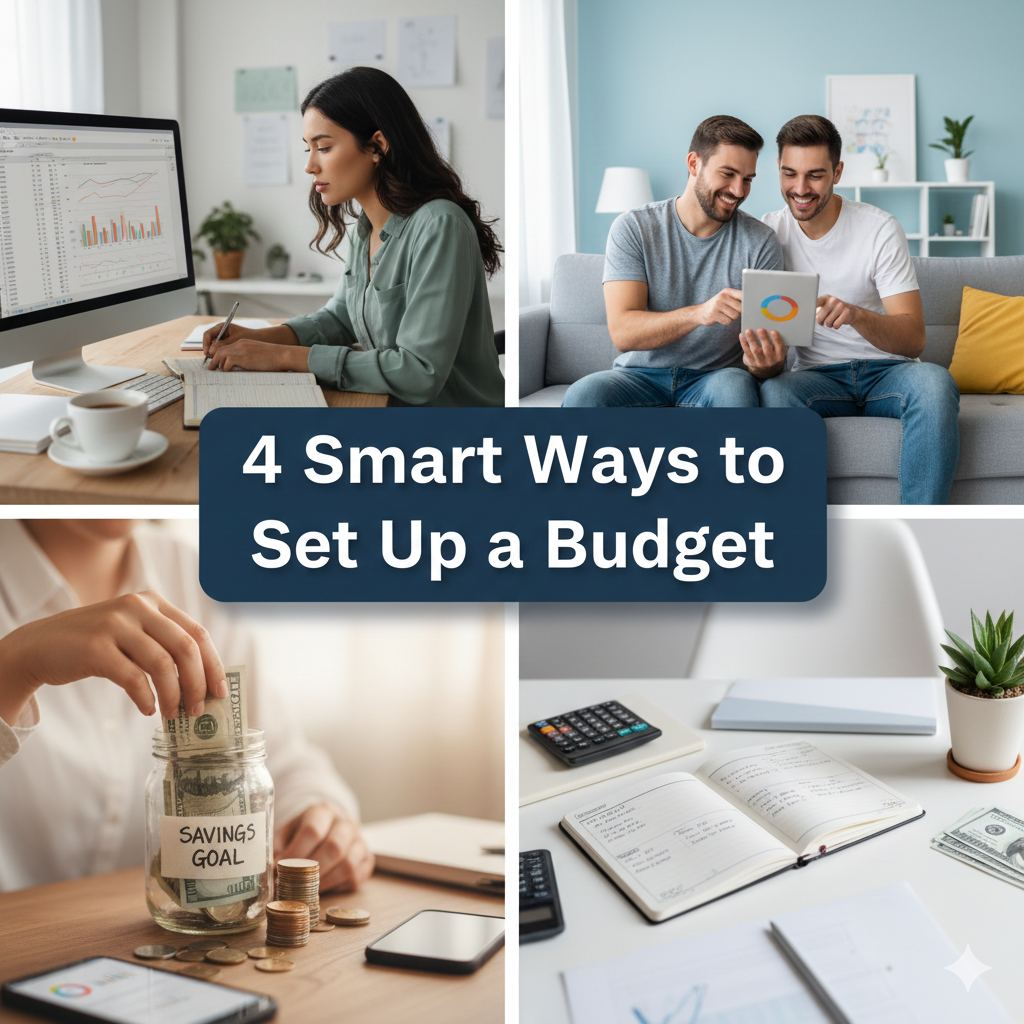
The popular perception of budgeting is that it involves spending hours with spreadsheets, a calculator and a headache. It doesn’t. A good budget can be established in minutes — and it could alter the course of your financial life.
Whether you’re living paycheck to paycheck, intending to save up for something major, or have just plain old had it with wondering where all your money is going — these 4 fast budget setup ideas are here to help. No finance degree needed. No complicated software. Just simple systems that work.
Let’s get into it.
Why Immediately Setting Up a Budget Is the Best Thing You Can Do
Before we dive into the ideas, let’s discuss why it matters.
A budget isn’t a punishment. It’s a plan.
Without a plan, money disappears. You buy things without thinking. The month ends. You’re broke. You don’t know why.
You’re in charge of your finances with a budget. You decide who gets your money before it disappears. That simple change — from reactive to intentional — is what sets apart people who build savings from those who feel always behind.
And here’s the best part: you don’t have to be perfect. You just need to start.
What Does It Mean for a Budget to Be “Fast” to Set Up?
A fast budget setup means:
- 30 minutes or less to set it up
- It does not need expensive apps or tools
- Staying with it is simple enough
- It adapts to your real life — not some textbook version of your life
All four of the ideas below meet these criteria. Select the one that suits your personality, your way of life and your ambitions.
Budget Idea #1 — The 50/30/20 Split
The Simplest Budget Framework Ever Made
The 50/30/20 budget is the most common fast budget setup for a reason: it’s dead simple.
Here’s how it works. You divide every paycheck into three categories:
| Category | Percentage | What It Covers |
|---|---|---|
| Needs | 50% | Rent, groceries, utilities, transportation |
| Wants | 30% | Dining out, entertainment, subscriptions |
| Savings/Debt | 20% | Emergency fund, investments, loan payments |
That’s it. Three buckets. Done.
How to Set It Up in Less Than 20 Minutes
Step 1: Calculate your monthly after-tax income.
Step 2: Multiply that number by 0.50, 0.30 and 0.20.
Step 3: Write down your current expenses and put each in a bucket.
Step 4: Identify a cost to cut if the bucket is overflowing.
For instance, let’s say you take home $2,500 per month:
- Needs: $1,250
- Wants: $750
- Savings/Debt: $500
That’s your entire budget framework. Built in minutes.
Who This Works Best For
The 50/30/20 rule is ideal for:
- First-time budgeters
- People with steady, predictable income
- Someone who wants organization without micromanaging each dollar
One caveat: if you’re living in a high-cost city, your “needs” may well devour more than 50%. That’s okay. Tweak the percentages to 60/20/20 or whatever more closely resembles your reality. The framework is a guide rather than a law.
Budget Idea #2 — The Cash Envelope System
Old-School Method, Zero-Stress Results
The cash envelope system has been around for decades. Dave Ramsey popularized this method, but the fundamental concept is older than that.
The concept is shockingly simple: pay for your spending categories with physical cash. When the envelope empties out, you’re done spending.
No overspending. No excuses. The money is physically gone.
A Step-by-Step Guide to Setting Up Your Envelopes
Step 1: Figure out your problem spending categories. Typical ones are groceries, eating out, clothes, entertainment and gas.
Step 2: Set a monthly limit per category. Be realistic. Do not say $100 for groceries if you actually spend $400.
Step 3: At the beginning of the month (or per pay period), take that amount out in cash.
Step 4: Label envelopes for each category.
Step 5: When you spend, take cash out of the matching envelope each time.
Stop when the envelope is empty. Done for the month. No exceptions.
A Sample Envelope Budget Layout
| Envelope Label | Monthly Amount |
|---|---|
| Groceries | $350 |
| Dining Out | $150 |
| Gas | $120 |
| Entertainment | $80 |
| Clothing | $50 |
| Personal Care | $40 |
| Total | $790 |
Why It Works So Well
Cash spending stings in a way that swiping a card does not. Studies in behavioral economics have shown repeatedly that people spend less when they use actual cash. Handing over $40 feels real. Tapping a phone feels like nothing.
If you’ve attempted budgeting apps and have been unable to stay with them, this method might be your solution. It’s tactile and visual, and you can’t cheat — unless you go raiding one envelope to stuff another (which means you need a budget adjustment, not an abundance of willpower).
The Digital Version: Virtual Envelopes
Not a fan of carrying cash? Apps like Goodbudget and YNAB (You Need a Budget) recreate this system digitally. You allot dollars to virtual envelopes, and you follow spending with category tracking. Same psychology, without the crumpled bills in your wallet.
Budget Idea #3 — The Zero-Based Budget
Every Dollar Gets a Job
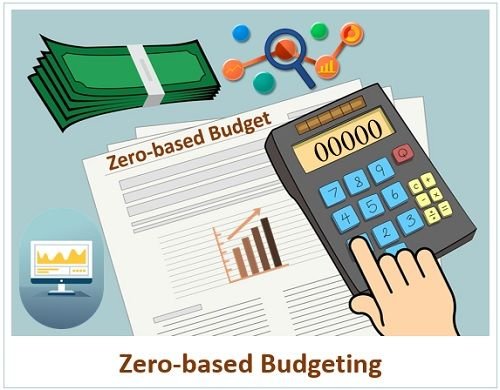
Zero-based budgeting is the most detailed of the four fast budget setup ideas — but it can still easily be done in one sitting.
Here’s the single most important principle: Income minus expenses equals zero.
That doesn’t mean you spend all of it. That means every dollar has a job — whether it’s for rent, savings, groceries or a vacation fund. Nothing floats around unaccounted for.
Zero-Based Budget vs. 50/30/20
| Feature | Zero-Based Budget | 50/30/20 Budget |
|---|---|---|
| Level of detail | High | Medium |
| Setup time | 30–45 minutes | 15–20 minutes |
| Best for | Detail-oriented people | Beginners |
| Flexibility | Low (strict) | High (broad) |
| Tracks every dollar | Yes | No |
How to Create a Zero-Based Budget Fast
Step 1: Write down what your monthly income is.
Step 2: Write down every expense — fixed (rent, car payment) and variable (coffee, groceries).
Step 3: Assign a dollar amount to every category, including savings.
Step 4: Add everything up. If the total is equal to your income, you are done.
Step 5: If you do have leftover funds — direct them somewhere (savings, debt repayment, sinking fund). If you’re over — cut something.
Sample Zero-Based Budget for $3,000/Month
| Category | Amount |
|---|---|
| Rent | $900 |
| Utilities | $120 |
| Groceries | $300 |
| Transportation | $200 |
| Phone | $60 |
| Internet | $50 |
| Subscriptions | $40 |
| Dining Out | $100 |
| Clothing | $50 |
| Personal Care | $30 |
| Entertainment | $70 |
| Emergency Fund | $200 |
| Savings | $300 |
| Debt Payment | $380 |
| Total | $3,000 |
See how each dollar is allocated somewhere. Nothing is leftover. Nothing is “mystery money.”
The Power of Zero
This method forces you to have an honest conversation with yourself about every expense. Looking to sign up for another streaming service? Fine — but something else has to give. It instills financial discipline without being punitive, since you determine every figure.
Budget Idea #4 — The Pay Yourself First Budget
Reimagine How You Budget
Most people budget like this: pay bills, spend on life, save what’s left.
The problem? There’s almost never anything left.
The pay yourself first method is the total opposite of that equation:
Save first. Spend what’s left.
As soon as your paycheck comes in, you transfer a pre-agreed upon amount into savings (or investments, or debt payments). Then you live on the rest.
Why This Method Is So Powerful
It removes the temptation completely. You never see that money sitting in your checking account, so you never miss it.
That’s the budgeting principle behind automatic 401(k) contributions, automatic savings transfers and most wealth-building advice from financial professionals. It works because it takes willpower out of the equation altogether.
According to NerdWallet’s personal finance guides, automating your savings is one of the single most effective habits for long-term financial health — regardless of your income level.
How to Get It Up and Running in 15 Minutes
Step 1: Determine the percentage or amount to save. If necessary, start small — even 5% or $50/month is a tangible first step.
Step 2: Set up an automatic transfer on payday. You can schedule automatic transfers online with most banks. The money moves to savings the same day you get paid.
Step 3: Build your spending budget around what is remaining.
Step 4: When you have adjusted to the savings amount, increase it every few months.
What to Do With the Savings
Don’t leave it sitting in a regular checking account. Use:
- A high-yield savings account for an emergency fund
- A Roth IRA or 401(k) for retirement
- A dedicated savings account for specific goals (such as vacation, car, down payment)
Just like tending a small balcony garden — where small, consistent efforts over time lead to something beautiful — building savings works the same way. A little put away each month grows into something you’ll be genuinely proud of.
Pay Yourself First Budget — Quick Snapshot
| Monthly Income | Savings First (15%) | Left to Live On |
|---|---|---|
| $2,000 | $300 | $1,700 |
| $3,000 | $450 | $2,550 |
| $4,500 | $675 | $3,825 |
| $6,000 | $900 | $5,100 |
How to Choose the Right Budgeting Method for You
Not sure which of these 4 fast budget setup ideas is right for you? Use this quick guide:
| If You Are… | Try This Method |
|---|---|
| A complete beginner | 50/30/20 Split |
| Someone who easily overspends | Cash Envelope System |
| Methodical and organized | Zero-Based Budget |
| Someone struggling to save | Pay Yourself First |
You can also combine methods. For instance, use the pay yourself first approach to secure your savings, then implement 50/30/20 on what you have left to spend. A blended approach simply works well for many people.
The 3 Worst Budget Setup Mistakes (And How to Avoid Them)

Mistake #1: Making the Budget Too Tight
If you set aside $50 for groceries but realistically spend $300, you’re going to give up in the first week. Begin with what’s real, then tighten over time.
Mistake #2: Ignoring Irregular Expenses
Car registration. Holiday gifts. Annual subscriptions. They’re not monthly, but they are real. Create a sinking fund — that is, contribute every month to a savings account set aside for irregular expenses. That’s $25/month which is $300 by year’s end.
Mistake #3: Treating a Budget as a One-Time Task
A monthly budget review is needed — 15 minutes, that’s all. Life changes. Expenses change. Your budget should too.
Tools to Help You Get Started Today
You can budget for free. Here are some free tools to consider:
| Tool | Type | Best For |
|---|---|---|
| Google Sheets | Spreadsheet | Custom, DIY budgets |
| Mint | App | Automatic expense tracking |
| YNAB | App | Zero-based budgeting |
| Goodbudget | App | Digital envelope system |
| EveryDollar | App | Simple zero-based budgeting |
| Pen & Paper | Analog | Minimalists and beginners |
Quick-Start Checklist: Create Your Budget Right Now
Check off this list to create your first-ever budget today:
- ☐ Determine your monthly take-home pay
- ☐ Identify all fixed expenses (rent, insurance, subscriptions)
- ☐ Write down all variable expenses (food, gas, entertainment)
- ☐ Use one of the 4 budget methods above
- ☐ Attach dollar amounts to each category
- ☐ Set up an automatic savings transfer
- ☐ Schedule a monthly budget review (same day every month)
- ☐ Track your first week of spending
FAQs About Fast Budget Setup Ideas
Q1: How much time does it take to get a budget set up? It should take 20–45 minutes to set up most budgets. The 50/30/20 system is the quickest — roughly 15–20 minutes. The zero-based method does take a little longer as you’re accounting for every single dollar, but it is still doable in one sitting.
Q2: Is it necessary to have an app for effective budgeting? No. A notebook and pen work just as well. Apps make it easier and quicker to track, but they’re not necessary. Many people who do most things digitally still write out their budgets by hand because it feels more deliberate.
Q3: What if I earn a different amount of income from month to month? Start with the lowest expected monthly income you will possibly have. Budget conservatively. If you earn more than usual one month, divert the extra money straight into savings or paying off debts.
Q4: I have attempted budgeting in the past and keep failing. What should I do differently? Try a different method. If spreadsheets didn’t work, try the envelope system. If the envelope system seemed tedious, try pay yourself first. Everyone’s brain is wired differently. The “right” budget is the one you will actually use.
Q5: Should I include my partner or family in setting up the budget? Yes — if you share expenses, the budget should be a joint effort. Most budgets controlled by one person, and unknown to another, are doomed to fail. Turn it into a 30-minute shared conversation at the beginning of each month.
Q6: Can I change my budget every month? Absolutely. Actually, you should be updating it every month. Life isn’t static. Your budget shouldn’t be either. Think of those monthly reviews as tune-ups, not signs of failure.
Q7: What’s the first thing I need to do after setting up a budget? Monitor your spending in the first full week. Awareness is the most powerful budgeting tool. Once you understand where money actually went, following your plan becomes much easier.
Wrapping It All Up
Creating a budget isn’t about being perfect with money. It’s about being honest with money.
All 4 of these fast budget setup ideas — the 50/30/20 split, the cash envelope system, the zero-based budget and the pay yourself first method — work. Millions of people everywhere have used them to pay off debt, build savings and finally feel in control of their finances.
The key is starting. Not next month. Not when things settle down. Today.
Choose the method that resonates with your nature. Take 20–30 minutes to set it up. Stick with it for 60 days. You will see a difference.
Your financial life shouldn’t be stressful. It begins with one simple plan — and that plan doesn’t begin tomorrow.