Turn Your Railing Into a Garden — Here’s How
Now imagine stepping out onto your balcony and being met with a row of colorful flowers, fresh herbs or even small vegetables — all conveniently suspended from your railing. And that’s exactly what a rail planter can do for you.
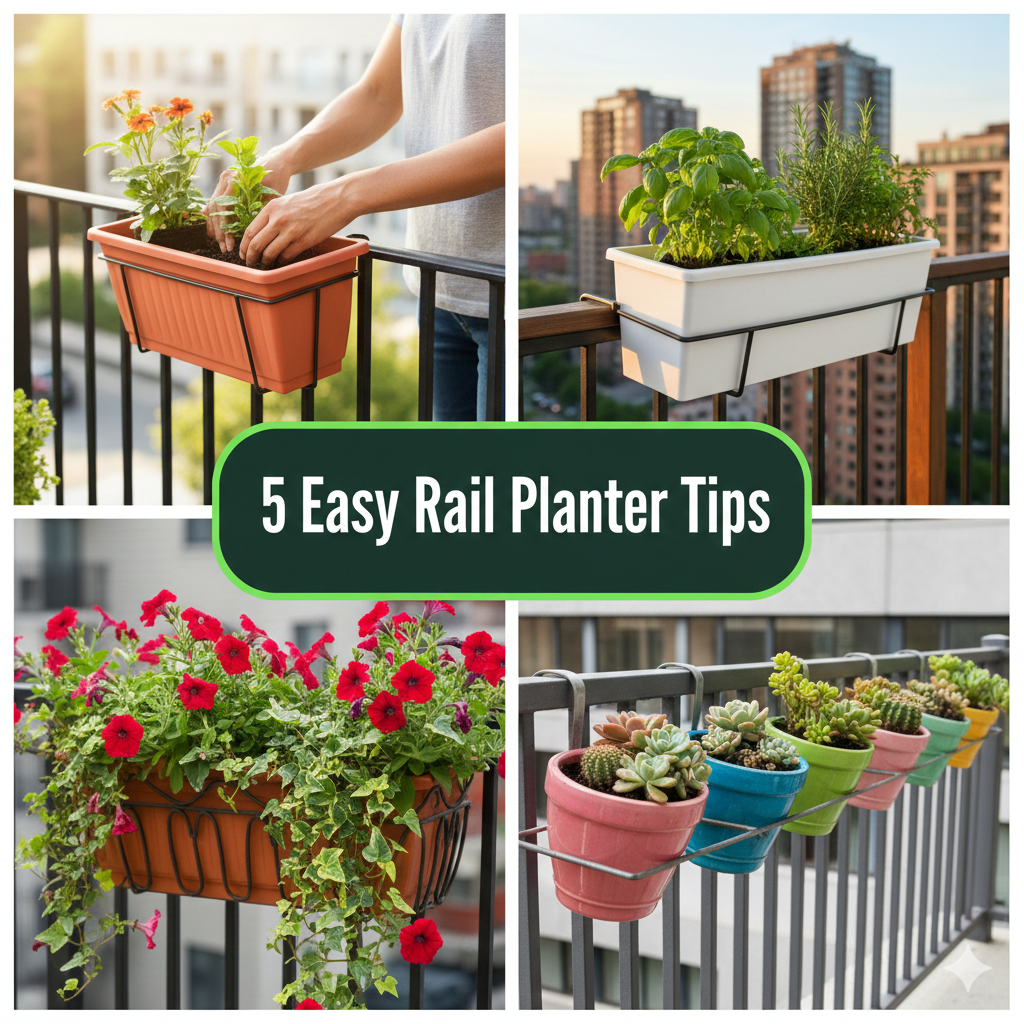
Rail planters are boxes or containers that attach with hooks or brackets to railings, fences or deck edges. They’re also ideal for tiny spaces where there’s no room for a large garden bed. Rail planters work anywhere: apartments, condos, townhouses.
But that’s the thing: just buying a rail planter and dumping dirt into it isn’t going to cut it. With a few clever tricks, it’s the difference between a thriving mini-garden and a sad, wilting mess.
In this article, you’ll learn 5 simple, hands-on and time-tested rail planter tips that will help your plants flourish — even if you’ve never gardened in your life.
Tip 1: Choose the Right Rail Planter for Your Space
Size and Fit Are More Important Than You Think
You need the right planter before you purchase plants or soil. Rail planters are not all created equal. Some are too heavy for certain railings. Others are too small to contain enough soil for your plants to thrive.
Here’s what to consider before you buy:
Railing width: First measure your railing width. Most rail planters include adjustable brackets, but you’ll still need to know the size of your railing — round, square or flat.
Weight limit: Make sure you know your balcony or deck’s weight limit. Wet soil is surprisingly heavy. A planter box about half full can weigh anywhere from 20 to 40 pounds.
Material: Rail planters are made of plastic, wood, metal and fabric. Each has pros and cons.
| Material | Advantages | Disadvantages |
|---|---|---|
| Plastic | Lightweight, cheap, weather-resistant | Can crack in extreme cold |
| Wood | Natural look, insulation for roots | Needs sealing, can rot |
| Metal | Durable, designer look | Heats too quickly and burns roots |
| Fabric | Great drainage and breathability | Dries too fast |
Check Safety First
Always double-check that the planter is secured properly before adding soil. A loose planter can tumble — and that is hazardous, particularly on upper-floor balconies. If necessary, secure with locking brackets or zip ties.
Tip 2: Use the Right Soil Mix — Not Just Any Dirt
Why You Can’t Use Regular Garden Soil
This is a very common mistake people make. They fill a bag with common garden soil, pour it in and wonder why their plants do so poorly.
Here’s the catch: ordinary garden soil is too heavy for containers. It compresses, becomes waterlogged and barely thatch suffocates roots. In a rail planter you want something lighter and fluffier.
The best option is a high-quality potting mix — definitely not garden soil, and definitely not topsoil. Potting mix is specifically made for containers. It drains well, retains just enough moisture and gives roots breathing room.
Build a Better Soil Mix
To further increase effectiveness, combine these:
- 60% potting mix — your base
- 20% perlite or coarse sand — helps with drainage
- 20% compost — enriches soil with natural nutrients
This combination keeps your rail planter light, drainable, and nutrient-dense. Your plants will love it.
Don’t Skip Fertilizer
Potting mix does not hold nutrients for long — particularly in a small pot that is frequently watered. When you fill the planter for the first time, add a slow-release granular fertilizer. Then fertilize again every 4 to 6 weeks during the growing season.
Tip 3: Select Plants That Truly Thrive in Rail Planters
Not Every Plant Is a Good Fit
The depth and width of a rail planter is limited. That means big root systems are not going to work here. You want plants that remain compact, don’t require deep soil and look terrific all season long.
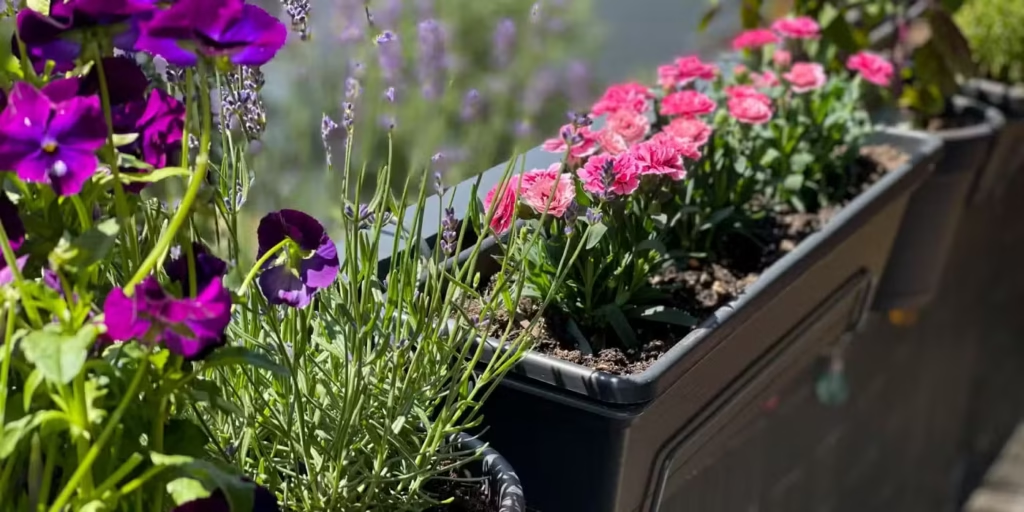
Here are the best categories:
Flowers That Work Best
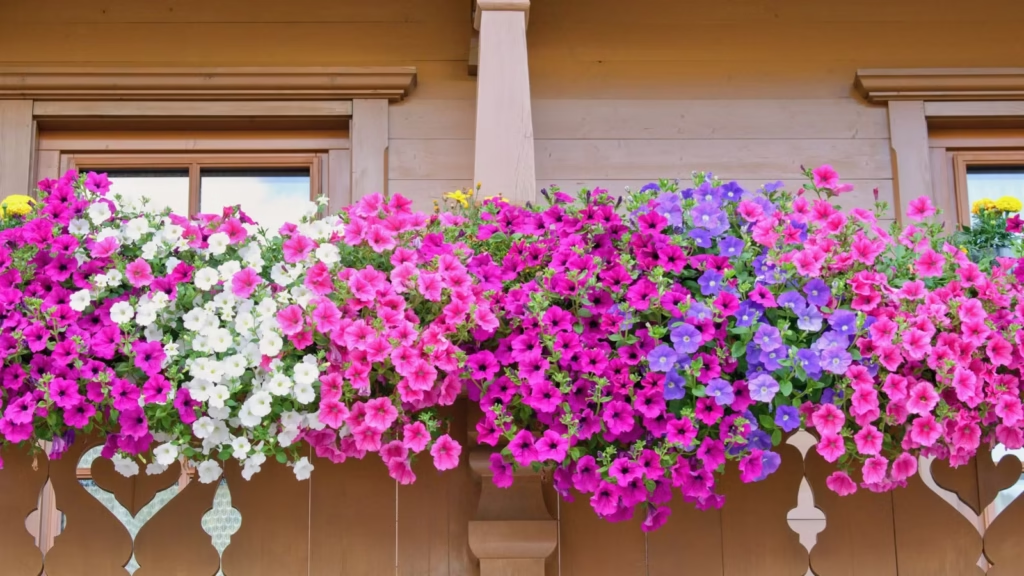
- Petunias — colorful, fast-growing, heat-tolerant
- Impatiens — made for shady balconies
- Lobelia — beautiful trailing blooms spilling over the edges
- Marigolds — cheerful, pest-repelling, easy to grow
- Geraniums — old-fashioned, long-lasting, low-maintenance
Herbs You Can Grow and Eat
Rail planters are lovely for herbs. They’re small, they smell good and you can just clip them into your cooking.
- Basil — loves sun and warmth
- Mint — super fast-growing, makes great drinks (plant it alone; it takes over)
- Chives — simple, good in soups and salads
- Thyme — drought-tolerant, low maintenance
- Parsley — grows well in partial shade
Small Vegetables That Work
- Cherry tomatoes (better to use a deeper planter, at least 10 inches)
- Lettuce and spinach (shallow roots, ideal for rail planters)
- Radishes (fast-growing, perfect for beginners)
- Green onions
Mix Smart — Not Random
Use the “Thriller, Filler, Spiller” method when planting multiple varieties in the same rail planter:
- Thriller — a tall and upright plant in the middle (like a tall marigold or basil)
- Filler — medium bushy plants for filling in space (such as petunias)
- Spiller — trailing plants that cascade over the edge (like lobelia or sweet potato vine)
This technique creates a dense, tiered appearance to your planter that can really dazzle.
Tip 4: Drainage Is Everything — Get It Right or Lose Your Plants
Why Drainage Is the #1 Silent Killer
Overwatering is the number one cause of death in container plants. And that’s not necessarily watering too much — it’s poor drainage most of the time. If the water is unable to escape out of the bottom of the planter, it lingers around the roots. This leads to root rot that can quickly kill plants.
Rail planters are small, so drainage is especially important.
What Good Drainage Looks Like
Rail planters must have drainage holes at the bottom. If your planter lacks any, drill a few of your own. For a typical 24-inch planter, aim for four to six holes roughly ½ inch wide.
Then, before you add soil, place a drainage layer at the base of the planter:
- Small pebbles or gravel, in a 1-inch layer
- Or use broken terracotta pieces
- Or use a piece of landscape fabric (this prevents soil from clogging the holes)
Watch Out for Waterlogged Soil
Even with drainage holes, soil can hold too much water when:
- You’re watering too often
- Your planter is sitting in a patch of shade where water evaporates very gradually
- The potting mix is too dense
Insert your finger at least an inch into the soil. If it feels damp, skip watering today. Water only when the top inch of soil is dry.
A Simple Drainage Checklist
| Step | What to Do |
|---|---|
| Buy or drill drainage holes | Minimum of 4–6 holes per planter |
| Add a drainage layer | Pebbles or gravel, at least 1 inch thick |
| Use light potting mix | Avoid heavy garden soil |
| Check soil moisture before watering | Finger test — 1 inch deep |
| Elevate planter slightly if needed | Ensures water can flow freely |
Tip 5: Water More Wisely, Not More
Rail Planters Dry Out Fast
Here’s something that catches most novice gardeners by surprise: rail planters dry out far more quickly than ground garden beds and even large pots. Why? Because they’re small, subject to wind and often in full sun. Wind sucks moisture out of the soil quickly.
In sweltering summer months, your rail planter may need water once or even twice daily. This shocks many people.
Morning Watering Is Best
Early morning is the best time to water. Here’s why:
- Before the heat of the day causes evaporation, water reaches roots
- Fungal disease is prevented with leaves having time to dry out
- Moisture gets to plants upon entering their active growing stages
Do not water in the evening unless you absolutely have to. Overnight damp soil fosters mold and disease.
How to Water Properly
Do not simply apply water to the surface. Water slowly and deeply, until you see it running out of the drainage holes. This means the whole root zone receives moisture — not just the top few inches.
For extra control, use a watering can with a slender spout or a gentle hose attachment.
Try Self-Watering Inserts
If you travel frequently or tend to forget watering, self-watering planter inserts or liners may be a wise investment. These have a tiny reservoir at the bottom that slowly draws water to the roots via capillary action. It won’t eliminate all watering, but you can reduce the frequency by half.
Use Mulch on Top
A thin layer of mulch (wood chips or shredded leaves, for example) on top of the soil works wonders. It:
- Slows moisture evaporation
- Maintains root temperature in hot weather
- Decreases your watering frequency
Just keep the mulch away from the stems of your plants to avoid rot.
Bonus Rail Planter Tips and Tricks
Give Plants Enough Sunlight
Most flowering plants and herbs require a minimum of 6 hours of direct sunlight each day. Before setting up your rail planter, observe how much sun your balcony or deck receives throughout the day. If you’re looking for more inspiration on making the most of compact outdoor spaces, Small Balcony Garden is a great resource packed with creative ideas.
- Full sun (6+ hours): Ideal for petunias, marigolds, basil, tomatoes
- Partial sun (3–6 hours): Good for impatiens, parsley, lettuce
- Shade (under 3 hours): Try ferns, hostas or mint
Deadhead Flowers Regularly
Deadheading is cutting off dead or faded flowers. It seems simple — but it makes a big difference. Pinching old blooms encourages the plant to focus energy on creating new ones. Your planter remains colorful all season long, rather than getting sparse in midsummer.
Simply pinch off dead flowers with your fingers or snip them away with small scissors every few days.
Rotate Your Planter Occasionally
If one side of your rail planter receives more sunlight than the other, the plants will grow unevenly — leaning toward the light. Rotate the planter every so often to expose all sides to equal light and promote bushy, balanced growth.
Common Rail Planter Mistakes to Avoid
Even well-meaning plant parents can make damaging mistakes. Here are the most common ones — and how to avoid them:
| Mistake | Why It’s a Problem | Fix |
|---|---|---|
| Using garden soil | Too heavy, compacts, poor drainage | Use potting mix instead |
| Overcrowding plants | Plants compete for water and nutrients | Follow spacing guidelines on plant tags |
| Watering on a fixed schedule | Doesn’t account for weather changes | Water based on soil moisture, not calendar |
| Skipping fertilizer | Soil nutrients run out fast in containers | Add slow-release fertilizer every 4–6 weeks |
| Wrong sun placement | Plants get leggy or burned | Match plant needs to your balcony’s light level |
According to the RHS (Royal Horticultural Society), container plants need more frequent feeding and watering than those grown in the ground — making a consistent care routine especially important for rail planters.
FAQs About Rail Planters
Which type of rail planter is best for a small balcony?
For smaller balconies, a lightweight plastic or fabric rail planter is ideal. They’re inexpensive, don’t add a lot of weight and come in various sizes. Look for those with adjustable brackets that accommodate flat, round or square railings.
How deep should a rail planter be for herbs?
Most herbs thrive in planters that are 6 to 8 inches deep. Use 10 inches deep or deeper for larger herbs such as basil or rosemary. The deeper the soil, the stronger the root growth — and the healthier your plant.
Should I leave my rail planter out through winter?
It depends on where you live and what your planter is made of. Plastic planters may crack during freezing temperatures. Wood planters should be sealed and stored. In mild winters, perennials can be left outdoors. In cooler climates, bring planters indoors or remove plants and store the empty planter inside.
How regularly do I need to water my rail planter throughout summer months?
Many rail planters will need watering every day in hot weather, sometimes twice a day. Always check the soil first. If the top inch is dry, go ahead and water. If it’s still moist, wait.
What plants should I avoid in rail planters?
Steer clear of big, deep-rooted plants such as sunflowers, zucchini, large pepper plants or anything that grows taller than 3 feet. These require more soil depth and root space than a rail planter can provide. Stick with compact varieties labeled “dwarf” or “container-friendly.”
Do rail planters damage railings?
They can, eventually — particularly if the planter is heavy and the brackets aren’t padded. Use rubber-padded brackets to protect the railing surfaces. Don’t hang planters from wooden railings that are aging or weakened.
Can I plant flowers and herbs together in the same rail planter?
Yes! This is a great idea. Planting marigolds near basil can help deter some pests. Lobelia or petunias next to chives add color and keep pollinators coming. Just ensure that all the plants in one box need similar sunlight and watering conditions.
Wrapping It All Up — Get Rail Planting Today!
A rail planter is one of the most satisfying gardening projects you can undertake — even if you have only a tiny apartment and a small balcony railing. You don’t need a big yard. You don’t need gardening experience. All you need is the right setup and a few smart habits.
Here’s a quick recap of the 5 easy rail planter tips:
- Choose the right planter — ensure it matches your railing type, check weight limits and lock it in safely
- Use the right soil — lightweight potting mix with perlite and compost, plus regular fertilizing
- Pick the right plants — compact flowers, herbs and small veggies that thrive in containers
- Nail your drainage — drill holes, add gravel and use the moisture finger test
- Water smarter — water in the morning, water deeply and mulch to retain moisture longer
Start with one planter. Start with one or two types of plants. Get comfortable with the routine. Then expand as you go. Before you know it, your railing will resemble something from a garden magazine.
The finest garden is not the grandest — it is the one you actively maintain. And with these tips, that’s precisely what you’ll do.