Your Garden Grew — Please Don’t Mess Up the Best Part
You watered it. You weeded it. You waited for weeks.
And now, at last, your garden is full of vegetables, fruits, or herbs just waiting to be harvested.
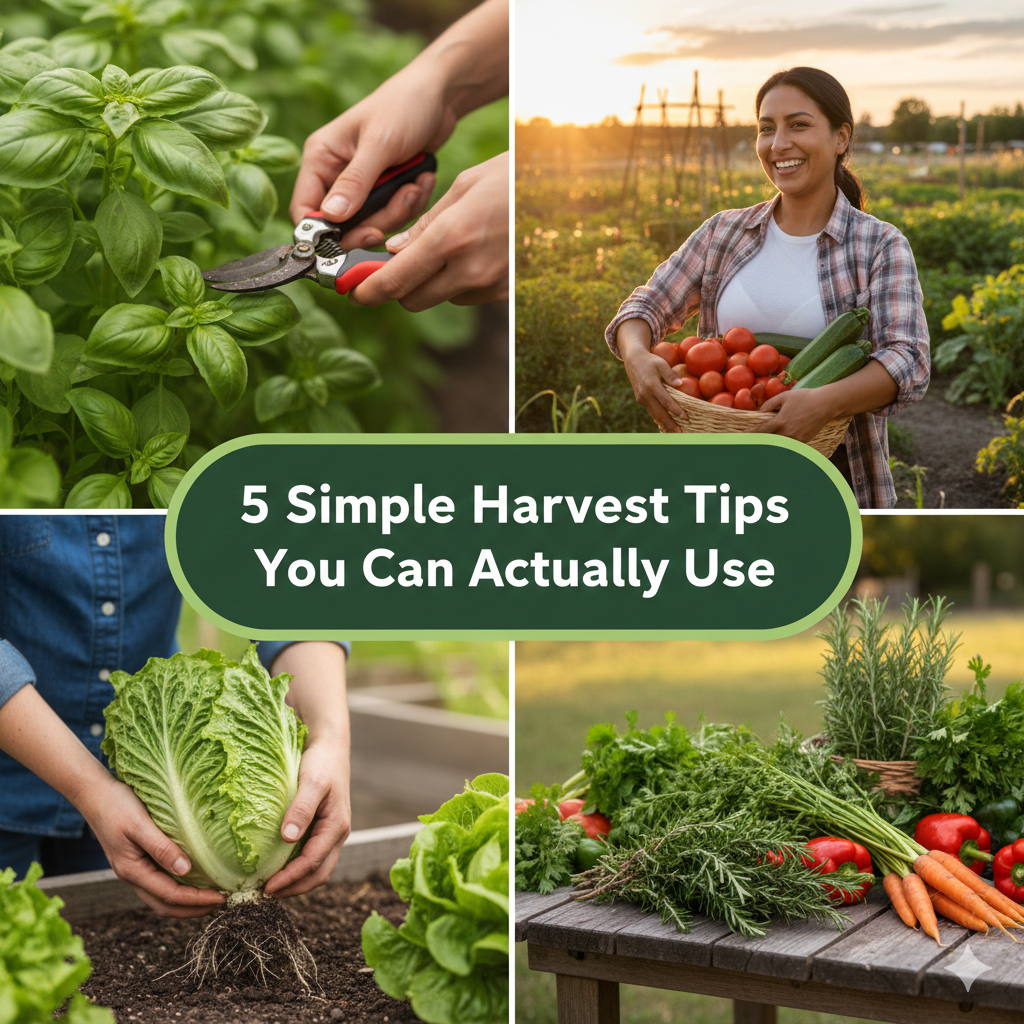
But here’s something most novices don’t think about: how you harvest is just as important as how you grow.
If you pick too early, your produce won’t have the flavor it deserves. Pick too late, and it turns mushy or tough, or flowers and goes to seed. Harvest the wrong way, and you can harm the plant so much that it will cease production entirely.
The good news? You don’t need fancy tools or expert knowledge to get the harvest right.
Whether you grow tomatoes on a balcony, lettuce in a raised bed, or zucchini in a backyard garden, these five simple harvest tips will guide you through the process of what to do.
Let’s make sure all that hard work leads to something.
The Harvest Stage Most Gardeners Overlook
Most garden advice focuses on planting, watering, and fertilizing.
Harvesting? It’s considered the easy part. Just pick it and eat it, right?
Not quite.
The harvest stage is where many gardeners — beginner or otherwise — silently lose a lot of value from their garden. They pick produce too early. They damage the plant while harvesting. They allow things to rot on the vine. Or they store their harvest wrong and watch it spoil in a few days.
Here’s a look at some simple harvest mistakes and their effect on your garden:
| Harvesting Mistake | What Happens |
|---|---|
| Pick too early | Poor flavor, hard texture, low nutrition |
| Pick too late | Mushy texture, bitter taste, plant stops producing |
| Pull instead of cut | Damages stems, stresses the plant |
| Harvest at wrong time of day | Wilting, reduced shelf life |
| Ignore overripe produce | Attracts pests and disease |
See how every mistake has a real-world cost?
The wonderful thing is that all of these are entirely avoidable with just a few simple habits.
Tip #1 — Learn What the “Ready Signs” Are for Each Plant
This is the basis for a bountiful harvest.
Each plant has its own unique set of signals that say, “I’m ready. Pick me now.”
The trouble is, many beginner gardeners guess — or they simply follow the directions on the seed packet. The dates on seed packets are estimates. They don’t take into account your local climate, your soil, or the amount of sunshine your garden actually gets.
Learning to read the plant itself is much more reliable.
What to Look For
Here’s a quick guide to ready signs for the most common crops:
| Crop | Ready Signs |
|---|---|
| Tomatoes | Fully colored (red, yellow, or orange depending on variety), give a little when squeezed |
| Zucchini | 6–8 inches long and firm — don’t wait for them to become bulging |
| Lettuce | Leaves are full and plentiful but before the center shoots up (bolts) |
| Cucumbers | Dark green, firm, about 6–8 inches long — if they’re already turning yellow, it’s too late |
| Beans (green) | Pods are firm and snap cleanly — seeds shouldn’t be protruding |
| Peppers | Can be picked green (milder) or left to fully ripen to red/yellow for sweeter flavor |
| Herbs (basil, mint) | Pick before flowers appear — flowers drop the flavor significantly |
| Strawberries | Completely red all the way up to the stem — no white at the top |
The simplest rule: When in doubt, consult the plant — not the calendar.
The Touch Test
For a lot of vegetables, your hands are the best tool.
Tomatoes, peaches, and melons all yield gently when ripe — not mushy, just a little soft. Cucumbers and zucchini should feel firm and dense. If they feel hollow or spongy, you’ve waited too long.
Make a practice of this each time you inspect your garden. After a few seasons, you’ll be able to read your plants as if they were speaking a language.
Tip #2 — Morning Harvests for Peak Freshness
This tip sounds almost too simple to matter.
It matters a lot.
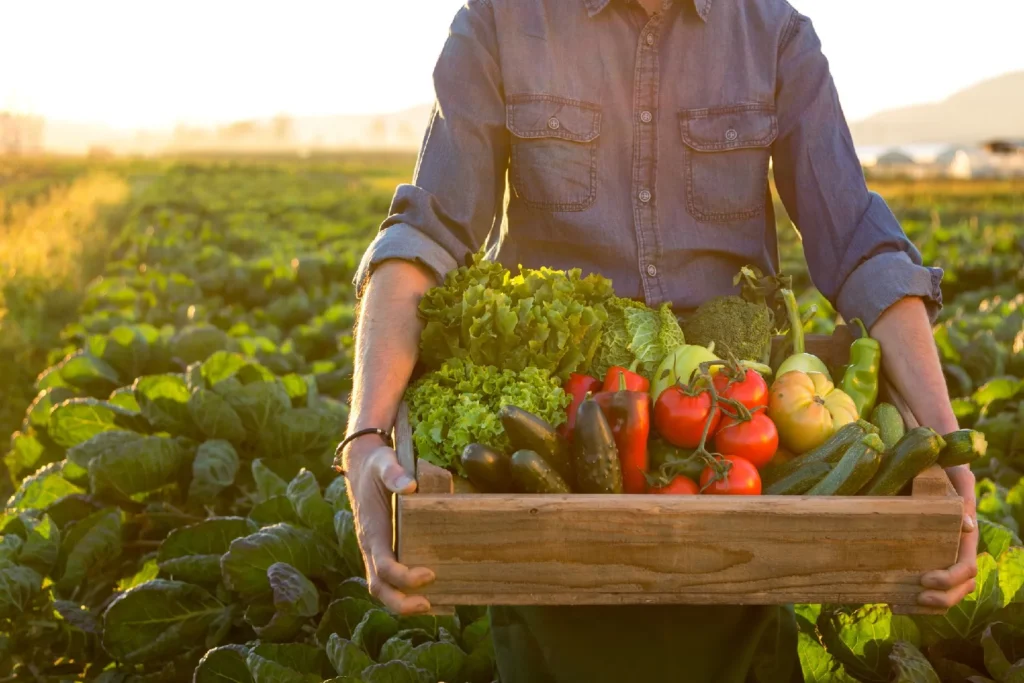
For most vegetables and herbs, the best time to harvest is in the morning after the dew has dried but before the heat of midday sets in.
Here’s why it works so well.
The Science Behind Morning Harvesting
Plants fill their cells with sugars and water overnight. By morning, those cells are firm, full, and bursting with flavor and nutrients.
As the day warms up, plants lose moisture through their leaves — a process called transpiration. By the afternoon, your lettuce is already wilting slightly, your herbs have lost some of their essential oils, and your berries are softer than they were at 8 a.m.
If you harvest in the morning, you’re getting the plant at its prime.
According to the University of California Division of Agriculture and Natural Resources, harvesting during cooler parts of the day significantly extends the post-harvest quality and shelf life of most vegetables.
| Time of Harvest | What You Get |
|---|---|
| Early morning (after dew dries) | Firm texture, peak flavor, longer shelf life |
| Midday | Slightly wilted, less crisp |
| Late afternoon / evening | Softer, more moisture loss, spoils faster |
There are a few exceptions worth mentioning:
- Tomatoes can be harvested at any time — they hold up well.
- Winter squash and pumpkins are also fine to pick later in the day since their thick skin protects them.
But for leafy greens, herbs, cucumbers, beans, and berries — morning is always better.
A Simple Morning Harvest Routine
Carry a basket or bag and walk through your garden every morning. Check for anything that’s ready. Pick it while it’s cool.
Not only does this get you the freshest produce, but it also trains you to spot trouble early — pests, disease, or over-ripening — before they have a chance to spread.
Tip #3 — Always Cut, Never Pull
This tip alone can double the lifespan of most productive plants.
When most novice harvesters pick fresh produce, they grab the fruit or vegetable and yank. It seems natural. The produce comes off. Job done.
But pulling puts huge stress on the plant. It can rip stems, loosen roots, and create open wounds that welcome disease and pests.
Cutting is almost always the right move.
Why Cutting Makes Such a Big Difference
When you cut correctly, you create a clean wound that heals up quickly. The plant maintains its structure. It can allocate its energy to creating the next round of fruits or vegetables rather than making repairs.
For plants like tomatoes, peppers, cucumbers, and squash — which are indeterminate producers (meaning they keep producing fruit all season) — this is a big deal. Every healthy cut keeps the cycle going.
Here’s what to use for different crops:
| Crop Type | Best Cutting Tool |
|---|---|
| Tomatoes, peppers | Small pruning shears or scissors |
| Cucumbers, squash | Garden knife or pruning shears |
| Lettuce (full head) | Sharp knife at the base |
| Herbs | Scissors — cut just above a leaf node |
| Beans, peas | Fingers or scissors — snap or snip cleanly |
| Strawberries | Small scissors, leave a short stem |
The Right Way to Cut
Always cut as close to the vine or stem as makes sense — leaving a short stub on the fruit side helps prevent rot on the fruit itself.
For herbs, always snip just above a leaf node (the point where two leaves branch off). This causes the plant to bush out and produce even more leaves. The more you harvest herbs this way, the fuller and more productive they become.
Clean your scissors or shears with rubbing alcohol between plants. This stops the spread of any disease from one plant to another.
Tip #4 — Regular Harvesting Keeps Plants Producing
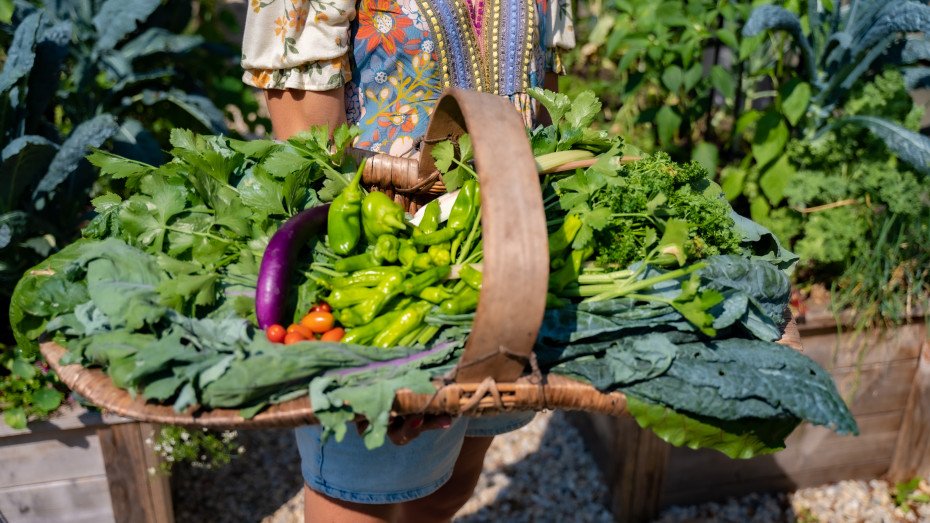
Here’s one of the most powerful — and least noticed — simple harvest tips of all.
The more you harvest, the more your plant produces.
This isn’t a gardening myth. It’s plant biology.
Most fruiting plants have one biological goal: to produce seeds and reproduce. When fruit is left on the plant to fully ripen, go to seed, or rot, the plant interprets that as “mission accomplished.” It slows down or stops producing new fruit.
But when you harvest regularly — before the plant reaches that stage — it keeps trying. It keeps pushing out new flowers, new fruit, new growth.
Plants That Respond Best to Regular Harvesting
| Plant | How Often to Harvest | What Happens If You Don’t |
|---|---|---|
| Zucchini | Every 2–3 days | Turns into a giant marrow, plant slows down |
| Beans (green) | Every 3–4 days | Pods toughen, plant stops flowering |
| Basil & herbs | Weekly | Bolts (goes to flower), flavor drops |
| Cucumbers | Every 2–3 days | Yellows and seeds mature, plant stops producing |
| Lettuce | Outer leaves weekly | Bolts and turns bitter |
| Strawberries | Every 2 days in peak season | Attracts slugs and mold |
Zucchini is the most extreme example. Leave one on the plant a week too long and it becomes a monster marrow the size of a baseball bat. Meanwhile, your plant has entirely stopped producing new ones.
During peak growing season, check your garden every 2–3 days. Don’t wait until something obviously looks ripe. Pick a little too early rather than a little too late.
The “One Overripe Fruit” Rule
Here’s a helpful rule to remember: one overripe fruit can slow down an entire plant.
Get into the habit of removing any fruit that has gone past its prime — even if you won’t eat it. Compost it. This signals the plant to keep producing and eliminates a potential home for pests and mold.
Tip #5 — Store Your Harvest the Right Way
You did everything right. You watched for ready signs. You harvested in the morning. You cut cleanly. You picked regularly.
Now don’t ruin it with poor storage.
Improper storage is where a lot of fresh produce spoils — and fast.
The main thing to know is that not everything belongs in the refrigerator. Some crops actually do better stored at room temperature, while others require cold storage right away.
The Cold vs. Room Temperature Guide
| Store at Room Temperature | Refrigerate Immediately |
|---|---|
| Tomatoes (cold kills flavor) | Leafy greens (lettuce, spinach, kale) |
| Potatoes (cold converts starch to sugar) | Berries (mold fast at room temp) |
| Onions and garlic | Beans and peas (shell same day or refrigerate) |
| Winter squash and pumpkins | Cucumbers (if cut) |
| Basil (cold blackens leaves quickly) | Broccoli and cauliflower |
Keep Moisture in Mind
Moisture is the enemy of long shelf life — in most cases.
Dry leafy greens out before putting them in the fridge. Wet greens turn slimy and rot in days. A salad spinner works great. Or simply pat them dry with a clean towel and store in a breathable bag or container with a paper towel to absorb excess moisture.
Never wash berries until you are ready to eat them. Water accelerates mold dramatically.
Root vegetables such as carrots and beets can last for months stored in damp sand or a cool, dark place — a method of storage gardeners have used for centuries.
Herbs: The Water Glass Trick
Fresh herbs like basil, cilantro, and parsley will last much longer when treated like fresh-cut flowers.
Trim the stems slightly, stand them upright in a glass of water, and keep them on your counter (or in the fridge for parsley and cilantro). Change the water every few days. This keeps herbs fresh for 1–2 weeks rather than just a few days in a plastic bag.
Putting All 5 Tips Together
Here’s a quick recap of all 5 easy harvest tips in one place:
| Tip | What to Do | Why It Matters |
|---|---|---|
| #1 Learn Ready Signs | Read the plant, not the calendar | Pick at peak flavor and nutrition |
| #2 Harvest in the Morning | After dew dries, before heat builds | Firmer texture, better flavor, longer shelf life |
| #3 Cut, Don’t Pull | Use clean scissors or shears | Protects the plant, extends its productive life |
| #4 Harvest Regularly | Every 2–3 days for fast producers | Signals plant to keep producing |
| #5 Store Correctly | Cold vs. room temp based on crop type | Prevents waste, keeps produce fresh longer |
None of these tips are especially complicated. They don’t require expensive equipment. They simply need a bit of awareness and consistency.
A Note for Balcony and Small-Space Gardeners
For those of you gardening on a small scale — containers, raised beds, or a balcony setup — these harvest tips matter even more.
In a limited space, every plant has to perform. You can’t afford to let a zucchini go to seed or lose an entire container of basil to bolting. Small-space gardeners who harvest regularly and correctly get dramatically more food from the same small footprint.
For container or balcony growing beginners, a resource like Small Balcony Garden can offer practical tips on how to grow more food in less space — and harvest it properly too.
Frequently Asked Questions
How do I know if I harvested a vegetable too soon?
The most obvious indicator is flavor — produce harvested too soon tends to taste bland, watery, or starchy. The texture might also be tougher or woodier than expected. The upside: it won’t hurt you, and you’ll know better next time. Compare what you picked against the ready signs described earlier.
Can I harvest in the evening if mornings don’t work for me?
Evening is better than midday, but not as good as morning. By evening, plants have already lost moisture throughout the day. Evening-harvested crops won’t hold as long in storage, particularly leafy greens and herbs. If morning isn’t possible, aim for early evening when the temperature starts to cool down again.
What should I do with produce I can’t eat right away?
Freeze it, pickle it, or share it. Most vegetables can be blanched (briefly boiled, then cooled in an ice bath) and frozen for months. Tomatoes can be made into sauce or passata. Herbs can be dried, frozen in olive oil in ice cube trays, or turned into pesto. Don’t let a big harvest go to waste — there’s almost always a preservation option.
Why does my zucchini keep getting huge before I notice it?
Zucchini hides under large leaves and grows incredibly fast — sometimes 1–2 inches per day at peak season. You need to physically move the leaves and check underneath every 2–3 days. Once you miss one, it balloons quickly. The big ones are still edible — perfect for zucchini bread — but the plant will slow down, so remove them promptly.
Do I need special tools to harvest?
Not really. A good clean pair of scissors or small pruning shears handles most garden harvesting tasks well. For root vegetables, a garden fork helps loosen the soil without damaging the roots. A basket or bag for collecting produce rounds it out. Keep your tools clean and dry after each use to prevent rust and the spread of disease.
My herbs keep flowering. What am I doing wrong?
Herbs bolt (flower) when they’re too hot, too dry, or not harvested regularly enough. Once a herb flowers, the flavor in the leaves drops significantly. Prevention is the best cure — harvest weekly and pinch off any flower buds as soon as you see them. For basil especially, pinching flower buds redirects the plant’s energy back into leafy growth.
Is it okay to harvest in the rain?
It’s best to avoid harvesting during or right after heavy rain. Wet conditions leave plants more susceptible to disease, and handling wet stems can bruise them or introduce bacteria. If you must harvest in wet weather, get it done quickly and dry the produce as soon as possible before storage.
The Garden Does Deserve a Great Harvest
All those early mornings watering. All those weekends weeding. All that patience watching seedlings sprout.
You put in the work. The harvest is your reward.
These 5 simple harvest tips are here to make sure you truly get to enjoy that reward — with the most flavorful, longest-lasting produce from a plant that keeps on giving all season long.
You don’t need to be a master gardener. You just need to be consistent.
Watch your plants. Pick in the morning. Cut — don’t pull. Harvest often. Store smart.
Do those five things, and your garden will reward you with more flavor, more produce, and more satisfaction than you ever imagined was possible from a patch of soil and a few tiny seeds.
Happy harvesting.