You should be growing your own food. But you have no idea how to begin.
Perhaps you’ve attempted before, only to see it all wither. Perhaps you’re looking at a patch of soil — or even just an individual pot on a balcony — wondering if it’s worth the effort.
Here’s the secret: most people fail at gardening not because they aren’t good at it. They fail because they started with the wrong crops.
Pick the right plants from day one, and growing your own food is one of the most rewarding things you will ever do. Pick the wrong ones, and you’ll find yourself months into your journey banging your head against a wall, before ultimately giving up.
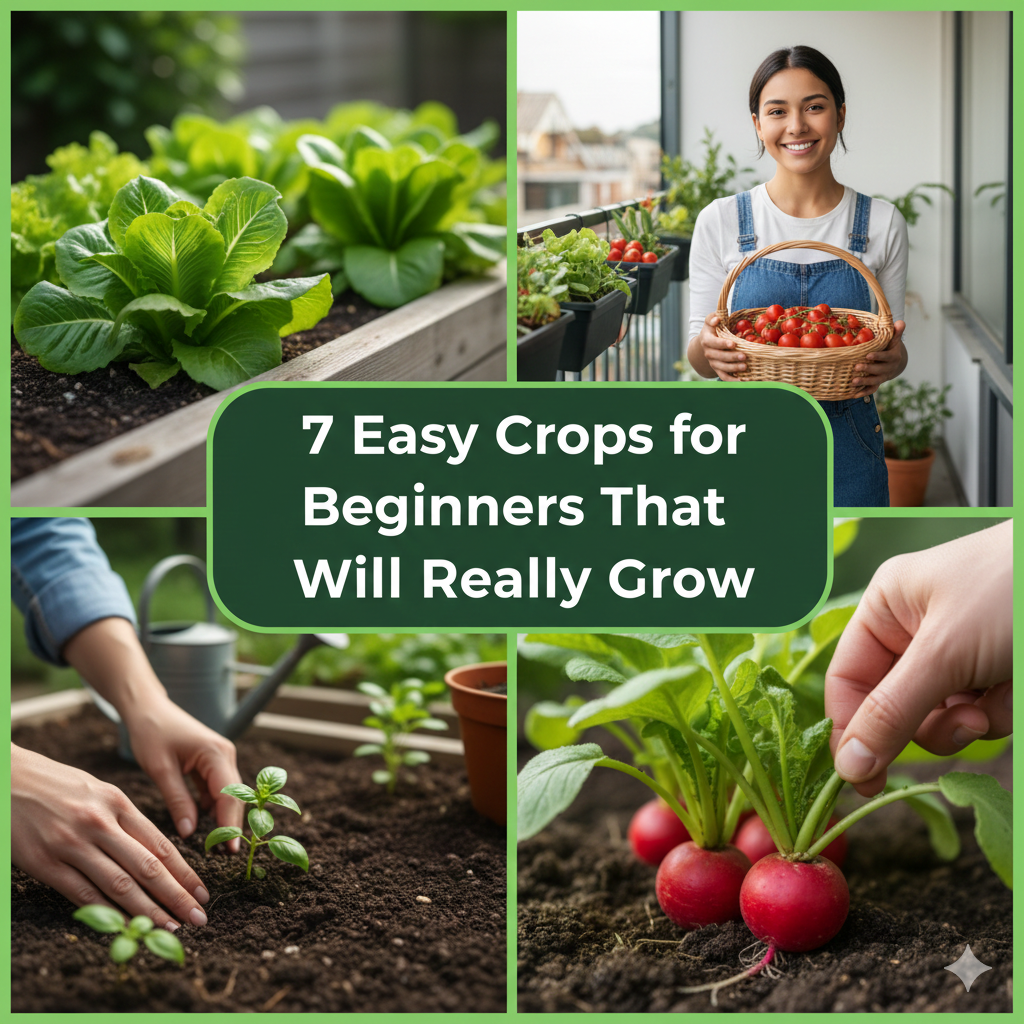
This guide is framed around 7 easy crops for beginners — forgiving, fast-growing, and genuinely rewarding plants. They were selected because each does not require perfection. It simply requires some attention and the appropriate initial conditions.
Let’s grow something.
Why It Matters Which Crop You Pick First
All plants are not created equal.
Some crops — celery, cauliflower or watermelon, for instance — are notoriously persnickety. They require exact temperatures, ideal soil conditions and careful timing. As a beginner, they’re a recipe for disappointment.
These 7 easy crops described in this guide are the complete opposite. They’re resilient. They bounce back from mistakes. You see progress quickly with them, and that keeps you motivated.
So, what makes a crop “beginner-friendly”?
| Feature | Why It Works for Beginners |
|---|---|
| Quick germination | You see results quickly and stay motivated |
| Tolerates erratic watering | Forgives the occasional missed day |
| Few pest problems | Less monitoring and intervening needed |
| Grows in container or ground | Works for any space — garden or balcony |
| Little pruning or training needed | Less technical skill required |
| Short growing season | Harvest sooner, learn faster |
Keep those features in mind as you scan the list. You’ll understand precisely why each crop deserves its place.
Crop #1 — Radishes: The Quickest Victory in the Garden
If you’ve never grown anything, grow radishes.
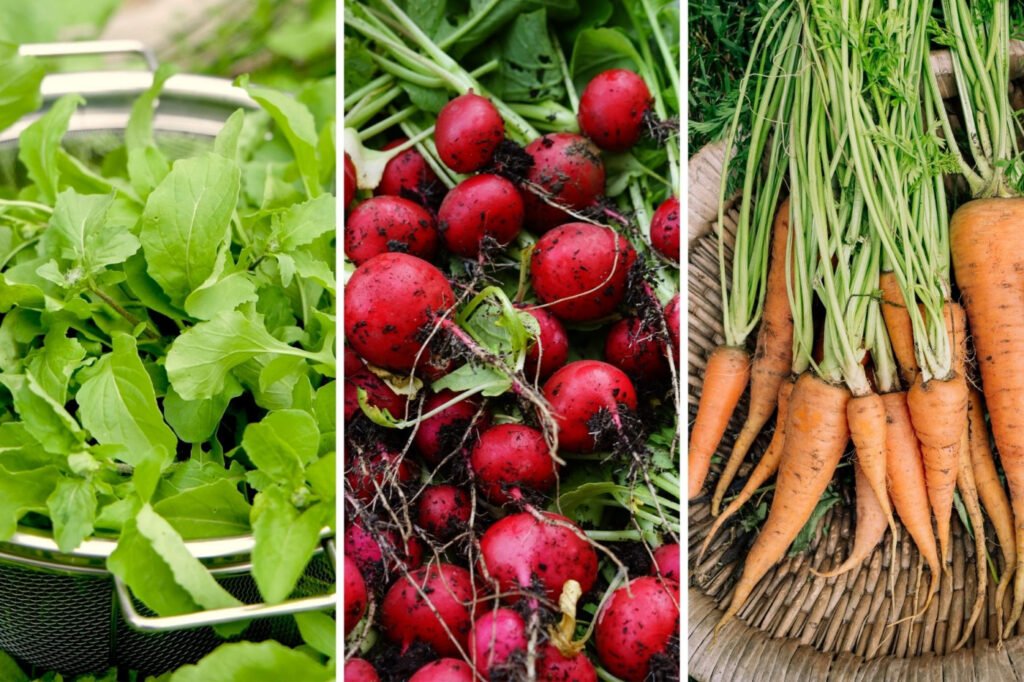
They can go from seed to harvest in as little as 3 to 4 weeks. That’s not a typo. Most vegetables require months of waiting — with radishes you won’t even feel like you’ve been waiting.
What Makes Radishes Ideal for Beginners
Radishes thrive in almost every soil. They do not require rich compost or perfect drainage. They’re one of the rare crops that really love to be a little bit neglected.
They also perform beautifully in containers, raised beds or right in the ground.
How to grow radishes:
- Plant seeds directly into the ground ½ inch deep.
- Plant them 2 inches apart in rows spaced 6 inches apart.
- Water frequently but don’t overdo it — waterlogged soil splits the fruit.
- Harvest when the tops of the radishes pop up out of the soil and appear full and round.
No-Fuss Bonus: Sow a short row every two weeks for all-season, small-batch harvests. Gardeners call this “succession planting.”
Radishes do double duty as well — the leaves are edible. Add young radish greens to salads for a peppery bite.
Crop #2 — Lettuce: One-Time Plant, Weeks of Harvest
Lettuce is one of the easiest crops in the world to grow — and one of the most practical.
Consider how often you buy lettuce at the grocery store. Now imagine snipping fresh leaves right out of your own garden instead. Lettuce grows rapidly, uses virtually no space and can be harvested multiple times from the same plant.
The Cut-and-Come-Again Method
The secret to maximizing your lettuce is something called cut-and-come-again harvesting. Instead of uprooting the entire plant, you cut off the outer leaves and leave the center intact. It just keeps growing and sprouting new leaves for weeks — sometimes months.
How to grow lettuce:
- Scatter seeds thinly on moist soil and cover with a very thin layer of compost.
- Keep the soil consistently moist — lettuce hates drying out.
- Once they’re a few inches tall, thin seedlings to about 6 to 8 inches apart.
- Start harvesting outer leaves when the plant is 4 to 6 inches tall.
Lettuce prefers cooler weather. It’s a good grower for spring and autumn. In summer’s heat, it bolts (produces seeds and turns bitter) quickly — so be sure to time your planting accordingly.
Best lettuce varieties for beginners:
- Butterhead — tender, mild leaves, slow to bolt
- Loose-leaf — quickest to grow, easiest to pick
- Romaine — crunchy, upright, relatively heat-tolerant
Crop #3 — Green Beans: Massive Yields With Virtually No Labor
Green beans are one of those crops that keep on coming. You plant them, water them a little and they will reward you with armloads of beans for weeks.
They’re also among the easiest easy crops to direct sow — which means you put the seed right in the ground where it will grow, without having to fuss over seed trays or transplanting.
Bush Beans or Pole Beans: Which Should You Grow?
There are two basic varieties of green bean, and the choice makes a difference for beginners.
| Type | Growth Habit | Support Needed? | Best For |
|---|---|---|---|
| Bush beans | Compact, 1–2 ft tall | No | Containers and small beds |
| Pole beans | Climbing, 5–8 ft tall | Yes (trellis/cane) | Larger gardens, vertical growing |
Bush beans are the easier starting point. They require no staking or trellising, they all mature at the same time (excellent for a bumper crop), and they’re finished growing in 50 to 60 days.
How to grow green beans:
- Plant seeds 1 inch deep, 3 inches apart in rows 18 inches apart.
- Water at the base — wet foliage can promote disease.
- Don’t over-fertilize with nitrogen. It promotes leafy growth rather than beans.
- Harvest when pods are firm and bright green, about the thickness of a pencil.
Pick beans regularly. The more you harvest, the more the plant produces. If you leave pods on too long, the plant won’t produce new ones.
Crop #4 — Courgettes (Zucchini): One Plant Feeds a Family
Fair warning: courgettes are prolific.
You can plant one or two courgette plants and by midsummer have more than you know what to do with. They’re fast-growing, low-effort and yield an almost ridiculous amount of food for the effort involved.
How to Keep Courgettes in Check (and Tasty)
The most common mistake novice gardeners make with courgettes is leaving them too long on the plant. A courgette allowed to grow becomes a marrow — woody, watery and far less flavourful.
Pick courgettes at 15 to 20 cm (6 to 8 inches) long. At that size, they are tender, flavourful and at their best.
How to grow courgettes:
- Start seeds indoors 3 to 4 weeks before the last frost, or sow directly outside when all risk of frost has passed.
- Set in a sunny site with rich, well-drained soil.
- Space plants at least 90 cm (3 feet) apart — they spread as they grow.
- Water deeply at the base, particularly during dry spells.
- Fertilize every two weeks with a general-purpose fertilizer once flowers appear.
Pollination Note: Courgettes have male and female flowers. This will give you flowers but no fruits early in the season. It’s normal — give it time, and pollinators will work their magic.
Courgettes are great in containers too, so long as you go for a compact variety such as ‘Patio Star’ or ‘Bush Baby.’
Crop #5 — Herbs: Big Taste, Small Space
Herbs are the underrated champions of newbie gardening.
They’re small. They’re fast. They are used in the kitchen every single day. And most of them are just extremely forgiving. Many herbs spring right back even if you forget to water for a few days.
4 Easiest Herbs for Complete Beginners
Basil reigns supreme in summer herb gardens. It thrives in warmth and sunshine and is fast-growing from seed. Pick off flower buds as soon as they develop to keep the plant bushy and prolific. Basil and tomatoes are beautiful companions — in the garden and on the plate.
Mint is nearly indestructible. In fact, the greater challenge with mint is controlling it — it spreads aggressively through underground runners. Grow mint in a pot to prevent it taking over your garden.
Chives are among the easiest of all plants to care for. Once you plant them, they’ll return year after year. Snip the leaves as needed. The purple flowers are edible as well and look pretty in salads.
Parsley requires some patience — it can take a while to germinate (up to three weeks) — but once established, it’s a workhorse. It tolerates some shade, so it’s good for shadier spots.
| Herb | Sunlight Needed | Watering | Container-Friendly? | Regrows After Cutting? |
|---|---|---|---|---|
| Basil | Full sun | Regular | Yes | Yes |
| Mint | Partial to full sun | Moderate | Yes (essential) | Yes |
| Chives | Full sun | Low | Yes | Yes |
| Parsley | Partial shade OK | Moderate | Yes | Yes |
You don’t need a big garden for herbs. A sunny windowsill, a small balcony, or even just a row of pots on the patio is more than adequate. For creative ideas on growing herbs and edibles in tight outdoor spaces, Small Balcony Garden is a fantastic resource packed with practical inspiration.
Crop #6 — Tomatoes: The Crop Beginner Gardeners All Grow Eventually
Tomatoes aren’t the most accessible crop on this list — but they’re too rewarding not to include.
There’s something uniquely wonderful about plucking a sun-ripened, warm tomato from the vine and eating it there and then. No shop-bought tomato comes close. Which, alone, makes tomatoes worth every ounce of work.
A Word on Tomato Varieties: The Right One Makes Everything Easier
The single most common mistake beginner gardeners make with tomatoes is picking the wrong variety.
Some big beefsteak and heirloom types can be challenging — they require tons of support, special feeding and are picky about where they grow.
Cherry tomatoes are the best friend of beginners. Varieties such as ‘Tumbling Tom’, ‘Sweet Million’ and ‘Sun Gold’ are small, highly productive and much more forgiving than their heftier siblings.
How to grow tomatoes:
- Start seeds indoors 6 to 8 weeks before the last frost date.
- Transplant outdoors when nighttime temperatures remain above 10°C (50°F).
- Position plants in full sun — tomatoes require 6 to 8 hours of direct sunlight daily.
- Water consistently and deeply. Irregular watering can lead to problems such as blossom end rot and cracked skin.
- Fertilize weekly with a fertilizer designed for tomatoes from when the first flowers appear.
- Pinch out “side shoots” — the little shoots that grow up between the main stem and branches — on cordon varieties, to direct energy into producing fruit.
Container Pick: ‘Tumbling Tom’ is great for hanging baskets and pots. It tumbles over the sides, produces loads of cherry tomatoes and requires very little support.
According to the Royal Horticultural Society’s guide to growing tomatoes, consistent watering and a sunny, sheltered spot are the two most important factors for a successful crop — making cherry varieties the ideal low-fuss choice for first-time growers.
Crop #7 — Peas: Sweet, Satisfying and Surprisingly Easy
Peas are among the earliest domesticated crops in human history — and with good reason.
They’re sweet, they’re productive, they grow quickly and they also improve your soil as they grow. Peas, like all legumes, fix nitrogen from the air into the soil — giving your garden a natural fertilizer for the next crop.
Why Peas Are Perfect for Beginners in Spring
Peas are a cool-season crop. They don’t require warm weather like tomatoes or courgettes do. You can start them as early as February or March (depending on your climate), which gives you a head start on the growing season.
They also grow vertically, so they’re great for small spaces. A single row of peas climbing a plain trellis of sticks and string takes virtually no horizontal ground space at all.
How to grow peas:
- Plant seeds directly in the soil 2 inches deep, 3 inches apart.
- Establish a rudimentary support system — pea sticks, bamboo canes or a wire mesh — before the plants become too tall.
- Water regularly during flowering and pod development.
- Harvest pods while they are still plump and full, but before they get too large and starchy.
Taste Test Trick: Open a pod and eat a raw pea directly from the garden. If it’s sweet and tender, it’s ready. If it’s starchy and floury, you waited too long.
Peas are also a great children’s crop — they mature quickly, the pods are fun to pick and eating peas right out of the garden is legitimately thrilling for young growers.
Your First Season Growing Plan
So you have 7 easy crops — but how do you even start?
Here’s a straightforward starter plan that takes the season into account:
| Season | Best Crops to Sow |
|---|---|
| Early Spring (Feb–Mar) | Peas, lettuce, radishes |
| Late Spring (Apr–May) | Green beans, herbs, courgettes |
| Early Summer (May–Jun) | Tomatoes (transplant out), courgettes, beans |
| Autumn | Lettuce, radishes, herbs (indoors) |
Don’t try to grow all 7 in your first season. Pick 2 or 3. Get comfortable. Find out what your soil and space need. Then expand the following year.
Even a single pot of herbs on a windowsill is a victory.
Typical Errors Made by Beginners (And How to Avoid Them)
Every new gardener makes mistakes. Here are the most common ones — so you don’t have to learn them the hard way.
Overwatering is the biggest killer of beginner plants. More plants die from overwatering than underwatering. Check the soil before watering — stick your finger an inch into the soil. If it’s still wet, give it another day.
Planting too close together is another common mistake. Plants need room for air movement, root growth and light access. Always adhere to the spacing instructions on your seed packet.
Not hardening off seedlings before planting them outdoors causes shock and wilting. If you’ve started seeds indoors, take them outside for a few hours each day for a week before placing them in the ground permanently.
Planting too early — particularly with warm-season crops such as tomatoes and courgettes — results in stunted plants. Frost will kill your seedlings overnight. Patience pays off.
Frequently Asked Questions
Q1: What is the easiest crop to grow for a complete beginner? Radishes are the easiest of all easy crops for beginners. They will grow in almost any soil, germinate in days, and are ready to harvest in 3 to 4 weeks. They are the ideal first crop to boost confidence.
Q2: Can I grow these crops in containers or pots? Yes, absolutely. Lettuce, radishes, herbs, cherry tomatoes and dwarf varieties of green beans and peas are all strong container growers. Use a good quality potting compost, make sure your pots have drainage holes, and water more often than you would in the ground.
Q3: How much sun do I need to grow vegetables? Most vegetables need at least 6 hours of direct sunlight each day. If your space gets only some sunlight, limit planting to lettuce, parsley and chives — they do better than most crops in partial shade.
Q4: Do I need to purchase special compost or soil? For containers, yes — just buy a general-purpose potting compost. For growing in the ground, dig in home-made or bought compost before planting to improve drainage and nutrient levels. You don’t need anything fancy.
Q5: How do I know when to water my crops? The finger test is the best method. Insert your index finger about an inch into the soil. If it feels dry, water. If it still feels damp, wait. For most of these crops, overwatering is more harmful than underwatering.
Q6: Is it possible to grow vegetables on a balcony? Definitely. Radishes, lettuce, herbs, cherry tomatoes and dwarf green beans are all excellent balcony crops. Choose deep pots (at least 30 cm deep for most crops), water regularly — containers dry out much quicker than soil does — and place your pots where they will get the most sunlight.
Q7: Do I need to feed my plants? Yes, particularly for plants grown in containers. The nutrients in compost deplete over time or get washed away. Feed regularly with a general-purpose liquid fertilizer every two weeks, or switch to a tomato feed once fruiting crops start flowering.
The Bottom Line
You don’t need a large garden, years of experience or specialty equipment to grow food for yourself.
You just have to select the right crops, be patient and learn as you go.
These 7 easy crops for beginners — radishes, lettuce, green beans, courgettes, herbs, tomatoes and peas — were chosen because they work with real beginners under real circumstances. They’re forgiving. They’re rewarding. And each and every one will teach you something useful about the way plants grow.
Start with just one crop this season. Get your hands dirty. Make the mistakes — that’s part of it.
By the end of your first season, you’ll have done more than grow food. You’ll have grown confidence.
And that’s the harvest that keeps on giving every year.
Focus Keyword: Easy Crops for Beginners | Word Count: ~2,600 words