Whether you’re growing tomatoes in your backyard or tending succulents on a windowsill, one thing is always true — your plants are only as good as the soil they grow in.
Many novice gardeners obsess over watering schedules or sunlight. But experienced growers know the true secret is underground. The right soil combination can be the difference between a plant barely making it and one that absolutely flourishes.
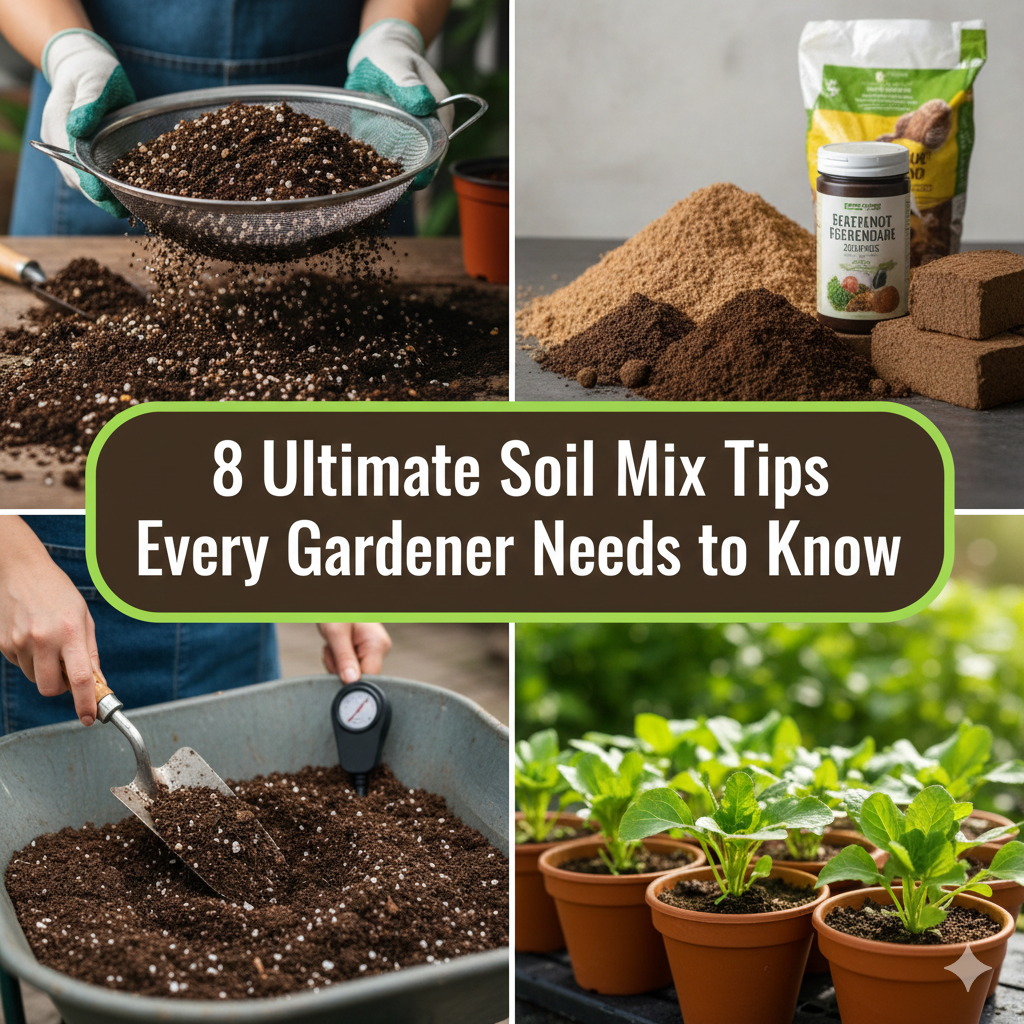
These 8 ultimate soil mix tips are practical, proven, and easy to apply. No complicated science. No expensive equipment. All practical advice you can implement immediately.
Let’s dig in.
Why Your Soil Mix Matters More Than You May Think
Before we get into the tips, let’s take a moment to discuss why soil mix is such a big deal.
Plants obtain nearly all of what they need from the soil — water, nutrients, oxygen, and root support. If any one of these is wrong, the plant starts to suffer.
A poor soil mix might:
- Store so much water it smothers the roots
- Drain too quickly and deprive the plant of moisture
- Pack too tight and block air from reaching the roots
- Lack the nutrients plants need to grow healthy
A good soil mix addresses every one of these issues at once. That’s the goal. And these 8 tips will help get you there.
Tip 1 — Know Your Plant Before You Mix Anything
That may sound simple, but it is by far the most crucial step of all. Different plants need different soil.
A cactus and a fern can both take root in soil, yet thrive in entirely opposing conditions. A cactus needs dry, sandy, fast-draining soil. A fern likes damp, rich, loamy soil. Give them the same mixture and one will die.
Match the Plant Type to the Mix
Here’s a handy reference table:
| Plant Type | Ideal Soil Traits | Key Ingredients |
|---|---|---|
| Succulents & Cacti | Fast-draining, dry | Coarse sand, perlite, grit |
| Vegetables | Rich, moist, well-draining | Compost, loam, perlite |
| Tropical Houseplants | Moisture-retaining, airy | Peat or coco coir, bark |
| Herbs | Light, well-draining | Loam, sand, compost |
| Ferns & Moisture Lovers | Consistently moist | Peat, compost, fine bark |
| Roses | Rich, slightly acidic | Loam, compost, grit |
Don’t buy a single bag of potting mix without looking up what your specific plant likes. That one step could save you hours of frustration.
Tip 2 — Stop Using Garden Soil in Pots
One of the most common mistakes new gardeners make is this one. They pick up soil from the garden bed and fill their pots with it.
Seems logical, right? The plants growing in that garden are doing just fine.
Here’s the problem. Garden soil packs hard when put into a container. It squeezes the roots. It blocks airflow. And it doesn’t drain well, which can cause root rot.
What to Use Instead
Use a dedicated potting mix for containers and raised beds, or blend your own soil mix. Here’s a simple general-purpose container mix:
- 40% compost — adds nutrients
- 30% perlite or vermiculite — improves drainage and airflow
- 30% coco coir or peat moss — holds the right amount of moisture
This mix is lightweight, well-draining, and allows roots to breathe.
If you’re growing in a raised bed, you can mix in some garden soil — but only as a minor ingredient, not the main one.
💡 If you’re working with limited space, check out Small Balcony Garden for smart container gardening ideas that make the most of every square foot.
Tip 3 — Add Perlite for Better Drainage Every Single Time
Perlite is arguably the most useful soil amendment you can have.
Perlite is a white, lightweight volcanic material. It resembles tiny foam beads. And it does something no other ingredient does quite as well — it creates air pockets in the soil.
Those air pockets prevent compaction, improve drainage, and give roots the oxygen they need to grow strong.
How Much Perlite Should You Add?
| Plant Type | Recommended Perlite Ratio |
|---|---|
| Succulents & Cacti | 50% perlite |
| Vegetables | 20–25% perlite |
| Tropical plants | 15–20% perlite |
| Orchids | 30–40% perlite |
| Herbs | 20–30% perlite |
Twenty percent perlite is a good starting point for most plants. If the soil still feels heavy or wet after watering, add more the next time you repot.
Tip 4 — Compost Is Your Secret Weapon for Nutrient-Rich Soil
Fertilizers get a lot of attention. But there is no substitute for the slow, steady nutrition that compost provides.
Compost is decomposed organic matter — food scraps, leaves, grass clippings, and the like. As it breaks down, it releases a broad spectrum of nutrients into the soil. It also improves soil structure and feeds the beneficial microbes that help plants absorb those nutrients.
How to Use Compost Correctly
- In garden beds, mix in 2–4 inches of compost every season
- For potting mixes, compost should make up 30–40% of the total blend
- Use aged or finished compost, not fresh — fresh compost can burn plant roots
- Store-bought compost works just as well as homemade — just check for quality
One important note: compost is not a complete soil mix on its own. It holds too much moisture and can compact. Always combine it with other ingredients like perlite or coco coir.
Tip 5 — Test Your Soil pH Before You Plant
Here’s a tip that many gardeners skip — and then wonder why their plants aren’t thriving even in good-looking soil.
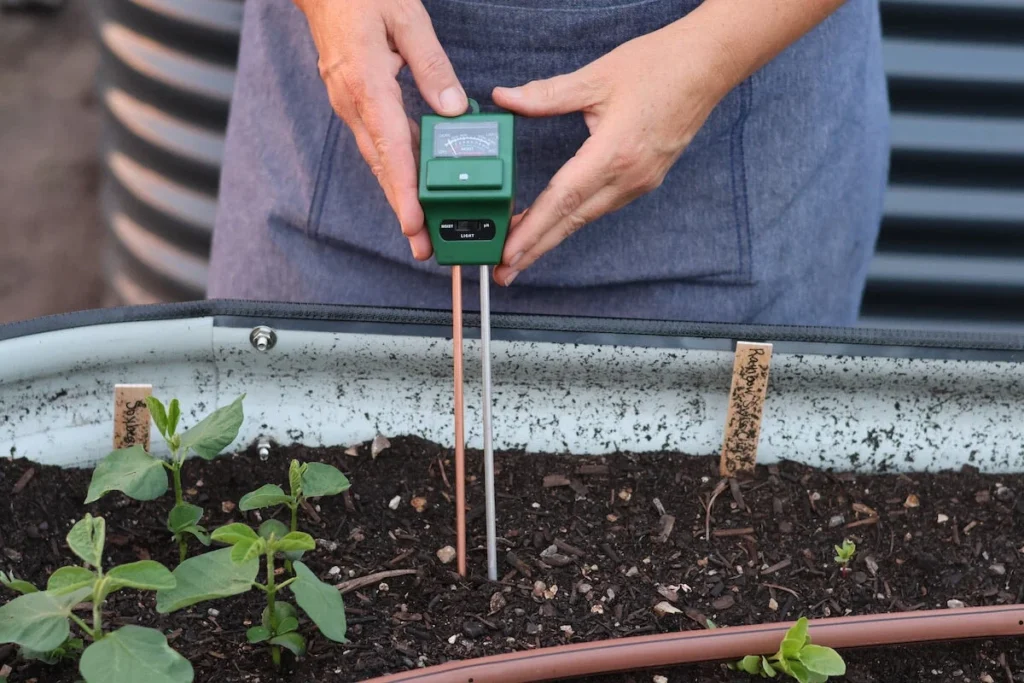
Soil pH measures how acidic or alkaline your soil is on a scale from 0 to 14. A pH of 7 is neutral. Below 7 is acidic. Above 7 is alkaline.
Most plants grow best in slightly acidic to neutral soil, around pH 6.0 to 7.0. But some plants have very specific needs.
pH Preferences by Plant Type
| Plant | Preferred pH Range |
|---|---|
| Blueberries | 4.5 – 5.5 |
| Roses | 6.0 – 6.5 |
| Tomatoes | 6.0 – 6.8 |
| Lavender | 6.5 – 7.5 |
| Azaleas | 4.5 – 5.5 |
| Most Vegetables | 6.0 – 7.0 |
How to Adjust pH
- To lower pH (make more acidic): Add sulfur, peat moss, or pine bark
- To raise pH (make more alkaline): Add agricultural lime or wood ash
Inexpensive pH test kits can be found at any garden center. Test before you plant — not after something goes wrong.
🔗 For a deeper look at soil pH and how it affects plant health, the Royal Horticultural Society’s guide to soil pH is an excellent resource.
Tip 6 — Coco Coir Is the Smarter Alternative to Peat Moss
Peat moss was the go-to moisture-retaining ingredient in soil mixes for years. It works great. But it has a significant downside — harvesting it damages fragile bog ecosystems and contributes to carbon release.
The eco-friendly replacement is coco coir. It’s made from the fibers of coconut husks — a byproduct that would otherwise go to waste.
Coco Coir vs. Peat Moss — Side by Side
| Feature | Coco Coir | Peat Moss |
|---|---|---|
| Sustainability | Eco-friendly | Environmentally harmful |
| pH | Neutral (6.0–6.7) | Acidic (3.5–4.5) |
| Water Retention | Good | Excellent |
| Reusability | Can be reused | Breaks down faster |
| Cost | Comparable | Comparable |
| Texture | Fluffy, fibrous | Dense, spongy |
Coco coir doesn’t change your soil’s pH the way peat does, making it easier to use across a wider range of plants. For most gardeners, coco coir is the better choice.
Tip 7 — Layer Your Soil Mix — Don’t Just Dump and Stir
This tip is less about ingredients and more about technique — and it makes a surprisingly big difference.
When creating a custom soil mix, the order and method of combining ingredients matters. If you just dump everything in and give it a quick stir, some areas will be dense with compost while others are pure perlite. Your mix ends up uneven, and your plants pay the price.
The Right Way to Mix Soil
- Start with your largest volume ingredient — usually compost or potting mix
- Add perlite or sand next — spread it evenly across the top
- Add any specialty ingredients — bark chips, coco coir, or fertilizer
- Mix thoroughly with your hands, a trowel, or in a large container
- Add water gradually as you mix — this helps everything blend evenly and settles the mix
- Let it sit for 10–15 minutes before using — especially if you added fertilizer or lime
If you’re making large batches, use a wheelbarrow or a big plastic storage bin. Mix in sections if needed. A consistent mix leads to consistent growth across all your plants.
Tip 8 — Refresh Your Soil Mix Every Growing Season
Soil doesn’t last forever. It breaks down, compacts, and loses nutrients over time. What worked beautifully in spring may be doing your plants a disservice by the following year.
This tip is especially important for container gardeners, since potted plants have limited soil to work with and can exhaust it much faster than plants growing in open ground.
Signs Your Soil Mix Needs Refreshing
- Water pools on the surface instead of soaking in
- The soil looks gray, crusty, or hydrophobic (repels water)
- Plants seem stunted despite regular fertilizing
- Roots are circling the pot or visibly overgrown
- The soil has dropped significantly from the top of the pot
How to Refresh Your Soil Mix
You don’t need to replace the entire mix every time. Here’s a smart refresh approach:
- Remove the top 2–3 inches of old soil from containers
- Mix in fresh compost and perlite to replace what was removed
- Add a slow-release fertilizer to replenish lost nutrients
- For raised beds, top-dress with 1–2 inches of compost each season
- For containers, do a full soil replacement every 1–2 years
Think of it like changing the oil in a car. Fresh soil makes the plant run better.
The Perfect Soil Mix Formula (For Most Plants)
Here’s a general-purpose soil mix formula that works well for vegetables, herbs, and most flowering plants:
🌱 All-Purpose Soil Mix Formula

40% Compost
30% Perlite or Coarse Sand
20% Coco Coir or Peat Moss
10% Topsoil or Loam

Optional Additions:
+ Worm castings (5%) for an extra boost of nutrients
+ Slow-release fertilizer granules
+ Mycorrhizal fungi powder (helps roots grow stronger)
Adjust ratios based on the plant type and drainage needs. Use the tables throughout this article to guide your decisions.
Bonus Section — Common Soil Mix Mistakes to Avoid
Even experienced gardeners make these errors. Keep them in mind as you build your ideal soil mix.
Mistake 1 — Using only one ingredient. Pure compost, pure perlite, or pure coco coir alone won’t cut it. A balanced mix of ingredients is always better.
Mistake 2 — Over-watering to “compensate” for bad soil. If your soil mix drains poorly, more water just makes it worse. Fix the mix first.
Mistake 3 — Ignoring soil for established plants. Just because a plant has been growing for a few years doesn’t mean it doesn’t need fresh soil. Refresh it regularly.
Mistake 4 — Adding sand to clay soil without other amendments. Sand + clay = concrete-like soil. Always add organic matter too.
Mistake 5 — Reusing diseased or pest-infested soil. If a plant died from disease, don’t reuse that soil. Start fresh to avoid spreading problems.
FAQs About Soil Mix Tips
Q1: What soil mix is best for beginners? A good starter mix would be 40% compost, 30% perlite, and 30% coco coir, which works well for most potted plants and vegetables. It’s simple, inexpensive, and forgiving.
Q2: Can I make my own soil mix at home? Absolutely. You can purchase compost, perlite, and coco coir at most garden stores and mix them yourself. Homemade mixes are often better than store-bought because you can adjust them to fit the needs of your specific plants.
Q3: How often should I replace the soil in my plant pots? For most container plants, a partial refresh every 6–12 months and a full replacement every 1–2 years. Signs include compaction, poor drainage, or stunted growth.
Q4: What is the difference between potting mix and potting soil? Not always the same thing. Potting mix is often soil-less — it’s a combination of perlite, coco coir, bark, and compost. Potting soil may contain real dirt. Both can work, but check the label.
Q5: Should I add fertilizer to my soil mix? If you’re using compost, it provides some nutrients naturally. But adding a slow-release granular fertilizer at planting time is a smart move, especially for heavy feeders like tomatoes or roses.
Q6: How can I improve poor garden soil quickly? Top-dress with 2–4 inches of compost and work it into the top 6 inches of soil. Add perlite if drainage is an issue. Test and adjust the pH. Repeat every season and your soil will greatly improve over time.
Q7: Is perlite safe for all plants? Yes. Perlite is non-toxic and pH-neutral. It’s safe for all types of plants, including edibles. Just don’t breathe in the dust while handling it — wear a mask if you’re mixing large amounts.
Wrapping It All Up
Great soil isn’t complicated. You need a little know-how and the right mix of ingredients.
To sum it all up — the 8 ultimate soil mix tips:
- Know your plant before mixing anything
- Stop using garden soil in containers
- Always add perlite for drainage
- Use compost as your nutritional foundation
- Test and adjust your soil pH
- Swap peat moss for coco coir when you can
- Layer and blend your mix properly
- Refresh your soil every growing season
Use even two or three of these tips and you’ll see a real difference in how your plants look and grow. Apply all eight and your garden will reward you in ways you didn’t expect.
Healthy plants start literally from the ground up. Get your soil mix right, and everything else gets a whole lot easier.
Happy growing.