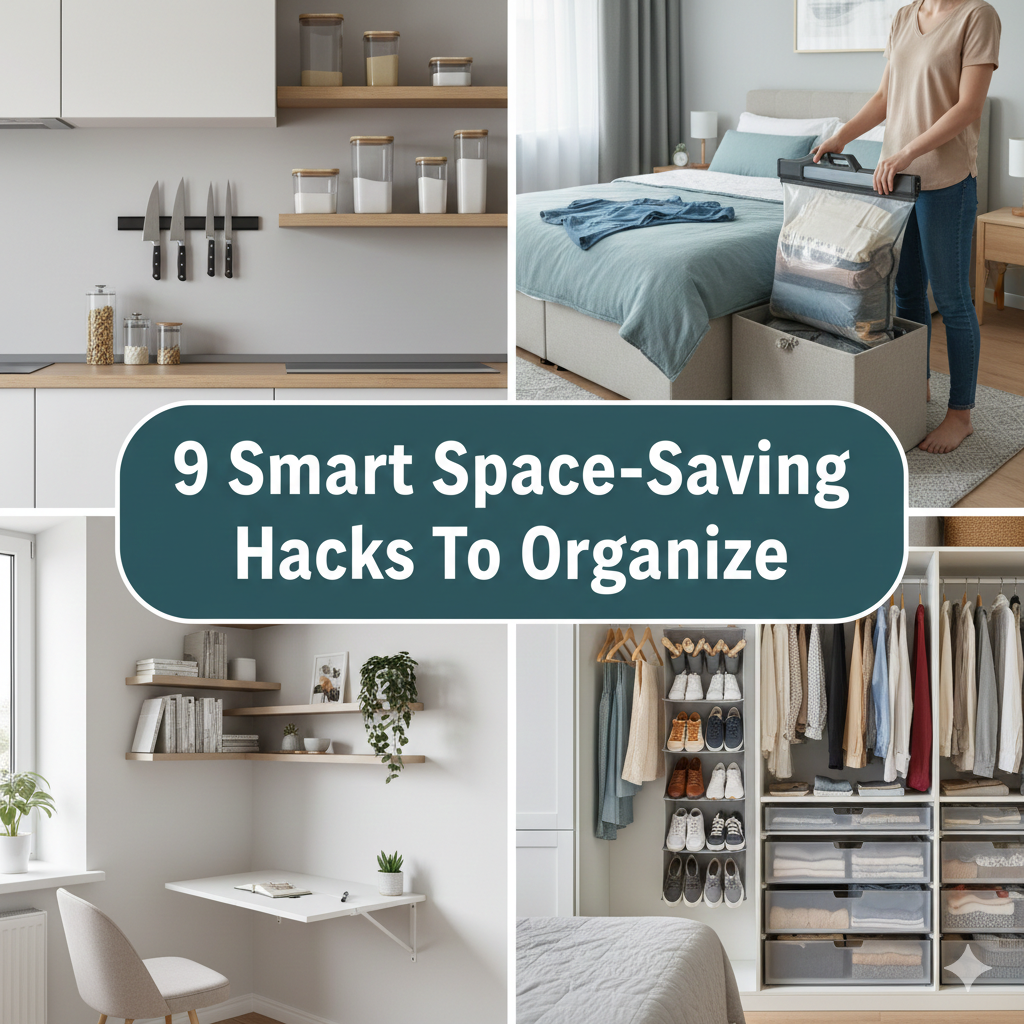
Do you ever look around your room and feel as though the walls are closing in? You’re not alone. Millions more live in small apartments, tiny homes or shared spaces where every square foot really matters.
The good news? You do not need a larger place. You just need smarter ideas.
These nine practical space-saving tricks will reclaim your floors, walls and corners — without breaking the bank or bulldozing your home. Whether you have a studio apartment, a tiny bedroom or an inundated kitchen, these strategies are designed for real life.
Let’s get into it.
Tip #1 — Keep Going Vertical: Your Walls Are Wasted Space
Most people consider the square footage. But the smarter move? Look up.
Your walls from floor to ceiling are filled with untapped storage potential. The top three or four feet of wall space are left a total void in most homes. That’s prime real estate not being used.
How to Use Vertical Space Like a Boss
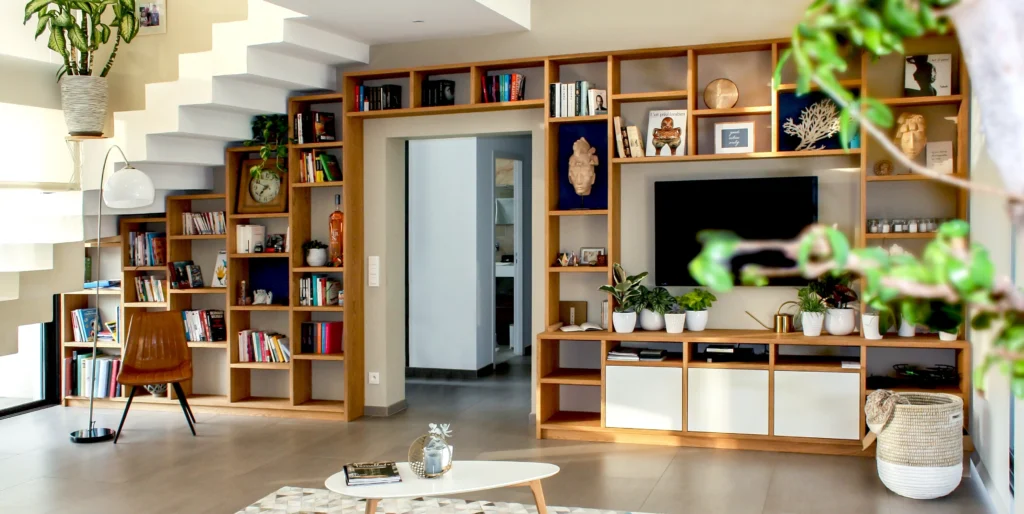
- Add floor-to-ceiling shelving units in living rooms, bedrooms and home offices.
- Use tall bookcases rather than wide, low ones.
- Mount floating shelves over desks, sofas and beds.
- In kitchens and craft rooms, add pegboards to hang tools, utensils and supplies.
The farther up you go, the more floor space you free up. It’s that simple.
Quick Tip: Store items you don’t need daily — seasonal decorations, extra blankets or archived documents — on the top shelves.
Trick #2 — Multi-Function Furniture Is a Game Changer
If a piece of furniture performs only one function, it may not earn its place in a small home.
Multi-functional furniture serves double duty — or triple, even — and is one of today’s most effective space-saving tricks.
Must-Have Multi-Function Furniture Pieces
| Furniture Piece | Primary Use | Bonus Utility |
|---|---|---|
| Ottoman | Seating | Storage for games, shoes or blankets |
| Murphy bed | Sleeping | Becomes a wall cabinet by day |
| Sofa bed | Seating | Used as a guest bed |
| Dining bench with storage | Seating | Hidden compartment inside |
| Nesting tables | Side table | Stack away when not needed |
| Bed with drawers | Sleeping | Under-bed storage |
Just investing in two or three of them can transform your home when it comes to both how it feels and how it functions.
Hack #3 — Remove the Mayhem Under Your Bed
The area beneath your bed is probably the most neglected space in any household. It’s out of sight, and most people forget it exists at all.
But under a typical queen-size bed, you can get about 30 to 40 cubic feet of storage space. That’s significant.
Smart Under-Bed Storage Ideas
- Flat rolling bins — ideal for shoes, seasonal clothes, or extra bedding.
- Vacuum storage bags — compress bulky items such as winter coats and duvets into a tiny fraction of their size.
- Bed risers — raise your bed 4 to 6 inches to make room for larger storage bins underneath.
- Built-in drawer beds — if you are buying new furniture, go for a bed frame with built-in drawers.
Label everything. If you can’t see what’s under there, then the storage space becomes clutter — not a solution.
Trick #4 — Think Inside the Door
Here’s an area most people overlook altogether: behind their doors.
Every door in your house — bedroom, bathroom, pantry, closet — has an interior surface that can hold a surprising amount of stuff.
What You Can Keep Behind Doors
- Over-the-door shoe organizers — great for shoes, but also cleaning supplies, toiletries, snacks or craft supplies.
- Towel and hook racks — ideal for bathrooms and bedrooms.
- Magnetic spice racks — a smart idea for the back of pantry or cabinet doors.
- Pocket organizers — for kids’ rooms to neatly store small toys, art supplies or books.
It’s nearly free and takes less than 30 minutes to set up. But it can free up a whole drawer or shelf somewhere else.
Trick #5 — Declutter Before You Organize
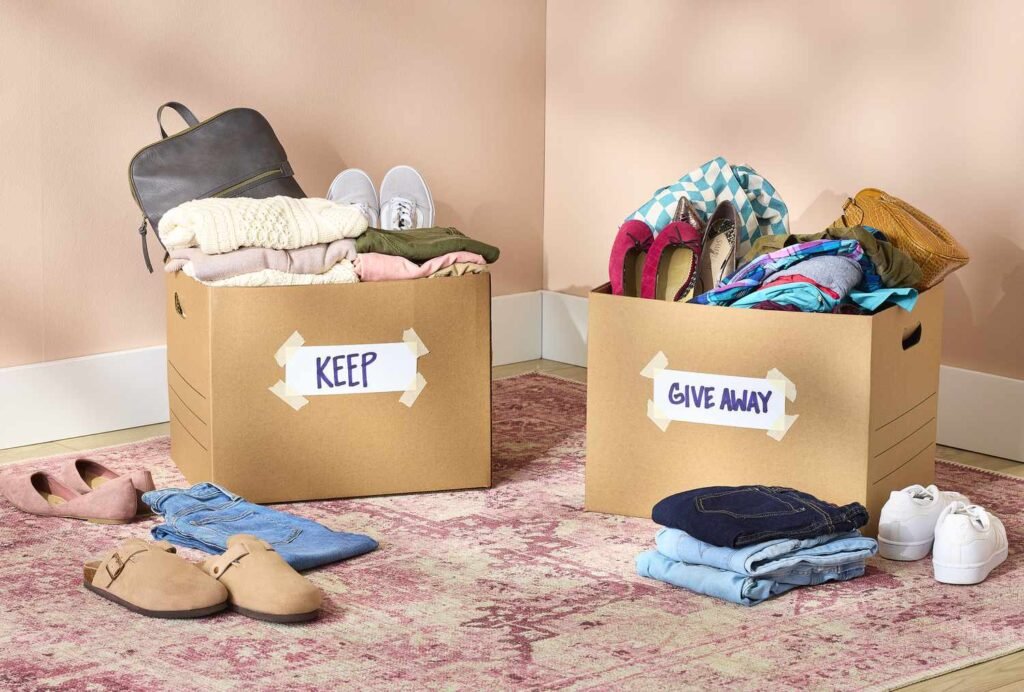
This one is not a matter of purchasing anything. It’s about letting go.
Storage bins or clever furniture won’t solve an overshopping problem. The first step of any space-saving plan is decluttering. It’s the trick that makes everything else work better.
The Four-Box Method That Actually Works
- Keep — the things that you use and love.
- Donate — items in decent condition that someone else could use.
- Trash — broken, expired or useless stuff.
- Relocate — items that have a better place elsewhere in the house.
Go room by room. Don’t rush it. Even just one extra hour per room can make a huge difference.
The One Year Rule: If you haven’t used an item in the last 12 months and it has no sentimental value — let it go.
Decluttering before organizing ensures that you’re storing only what needs to be in your life. That’s a far more powerful starting place.
Trick #6 — Cabinet Tricks That Will Change Your Kitchen
Kitchens are famously petit, yet expected to deliver. It all adds up fast with appliances, pots, pans, food and gadgets.
These space-saving tricks are aimed right at the kitchen — one of the busiest rooms in any home.
Kitchen Space-Saving Ideas That Work
Inside Cabinets:
- Install stackable shelf risers to double the usable space inside a cabinet.
- Install pot lid organizers to keep lids from sliding around and knocking everything over.
- Add pull-out cabinet organizers so that nothing gets lost in the back.
On the Counter:
- Opt for a wall-mounted magnetic knife strip instead of an oversized knife block.
- Hang a wall-mounted paper towel holder to clear your counter space.
- Store appliances you use less frequently (such as waffle makers or blenders) in a cabinet rather than on the counter.
In the Pantry:
- Store in clear containers, so you always know your inventory.
- Install door-mounted organizers for spices, foil and wraps.
- Make use of lazy Susans in corner cupboards so nothing gets lost.
A tidy kitchen not only feels larger — it’s also quicker and less stressful to cook in.
And if you’re working with an outdoor kitchen or a small balcony setup, the same logic applies — check out these smart ideas for making the most of small outdoor spaces to extend your organization strategy beyond your front door.
Trick #7 — Use Light and Mirrors To Make Rooms Look Bigger
This one is a visual sleight of hand — but it works brilliantly.
You can’t always alter the physical size of a space. But you can change how big it feels. And that’s just as important for daily living.
How Light and Mirrors Create the Illusion of Space
Mirrors:
- Hang a large mirror on the wall opposite a window to reflect light and double the sensation of depth.
- Use mirrored wardrobe doors instead of solid ones.
- Prop a full-length mirror against a wall — it lifts the eye up and out.
Lighting:
- Swap out heavy curtains for light-filtering sheer panels to increase the flow of natural light.
- Use recessed or wall-mounted lighting instead of floor lamps that take up space.
- Install under-cabinet lighting in kitchens for clean work surface illumination.
Color:
- Pale wall colors (white, soft grey, pale beige) reflect light and encourage rooms to feel airy.
- Skip dark accent walls in very small rooms.
| Design Element | Effect on Space Perception |
|---|---|
| Large mirror on main wall | Creates illusion of twice the depth |
| Light-colored walls | Reflects light; opens up room |
| Sheer curtains | Maximizes natural light |
| Recessed ceiling lights | Removes floor visual clutter |
| Vertical stripes | Makes ceilings feel taller |
According to The Spruce’s guide to making small rooms look bigger, combining mirrors with strategic lighting is one of the most proven and budget-friendly ways to visually expand any room.
Trick #8 — Create Zones Without Walls in Open Spaces
Open-plan layouts can feel airy — or they can be complete chaos. The difference is zoning.
Zoning means creating separate areas for different kinds of activity in one big room — without erecting walls.
How to Effectively Zone a Room
Use Rugs: A rug grounds a seating, dining or reading area. It visually signals “this is a separate space,” even in the absence of walls.
Use Furniture Placement: Position a sofa away from the dining area. Just this one move creates a psychological divide between those two zones.
Use Lighting: A pendant lamp over the dining table and a floor lamp next to the sofa each define their own space — even if they’re in one continuous room.
Use Curtains or Dividers: Hanging floor-to-ceiling curtains on a ceiling track can divide a studio apartment into “bedroom” and “living room” areas — and you can pull them open at any time.
Zoning doesn’t reduce space. It organizes it. And organized space always feels bigger and more livable.
Trick #9 — Digital Declutter: Clear Your Shelves of Paperwork and Media
Here’s a space-saving hack that most articles never touch on at all: go digital.
Consider how much physical space is consumed by:
- Books
- DVDs and Blu-rays
- Photo albums
- Filing cabinets full of papers
- CD and vinyl collections
Each of those things occupies shelf space, drawer space, or floor real estate. And most of it can be swapped for a hard drive or a cloud account.
How Going Digital Helps You Reclaim Space
- Scan documents — tax returns, medical records, warranties — and keep them in a secure cloud folder. Shred the originals.
- Use e-books and audiobooks for new purchases. Apps like Kindle, Libby and Audible contain thousands of titles.
- Digitize old photos using a scanner or a scanning app on your phone.
- Stream video and music instead of purchasing physical copies.
- Use one external hard drive to save everything in a single, portable device.
This isn’t a question of discarding things you value. If you still enjoy your vinyl collection — keep it. But for everyday papers, instruction manuals and forgotten DVDs? Going digital is one of the most brilliant space-saving tricks out there.
What All 9 of These Tricks Have in Common
You don’t have to do all nine at once. The truth is, doing everything all at once is too much. Instead, think about what two or three tricks would make the most difference in your particular home.
Here’s a quick cheat sheet:
| Your Biggest Problem | Best Hack to Start With |
|---|---|
| Too much stuff everywhere | Trick #5 — Declutter first |
| Small bedroom | Trick #3 — Store under your bed |
| Cramped kitchen | Trick #6 — Cabinet hacks |
| Tiny living room | Trick #7 — Light and mirrors |
| Studio apartment | Trick #8 — Create zones |
| No storage space | Trick #1 — Go vertical |
| Stacks of paperwork | Trick #9 — Go digital |
Start small. Even one change sends a ripple effect throughout your whole home.
Frequently Asked Questions
Q1: What’s the best hack for saving space in a small bedroom? The single best hack for a small bedroom is under-bed storage paired with vertical shelving. Combined, these two strategies can free up a considerable amount of floor and closet space without the need for drastic renovation.
Q2: Does that mean I have to spend a lot of money on space-saving furniture? Not at all. A lot of space-saving tricks — decluttering, making use of the back of doors or rearranging your furniture for better zoning — won’t cost you a thing. Multi-functional furniture can be a significant investment, but since one piece typically takes the place of several others, it usually saves money over time.
Q3: What are the best space-saving tricks for a small apartment? For a tiny apartment, the best combination would be: wall shelves to go vertical, a Murphy or sofa bed, rugs and light fixtures to create zones in the open-plan space, and digitizing all paperwork to eliminate pile-up.
Q4: How do I create the illusion of space in a small room without renovating? Add large mirrors opposite windows, opt for light-colored walls, replace heavy curtains with sheer ones and use recessed lighting. These visual tricks cost little but dramatically change a room’s sense of space.
Q5: How often should I declutter my home? Generally, a full declutter should take place once or twice a year — usually when the seasons change. In the meantime, do mini-declutters of individual drawers or closets once a month to keep things from piling up.
Q6: Are space-saving tricks renter-friendly? Most of them, yes. Freestanding shelving, door organizers, furniture rearrangement, mirrors and under-bed storage all require no drilling or permanent changes. Just always check your lease before mounting anything to walls.
The Bottom Line
Living in a small home should not feel like a compromise.
With the right space-saving tricks, even the smallest room can feel organized, open and — most importantly — truly comfortable. The key is to make the most of what you have and be intentional about every inch of it.
Try out one trick this week. Declutter a single drawer. Mount one shelf. Buy a storage ottoman. Small changes stack up fast.
Your home is not too small. It’s just not organized yet.
Focus Keyword: Space-Saving Tricks | Word Count: ~2,550 words