The idea of watering plants seems simple enough for most people.
Just pick a can, pour some water and you are done.
But the truth is, watering the wrong way — overwatering or underwatering — causes more plant deaths than any other factor. Excess water suffocates the roots. Too little dries them out. Wrong timing wastes water. Wrong method causes disease.
The good news? Once you learn a few rules of thumb, watering becomes second nature. And your plants? They’ll actually thrive.
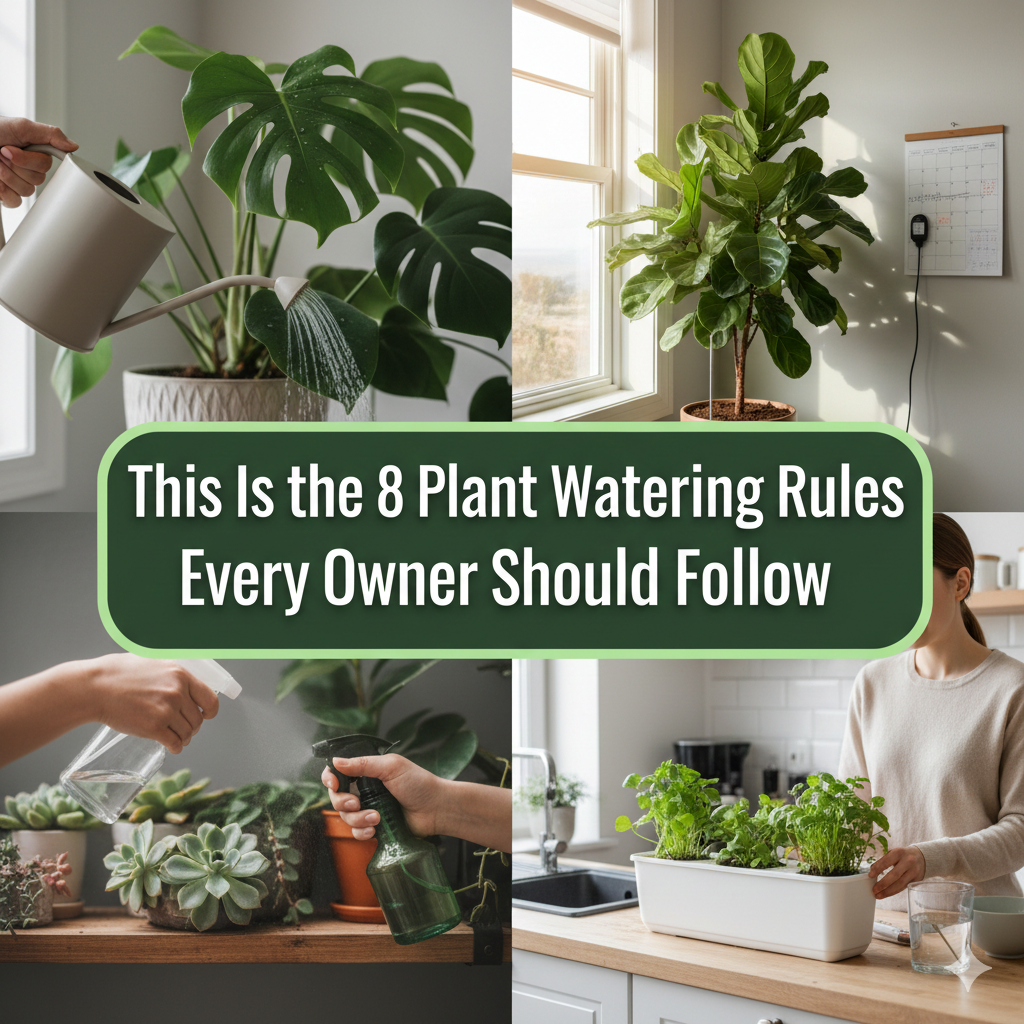
Here are the 8 basic rules of watering every beginner and experienced gardener should remember. Whether you’re tending a single houseplant on your windowsill or an entire balcony garden, these rules extend to everything.
Let’s get into it.
Why Watering Correctly Actually Matters
Now before we get into the rules here, let me clear one thing up.
Plants don’t just “drink” water. Plants use it to draw nutrients from the soil into their roots, stems and leaves. Water also helps plant cells stay firm and healthy. Without sufficient amounts, plants wilt and yellow and die. With too much, roots choke and rot.
Nailing watering is the number one thing you can do to keep plants alive.
| Water Problem | What It Causes |
|---|---|
| Too much water | Root rot, yellowing leaves, mold in the potting medium |
| Too little | Wilting, dry/crispy leaf tips and stunted growth |
| Wrong time of day | Evaporation loss and fungal disease on the leaves |
| Wrong method | Shallow roots, leaf burn and wasted water |
Well, let’s change all that — one rule at a time.
Rule #1: Always Water the Soil, Not the Leaves
This is Rule No. 1 — the most important of all the essential watering rules.
Water belongs in the soil — not on the leaves.
When you splash water on the leaves and it remains wet for hours, fungal diseases move in quickly. Wet foliage invites mold, mildew and leaf spot. Some plants are particularly sensitive to this — tomatoes and roses, for example.
How to Water Soil the Right Way
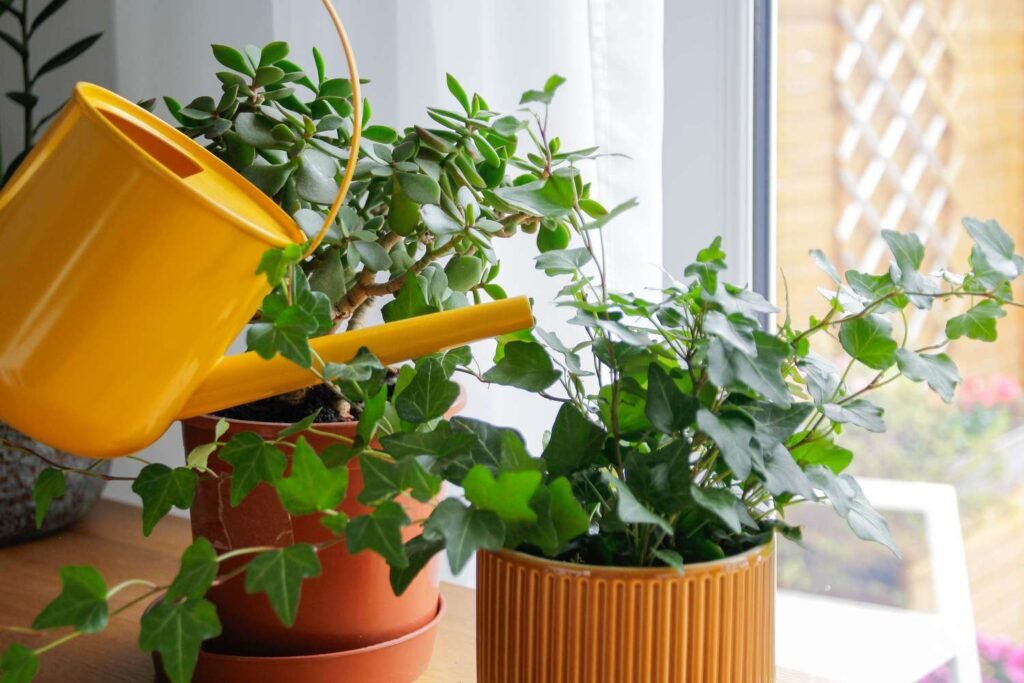
- Aim your watering can or hose at the base of the plant
- Aim to keep the stream mild and steady — don’t turn on the soil so hard it rockets back up
- When watering inside, pour slowly and evenly around the perimeter of the pot — not just on one side
The Only Exception
Certain tropical plants appreciate a good mist on their leaves because they take up humidity. Plants such as ferns, orchids and peace lilies can tolerate light misting — but that is not the same as drenching a plant’s foliage.
Even then, mist in the morning so the leaves dry before dark.
Rule #2: Do Deep Watering, Not Just Frequent Watering
Here’s a rule that shocks many beginners.
In fact, watering a little every day is worse than watering deeply once every few days.
Why? Because shallow watering keeps moisture only above the soil surface. Roots follow the water. It leaves the plant shallow too — weak and susceptible to drought.
Heavy watering forces moisture down into the lower soil layers. Roots descend and spread to trace it. Deeper roots mean stronger, more resilient plants.
What Deep Watering Looks Like
- Water slowly until you see it draining from the bottom of the pot
- For garden beds, water until moisture is at least 6–8 inches deep
- When you do water, wait until the top inch or two of soil is dry before watering again
A Simple Test
Insert a wooden chopstick or pencil 2 inches into the soil. If it comes out with wet soil stuck to it, the plant doesn’t need water yet. If it comes out clean and dry, then it’s time to water.
Rule No. 3: Learn the Finger Test Before Everything Else
Do not water any plant first — always check the soil.
This is known as the finger test, and it applies to almost every plant. It takes three seconds and will prevent you from making the biggest watering mistake of them all: overwatering.
How to Do the Finger Test
- Gently push your index finger one to two inches into the soil close to the plant base
- Feel the soil at that depth
- If it feels dry or just barely damp — give the plant some water
- If it feels damp or wet — wait and try again tomorrow
Different Plants, Different Rules
Not all plants are on the same schedule. Here’s a quick guide:
| Plant Type | When to Water |
|---|---|
| Succulents & cacti | When soil is thoroughly dry (every 1–2 weeks) |
| Tropical houseplants | When top 1–2 inches feel dry |
| Herbs (basil, mint) | When top inch feels dry — they prefer slightly moist soil |
| Ferns | Keep soil evenly moist, never soggy |
| Peace lily | Water when leaves just begin to droop slightly |
The finger test takes all the guesswork out of it. This is one of the most useful essential watering rules you can develop a habit around.
Rule #4: Water in the Morning
Timing is more important than most people realize.
The single best time to water your plants is early morning — well before 10 a.m.
Here’s why that window is so effective.
Why Morning Watering Wins
- Less evaporation — The sun is not fully heated up yet, so more water reaches the roots instead of evaporating
- Leaves dry out fast — Any water that hits the foliage dries during daylight hours, so no fungal problems
- Plants prepare for the day — Plants absorb water most actively during daylight hours
What About Evening Watering?
Watering in the evening is the second-best option — but it has a downside. Soil and foliage that are wet overnight in cooler conditions create exactly the right scenario for mold and fungal disease.
If morning isn’t possible, water in early evening and target only the soil — never the leaves.
The Worst Time to Water
Do not try to water in the middle of a hot, sun-drenched afternoon. Water on the ground evaporates before roots can drink it. And water droplets on leaves can function like little magnifying glasses in direct sunlight, causing leaf scorch.
Rule No. 5: Water for the Season
Not all plants need the same amount of water all year long.
That’s one of the fundamental essential watering rules that even experienced gardeners occasionally forget. All of this changes as the seasons progress — temperature, sunlight, humidity and the rate at which a plant is growing can all have significant effects on how much water it actually requires.
A Season-by-Season Breakdown
| Season | Plant Activity | Watering Frequency |
|---|---|---|
| Spring | Active growth starts | Increase watering gradually |
| Summer | Peak growth, high evaporation | Water more frequently, check daily |
| Autumn | Growth slows | Reduce watering by 30–40% |
| Winter | Most plants go dormant | Sparingly — once every 1–2 weeks |
Signs You Are Watering Wrong for the Season
Overwatering in winter is one of the most common plant-killing mistakes. Plants are in a dormant state in winter and therefore consume very little water. If you are watering the same way through December as you would in summer, your plants are almost certainly on their way to root rot.
The opposite problem is underwatering in the summer. Soil dries out far more quickly than you might think in high heat and bright sunshine. During heat waves or unseasonably warm stretches, always check the soil more frequently.
A good habit: every time the season changes, check your plants’ water needs. Instead of using the same routine year-round, adapt your schedule.
Rule #6: Go For Room Temperature Water, Not Cold
This one sounds small. But it helps — a lot, particularly for houseplants.
Cold water shocks plant roots. It can induce sudden stress, hinder nutrient absorption and — in sensitive plants such as orchids or African violets — may even result in brown spots on the leaves.
What Temperature Is Right?
- Room temperature water (about 65–70°F / 18–21°C) is ideal for most houseplants
- Slightly warm water is great for tropical plants that grow in warm environments
- Never use very cold tap water straight from the faucet — particularly in winter
A Tip for Tap Water
Chlorine and fluoride are present in tap water in many regions. Both of these can accumulate in soil over time and lead to browning leaf tips — especially in plants like spider plants, peace lilies and dracaenas.
An easy solution: fill your watering can the night before and let it sit out. By morning, the chlorine is gone and the water is at room temperature. Two problems solved with one simple habit.
According to The Royal Horticultural Society (RHS), collecting and using rainwater is also an excellent alternative to tap water — especially for acid-loving plants and those sensitive to fluoride buildup.
Rule #7: Always Ensure Drainage in Your Pots
Lack of drainage = death sentence for most plants.
This is one of the essential watering rules that is non-negotiable. However carefully you water, if there isn’t anywhere for excess water to go, it pools at the bottom of the pot. Roots sitting in standing water rot quickly. The plant droops, leaves turn yellow and eventually it dies.
What Good Drainage Looks Like
- Pots should have at least one hole at the bottom
- Use a saucer or tray beneath the pot to catch drainage water — but empty it within 30 minutes of watering, so the pot isn’t sitting in standing water
- Use well-draining potting mix — not garden soil, which compacts and retains too much moisture indoors
What to Do When You Love a No-Hole Pot
Some decorative pots are simply too pretty to part with — even if they don’t have drainage holes. The answer: the double pot method.
Keep your plant in a plain nursery pot with drainage holes. Put that pot inside your decorative pot. When you water, take out the inner pot and water it thoroughly over a sink, let it drain completely, then put it back inside the decorative one.
Signs of Poor Drainage
- Soil remains wet for greater than 5–7 days
- A moldy or sour odor emanating from the soil
- Yellowing lower leaves
- Soft, mushy stems at the base
If you observe any of these signs, repot the plant right away into a pot that drains well.
Rule #8: Water Based on Light and Humidity
Everything comes together with the final rule.
The amount of light your plant receives — and how humid its surroundings are — directly influences the rate at which the soil dries out. Two identical plants in two different locations will require wholly different watering schedules.
Light and Water: The Connection
- High light = more rapid evaporation — Plants in bright, sunny locations dry out quicker. Check them more frequently.
- Low light = slower drying — Plants in dark corners retain moisture for much longer. The biggest risk here is overwatering.
A plant in a bright, south-facing window may require watering twice as frequently as one sitting in a dimly lit hallway.
Humidity and Water: What Changes
- Dry indoor air (especially in winter when heating is on) draws moisture out of leaves and soil much more quickly
- Humid environments (bathrooms, kitchens or humid climates) will significantly slow evaporation
If your home is extremely dry, you might need to water a little more often and also think about grouping plants together — plants release moisture through their leaves, so a cluster of them in one space naturally raises humidity around them.
For more tips on managing plants in compact outdoor spaces, Small Balcony Garden is a brilliant resource full of practical advice on watering, plant selection and balcony setup for beginners.
A Handy Chart: How to Adjust Watering by Environment
| Environment | Light Level | Humidity | Watering Adjustment |
|---|---|---|---|
| South-facing window | High | Low–Medium | Increase watering |
| North-facing corner | Low | Medium | Reduce watering; risk of overwatering |
| Bathroom shelf | Low–Medium | High | Water very sparingly |
| Heated living room (winter) | Low | Very dry | Check soil often, water carefully |
| Outdoor balcony (summer) | High | Variable | Daily check-ins during heat waves |
All 8 Essential Watering Rules at a Glance
| Rule | Key Action |
|---|---|
| 1. Water the soil, not the leaves | Aim low — keep foliage dry |
| 2. Deep watering, not frequent | Water the roots — not the surface |
| 3. The finger test | Check moisture before every watering |
| 4. Water in the morning | Before 10 a.m. is best |
| 5. Seasonal adjustment | Less in winter, more in summer |
| 6. Use room temperature water | Avoid cold water shock |
| 7. Always use drainage | No pooling at the roots |
| 8. Adjust for light and humidity | Environment changes everything |
Bonus: What Your Plant Is Trying to Tell You
Your plants speak through their leaves and stems. Here’s how to read the signs:
| What You See | What It Probably Means |
|---|---|
| Yellow leaves (soft, mushy stem) | Overwatering / root rot |
| Yellow leaves (dry, crispy edges) | Underwatering |
| Brown leaf tips | Fluoride/chlorine buildup or dry air |
| Wilting with wet soil | Root rot — roots are unable to absorb water |
| Wilting with dry soil | Needs water immediately |
| White crusty deposits on top of soil | Mineral buildup from hard tap water |
| Mold on surface of soil | Too much moisture, poor air circulation |
FAQs About Essential Watering Rules
Q: How often do I need to water my houseplants? A: There’s no one answer — it depends on the plant, pot size, season and environment. Using the finger test (Rule #3) before watering is always best. Most houseplants require watering every 5–10 days, but this varies widely.
Q: Is it okay to water plants every day? A: Daily watering is too much for most plants and risks overwatering. The exceptions are extremely fast-draining situations (outdoor pots in hot summer weather, for example) or thirsty plants such as basil or ferns. Always check the soil first.
Q: Can I use tap water for all my plants? A: Most plants do well enough with tap water. But fluoride- and chlorine-sensitive plants — such as spider plants, peace lilies and dracaenas — thrive on water that has either been set aside for 12 hours or longer, or filtered water.
Q: My plant’s leaves are turning yellow after I water it. Why? A: Yellowing leaves after watering most often suggest overwatering or inadequate drainage. Make sure your pot has drainage holes and allow the soil to dry more between waterings. If the stem feels squishy at the bottom, root rot may have already occurred.
Q: Does the size of the pot influence how often I water? A: Yes, significantly. Small pots dry out more quickly and require more frequent watering. Large pots hold more moisture and can retain it for longer — increasing the danger of overwatering. Always use a properly sized pot for the plant.
Q: Should I water differently in summer than in winter? A: Absolutely. In summer, heat and bright light dry soil quickly — check on your plants more frequently. Most plants slow down or go dormant in winter and require much less water. It’s common practice to reduce watering by 30–50% over wintertime and it’s recommended.
Q: How can I quickly remedy an overwatered plant? A: Stop watering immediately. Relocate the plant to a bright, well-ventilated location. Dispose of any excess water from the saucer. If root rot has developed, repot the plant in fresh dry soil, trimming any black or mushy roots before replanting.
Q: Do outdoor balcony plants need more water than indoor plants? A: Generally, yes. Outdoor plants are exposed to more sun, wind and heat — all of which dry soil faster. In the summer, outdoor balcony pots might need watering every 1–2 days. A good rule of thumb is to check the soil rather than follow a fixed schedule.
Putting It All Together
Watering sounds simple. And once those rules become habits, it really is.
The 8 basic watering rules that this guide has covered — watering the soil, not the leaves; deep watering; doing the finger test; morning timing; adjusting for seasons; using room-temperature water; ensuring drainage; and accounting for light and humidity — create a complete, practical system.
You aren’t expected to memorize all eight at once. Choose two or three to work on this week. Notice how your plants respond. Then add the rest in layers, slowly.
Healthy plants aren’t luck. They’re the result of deliberate, thoughtful care. And watering — done well — is the bedrock of all of it.
Your plants are already relying on you. And now you know just what to do.
Focus Keyword: Essential Watering Rules | Word Count: ~2,600 words