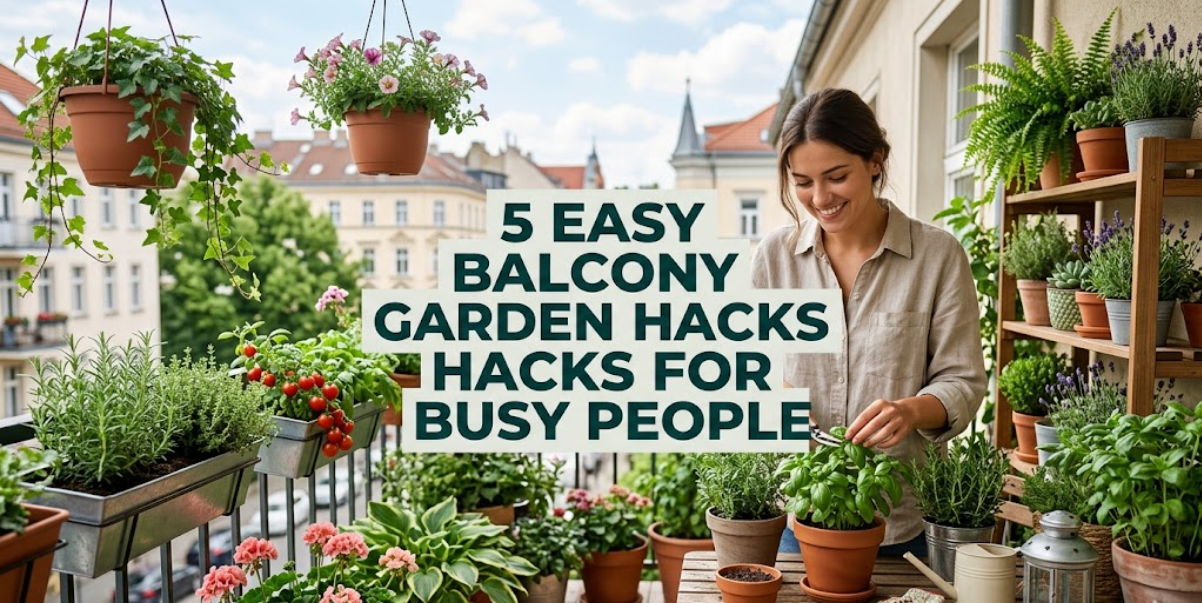
City life often leaves very little room—literally and figuratively—for gardening. Between long commutes, packed schedules, and the constant pull of screens, tending to plants can feel like a luxury reserved for people with time to spare. Yet, a small balcony garden can quietly transform your daily routine. It softens the edges of urban living, improves air quality, and gives you a pocket of calm that doesn’t demand hours of maintenance.
The good news is this: you don’t need to become a full-time gardener to enjoy a thriving balcony garden. With a few clever hacks designed specifically for busy people, you can grow herbs, flowers, and even vegetables with minimal effort. This article explores five practical, time-saving balcony garden hacks, supported by useful tables, planning charts, and actionable insights.
hack 1: self-watering systems that practically run themselves
If you forget to water plants—or simply don’t have time—self-watering systems are a game changer. These setups allow plants to absorb water as needed, reducing the risk of both under- and over-watering.
At its core, a self-watering system consists of a reservoir that holds water and a mechanism (usually a wick or soil design) that delivers moisture gradually to plant roots.
You can either buy ready-made self-watering pots or create your own using simple materials like plastic bottles, cotton strings, and containers.
how it works in simple terms
- water sits in a reservoir below the soil
- capillary action pulls water upward
- roots access moisture consistently
This means you can go days—or even a week—without worrying about watering.
table: comparison of watering methods
| Method | Time Required per Week | Risk Level (Over/Under Watering) | Cost | Best For |
|---|---|---|---|---|
| Manual watering | High | High | Low | People at home daily |
| Drip irrigation | Medium | Low | Medium | Medium-sized balconies |
| Self-watering pots | Very low | Very low | Medium | Busy individuals |
| Hydroponic systems | Medium | Low | High | Advanced growers |
quick tip
If you’re using DIY bottle systems, use dark-colored bottles to prevent algae growth inside the reservoir.
hack 2: vertical gardening to maximize space and minimize effort
Balconies are small. That’s the reality. But vertical gardening allows you to multiply your planting area without taking up floor space.
Instead of spreading plants across the balcony floor, you grow upward using shelves, wall planters, hanging pots, or trellises.
This not only saves space but also makes maintenance easier. When plants are arranged at eye level, you spend less time bending, moving, and rearranging.
common vertical setups
- wall-mounted pocket planters
- ladder shelves
- hanging baskets
- railing planters
table: vertical gardening options and effort level
| Setup Type | Installation Effort | Maintenance Effort | Cost Range | Ideal Plants |
|---|---|---|---|---|
| Hanging baskets | Low | Low | Low | Herbs, flowers |
| Wall pockets | Medium | Low | Medium | Leafy greens |
| Ladder shelves | Low | Low | Medium | Mixed plants |
| Trellis systems | Medium | Medium | Medium | Climbers (beans, vines) |
time-saving insight
Group plants with similar sunlight and watering needs together vertically. This reduces decision fatigue and speeds up care routines.
hack 3: choose low-maintenance plants that thrive on neglect
Not all plants demand constant attention. Some actually prefer a bit of neglect.
If you’re busy, plant selection matters more than technique. Choosing resilient, forgiving plants eliminates half the work before you even start.
best low-maintenance balcony plants
- succulents (require very little water)
- snake plant (tolerates low light)
- pothos (fast-growing, forgiving)
- mint and basil (easy herbs)
- cherry tomatoes (surprisingly resilient)
table: plant care requirements overview
| Plant Type | Water Frequency | Sunlight Needs | Growth Speed | Maintenance Level |
|---|---|---|---|---|
| Succulents | Every 10–14 days | Bright indirect | Slow | Very low |
| Snake plant | Every 2–3 weeks | Low to medium | Slow | Very low |
| Pothos | Weekly | Low to bright | Fast | Low |
| Mint | 2–3 times/week | Medium sunlight | Fast | Low |
| Cherry tomatoes | Every 2–3 days | Full sun | Medium | Medium |
practical advice
Start with 3–5 plants instead of overcrowding your balcony. Fewer plants mean less maintenance and better attention to each one.
hack 4: automate with simple timers and smart tools
Automation doesn’t have to be expensive or complicated. Even basic tools can drastically reduce the time you spend maintaining your balcony garden.
examples of simple automation
- plug-in timers for watering systems
- solar-powered irrigation kits
- moisture sensors that indicate when to water
- LED grow lights with timers
These tools ensure your plants receive consistent care even when you’re busy or away.
chart: weekly time saved using automation
| Task | Manual Time (mins/week) | Automated Time (mins/week) | Time Saved |
|---|---|---|---|
| Watering | 60 | 10 | 50 |
| Monitoring soil | 30 | 10 | 20 |
| Light adjustment | 20 | 5 | 15 |
| Total | 110 | 25 | 85 mins |
key takeaway
You can reduce your gardening workload by over 70% with minimal investment in automation tools.
hack 5: use the “set-and-forget” soil mix strategy
Soil is often overlooked, but it plays a critical role in how much effort your garden requires.
A high-quality, well-balanced soil mix retains moisture, provides nutrients, and ensures proper drainage—all of which reduce maintenance.
ideal balcony soil mix formula
- 40% potting soil
- 30% compost
- 20% coco coir or peat moss
- 10% perlite or sand
This combination creates a stable growing environment that requires less frequent watering and fertilizing.
table: soil component benefits
| Component | Purpose | Benefit for Busy Gardeners |
|---|---|---|
| Potting soil | Base structure | Supports root growth |
| Compost | Nutrient supply | Reduces need for fertilizers |
| Coco coir | Moisture retention | Less frequent watering |
| Perlite | Drainage and aeration | Prevents root rot |
extra tip
Add slow-release fertilizer pellets to your soil mix. This feeds plants gradually over weeks or months, eliminating the need for regular fertilizing.
putting it all together: a simple weekly routine
Even with all these hacks, consistency matters. The goal is not to eliminate effort entirely, but to simplify it.
Here’s a realistic weekly routine for a busy person:
weekly balcony garden checklist
| Day | Task | Time Required |
|---|---|---|
| Monday | Quick visual check | 5 mins |
| Wednesday | Check water levels | 10 mins |
| Friday | Remove dead leaves | 10 mins |
| Sunday | General inspection & harvest | 15 mins |
Total weekly time: around 40 minutes
That’s less than 6 minutes per day on average.
common mistakes to avoid
Even with easy hacks, a few missteps can create unnecessary work:
- overwatering (the most common issue)
- overcrowding plants
- ignoring sunlight patterns
- using poor-quality soil
- choosing high-maintenance plants
Avoiding these mistakes keeps your system efficient and low-effort.
balcony layout planning chart
| Balcony Size | Recommended Setup | Number of Plants | Effort Level |
|---|---|---|---|
| Small | Vertical + hanging pots | 5–8 | Low |
| Medium | Shelves + railing planters | 8–15 | Medium |
| Large | Mixed setup with seating + plants | 15–25 | Medium |
emotional and lifestyle benefits
Beyond convenience, balcony gardening offers subtle but meaningful lifestyle improvements.
- reduces stress after long workdays
- provides fresh herbs and vegetables
- improves air quality
- creates a relaxing personal space
For busy people, this matters more than maximizing yield. The goal isn’t to become a farmer—it’s to create a small, sustainable escape.
faqs
- how often should I water balcony plants if I’m busy
If you use self-watering systems, you may only need to refill every 5–10 days. Otherwise, 2–3 times per week is sufficient for most plants, depending on weather. - what are the easiest plants for beginners with no time
Succulents, snake plants, pothos, and mint are among the easiest. They tolerate inconsistent care and adapt well to balcony environments. - can I grow vegetables on a small balcony
Yes, especially compact varieties like cherry tomatoes, chilies, lettuce, and herbs. Vertical gardening helps maximize space. - do I need expensive tools to automate my garden
No. Basic timers and simple irrigation kits are affordable and highly effective. Even DIY solutions can work well. - how do I prevent plants from dying when I travel
Use self-watering pots or ask someone to check your garden once a week. Alternatively, install a timer-based irrigation system. - what is the biggest time-saving tip for balcony gardening
Combine low-maintenance plants with self-watering systems. This reduces both daily and weekly effort significantly.
final thoughts
Balcony gardening doesn’t have to compete with your schedule. With the right hacks, it can quietly fit into your life without demanding constant attention.
Think of it less as a chore and more as a system—one that works in the background while you focus on everything else. A few smart choices at the beginning can save hours later, turning even the busiest lifestyle into one that still has room for a bit of green.