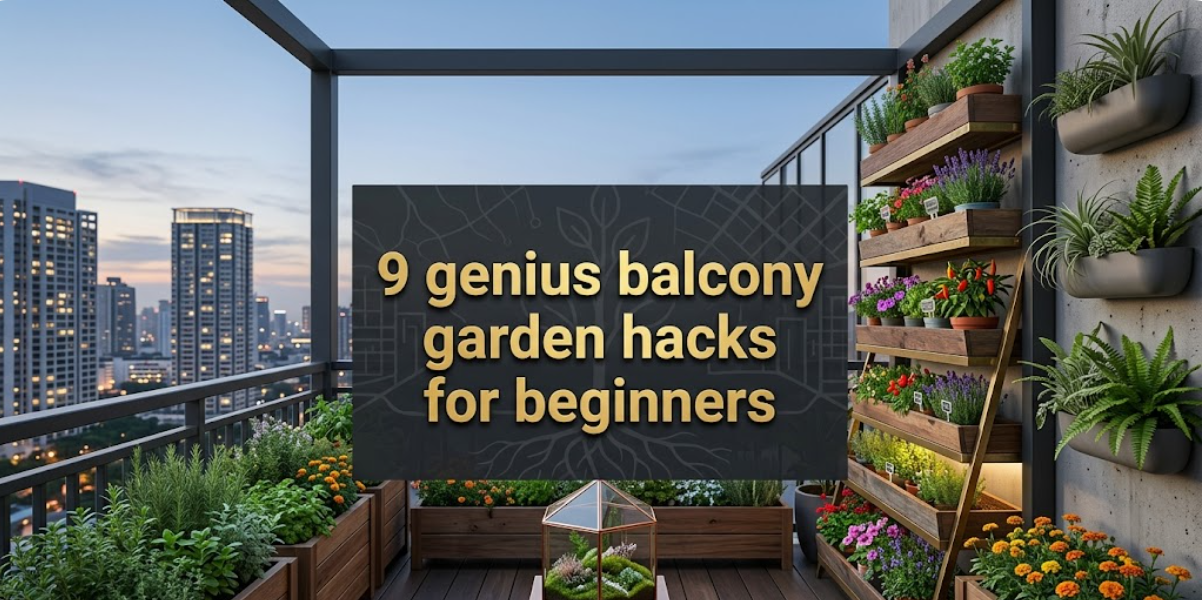
Starting a balcony garden can feel exciting at first, but many beginners quickly realize it comes with unexpected challenges—limited space, unpredictable sunlight, wind exposure, watering issues, and plant choices that don’t always survive. The good news is that balcony gardening is less about having “perfect conditions” and more about knowing a few clever strategies that make everything easier.
This guide breaks down 9 practical, beginner-friendly balcony garden hacks that help you grow more plants with less effort, fewer mistakes, and better results over time. Each hack is designed for real-world conditions, especially small urban spaces where every inch and every drop of water matters.
- start with a “zone-based” balcony layout instead of random pots
Most beginners place pots wherever they find space. That usually leads to overcrowding, uneven sunlight exposure, and plants competing for resources.
A better approach is dividing your balcony into functional zones:
- sun zone (brightest area)
- partial shade zone
- vertical zone (walls and railings)
- utility zone (tools, soil storage, watering station)
This system helps you assign plants based on needs instead of guesswork.
simple balcony zoning chart:
| zone type | best use | suitable plants |
|---|---|---|
| sun zone | fruiting plants | tomatoes, peppers, basil |
| partial shade | leafy greens | lettuce, spinach, mint |
| vertical zone | climbing/support plants | beans, cucumbers, ivy |
| utility zone | storage/work area | tools, compost bin |
why this works:
When plants are grouped based on their environmental needs, they grow more consistently and require less correction later.
- use lightweight containers to avoid balcony overload
A mistake beginners rarely think about is weight. Soil, water, and ceramic pots can become surprisingly heavy when combined.
Balcony structures have load limits, especially in apartments. Switching to lightweight materials reduces risk and improves mobility.
best container materials:
- plastic grow bags
- fabric pots
- recycled containers
- fiberglass pots
container weight comparison:
| container type | empty weight | water retention | mobility |
|---|---|---|---|
| ceramic pots | heavy | high | low |
| plastic pots | light | medium | high |
| fabric grow bags | very light | high drainage | very high |
| metal containers | medium | low | medium |
extra advantage:
Lightweight pots allow you to rearrange plants based on seasonal sunlight changes, which dramatically improves growth.
- master “soil layering” instead of using plain soil
Beginners often fill pots with basic garden soil, which leads to poor drainage and weak roots. Balcony plants perform better with layered soil systems that balance moisture and aeration.
a simple 3-layer soil method:
- bottom layer: drainage (gravel or broken pottery)
- middle layer: nutrient mix (compost + coco peat)
- top layer: mulch (dry leaves or husk)
soil performance chart:
| layer | purpose | benefit |
|---|---|---|
| drainage | prevent waterlogging | root protection |
| nutrient | feed plant roots | steady growth |
| mulch | moisture retention | reduced watering needs |
why this matters:
Balconies dry out faster than ground soil gardens. Layered soil keeps moisture stable without drowning roots.
- install a simple drip watering system (even DIY)
Watering inconsistently is one of the biggest reasons beginner gardens fail. Either plants dry out or get overwatered.
A drip system ensures slow, steady hydration.
easy DIY options:
- perforated plastic bottle inverted into soil
- medical drip set system
- hanging gravity-fed water bottle setup
watering efficiency comparison:
| method | consistency | effort | plant health |
|---|---|---|---|
| hand watering | low | high | variable |
| spray watering | medium | medium | moderate |
| drip system | high | low | very stable |
bonus tip:
Drip systems are especially useful when traveling or busy during the week.
- choose “high return” beginner plants first
Not all plants are beginner-friendly. Some require strict conditions, while others thrive even with minimal care.
best beginner balcony plants:
- mint
- basil
- coriander
- cherry tomatoes
- chili peppers
- spinach
plant success rate chart:
| plant | difficulty | growth speed | beginner success |
|---|---|---|---|
| mint | easy | fast | very high |
| basil | easy | fast | very high |
| tomatoes | medium | medium | high |
| lettuce | easy | fast | high |
| roses | hard | slow | low |
why this matters:
Early success builds confidence. Once beginners see results, they are more likely to continue improving their garden.
- use vertical stacking to triple your growing space
Most balconies have limited floor space, but unused vertical space above pots is often wasted.
Vertical gardening transforms walls and railings into productive growing areas.
methods include:
- hanging pots
- wall-mounted planters
- tiered shelves
- railing planter boxes
space efficiency chart:
| setup type | space usage | plant capacity |
|---|---|---|
| ground pots | high | low |
| stacked shelves | medium | high |
| wall planters | low | very high |
| hanging baskets | low | medium |
why beginners love this:
It instantly makes a small balcony feel like a full garden without needing extra floor space.
- rotate plants weekly for balanced sunlight exposure
Sunlight on balconies is rarely uniform. Some corners get strong morning light, others get harsh afternoon heat, and some stay shaded.
Rotation ensures all plants grow evenly.
simple rotation method:
- move sun-loving plants closer to light source weekly
- rotate pots 90–180 degrees for even growth
- shift shade plants based on seasonal changes
sunlight rotation guide:
| time period | action needed |
|---|---|
| morning | check sun exposure angle |
| weekly | rotate pots |
| seasonal | reposition plant zones |
result:
Healthier, more symmetrical plants with stronger stems.
- recycle household waste into plant boosters
Balcony gardening doesn’t require expensive fertilizers or tools. Many useful materials already exist at home.
examples of reusable items:
- banana peels (natural potassium fertilizer)
- eggshells (calcium boost)
- coffee grounds (nitrogen source)
- plastic bottles (watering systems)
waste-to-value chart:
| waste item | garden use | benefit |
|---|---|---|
| banana peel | compost additive | improves flowering |
| eggshells | soil supplement | strengthens roots |
| coffee grounds | mulch/fertilizer | improves soil texture |
why it matters:
This reduces cost while improving soil quality naturally.
- create a microclimate with grouping and barriers
Balconies are exposed environments. Wind, heat, and drying air can stress plants quickly.
A microclimate is a small, controlled environment that improves plant survival.
how to create it:
- group plants closely together
- use transparent wind barriers
- place taller plants on edges
- use reflective surfaces carefully
microclimate effectiveness:
| method | wind protection | moisture retention |
|---|---|---|
| plant grouping | medium | high |
| wind barrier | high | medium |
| isolated pots | low | low |
benefit:
Plants support each other by reducing evaporation and shielding weaker species.
balcony garden progress overview
| stage | focus area | expected result |
|---|---|---|
| beginner | basic setup | survival of plants |
| intermediate | layout + watering | steady growth |
| advanced | optimization | high yield + stability |
weekly beginner balcony garden routine
| day | task |
|---|---|
| monday | water check + soil touch |
| tuesday | rotate plants |
| wednesday | prune dead leaves |
| thursday | pest inspection |
| friday | light fertilizing |
| saturday | rearrange pots if needed |
| sunday | observation + notes |
final thoughts
Balcony gardening is not about perfection—it’s about adaptation. Small spaces can still produce impressive greenery when you understand how to manage light, water, soil, and space efficiently.
These 9 hacks are not just shortcuts; they are systems that reduce failure and make gardening more predictable. Once you apply even a few of them, you’ll notice that your balcony stops feeling like a limited corner and starts becoming a productive, calming ecosystem of its own.
faqs
- what is the easiest plant to grow on a balcony for beginners?
Mint is one of the easiest plants because it grows quickly, tolerates different conditions, and requires minimal maintenance. Basil and coriander are also excellent beginner choices. - how often should balcony plants be watered?
It depends on weather and plant type, but most balcony plants need watering 2–4 times a week. Hot climates may require daily watering, especially for small containers. - can I start a balcony garden with no experience?
Yes, balcony gardening is beginner-friendly. Starting with simple plants and basic containers is enough to build experience over time. - how do I stop plants from dying in small pots?
Use proper drainage, avoid overwatering, choose lightweight soil mixes, and ensure plants get appropriate sunlight based on their type. - is fertilizer necessary for balcony plants?
Yes, but not heavily. Organic fertilizers like compost, banana peels, or diluted liquid fertilizer are usually enough for balcony gardens. - what is the biggest mistake beginners make in balcony gardening?
Overwatering and choosing the wrong plants for available sunlight conditions are the most common mistakes.