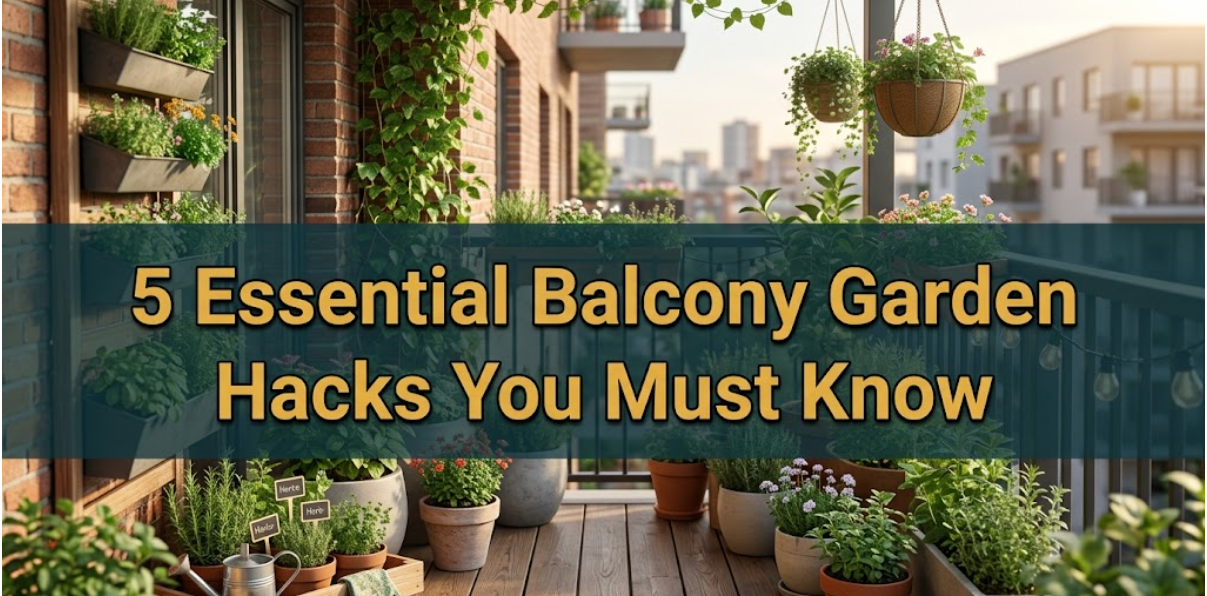
A balcony garden often starts as a simple idea: a few pots, a couple of herbs, maybe a flowering plant for color. But over time, many people realize the same problem—plants struggle, space feels cramped, watering becomes inconsistent, and the whole setup looks more chaotic than calming.
The good news is that balcony gardening is less about having more space and more about using smarter systems. Once you understand a few essential hacks, even a very small apartment balcony can turn into a productive green corner filled with herbs, vegetables, and decorative plants.
Below are five essential balcony garden hacks that go beyond basic advice. Each one focuses on structure, efficiency, and long-term sustainability so your garden doesn’t just grow—but thrives.
hack 1: build a layered vertical system instead of spreading out
One of the biggest mistakes in balcony gardening is treating the floor like the main growing area. In small spaces, horizontal expansion is limited, but vertical space is often ignored.
A layered vertical system means using height strategically—like shelves in a kitchen.
Think of your balcony as having five vertical levels:
Level 1: floor pots (largest plants)
Level 2: mid-height shelves
Level 3: wall-mounted planters
Level 4: railing planters
Level 5: hanging pots
Here’s how space usage changes:
| Level | Type of Plants | Efficiency Value |
|---|---|---|
| Floor | Tomatoes, dwarf plants | Medium |
| Mid shelves | Herbs, leafy greens | High |
| Wall | Strawberries, ivy | Very high |
| Railing | Flowers, small herbs | High |
| Hanging | Trailing plants | Very high |
Instead of 5–6 pots on the ground, you can fit 15–25 plants using vertical layering.
practical setup method:
- Install a metal or wooden shelving rack against one wall
- Add railing planters for herbs like basil and mint
- Use S-hooks for hanging baskets
- Keep heavier pots only on the floor level
visual spacing breakdown:
| Balcony Size | Traditional Setup | Vertical Setup |
|---|---|---|
| 4×6 ft | 5–7 plants | 15–20 plants |
| 5×8 ft | 8–12 plants | 25–35 plants |
The key idea: you are not increasing space—you are multiplying usable surfaces.
hack 2: choose plants based on “growth behavior,” not appearance
Many beginners choose plants based on looks or taste. But in a balcony environment, growth behavior matters more than appearance.
Plants fall into three behavioral categories:
- fast spreaders (take over space quickly)
- vertical growers (grow upward)
- compact growers (stay controlled)
Choosing the right mix prevents overcrowding and maintenance problems.
plant behavior chart:
| Category | Examples | Best Use in Balcony |
|---|---|---|
| Fast spreaders | Mint, oregano | Controlled pots only |
| Vertical | Tomato, beans, chili | Floor or large pots |
| Compact | Thyme, lettuce, parsley | Shelves/railings |
smart combination rule:
- 40% compact plants
- 35% vertical growers
- 25% controlled spreaders
why this matters:
If you only plant fast spreaders, your balcony becomes overgrown in weeks. If you only plant vertical growers, you lose lower space efficiency. Balance creates stability.
real-life example layout:
| Zone | Plant Type |
|---|---|
| Floor corner | Tomato + chili |
| Mid shelf | Lettuce + parsley |
| Railing | Basil + coriander |
| Hanging pots | Strawberries |
This system keeps the garden structured instead of chaotic.
hack 3: control water like a system, not a routine
Watering is where most balcony gardens fail—not because of lack of effort, but because of inconsistency.
Instead of manually guessing when to water, think of irrigation as a controlled system.
three watering methods ranked:
| Method | Efficiency | Effort | Suitability |
|---|---|---|---|
| Manual watering | Low | High | Small setups |
| Bottle drip system | Medium | Low | Beginners |
| Self-watering pots | High | Very low | Long-term |
simple bottle drip system:
- Take a plastic bottle
- Make 2–4 tiny holes in cap
- Fill with water
- Insert upside down into soil
This releases water slowly over 1–3 days.
watering frequency guide:
| Plant Type | Summer (Hot) | Winter (Cool) |
|---|---|---|
| Herbs | Daily | 2–3 days |
| Vegetables | Daily | 1–2 days |
| Succulents | 3–5 days | 7–10 days |
| Flowers | 1–2 days | 3–4 days |
important insight:
Plants don’t die from lack of care—they die from inconsistent care.
A stable watering rhythm matters more than quantity.
bonus hack:
Place a small tray under pots to reuse drained water in dry climates, reducing waste.
hack 4: use lightweight soil engineering instead of normal garden soil
Most people use regular garden soil because it feels natural. But in balcony gardening, soil weight, drainage, and aeration matter more than “naturalness.”
Heavy soil causes:
- root rot
- poor drainage
- structural weight issues
- stunted plant growth
Instead, use engineered potting mix.
ideal balcony soil mix:
| Ingredient | Purpose | Ratio |
|---|---|---|
| Coco peat | Moisture retention | 40% |
| Compost | Nutrients | 30% |
| Perlite | Aeration | 20% |
| Sand | Drainage balance | 10% |
comparison:
| Soil Type | Weight | Drainage | Root Health |
|---|---|---|---|
| Garden soil | Heavy | Poor | Medium |
| Potting mix | Light | High | Excellent |
why coco peat matters:
It holds moisture without suffocating roots, making it perfect for hot climates.
balcony safety factor:
| Soil Type | Balcony Load Risk |
|---|---|
| Heavy soil | High |
| Light mix | Low |
This is especially important for apartment buildings where structural load matters.
hack 5: design micro-zones instead of random placement
Most balconies fail visually and functionally because plants are placed randomly. A better method is micro-zoning—dividing the balcony into functional areas.
Think of it like organizing a small room.
basic zoning system:
Zone 1: edible garden
Zone 2: decorative plants
Zone 3: relaxation corner
Zone 4: utility/storage
example layout:
| Zone | Purpose | Items Included |
|---|---|---|
| Edible zone | Food production | herbs, vegetables |
| Decorative | aesthetics | flowers, hanging plants |
| Relaxation | comfort | chair, small table |
| Utility | tools/storage | watering can, soil bags |
sample 4×6 ft balcony layout:
- left wall → vertical herb garden
- railing → flowering plants
- corner → tomato pot
- center → small chair
- under shelf → tools
visual balance principle:
- 60% plants
- 20% open space
- 20% movement/storage
why zoning works:
Without zoning, balconies become visually cluttered and physically hard to maintain. Zoning brings structure and makes maintenance intuitive.
bonus insights: seasonal rotation planning
A balcony garden should never stay static. Plants grow differently in each season, and rotating them improves soil health and productivity.
seasonal chart:
| Season | Best Plants |
|---|---|
| Spring | basil, spinach, lettuce |
| Summer | tomato, chili, cucumber |
| Autumn | kale, coriander, radish |
| Winter | garlic, onion, mint |
rotation benefits:
- prevents soil nutrient depletion
- reduces pest buildup
- improves yield consistency
common mistakes that reduce balcony garden success
Even with good hacks, small mistakes can reduce results significantly.
| Mistake | Result | Fix |
|---|---|---|
| Overcrowding plants | poor airflow | spacing control |
| Wrong sunlight choice | weak growth | match plant-light needs |
| Heavy containers | balcony stress | lightweight pots |
| Irregular watering | plant stress | drip system |
cost efficiency comparison
Balcony gardening doesn’t need high investment if planned properly.
| Item | Store Cost | DIY Cost |
|---|---|---|
| Planters | High | Low |
| Vertical racks | Medium | Low |
| Irrigation system | High | Very low |
| Soil mix | Medium | Low |
DIY solutions often perform just as well when done correctly.
faqs
- what is the easiest plant to start a balcony garden with
Herbs like mint, basil, and coriander are the easiest because they grow quickly and adapt well to containers. - how much sunlight is required for balcony plants
Most edible plants need 4–6 hours of direct sunlight, while leafy greens can survive with partial shade. - can i grow vegetables in a very small balcony
Yes, especially using vertical gardening and compact plant varieties like cherry tomatoes and dwarf peppers. - how do i prevent overwatering in pots
Use pots with drainage holes, lightweight soil, and consider drip irrigation or self-watering systems. - what is the best soil mix for balcony plants
A mix of coco peat, compost, perlite, and a small amount of sand works best for drainage and aeration. - how often should balcony plants be rearranged or rotated
Seasonally rotation (every 3–4 months) is ideal for maintaining soil health and plant balance.
A balcony garden is not defined by its size but by how intelligently it is structured. When space, water, soil, and plant selection work together as a system rather than random choices, even the smallest apartment balcony can become a productive, calming green space that feels far larger than it really is.