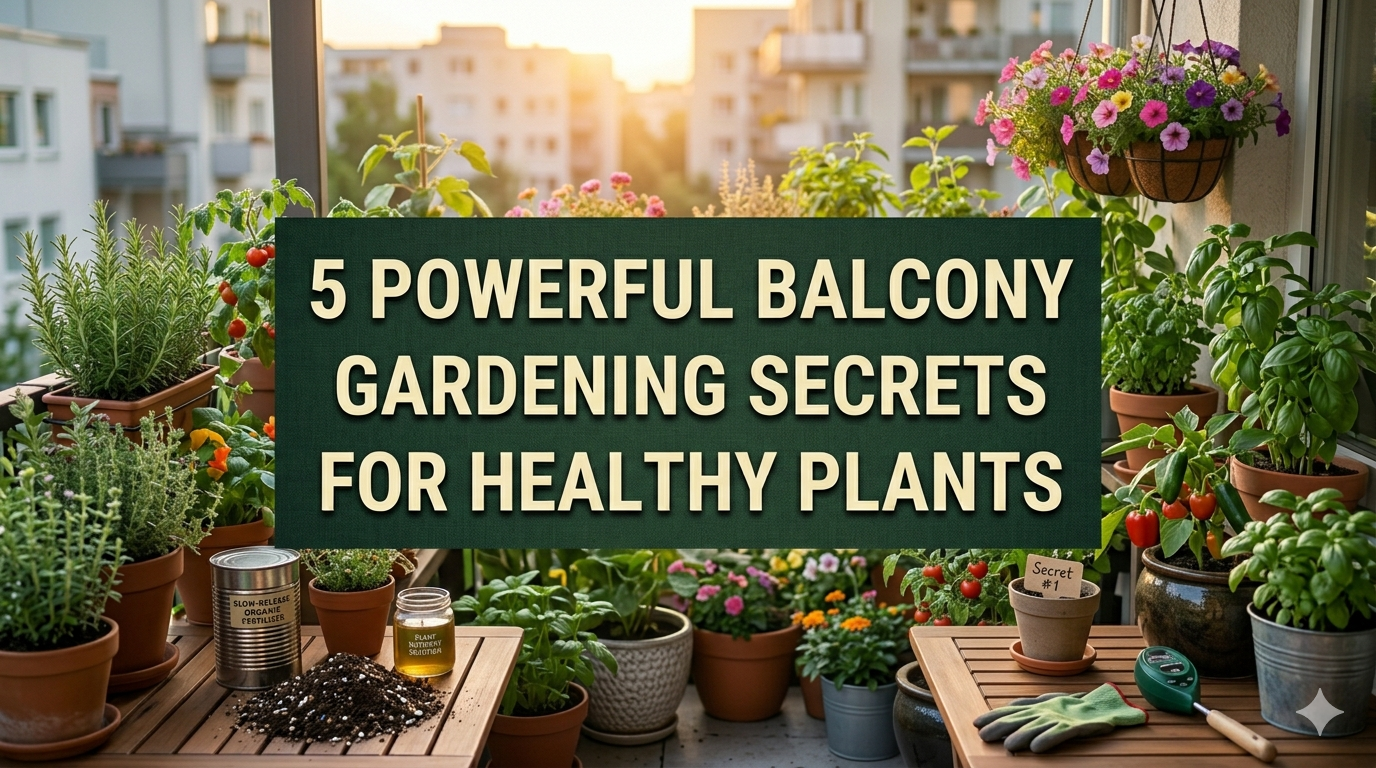
Balcony gardening looks simple from the outside—some pots, a bit of soil, a few green plants, and sunlight. But anyone who has tried it knows the reality is more complex. Plants dry out too fast, leaves turn yellow, growth stalls, and sometimes everything seems fine one week and struggling the next.
The truth is that healthy balcony plants are not a matter of luck. They depend on a few core principles that experienced gardeners quietly rely on. Once you understand these principles, your balcony stops being a “trial and error” zone and becomes a stable, thriving green space.
This guide breaks down five powerful balcony gardening secrets that directly influence plant health, growth speed, and long-term survival.
secret 1: soil quality is more important than plant choice
Most beginners focus on plants—what to grow, which looks nice, which survives in heat. But experienced gardeners start with soil.
Soil is not just “dirt.” It is a living system that controls water, nutrients, and oxygen flow to roots. Poor soil leads to weak plants, no matter how good your care routine is.
ideal balcony soil structure
A balanced mix should:
- retain moisture without becoming soggy
- allow airflow to roots
- contain nutrients for steady growth
recommended soil mix:
- 40% potting soil
- 30% compost
- 20% coco peat
- 10% perlite or sand
table: soil performance comparison
| Soil Type | Water Retention | Drainage | Nutrient Level | Plant Health |
|---|---|---|---|---|
| Basic garden soil | Medium | Low | Low | Poor |
| Potting mix | Medium | Medium | Medium | Good |
| Enriched mix | High | High | High | Excellent |
key insight
Healthy roots = healthy plant. Everything above ground depends on what happens below the soil.
balcony tip
Replenish compost every 2–3 weeks for container plants because nutrients wash out faster in pots.
secret 2: sunlight placement decides everything
Sunlight is not equal across your balcony. Even a small shift in pot placement can change plant health dramatically.
Plants do not just need sunlight—they need the right intensity, duration, and direction.
sunlight categories:
- full sun (6–8 hours)
- partial sun (3–5 hours)
- shade (1–3 hours indirect light)
table: plant sunlight requirements
| Plant Type | Ideal Sunlight | Growth Impact |
|---|---|---|
| Basil | Full sun | Fast growth |
| Mint | Partial shade | Steady growth |
| Snake plant | Low light | Very slow growth |
| Marigold | Full sun | High flowering |
| Ferns | Shade | Stable but slow |
common mistake
Placing all plants in the same light condition leads to uneven growth and plant stress.
balcony strategy
Divide your balcony into sun zones instead of treating it as one uniform space.
secret 3: watering is about timing, not quantity
Overwatering is one of the most common reasons balcony plants die. Beginners often think more water means healthier plants, but that’s not true.
Roots need both water and oxygen. Too much water blocks oxygen and leads to root rot.
better watering approach:
- water only when soil is slightly dry
- adjust based on season
- water early morning or evening
chart: watering frequency guide
| Season | Water Frequency | Risk Level | Best Practice |
|---|---|---|---|
| Summer | Daily/alternate | High | Early morning water |
| Winter | 2–3 times/week | Medium | Light watering |
| Monsoon | As needed | Very high | Check soil first |
soil test trick
Stick your finger 2–3 cm into the soil. If it feels moist, skip watering.
balcony insight
Containers dry faster than ground soil, so observation matters more than fixed schedules.
secret 4: pruning is not optional—it is growth control
Many beginners avoid pruning because they think it harms plants. In reality, pruning is what keeps plants healthy, structured, and productive.
Pruning removes:
- dead leaves
- weak stems
- overcrowded growth
This redirects energy into healthier parts of the plant.
benefits of regular pruning:
- stronger root system
- better air circulation
- increased flowering or leaf production
- reduced pest issues
table: pruning impact by plant type
| Plant Type | Response to Pruning | Growth Improvement |
|---|---|---|
| Herbs | Very high | Bushier growth |
| Flowering plants | High | More blooms |
| Indoor plants | Medium | Balanced shape |
| Climbers | High | Faster spread |
practical rule
Never remove more than 25–30% of a plant at once.
balcony tip
Weekly light pruning is more effective than occasional heavy trimming.
secret 5: plant grouping affects humidity and growth
Plants are not independent—they influence each other’s environment. Grouping plants strategically creates a micro-ecosystem that improves humidity, reduces stress, and stabilizes temperature.
This is especially important in balcony gardens exposed to wind and heat.
benefits of grouping plants:
- higher humidity retention
- reduced water evaporation
- better pest resistance
- improved visual density
table: grouping strategy
| Group Type | Plants Included | Benefit |
|---|---|---|
| Herb cluster | Basil, mint, parsley | Easy harvesting |
| Shade group | Ferns, snake plant | Moist environment |
| Flower cluster | Marigold, petunia | Pollinator attraction |
| Mixed group | Herbs + foliage | Balanced ecosystem |
design insight
Tightly grouped plants behave like a small natural ecosystem, supporting each other’s survival.
bonus secret: container size matters more than you think
Even perfect soil and watering cannot fix a container that is too small. Root space determines how big and healthy a plant can grow.
container guidelines:
- small herbs: 15–20 cm pots
- medium plants: 25–30 cm pots
- vegetables: 30+ cm deep containers
table: container size impact
| Container Size | Root Growth | Water Stability | Plant Health |
|---|---|---|---|
| Small | Limited | Low | Weak |
| Medium | Balanced | Medium | Good |
| Large | Strong | High | Excellent |
key insight
Bigger root space = less frequent watering and stronger plants.
balcony ecosystem setup plan
A healthy balcony is not random—it follows structure.
example layout:
| Zone | Plants | Purpose |
|---|---|---|
| Sun zone | Basil, marigold | Growth + flowers |
| Shade zone | Ferns, mint | Moisture balance |
| Vertical wall | Pothos, ivy | Space efficiency |
| Floor area | Vegetables | Productivity |
maintenance schedule
| Task | Frequency | Time Needed |
|---|---|---|
| Watering | 2–4x/week | 10–15 min |
| Pruning | Weekly | 10 min |
| Soil check | Weekly | 5 min |
| Fertilizing | Biweekly | 10 min |
common mistakes that harm balcony plants
- using low-quality soil
- ignoring drainage holes
- overwatering in humid weather
- overcrowding pots
- placing all plants in one light zone
avoiding these mistakes improves plant survival more than adding new tools or fertilizers.
faqs
- what is the most important factor for healthy balcony plants
Soil quality is the most important factor because it controls nutrients, water retention, and root health. - how often should I water balcony plants
It depends on season and plant type, but most require watering 2–4 times per week. - can plants survive in a shaded balcony
Yes, many plants like ferns, mint, and snake plants thrive in low-light conditions. - why do balcony plants die faster than garden plants
Because pots dry out faster, have limited soil, and require more frequent care. - is pruning really necessary for beginners
Yes, pruning improves growth, prevents disease, and keeps plants healthy long-term. - how many plants should a beginner start with
Starting with 5–8 plants is ideal to understand watering, sunlight, and care patterns without overwhelm.