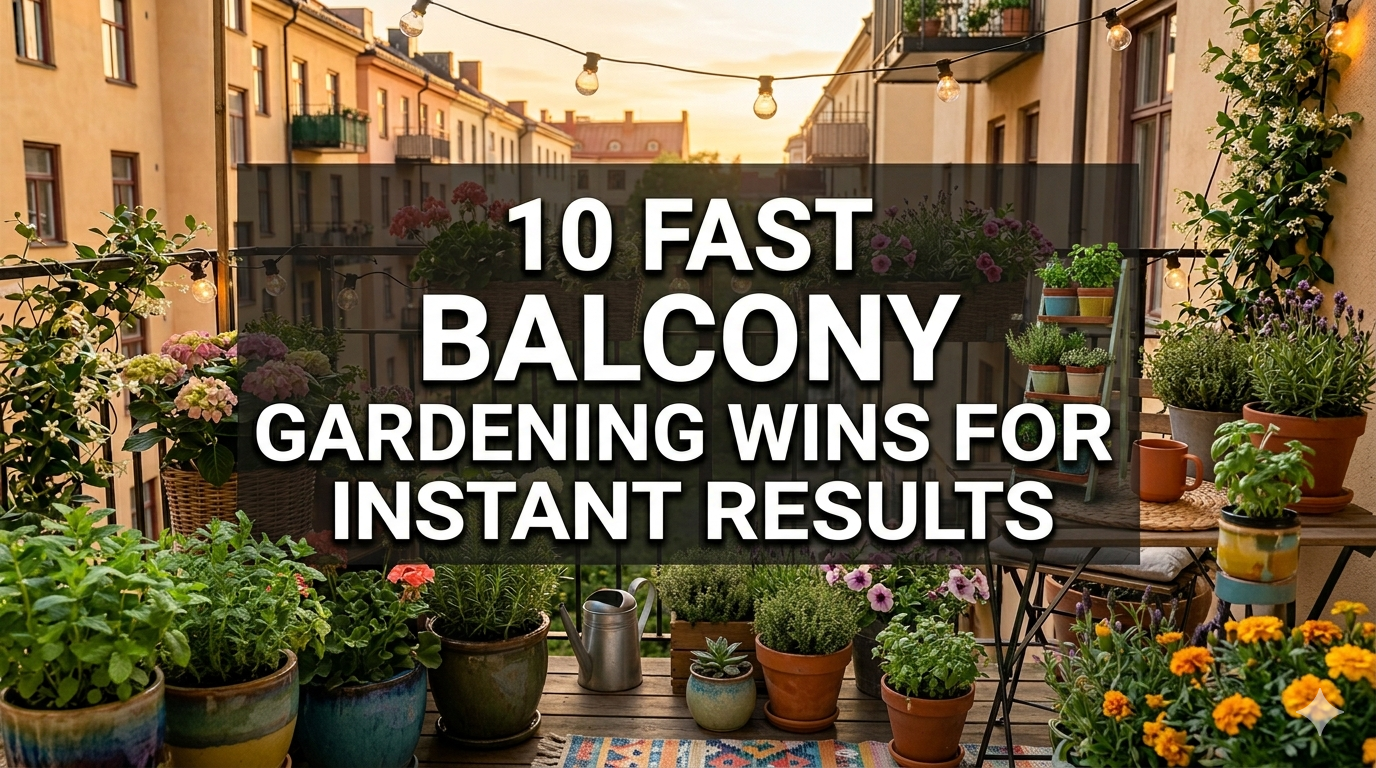
Balcony gardening often starts with excitement and ends with frustration—not because people lack interest, but because results take longer than expected. When space is limited, every pot, every plant, and every inch matters. So when something doesn’t show improvement quickly, it feels like it’s not working.
The good news is that balcony gardens respond extremely fast to the right changes. Unlike large outdoor gardens, container setups react within days because everything—soil, water, nutrients, and roots—is contained and controlled.
This guide focuses on 10 practical balcony gardening wins that deliver visible improvement quickly. These are not long-term theories. They are small, high-impact adjustments that can make your balcony look greener, healthier, and more alive in just days.
Along the way, you’ll find structured tables, visual comparisons, and practical layouts to make the changes easy to apply.
win 1: upgrade to high-quality potting mix for instant plant response
Soil is the foundation of every balcony garden, and yet it’s the most ignored element. Many people use regular garden soil, which is too dense for containers. The result is slow growth and poor drainage.
A good potting mix, on the other hand, is designed specifically for container gardening. It allows air, water, and nutrients to move freely.
soil comparison chart:
| Feature | Garden Soil | Potting Mix |
|---|---|---|
| Drainage | Poor | Excellent |
| Aeration | Low | High |
| Nutrient balance | Inconsistent | Balanced |
| Root growth speed | Slow | Fast |
| Weight in pots | Heavy | Light |
quick improvement mix:
- 50% potting soil
- 30% compost
- 20% coco peat or perlite
instant result:
Within 3–5 days, plants appear greener and more upright due to improved oxygen flow and moisture balance.
win 2: reposition plants based on sunlight zones
Most balconies receive uneven sunlight. One corner may get full sun while another remains shaded all day. Ignoring this leads to weak or uneven growth.
sunlight zoning chart:
| Light Zone | Hours of Sun | Best Plants |
|---|---|---|
| Full sun | 6+ hours | basil, tomatoes, chili |
| Partial sun | 3–5 hours | mint, coriander, spinach |
| Shade | <3 hours | ferns, lettuce, parsley |
quick action plan:
- Move sun-loving plants to railing edge
- Keep shade plants inside corners
- Rotate pots weekly
instant result:
Plants stop drooping and begin to stabilize within a few days.
win 3: introduce fast-growing plants for immediate greenery
If you want quick results, plant selection matters more than anything else. Some plants naturally grow faster and respond quickly to care.
fast-growing plant list:
| Plant | Visible Growth Time |
|---|---|
| Mint | 3–5 days |
| Basil | 5–7 days |
| Spinach | 7–10 days |
| Lettuce | 7–10 days |
| Green onion | 4–6 days |
growth speed comparison:
| Slow Plants | Fast Plants |
|---|---|
| Roses | Mint |
| Shrubs | Lettuce |
| Trees | Basil |
instant result:
Within a week, your balcony starts showing visible greenery instead of empty pots.
win 4: use vertical space to multiply greenery instantly
In small balconies, horizontal space is limited—but vertical space is often unused. Going vertical can instantly double or triple the visual greenery.
vertical gardening options:
| Method | Space Efficiency | Visual Impact |
|---|---|---|
| Wall shelves | Very high | High |
| Hanging pots | High | Very high |
| Ladder stands | Medium | High |
| Rail planters | Medium | Medium-high |
simple vertical structure:
Top: trailing plants (money plant, ivy)
Middle: herbs (basil, mint, coriander)
Bottom: heavier pots (vegetables or flowers)
instant result:
The balcony immediately looks fuller and more layered.
win 5: group pots for dense garden illusion
Spacing pots too far apart makes even a full garden look empty. Grouping them closely creates instant density.
cluster styles:
| Arrangement Type | Effect |
|---|---|
| Triangle group | Balanced look |
| Circular group | Dense appearance |
| Linear cluster | Structured feel |
visual spacing guide:
| Bad Setup | Good Setup |
|---|---|
| Wide gaps | Slight overlap |
| Isolated pots | Clustered groups |
instant result:
Even 4–5 pots can look like a mature mini garden.
win 6: add trailing plants for instant softness
Trailing plants create movement and softness in a balcony garden. They spill over edges and break rigid lines.
popular trailing plants:
- money plant
- string of hearts
- pothos
- creeping fig
placement chart:
| Position | Plant Type |
|---|---|
| Top railing | Hanging vines |
| Mid shelf | Bushy herbs |
| Floor pots | Compact plants |
instant result:
Your balcony gains depth and looks more “alive” within days.
win 7: use reflective surfaces to boost light
Light is the most powerful growth factor in small gardens. If your balcony lacks sunlight, reflection can help amplify what is available.
reflection tools:
| Material | Effect |
|---|---|
| Mirrors | Double brightness |
| White walls | Reflect sunlight |
| Foil sheets | Direct light |
placement tip:
Place reflective surfaces opposite plants—not behind them—for maximum effect.
instant result:
Plants look brighter and more vibrant almost immediately.
win 8: apply liquid fertilizer for rapid growth boost
Unlike solid fertilizers, liquid fertilizers are absorbed quickly and show fast results.
fertilizer comparison:
| Type | Absorption Speed | Result Time |
|---|---|---|
| Granular | Slow | Weeks |
| Compost | Medium | Days-weeks |
| Liquid feed | Fast | 2–4 days |
simple mix:
- Diluted compost tea
- Organic liquid fertilizer
- Seaweed extract (optional)
instant result:
Leaves become greener and growth accelerates within a few days.
win 9: prune strategically to trigger new growth
Pruning may feel like removing growth, but it actually stimulates new shoots.
pruning guide:
| Plant Type | What to Remove |
|---|---|
| Herbs | Top leaves |
| Vegetables | Yellow or weak parts |
| Bush plants | Overgrown stems |
growth response timeline:
| Day Range | Plant Reaction |
|---|---|
| 1–2 days | Adjustment phase |
| 3–5 days | New shoots appear |
| 6–10 days | Fuller growth form |
instant result:
Plants look fresher and bushier within a week.
win 10: improve soil moisture with natural mulch
Mulch helps retain water, regulate temperature, and improve soil appearance.
mulch options:
| Material | Best Use Season |
|---|---|
| Dry leaves | Autumn |
| Straw | Summer |
| Coconut husk | Year-round |
| Pebbles | Decorative use |
benefits table:
| Without Mulch | With Mulch |
|---|---|
| Dry soil | Moist soil layer |
| Frequent water | Reduced watering |
| Uneven growth | Stable roots |
instant result:
Soil stays healthier and plants look more stable quickly.
balcony gardening improvement overview
| Win Type | Time to Notice Change | Impact Level |
|---|---|---|
| Soil upgrade | 2–5 days | High |
| Plant rotation | 2–3 days | Medium |
| Vertical setup | Immediate | Very high |
| Fertilizer boost | 2–4 days | High |
| Pruning | 3–7 days | Medium-high |
weekly balcony care rhythm
| Day | Task |
|---|---|
| Monday | Water + observation |
| Tuesday | Light pruning |
| Wednesday | Fertilizer application |
| Thursday | Rearranging pots |
| Friday | Soil check |
| Saturday | Cleaning + misting |
| Sunday | Rest + visual planning |
common mistakes that delay results
| Mistake | Effect | Fix |
|---|---|---|
| Overwatering | Root damage | Check soil first |
| Poor sunlight setup | Weak growth | Reposition pots |
| Static layout | Dull appearance | Rotate arrangement |
| Wrong soil choice | Slow response | Use potting mix |
faqs
- how quickly can balcony gardening changes show results
Most visible improvements appear within 3–7 days if proper soil, light, and watering adjustments are made. - what is the fastest way to make a balcony look greener
Using fast-growing plants combined with vertical stacking gives the quickest visual impact. - do small changes really make a difference in balcony gardens
Yes, because container gardens respond quickly to even minor adjustments in soil, light, and watering. - which plants show results the fastest
Mint, basil, spinach, and green onions are among the quickest growers. - how often should I rearrange my balcony plants
Every 1–2 weeks is ideal to ensure balanced sunlight and fresh visual layout. - is fertilizer necessary for fast results
Yes, especially liquid fertilizers—they significantly speed up visible growth.
closing thought
A balcony garden doesn’t need months to feel alive. With the right combination of soil, light management, plant selection, and small structural changes, it can transform within days. The key is not doing everything at once—but applying the right wins that trigger immediate response.
When these simple adjustments come together, even the smallest balcony can shift from “empty space” to a living green corner that feels fresh, active, and constantly evolving.