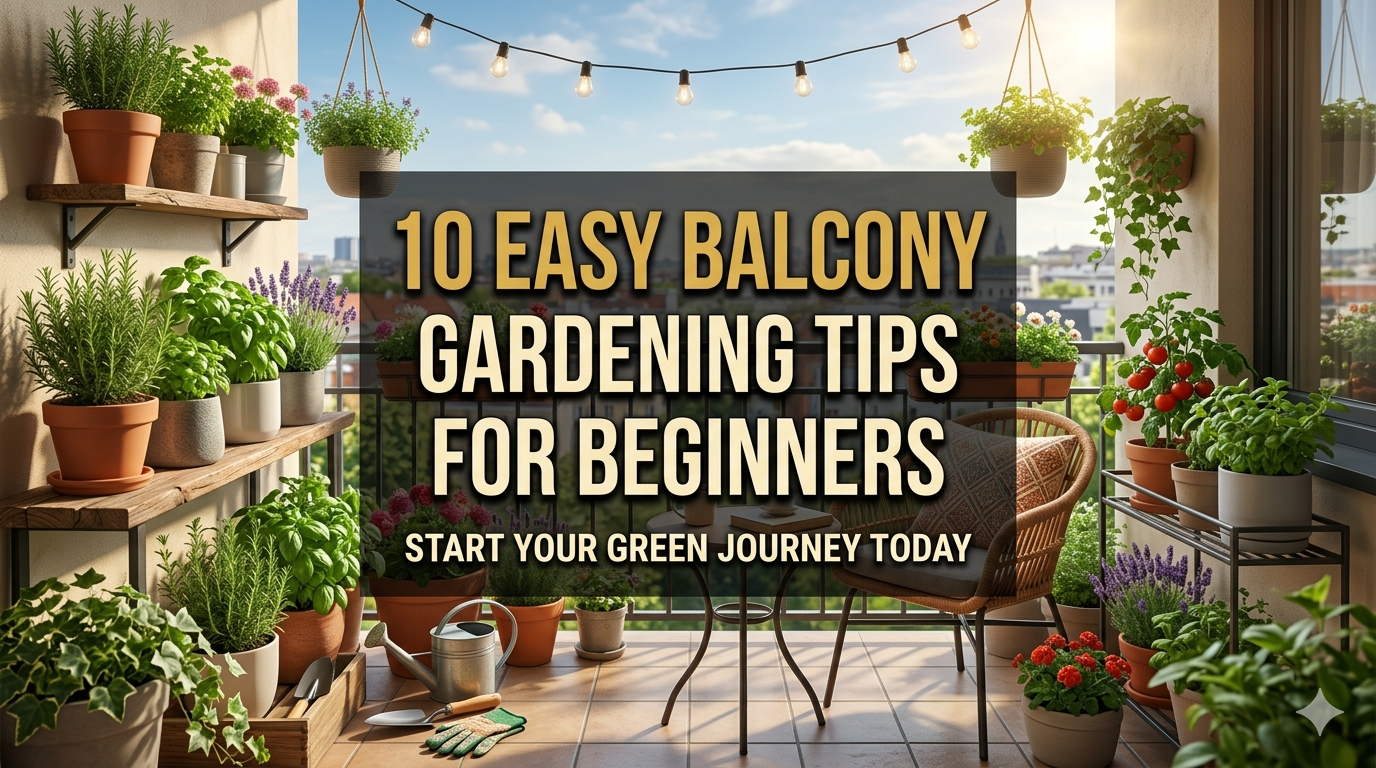
Starting a balcony garden is one of those projects that looks simple from the outside but quickly becomes confusing once you begin. Pots pile up, plants don’t grow as expected, sunlight behaves differently than you assumed, and watering becomes either too much or too little. Most beginners don’t fail because they lack interest—they struggle because they don’t have a simple system.
This guide focuses on practical, beginner-friendly balcony gardening tips that actually work in real small spaces. Instead of complicated gardening theory, you’ll find straightforward methods, comparisons, and setups that help you grow healthy plants even if you’re starting from zero.
Think of this as a grounded, step-by-step approach to turning even a tiny balcony into a functional green space.
- start with low-maintenance plants first
One of the biggest beginner mistakes is starting with difficult plants like roses, large vegetables, or exotic herbs. These require precise care and stable conditions.
Instead, begin with resilient plants that can tolerate mistakes.
best beginner-friendly plants:
- mint
- basil
- coriander
- money plant
- snake plant
- marigold
plant difficulty comparison:
| plant type | care level | growth speed | survival rate |
|---|---|---|---|
| mint | easy | fast | very high |
| basil | easy | fast | high |
| tomatoes | medium | medium | moderate |
| roses | hard | slow | low |
| succulents | easy | slow | high |
why this matters:
Early success builds confidence. If your first plants survive and grow, you’re far more likely to continue gardening long-term.
- understand your balcony sunlight pattern
Sunlight is the most important factor in balcony gardening—and also the most misunderstood.
Many beginners assume “my balcony gets sunlight,” but don’t track how long or when it actually appears.
basic sunlight categories:
- full sun (6+ hours)
- partial sun (3–6 hours)
- shade (less than 3 hours)
sunlight suitability chart:
| sunlight level | best plants | risk if ignored |
|---|---|---|
| full sun | tomatoes, peppers, herbs | drying, overheating |
| partial sun | leafy greens, mint | slower growth |
| shade | ferns, snake plant | weak growth in sun-loving plants |
simple observation tip:
Watch your balcony for one full day before planting anything.
- use the right containers (not just any pot)
Containers are not just decorative—they control drainage, temperature, and root health.
Many beginners reuse random containers without checking drainage holes or material suitability.
container comparison:
| container type | drainage | heat retention | beginner friendly |
|---|---|---|---|
| plastic pots | good | medium | yes |
| clay pots | excellent | high | yes |
| metal containers | poor | high heat | no |
| fabric grow bags | excellent | low | yes |
important rule:
If a container has no drainage holes, it is not suitable for most balcony plants.
- don’t overwater—learn soil checking instead
Overwatering is the number one reason balcony plants die.
Beginners often water on a schedule instead of checking soil conditions.
simple soil test method:
- insert finger 2–3 cm into soil
- if dry → water
- if moist → wait
watering comparison:
| method | accuracy | plant health outcome |
|---|---|---|
| fixed schedule | low | inconsistent |
| soil check method | high | stable growth |
| self-watering pots | very high | best for beginners |
key insight:
Plants die more often from excess water than lack of it.
- use vertical space to double your garden size
Balconies have limited floor area, but vertical space is often unused.
vertical gardening options:
- wall planters
- hanging pots
- tiered shelves
- railing boxes
space efficiency chart:
| setup type | space usage | plant capacity |
|---|---|---|
| floor pots | high | low |
| vertical shelves | low | high |
| hanging pots | low | medium |
why it works:
You don’t expand outward—you expand upward.
- choose lightweight soil mix for better plant health
Heavy soil reduces drainage and makes pots harder to move.
ideal soil mix for balcony gardens:
- coco peat
- compost
- perlite
soil mix ratio:
| component | percentage | function |
|---|---|---|
| coco peat | 40% | moisture retention |
| compost | 30% | nutrients |
| perlite | 30% | drainage and aeration |
benefit:
Light soil prevents root rot and improves oxygen flow.
- group plants based on water and sunlight needs
Placing all plants together randomly creates uneven growth.
Instead, group them based on similar needs.
grouping system:
| group type | plant examples | care level |
|---|---|---|
| high water | mint, leafy greens | frequent |
| medium water | basil, peppers | moderate |
| low water | succulents, cactus | minimal |
why it helps:
You avoid overwatering some plants while underwatering others.
- add mulch to reduce maintenance
Mulch is a simple layer placed on top of soil that helps retain moisture and reduce weed growth.
materials used:
- dry leaves
- coconut husk
- straw
mulch benefits chart:
| benefit | impact level |
|---|---|
| moisture retention | high |
| weed control | medium |
| temperature control | high |
beginner advantage:
Less watering, healthier soil, fewer problems.
- learn basic pruning for healthier growth
Many beginners avoid cutting plants, thinking it might harm them. In reality, pruning encourages better growth.
basic pruning rules:
- remove yellow leaves
- cut dead stems
- trim overgrown branches
pruning effect:
| action | plant response |
|---|---|
| no pruning | weak, tangled growth |
| regular pruning | strong, bushy growth |
simple truth:
Cutting correctly helps plants grow better, not worse.
- keep a simple weekly garden routine
Consistency matters more than effort intensity.
weekly routine:
| day | task |
|---|---|
| monday | watering check |
| tuesday | sunlight adjustment |
| wednesday | pruning |
| thursday | pest inspection |
| friday | fertilizing (light) |
| saturday | rearranging pots |
| sunday | observation |
why it works:
Small, repeated actions prevent big problems.
balcony gardening performance overview
| factor | beginner impact |
|---|---|
| plant selection | very high |
| watering habits | very high |
| sunlight control | high |
| soil quality | high |
common beginner mistakes
- overwatering
- ignoring sunlight patterns
- overcrowding pots
- using heavy soil
- choosing difficult plants too early
mistake impact chart:
| mistake | severity | fix difficulty |
|---|---|---|
| overwatering | high | medium |
| wrong plant choice | high | low |
| poor drainage | very high | medium |
faqs
- how do I start balcony gardening as a complete beginner?
Start with easy plants like mint, basil, and money plant, use simple containers with drainage, and observe sunlight patterns before planting more. - how many hours of sunlight do balcony plants need?
Most edible plants need 4–6 hours of sunlight, while shade plants like ferns can survive with less. - what is the most common mistake in balcony gardening?
Overwatering is the most common mistake, followed by choosing plants that don’t match sunlight conditions. - can I grow vegetables in a small balcony?
Yes, vegetables like tomatoes, chilies, spinach, and lettuce grow well in containers if properly maintained. - how often should I water balcony plants?
It depends on weather, but usually 2–4 times a week. Always check soil moisture instead of following a strict schedule. - do I need expensive equipment for balcony gardening?
No. Most beginner gardens can be built using recycled containers, basic soil mix, and simple watering tools.
A balcony garden doesn’t become successful because it is large or expensive. It becomes successful because it is simple, consistent, and adapted to its environment. Once you understand how light, water, soil, and space interact, even the smallest balcony can turn into a stable and productive green space that improves over time.