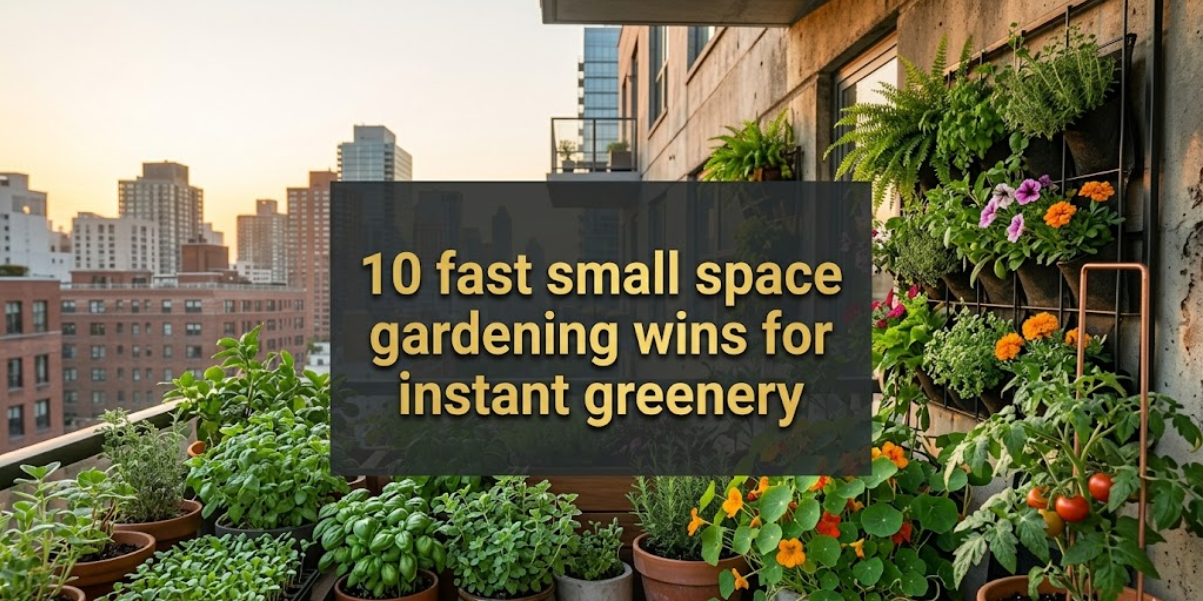
Small-space gardening often feels like a compromise at first. You want a lush, living environment, but you’re working with a balcony corner, a narrow window ledge, or maybe just a couple of square feet near a kitchen door. The good news is that greenery doesn’t depend on size—it depends on strategy.
With the right techniques, even the tiniest space can start looking vibrant within days. Not weeks. Not months. Days.
This guide focuses on 10 practical small-space gardening wins that give almost instant visual impact. These aren’t slow gardening theories—they’re quick, proven adjustments that change how your space looks and feels right away.
Along the way, you’ll find tables, layouts, and simple comparisons that make planning easier and more visual.
win 1: choose fast-impact plants instead of slow growers
One of the biggest mistakes in small-space gardening is choosing plants based on appearance instead of growth speed. If you want instant greenery, you need plants that show visible change quickly.
fast-growing plant options:
| Plant | Visible Results | Why it works fast |
|---|---|---|
| Mint | 3–5 days | Rapid leaf spread |
| Spinach | 5–10 days | Quick leaf cycles |
| Basil | 5–7 days | Strong regrowth after pruning |
| Lettuce | 7–10 days | Fast leaf formation |
| Green onion | 4–6 days | Regrows from base |
instant win effect:
Within a week, your space starts looking “alive” instead of decorative.
win 2: stack vertically instead of spreading horizontally
Small spaces fail when everything is placed at one level. Vertical gardening instantly multiplies your usable area without needing more floor space.
vertical setup options:
| Method | Space Saved | Visual Impact |
|---|---|---|
| Hanging pots | High | Cascading green layers |
| Wall shelves | Very high | Structured garden look |
| Ladder planters | Medium | Layered aesthetic |
| Rail planters | Medium | Balcony edge greenery |
simple vertical layout example:
Top level: trailing plants (money plant, ivy)
Middle level: herbs (basil, mint, coriander)
Bottom level: leafy vegetables or heavier pots
instant win effect:
Your space looks 2–3 times fuller without adding extra square footage.
win 3: use ready-made potting mix for immediate plant boost
Soil quality directly affects how fast plants show visible growth. Ordinary soil often delays growth because it’s compact and low in nutrients.
potting mix comparison:
| Soil Type | Drainage | Nutrients | Growth Speed |
|---|---|---|---|
| Garden soil | Low | Uneven | Slow |
| Potting mix | High | Balanced | Fast |
| Coco peat mix | High | Medium | Moderate-fast |
what a good mix contains:
- coco peat
- compost
- perlite or sand
instant win effect:
Leaves become greener and upright within days due to better oxygen flow to roots.
win 4: create instant fullness using clustered pots
Instead of spreading pots far apart, group them tightly. This creates an illusion of abundance even if you have fewer plants.
cluster arrangement method:
| Cluster Type | Effect |
|---|---|
| Triangular group | Balanced look |
| Circular group | Dense greenery feel |
| Layered group | Height variation |
spacing trick:
Keep pots close enough that leaves slightly overlap.
instant win effect:
Your garden instantly looks denser and more mature.
win 5: introduce trailing plants for visual overflow
Trailing plants are the fastest way to make a small space look lush. They naturally spill downward, creating movement and depth.
popular trailing plants:
- money plant
- string of pearls
- ivy
- creeping fig
visual layering chart:
| Position | Plant Type |
|---|---|
| Top rail | Hanging plants |
| Middle shelf | Bushy herbs |
| Floor level | Compact vegetables |
instant win effect:
Even a few pots feel like a green wall within days.
win 6: add reflective surfaces to double greenery visually
Light is everything in small spaces. If your garden looks dull, it’s often because light is limited, not because plants are lacking.
reflection boosters:
| Material | Effect on Light |
|---|---|
| Mirrors | Doubles visual space |
| White walls | Increases brightness |
| Foil panels | Directs sunlight |
placement tip:
Place reflective surfaces opposite your plants, not behind them.
instant win effect:
Plants appear brighter, healthier, and more vibrant instantly.
win 7: use micro herb gardens for quick edible greenery
Micro herb gardens are perfect for instant gratification because they grow fast and stay compact.
best micro herbs:
| Herb | Growth Speed |
|---|---|
| Cilantro | 5–7 days |
| Basil | 5–7 days |
| Chives | 4–6 days |
| Parsley | 7–10 days |
container setup:
Small trays or shallow pots work best.
instant win effect:
Fresh green shoots appear within a week, adding both color and function.
win 8: prune early and often for faster regrowth
Pruning doesn’t slow plants down—it actually encourages faster, fuller growth when done correctly.
simple pruning guide:
| Plant Type | What to Trim |
|---|---|
| Herbs | Top leaves |
| Veggies | Yellowing parts |
| Bush plants | Weak stems |
growth response timeline:
| Day | Result |
|---|---|
| 1–2 | Minimal visible change |
| 3–5 | New shoots appear |
| 6–10 | Fuller plant structure |
instant win effect:
Plants become bushier instead of leggy.
win 9: use water-smart containers for stress-free growth
In small spaces, inconsistent watering is a major problem. Self-regulating containers fix this instantly.
container types:
| Type | Benefit |
|---|---|
| Self-watering pot | Stable moisture level |
| Double-layer pot | Root protection |
| Fabric grow bag | Better aeration |
instant win effect:
Plants stop wilting and look healthier within days.
win 10: mix textures for instant visual richness
A garden doesn’t feel “full” just because it’s green. Texture variety creates depth and visual richness.
texture mixing chart:
| Plant Type | Texture Effect |
|---|---|
| Broad leaves | Bold visual base |
| Fine leaves | Soft filling texture |
| Trailing vines | Movement and flow |
| Flowering herbs | Color contrast |
example combination:
- basil (bushy)
- mint (spreading)
- ivy (trailing)
- lettuce (broad leaves)
instant win effect:
Even a small arrangement feels layered and professionally designed.
small space garden transformation chart
| Strategy Used | Visual Impact Time | Space Change Perception |
|---|---|---|
| Fast-growing plants | 3–7 days | Moderate |
| Vertical stacking | Immediate | High |
| Reflective surfaces | Immediate | High |
| Proper soil upgrade | 2–5 days | Moderate |
| Plant clustering | Immediate | High |
common mistakes that slow down results
| Mistake | Effect | Fix |
|---|---|---|
| Overwatering | Root stress | Check soil first |
| Too many slow plants | No visible change | Add fast growers |
| Flat arrangement | Dull appearance | Use vertical layers |
| Poor light planning | Weak growth | Reposition pots |
weekly small space gardening rhythm
| Day | Activity |
|---|---|
| Monday | Water + observe plants |
| Tuesday | Light pruning |
| Wednesday | Rearranging pots |
| Thursday | Soil check |
| Friday | Fertilizer (light) |
| Saturday | Cleaning + misting |
| Sunday | Rest + observation |
faqs
- how fast can I see changes in a small space garden
With the right plants and setup, visible improvements can appear in as little as 3–7 days. - what is the easiest plant for instant greenery
Mint and basil are among the fastest because they grow quickly and respond well to pruning. - do small space gardens need special soil
Yes, lightweight potting mix works much better than regular soil because it drains well and supports faster growth. - how do I make my small balcony look fuller
Use vertical stacking, clustered pots, and trailing plants to create layered depth. - can I grow vegetables in a very small space
Yes, leafy greens and herbs grow well in compact setups and don’t require deep containers. - what is the fastest visual improvement trick
Combining reflective surfaces with clustered green plants creates an instant lush effect.
closing thought
Small-space gardening is less about size and more about perception. With the right combination of fast-growing plants, vertical layering, smart soil choices, and visual tricks like reflection and clustering, even the smallest corner can feel alive and abundant.
The key is not waiting for nature to “eventually” fill the space—but guiding it so it looks full from the very beginning.