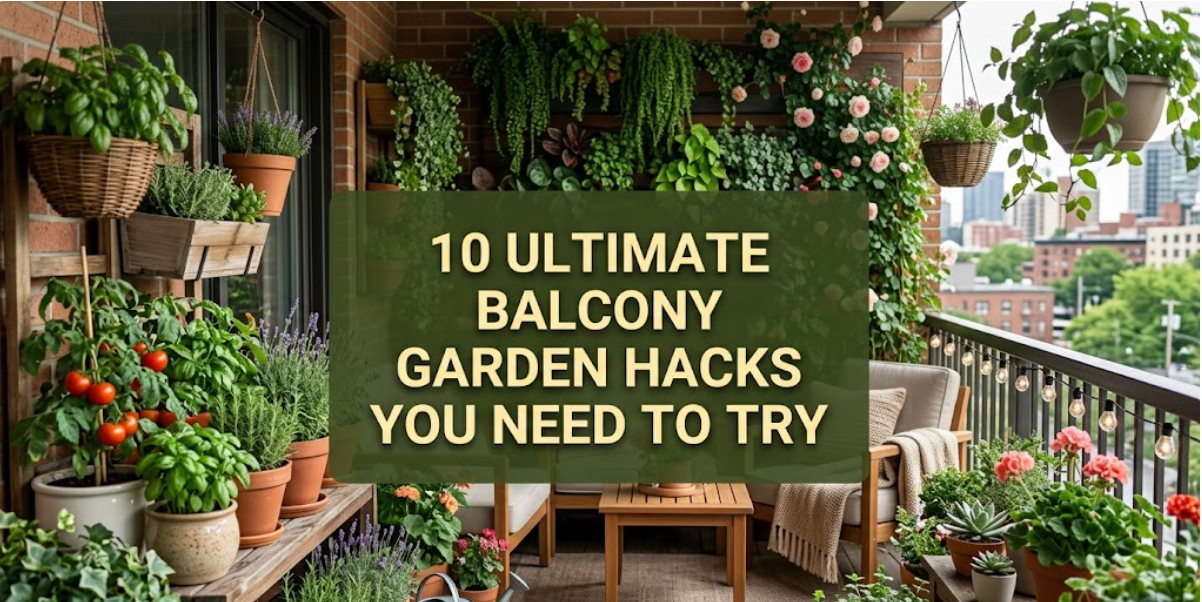
There’s something quietly transformative about turning a bare balcony into a living, breathing garden. Whether you’re working with a tiny apartment ledge or a spacious terrace, the right techniques can turn even the most uninspiring space into a lush retreat. The best part? You don’t need a big budget or professional skills—just a bit of creativity and a willingness to experiment.
This guide explores ten powerful balcony gardening hacks that go beyond the obvious. These aren’t just tips—they’re practical systems, space-saving tricks, and clever workarounds that help you grow more, waste less, and enjoy the process.
- use vertical space like a pro
Most balconies fail not because of lack of effort, but because of wasted vertical space. Walls, railings, and even ceilings can become growing zones.
Instead of crowding the floor with pots, think upward:
- Install wall-mounted planters
- Use hanging baskets
- Add tiered shelves or ladders
- Repurpose shoe organizers for herbs
Vertical gardening increases planting capacity by up to 3x without taking extra floor space.
quick comparison table:
| setup type | space used | plant capacity | cost level | maintenance |
|---|---|---|---|---|
| floor pots | high | low | low | easy |
| vertical racks | medium | high | medium | moderate |
| hanging planters | low | medium | low | moderate |
| wall systems | very low | very high | medium | moderate |
- self-watering containers save time and plants
One of the biggest mistakes beginners make is inconsistent watering. Plants suffer from both neglect and overcare.
Self-watering containers solve this by:
- Providing consistent moisture
- Reducing daily maintenance
- Preventing root rot (when designed well)
You can either buy them or make your own using plastic bottles or buckets with wicks.
simple DIY concept:
- Top section: soil + plant
- Bottom section: water reservoir
- Wick: draws water upward
watering efficiency chart:
| method | water waste | frequency needed | plant health |
|---|---|---|---|
| manual watering | high | daily | inconsistent |
| drip irrigation | low | automated | high |
| self-watering pots | very low | every 3–7 days | very high |
- choose the right plants (not just pretty ones)
A balcony garden isn’t a ground garden. Wind, sunlight angles, and heat reflection from walls create a microclimate.
Instead of forcing unsuitable plants, match plants to your conditions:
- full sun: tomatoes, basil, peppers
- partial shade: mint, lettuce, spinach
- windy areas: rosemary, succulents
- small spaces: dwarf varieties
plant suitability guide:
| condition | best plant types | avoid |
|---|---|---|
| strong sunlight | herbs, fruiting plants | delicate leafy greens |
| shade | leafy greens, ferns | fruiting plants |
| windy balcony | hardy herbs, succulents | tall fragile plants |
| humid space | tropical plants | cacti |
- recycle household items into planters
Balcony gardening doesn’t require expensive pots. In fact, some of the best containers are already in your home.
Ideas include:
- old buckets
- tin cans
- plastic bottles
- broken mugs
- wooden crates
The trick is proper drainage—always add holes at the bottom.
cost comparison chart:
| container type | average cost | durability | eco-friendly |
|---|---|---|---|
| store-bought pots | medium-high | high | low |
| recycled items | free-low | medium | very high |
| ceramic pots | high | high | medium |
- master companion planting
Plants don’t grow in isolation—they interact. Some combinations boost growth, while others compete or attract pests.
smart pairings:
- tomatoes + basil (better growth and flavor)
- carrots + onions (pest control)
- lettuce + radishes (space efficiency)
avoid combinations like:
- beans + onions
- tomatoes + potatoes
companion planting benefit chart:
| pairing type | benefit |
|---|---|
| complementary | improved growth |
| protective | pest reduction |
| space-sharing | better yield per pot |
- use lightweight soil mixes
Balconies have weight limits. Heavy garden soil can strain structures and reduce drainage.
Instead, use a lightweight potting mix:
- coco coir or peat
- compost
- perlite or vermiculite
ideal soil ratio:
| component | percentage | purpose |
|---|---|---|
| coco coir | 40% | moisture retention |
| compost | 30% | nutrients |
| perlite | 30% | aeration and drainage |
This mix ensures roots get oxygen while holding enough water.
- rotate plants for better sunlight
Sunlight on balconies shifts throughout the day due to building shadows. Instead of letting plants struggle, rotate them.
simple rotation system:
- morning: sun-loving plants at the front
- afternoon: rotate shaded plants forward
- weekly: turn pots for even growth
sun exposure chart example:
| time of day | sunlight direction | action needed |
|---|---|---|
| morning | east-facing | move sun plants out |
| midday | overhead | minimal changes |
| evening | west-facing | rotate again |
- create a mini compost system
Even a small balcony can support composting.
Use:
- a sealed bucket
- kitchen scraps (vegetable peels, coffee grounds)
- dry leaves or paper
avoid:
- meat
- dairy
- oily food
composting turns waste into free fertilizer and reduces garbage.
compost efficiency table:
| input type | decomposition speed | nutrient value |
|---|---|---|
| vegetable scraps | fast | high |
| fruit peels | medium | medium |
| dry leaves | slow | balanced |
- protect plants from extreme weather
Balconies are exposed environments. Sudden heatwaves, heavy rain, or strong winds can damage plants quickly.
protection hacks:
- use shade cloth in summer
- move pots indoors during storms
- install wind barriers (mesh or glass panels)
- group plants together to create microclimates
weather protection effectiveness:
| method | protection level | cost |
|---|---|---|
| shade cloth | high (heat) | low |
| wind barrier | high (wind) | medium |
| moving indoors | very high | free |
| plant grouping | moderate | free |
- grow upward with trellises and supports
Climbing plants are perfect for balconies because they grow vertically and produce more in less space.
best climbers:
- cucumbers
- beans
- peas
- small gourds
Use:
- bamboo sticks
- wire frames
- balcony railings
yield comparison:
| plant type | space used | average yield |
|---|---|---|
| bush plants | high | medium |
| climbing plants | low | high |
balcony garden productivity overview chart
| hack number | impact level | cost level | effort required |
|---|---|---|---|
| 1 (vertical) | very high | medium | moderate |
| 2 (watering) | very high | low-medium | low |
| 3 (plants) | high | low | low |
| 4 (recycle) | medium | very low | low |
| 5 (pairing) | high | low | moderate |
| 6 (soil) | very high | medium | low |
| 7 (rotate) | medium | free | low |
| 8 (compost) | high | low | moderate |
| 9 (protect) | high | low-medium | low |
| 10 (trellis) | very high | low | moderate |
practical weekly balcony gardening routine
| day | task |
|---|---|
| monday | check soil moisture |
| tuesday | rotate plants |
| wednesday | prune dead leaves |
| thursday | inspect pests |
| friday | light fertilizing |
| saturday | rearrange layout |
| sunday | relax and observe growth |
faqs
- how much sunlight does a balcony garden need?
Most edible plants require 4–6 hours of direct sunlight. However, leafy greens can thrive in partial shade. Always match plants to your balcony’s light conditions rather than forcing unsuitable varieties. - can I grow vegetables in a small balcony?
Yes, absolutely. Focus on compact and vertical-growing plants like cherry tomatoes, herbs, and leafy greens. With vertical systems, even a tiny balcony can produce a surprising amount of food. - how do I prevent pests naturally?
Use natural methods like neem oil spray, companion planting, and keeping plants healthy. Regular inspection is key—catching pests early makes control much easier. - how often should I water balcony plants?
It depends on weather and plant type, but generally once a day in hot climates and every 2–3 days in cooler conditions. Self-watering systems can reduce this frequency significantly. - is composting possible in apartments?
Yes, small-scale composting is ideal for balconies. Use sealed containers to avoid odor and pests. Stick to plant-based kitchen waste for best results. - what is the biggest mistake beginners make?
Overwatering and poor plant selection. Many beginners choose plants based on appearance rather than suitability, and then overcompensate with water, leading to root problems.
A balcony garden doesn’t have to be perfect to be rewarding. In fact, the charm lies in experimentation—the mismatched pots, the improvised trellis, the recycled containers. These hacks aren’t just about saving space or money; they’re about making the most of what you have and watching something grow because of your effort.
Start small, try one or two hacks, and build from there. Over time, your balcony won’t just look greener—it’ll feel alive.