Introduction
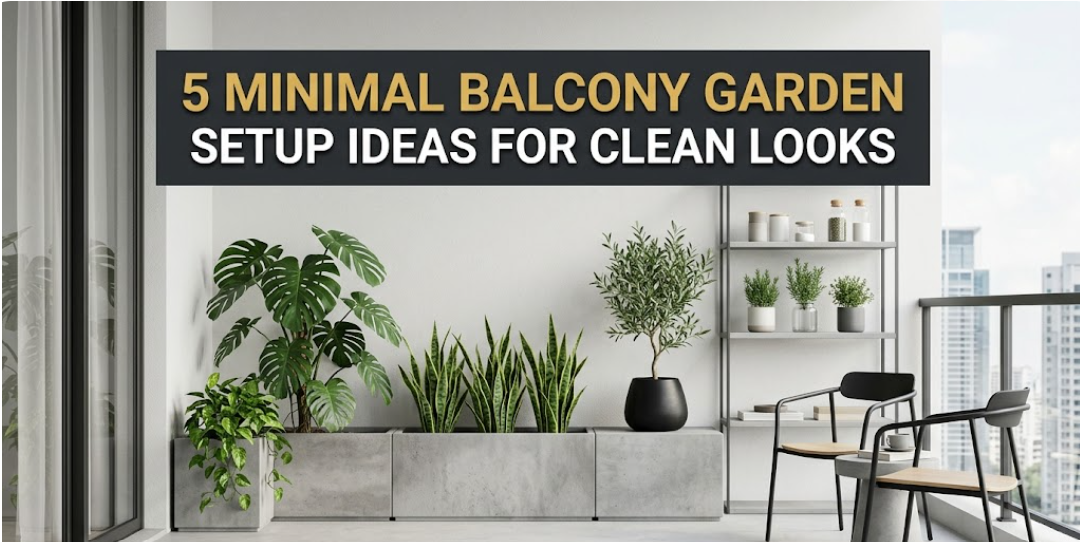
A balcony garden doesn’t always need to be overflowing with plants, colors, and decorative chaos to feel refreshing. In fact, some of the most visually calming outdoor spaces are built on simplicity. A minimal balcony garden focuses on structure, negative space, and intentional plant choices rather than density.
This approach works especially well in small apartments where clutter can make outdoor areas feel even smaller. With the right setup, you can turn even a narrow balcony into a peaceful, modern green corner that feels organized and breathable.
This guide explores five minimal balcony garden setup ideas designed specifically for clean aesthetics, low maintenance, and maximum visual harmony.
- monochrome plant palette setup
A monochrome plant palette means using plants with similar tones and textures instead of mixing too many colors or species. This creates a unified, calming look.
Instead of planting random flowering plants, you focus on variations of green or a single accent tone.
Best plant combinations for monochrome setup:
| Plant Type | Visual Role | Maintenance Level |
|---|---|---|
| Snake Plant | Vertical structure | Very low |
| ZZ Plant | Glossy contrast | Very low |
| Ferns | Soft texture fill | Medium |
| Peace Lily | Subtle white accent | Medium |
| Ivy | Hanging softness | Low |
Design approach:
- Use only green tones with occasional white flowers
- Avoid multicolor pots
- Keep containers identical or similar
Why it works:
A single color family reduces visual noise and creates a “gallery-like” balcony feel. The eye moves smoothly instead of jumping between competing colors.
- vertical wall garden with symmetry
When floor space is limited, vertical gardening is the most efficient solution. But for a minimal look, symmetry is key.
Instead of filling an entire wall randomly, you arrange plants in balanced grids or linear structures.
Simple layout example:
| Row | Left Side | Center | Right Side |
|---|---|---|---|
| Top | Hanging pothos | Empty space | Hanging pothos |
| Middle | Fern | Wall art | Fern |
| Bottom | Small herb pots | Bench | Small herb pots |
Design principles:
- Use identical wall planters
- Keep spacing equal
- Avoid overcrowding the vertical surface
Best plant choices:
- Pothos
- Spider plants
- Basil and mint (for edible symmetry)
- Small trailing succulents
Why it works:
Symmetry creates order, which is the foundation of minimal design. Even with many plants, the structure makes it feel controlled and clean.
- floor-clear floating shelf garden
One of the biggest mistakes in balcony gardening is filling the floor with too many pots. A minimal approach keeps the floor mostly empty and moves greenery upward.
Floating shelves or railing-mounted shelves allow plants to appear suspended, creating a light visual effect.
Suggested shelf arrangement:
| Shelf Level | Plant Type | Purpose |
|---|---|---|
| Top shelf | Trailing plants | Soft cascade effect |
| Middle shelf | Medium pots | Focal greenery |
| Bottom shelf | Herbs | Functional use |
Design rules:
- Keep at least 60% of floor space empty
- Use neutral-colored shelves (white, black, wood)
- Stick to 3–5 plant varieties only
Best plants:
- String of pearls
- Mint
- Basil
- Aloe vera
- Small succulents
Why it works:
Floating structures make the balcony feel larger because the ground is visually “free,” reducing heaviness.
- zen-inspired stone and greenery balance
This setup blends minimal gardening with a calm, almost meditative aesthetic inspired by Japanese design principles.
Instead of filling the space with plants, you intentionally balance greenery with empty space, stones, and simple textures.
Element distribution:
| Element | Quantity | Purpose |
|---|---|---|
| Plants | Few (2–4 types) | Soft contrast |
| White stones | Moderate | Ground texture |
| Wooden accents | Minimal | Warmth |
| Empty space | High | Visual calm |
Plant selection:
- Bonsai tree (main focal point)
- Bamboo plant
- Small moss patches
- Single ornamental grass
Design principles:
- Asymmetry is allowed but controlled
- Negative space is as important as plants
- Avoid colorful pots or decorations
Why it works:
This approach reduces sensory overload. The balance between stone, wood, and greenery creates a calming “pause space” in urban environments.
- compact herb strip garden
This setup is perfect for people who want both aesthetics and functionality. A herb strip garden organizes edible plants in a clean linear arrangement.
Instead of random pots, herbs are placed in a straight row or modular containers.
Example herb layout:
| Position | Herb | Usage |
|---|---|---|
| 1 | Basil | Cooking |
| 2 | Mint | Drinks |
| 3 | Rosemary | Aromatic |
| 4 | Thyme | Cooking |
| 5 | Coriander | Daily use |
Design guidelines:
- Use identical rectangular pots
- Keep spacing equal
- Stick to one straight line or two parallel lines
Additional tip:
Add a drip irrigation strip or self-watering pots for a maintenance-free look.
Why it works:
The uniformity of herb rows creates a clean, almost architectural design while still being practical.
comparison chart: all 5 minimal balcony garden styles
| Style | Visual Cleanliness | Maintenance | Space Efficiency | Best For |
|---|---|---|---|---|
| Monochrome palette | Very high | Low | Medium | Aesthetic lovers |
| Vertical symmetry | High | Medium | Very high | Small balconies |
| Floating shelves | Very high | Medium | High | Modern apartments |
| Zen stone garden | Extremely high | Very low | Medium | Relaxation spaces |
| Herb strip garden | High | Medium | High | Cooking enthusiasts |
maintenance tips for minimal balcony gardens
- Avoid overcrowding plants as they grow
- Stick to a fixed pot color palette (white, grey, black, terracotta)
- Prune regularly to maintain clean shapes
- Clean dust from leaves weekly
- Rotate plants every few weeks for balanced light exposure
- Use hidden storage for tools to avoid visual clutter
common mistakes to avoid
| Mistake | Effect |
|---|---|
| Too many plant species | Visual chaos |
| Mixed pot colors | Breaks minimal theme |
| Overdecorating (fairy lights, statues) | Distracts focus |
| Ignoring spacing | Makes balcony feel smaller |
| Choosing fast-growing vines without control | Overgrowth clutter |
faqs
- what is the main principle of a minimal balcony garden?
The main principle is simplicity through controlled plant variety, clean spacing, and reduced visual clutter. - can i still have flowers in a minimal balcony garden?
Yes, but they should be limited to one or two types and used as subtle accents rather than dominant features. - how many plants are ideal for a small balcony?
Typically 5–10 well-placed plants are enough depending on balcony size and layout style. - what colors work best for pots in a minimal setup?
Neutral colors like white, black, grey, beige, or natural terracotta work best because they don’t distract from greenery. - how do i keep a minimal balcony garden from looking empty?
Use structure—like shelves, symmetry, or vertical alignment—rather than filling space with more plants. - which minimal balcony garden style is easiest for beginners?
The herb strip garden or monochrome plant palette is easiest because both require low maintenance and simple planning.