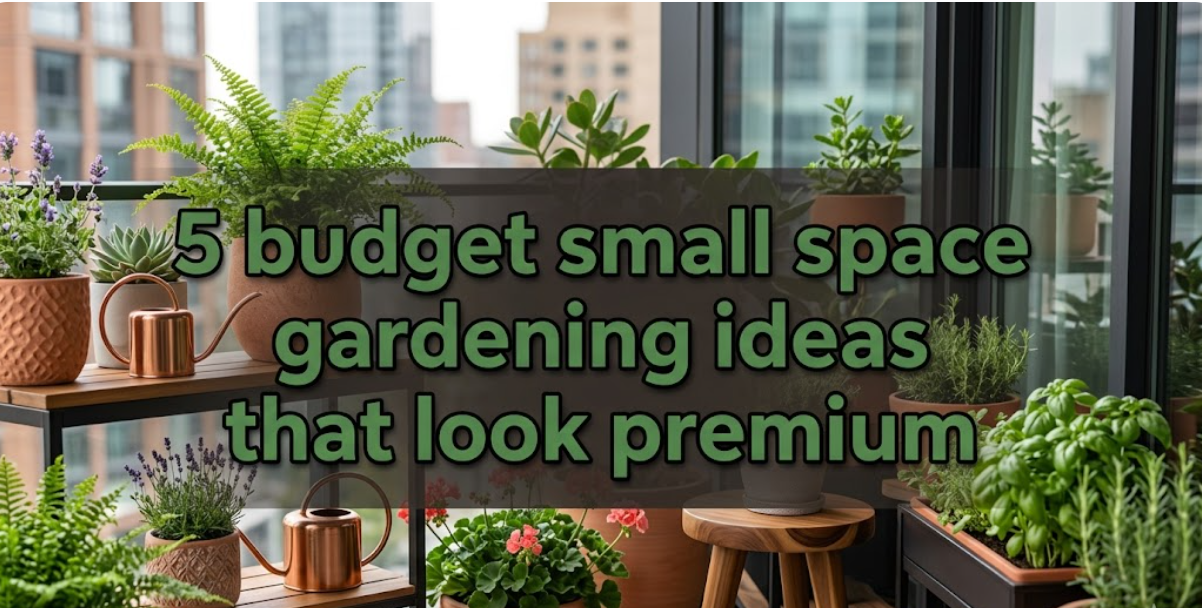
I didn’t plan to become someone who talks about plants like they’re part of daily life. If anything, I started gardening out of frustration. I had a small apartment, an even smaller balcony, and a constant feeling that I didn’t have enough “space” for anything meaningful or green.
At first, I treated gardening like a weekend experiment. A few pots here, a couple of herbs there. Most of it failed quietly. Some plants dried out, others grew weak, and a few just gave up completely.
But small spaces have a way of teaching you faster than big ones. When you only have a limited area, every mistake becomes visible. Every success feels earned.
Over time, I stopped thinking of my balcony as “too small” and started treating it as a controlled environment. That shift changed everything.
These are the six most important lessons I learned from small space gardening—not theory, but real adjustments that came from watching things fail and then slowly learning how to fix them.
lesson 1: space is not about size, it’s about layers
When I started, I thought gardening meant arranging pots in a straight line along the balcony wall. That’s what most “neat” setups look like in pictures. Mine looked fine at first too.
But very quickly, I ran out of room.
I remember standing there one evening, realizing I had more plants than floor space. That’s when I accidentally placed one pot on a small stool, then another on an old box. It didn’t look planned—but it worked.
That accident introduced me to layering.
Instead of thinking horizontally, I started thinking vertically.
small space layering system
| layer level | type of plants | purpose |
|---|---|---|
| top level | sun-loving herbs | maximum light exposure |
| mid level | leafy greens | easy maintenance zone |
| lower level | heavier pots (tomato) | stability and support |
| hanging | trailing plants | space efficiency + aesthetics |
Once I started stacking intentionally, my balcony suddenly felt twice as large.
What surprised me most was not just space efficiency, but how much healthier the plants became when they were placed according to light needs instead of appearance.
lesson 2: soil is more important than the plant itself
In the beginning, I believed gardening success depended on choosing the right plant. I would spend time selecting seeds or small nursery plants, thinking the “right” species would solve everything.
I was wrong.
The turning point came when I planted the same herb in two different containers. One was filled with cheap, compacted soil. The other had loose, mixed soil with compost. Same plant, same watering schedule, same sunlight.
After three weeks, the difference was obvious. One plant was struggling. The other looked like it belonged in a professional garden.
soil quality comparison table
| soil type | water retention | root growth | plant health outcome |
|---|---|---|---|
| compacted soil | poor | weak | slow decline |
| mixed garden soil | moderate | stable | average growth |
| compost-rich mix | balanced | strong | healthy growth |
That experiment changed how I spend money on gardening. I now invest more in soil than seeds or pots.
Good soil doesn’t just support plants—it reduces mistakes. It forgives inconsistent watering and stabilizes growth in small containers.
lesson 3: watering is not a schedule, it’s a reaction
One of my earliest mistakes was treating watering like a fixed rule.
“Water every morning.” That was my system. It sounded responsible. It also nearly destroyed half my plants.
Some plants were constantly wet. Others were still dry because water wasn’t reaching deep enough.
Eventually, I stopped following time and started following soil.
Instead of asking “what time is it?”, I started asking “what does the soil feel like?”
simple moisture logic chart
| soil condition | meaning | action required |
|---|---|---|
| dry top layer | needs water | water deeply |
| slightly moist | still balanced | wait |
| wet or sticky | overwatered risk | skip watering |
This approach felt less structured at first, but it became far more accurate.
Over time, I also learned something important: small pots dry faster than large ones, and hanging pots dry faster than ground-level ones. So watering became less about routine and more about observation.
lesson 4: micro-zones save small gardens
At one point, I noticed something frustrating. Some plants were thriving while others kept struggling—even though they were all being treated the same.
The problem wasn’t care. It was placement.
My balcony had hidden “micro-zones” that I hadn’t noticed before:
- one corner got intense afternoon heat
- one area stayed shaded most of the day
- near the wall, airflow was minimal
- near the railing, wind dried soil faster
Once I mapped these zones, everything changed.
balcony micro-zone map
| zone location | condition | best plant type |
|---|---|---|
| near railing | windy, bright | hardy herbs |
| center floor | stable light | vegetables |
| wall corner | shaded | leafy greens |
| upper hanging area | strong sun | drought-tolerant plants |
Instead of forcing plants to adapt to my layout, I adjusted my layout to match the environment.
That single shift reduced plant loss more than anything else I tried.
lesson 5: pruning is not damage, it’s direction
When I first started pruning plants, I felt like I was harming them. Cutting leaves or stems felt counterproductive. I avoided it for a long time.
But small spaces don’t have room for uncontrolled growth. Without pruning, plants become overcrowded, block each other’s light, and eventually weaken.
My first real pruning experiment was with basil. I cut a few top leaves hesitantly and waited, expecting damage.
Instead, the plant grew back thicker.
plant response after pruning
| action taken | short-term effect | long-term result |
|---|---|---|
| no pruning | tall, thin growth | weak structure |
| light pruning | slight pause | bushier growth |
| regular pruning | steady regrowth | strong, full plant |
That taught me something simple but important: pruning doesn’t reduce a plant—it redirects it.
In small spaces, direction matters more than size.
lesson 6: observation beats equipment
I used to think I needed better tools to improve my garden. Better pots, better fertilizers, better watering cans.
But over time, I realized something unexpected: most improvements didn’t come from buying things—they came from noticing things.
I started spending a few minutes each day just observing. No watering, no adjusting—just looking.
That habit revealed patterns I had been missing:
- one plant always drooped in late afternoon
- certain pots dried faster on windy days
- some leaves changed color before visible damage appeared
simple observation log
| observation type | what it reveals | action triggered |
|---|---|---|
| leaf color change | nutrient or stress issue | adjust feeding |
| drooping pattern | watering imbalance | change schedule |
| soil drying speed | pot/environment effect | relocate plant |
Once I started noticing instead of guessing, my success rate improved naturally.
what all six lessons taught me together
Looking back, these lessons didn’t just improve my plants—they changed how I think about limited space in general.
Small space gardening isn’t about fitting more things in. It’s about understanding what actually works within limits.
At first, I saw my balcony as too small. Later, I saw it as precise. Every inch had meaning. Every placement mattered.
And that’s when gardening stopped feeling like a hobby and started feeling like a system I could actually understand.
growth summary chart (real experience timeline)
| phase | what happened |
|---|---|
| week 1–2 | setup, early mistakes |
| week 3–5 | plant stress, adjustment period |
| week 6–8 | first stable growth patterns appear |
| week 9–12 | optimization of space and soil |
| month 4+ | balanced, low-maintenance system |
faqs
- what is the biggest mistake in small space gardening?
Overcrowding plants and ignoring how much light and airflow each one needs. - can small balconies really grow vegetables?
Yes, many vegetables like tomatoes, chilies, and spinach grow well in containers if soil and sunlight are managed properly. - how often should small space plants be watered?
There is no fixed schedule. Water only when the soil starts feeling dry on top. - is vertical gardening necessary for small spaces?
Not mandatory, but it significantly increases usable space and improves plant arrangement. - what type of soil works best for containers?
A loose, compost-rich mix that retains moisture but still drains well is ideal. - how do I know if my plant is in the wrong spot?
Signs include slow growth, leaf color changes, or uneven drying of soil compared to other plants.
—
Small space gardening taught me something simple but lasting: limits don’t reduce possibilities—they define them. And once you understand those limits, even the smallest balcony can become surprisingly productive.