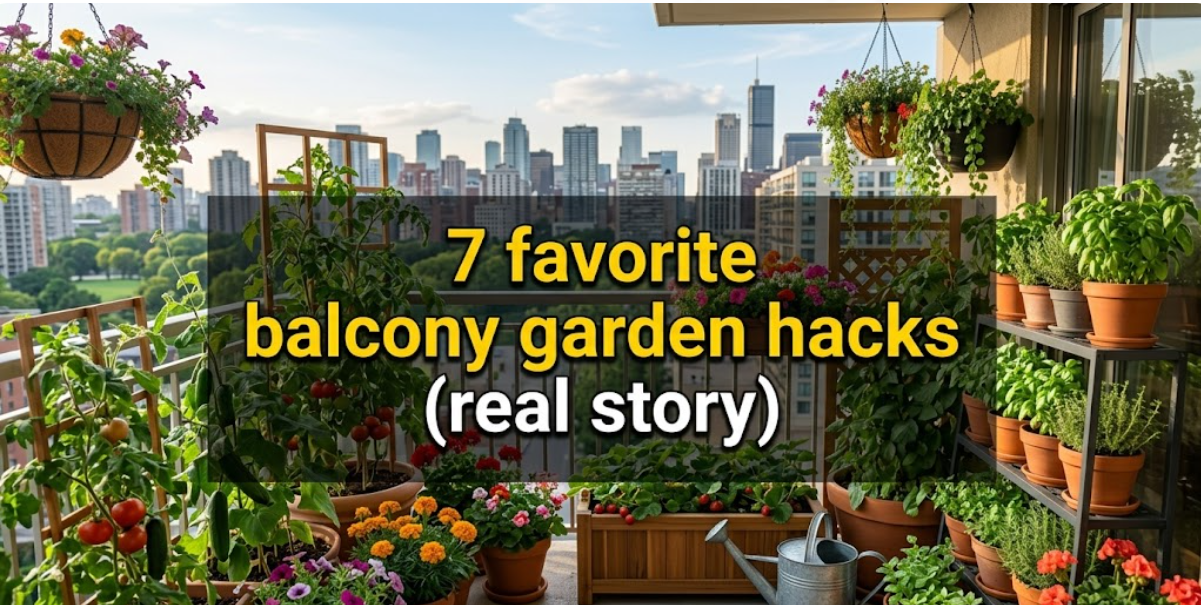
I didn’t start out as a “plant person.” In fact, the first time I tried to grow anything on my tiny balcony, I managed to kill a perfectly healthy mint plant in less than two weeks. It wasn’t neglect—I watered it daily. Turns out, that was exactly the problem.
That failure bothered me more than I expected. I live in a compact apartment with no yard, and that little balcony felt like my only connection to something alive and growing. So I decided to treat it like an experiment. I would try different things, fail where necessary, and keep what worked.
Over time, my balcony changed. It went from a hot, bare slab of concrete into a layered, green corner where herbs, flowers, and even a few vegetables began to thrive. What surprised me most wasn’t the plants—it was how much money I saved and how calming it became.
These are the seven hacks that made the biggest difference for me, told as honestly as possible, including the mistakes that came with them.
hack 1: the “wrong pot” realization that changed everything
In the beginning, I bought cheap plastic pots because they were affordable and easy to find. Within a month, I noticed something odd—soil dried too quickly, plants looked stressed, and roots overheated.
One afternoon, I touched the side of a black plastic pot under the sun. It was almost too hot to hold. That’s when it clicked: my plants weren’t failing because I lacked skill—they were literally cooking.
I switched to a mix of terracotta pots and repurposed containers like old clay bowls and even cracked buckets with drainage holes. The difference was immediate.
table: pot materials comparison
| material | heat retention | water retention | cost range | best for |
|---|---|---|---|---|
| plastic | high | low | low | temporary setups |
| terracotta | moderate | moderate | medium | herbs, flowers |
| ceramic glazed | low | high | medium-high | decorative plants |
| recycled items | varies | varies | free | budget gardening |
The biggest lesson here was simple: the container matters as much as the plant.
hack 2: vertical space is more valuable than floor space
My balcony is small—barely enough room for a chair. For a while, I kept lining pots along the floor, thinking that was the only option.
Then one day, while reorganizing, I stacked two crates by accident. That accidental stack became the start of a vertical system.
I added hooks, a simple metal rack, and even hung a few bottles turned into planters. Suddenly, I had triple the planting space without making the balcony feel crowded.
simple vertical layout idea
| level | plants used | benefits |
|---|---|---|
| top shelf | sun-loving herbs | maximum sunlight exposure |
| middle rack | leafy greens | easy access for watering |
| hanging pots | trailing plants | aesthetic + space-saving |
| floor level | larger pots (tomatoes) | stable base for heavier plants |
Vertical gardening didn’t just save space—it made the balcony feel like a miniature garden instead of a storage area.
hack 3: the watering schedule mistake (and fix)
I used to water every plant at the same time, every day. It felt organized. It also killed more plants than I’d like to admit.
Different plants have different needs. Some like dry soil between watering, others don’t.
The fix was surprisingly low-tech: I started using my finger.
Yes, literally. I would press my finger about an inch into the soil:
- if it felt dry → water
- if it felt moist → wait
That one change saved me from overwatering and underwatering at the same time.
chart: simple watering decision guide
| soil condition | action | frequency impact |
|---|---|---|
| dry | water now | increases watering |
| slightly moist | wait 1 day | balances watering |
| wet | skip watering | prevents root rot |
It’s not fancy, but it works better than any schedule I tried.
hack 4: kitchen waste turned into free fertilizer
This was a game changer for my budget.
Instead of throwing away vegetable scraps, I started collecting things like:
- banana peels
- tea leaves
- eggshells
At first, I just buried them in the soil. That worked… but also attracted insects.
So I improved the method:
- dried banana peels → crushed into powder
- eggshells → washed, dried, ground
- tea leaves → mixed into compost container
table: homemade fertilizer benefits
| material | key nutrient | plant benefit |
|---|---|---|
| banana peel | potassium | stronger roots, better growth |
| eggshell | calcium | prevents leaf issues |
| tea leaves | nitrogen | greener foliage |
Not only did this reduce waste, but it also cut down my spending on store-bought fertilizers almost completely.
hack 5: shade control using the simplest trick
One of my biggest struggles was harsh sunlight. In peak summer, the balcony turned into an oven.
Buying a fancy shade setup felt unnecessary, so I improvised.
I used:
- an old light-colored bedsheet
- a couple of strings
- some hooks
By hanging the sheet loosely, I created filtered sunlight instead of direct exposure.
The effect was immediate:
- leaves stopped burning
- soil stayed moist longer
- plants looked less stressed
quick shade comparison
| condition | plant response |
|---|---|
| direct sun (harsh) | leaf burn, dryness |
| filtered light | steady growth |
| full shade | slow or weak growth |
The goal wasn’t to block sunlight completely—it was to soften it.
hack 6: grouping plants by behavior, not type
I used to arrange plants based on how they looked. Tall ones in the back, small ones in front. It looked neat, but it didn’t work well.
Some plants dried faster. Others stayed wet longer. Mixing them caused uneven care.
So I reorganized based on behavior:
- thirsty plants together
- drought-tolerant plants together
- shade-loving plants in one corner
table: grouping strategy
| group type | examples | care style |
|---|---|---|
| high water needs | basil, mint | frequent watering |
| low water needs | succulents | minimal watering |
| moderate needs | tomatoes, peppers | balanced watering |
This reduced guesswork and made daily care faster.
hack 7: the “sit and observe” habit
This isn’t a physical hack, but it’s probably the most important one.
I started spending 10–15 minutes each evening just sitting on the balcony. No phone, no distractions—just observing.
At first, it felt pointless. But slowly, I began noticing:
- which plants leaned toward sunlight
- which leaves changed color
- where water pooled or dried fastest
These small observations helped me adjust things naturally instead of reacting after damage was done.
It also made the balcony feel less like a project and more like a living space.
growth timeline chart (real experience)
| week | change observed |
|---|---|
| 1 | plants adapting, minor stress |
| 3 | visible new leaves |
| 6 | stronger stems, faster growth |
| 10 | first harvest (herbs) |
| 16 | stable, self-sustaining system |
what all these hacks taught me
Looking back, none of these ideas are complicated. In fact, most of them are almost obvious in hindsight. But that’s the thing about small-space gardening—it’s not about doing something extraordinary. It’s about doing ordinary things correctly and consistently.
I didn’t transform my balcony overnight. It took failed plants, messy soil, and a lot of small adjustments. But eventually, it became something I actually look forward to maintaining.
And the best part? It didn’t cost much. Most of these changes either saved money or required things I already had.
faqs
- how do i start a balcony garden with no experience?
Start with 2–3 easy plants like mint, basil, or succulents. Focus on learning watering and sunlight basics before expanding. - how much sunlight is ideal for balcony plants?
Most plants need 4–6 hours of sunlight. If your balcony gets harsh sun, use filtered shade instead of full exposure. - can i grow vegetables in a small balcony?
Yes. Tomatoes, chilies, spinach, and herbs grow well in containers with proper care and sunlight. - how often should i water balcony plants?
There’s no fixed rule. Check soil moisture instead. Water only when the top inch feels dry. - what is the cheapest way to fertilize plants?
Use kitchen waste like banana peels, eggshells, and tea leaves after proper preparation. - how do i prevent pests naturally?
Keep plants clean, avoid overwatering, and use mild solutions like diluted soap spray if needed.