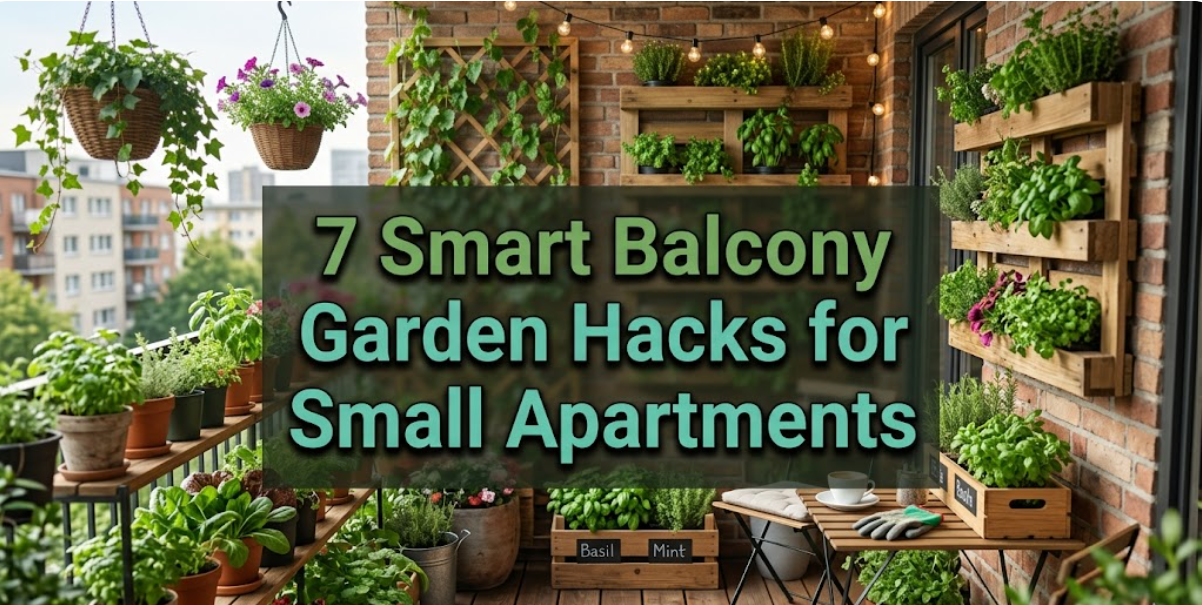
A small balcony can feel like an afterthought—an architectural leftover meant for little more than drying clothes or storing unused items. But with the right approach, even the tiniest outdoor space can become a lush, productive garden. Whether you live in a compact city apartment or a modest studio, a balcony garden offers a pocket of calm, fresh air, and even homegrown food.
The trick is not space—it’s strategy. Below are seven smart, practical hacks that transform limited square footage into a thriving green retreat. Along the way, you’ll find tables, planning guides, and practical insights to make your balcony garden not only beautiful but sustainable and efficient.
understanding your balcony microclimate
Before you plant anything, take a week to observe your balcony. This simple step is often overlooked, but it determines everything that follows.
Ask yourself:
- How many hours of sunlight does the space receive?
- Is it direct sunlight or filtered?
- Is the area windy?
- Does rain reach your plants?
Here’s a quick reference table to match conditions with suitable plants:
| Condition | Sunlight Hours | Ideal Plants |
|---|---|---|
| Full sun | 6–8 hrs | Tomatoes, peppers, basil, marigolds |
| Partial sun | 3–6 hrs | Lettuce, spinach, parsley, mint |
| Shade | <3 hrs | Ferns, snake plant, pothos |
| Windy balcony | Varies | Succulents, hardy herbs |
| Rain-exposed | Varies | Lavender, rosemary, geranium |
Understanding this “microclimate” prevents wasted effort and ensures your plants thrive instead of struggle.
hack 1: go vertical instead of horizontal
When floor space is limited, think upwards. Vertical gardening is the backbone of small balcony success.
Instead of crowding pots on the ground, use:
- Wall-mounted planters
- Hanging baskets
- Ladder shelves
- Trellis systems
Vertical gardening increases planting area without sacrificing movement space. It also improves airflow and sunlight distribution.
Simple vertical layout example:
| Structure Type | Best For | Space Efficiency |
|---|---|---|
| Hanging baskets | Herbs, trailing plants | High |
| Wall planters | Flowers, greens | Very high |
| Ladder shelves | Mixed plants | Medium |
| Trellis | Climbers (beans, ivy) | Very high |
Tip: Combine trailing plants (like ivy) with upright ones (like basil) for a layered effect that looks fuller without overcrowding.
hack 2: choose multi-functional containers
Not all pots are created equal. In a small balcony, every item should serve more than one purpose.
Look for:
- Rail planters (attach to balcony railings)
- Stackable pots
- Self-watering containers
- Storage bench planters
Self-watering pots are particularly useful for busy lifestyles or hot climates. They reduce daily maintenance and keep plants consistently hydrated.
Comparison of container types:
| Container Type | Water Efficiency | Space Saving | Maintenance |
|---|---|---|---|
| Standard pots | Low | Low | High |
| Self-watering pots | High | Medium | Low |
| Vertical stack pots | Medium | Very high | Medium |
| Rail planters | Medium | Very high | Low |
A clever trick: use old buckets, crates, or even kitchen containers as planters. With proper drainage holes, almost anything can become a home for plants.
hack 3: grow compact and dwarf varieties
Traditional garden plants are often too large for balcony life. Instead, choose compact or dwarf varieties specifically bred for small spaces.
Examples include:
- Cherry tomatoes instead of full-size tomatoes
- Dwarf peppers
- Mini eggplants
- Compact herbs like thyme and oregano
These plants require less soil, less support, and less pruning.
Plant size comparison:
| Plant Type | Regular Size Height | Dwarf Variety Height |
|---|---|---|
| Tomato | 5–6 feet | 1–2 feet |
| Pepper | 3–4 feet | 1–1.5 feet |
| Eggplant | 4 feet | 1.5–2 feet |
By choosing smaller varieties, you can grow more plants in the same space without overcrowding.
hack 4: master the art of companion planting
Companion planting is not just for large gardens—it’s even more valuable in small spaces. It involves pairing plants that benefit each other.
Benefits include:
- Natural pest control
- Improved growth
- Efficient use of space
Examples of effective combinations:
| Plant 1 | Plant 2 | Benefit |
|---|---|---|
| Basil | Tomato | Enhances flavor, repels pests |
| Mint | Cabbage | Keeps insects away |
| Marigold | Any veggie | Natural pest deterrent |
| Spinach | Radish | Maximizes soil usage |
Avoid planting incompatible species together, such as mint with delicate herbs, since mint can quickly dominate.
hack 5: optimize watering with smart systems
Watering is one of the biggest challenges in balcony gardening. Too much or too little can quickly damage plants.
Instead of guessing, use controlled methods:
- Drip irrigation kits
- Self-watering planters
- Watering spikes
- Recycled bottle irrigation
Simple DIY drip system:
- Take a plastic bottle
- Poke small holes in the cap
- Fill with water
- Insert upside down into soil
Watering frequency guide:
| Plant Type | Frequency (Summer) | Frequency (Winter) |
|---|---|---|
| Herbs | Daily | Every 2–3 days |
| Vegetables | Daily | Every 2 days |
| Succulents | Every 3–4 days | Weekly |
| Flowers | Daily | Every 2–3 days |
Consistency matters more than quantity. Plants prefer steady moisture rather than irregular soaking.
hack 6: use lightweight soil mixes
Balconies have weight limits, especially in apartments. Heavy garden soil can stress the structure and reduce drainage.
Instead, use lightweight potting mixes.
Ideal mix components:
- Coco peat (light and water-retentive)
- Perlite (improves drainage)
- Compost (nutrient-rich)
Suggested soil mix ratio:
| Component | Percentage |
|---|---|
| Coco peat | 40% |
| Compost | 30% |
| Perlite | 20% |
| Sand | 10% |
Benefits:
- Easier to move pots
- Better aeration
- Healthier root systems
Avoid using dense soil directly from the ground—it compacts quickly and suffocates roots.
hack 7: create zones for beauty and function
A balcony garden should be both productive and relaxing. Divide your space into zones to balance function and aesthetics.
Example layout:
| Zone Type | Purpose | Elements |
|---|---|---|
| Growing zone | Food production | Vegetables, herbs |
| Relaxation zone | Sitting/comfort | Chair, small table |
| Decorative zone | Visual appeal | Flowers, hanging plants |
| Utility zone | Tools/storage | Shelves, bins |
Even a 3–4 square meter balcony can accommodate all these zones with smart arrangement.
Add small touches:
- String lights
- A compact chair
- A small rug
These elements transform the space from “just plants” into a true retreat.
sample balcony garden plan
Here’s a simple layout plan for a small balcony (approx. 4×6 feet):
| Area | Items Included |
|---|---|
| Left wall | Vertical planters (herbs) |
| Right corner | Stackable pots (vegetables) |
| Railing | Rail planters (flowers) |
| Floor center | Small stool or chair |
| Back corner | Storage box + watering tools |
This layout keeps the center open while maximizing planting space.
common mistakes to avoid
Even with the best intentions, small balcony gardens can fail due to simple mistakes:
- Overcrowding plants
- Ignoring sunlight needs
- Overwatering or underwatering
- Using heavy soil
- Choosing the wrong plant varieties
Quick mistake-fix table:
| Mistake | Problem Caused | Solution |
|---|---|---|
| Overcrowding | Poor airflow, disease | Space plants properly |
| Wrong sunlight | Weak growth | Match plants to light |
| Overwatering | Root rot | Use drainage + schedule |
| Heavy soil | Poor roots | Use light mix |
budget-friendly balcony gardening tips
You don’t need a large budget to build a beautiful balcony garden.
Low-cost ideas:
- Reuse plastic bottles as pots
- Use wooden crates as planters
- Compost kitchen waste
- Propagate plants from cuttings
Cost comparison:
| Item Type | Store Price | DIY Alternative |
|---|---|---|
| Planter pot | High | Recycled bucket |
| Compost | Medium | Kitchen compost |
| Trellis | Medium | Bamboo sticks |
| Watering system | High | Bottle drip |
A creative approach often beats an expensive one.
seasonal planting guide for small balconies
Different seasons call for different plants. Planning ahead ensures year-round greenery.
| Season | Recommended Plants |
|---|---|
| Spring | Lettuce, spinach, herbs |
| Summer | Tomatoes, peppers, cucumbers |
| Autumn | Kale, carrots, coriander |
| Winter | Garlic, onions, indoor herbs |
Rotate crops to keep soil healthy and prevent nutrient depletion.
faqs
- how much sunlight does a balcony garden need
Most edible plants need at least 4–6 hours of sunlight daily. If your balcony gets less, focus on shade-tolerant plants like leafy greens and herbs. - can i grow vegetables in a very small balcony
Yes, by using vertical gardening, dwarf varieties, and compact containers, even a tiny balcony can produce vegetables. - how do i prevent pests naturally
Use companion planting, neem oil sprays, and keep plants clean. Marigolds and basil are especially helpful in deterring pests. - what is the best soil for balcony gardening
A lightweight mix of coco peat, compost, and perlite works best. It ensures good drainage and root health. - how often should i water balcony plants
It depends on the plant and season, but most require daily watering in summer and less frequent watering in cooler months. - can balcony gardening damage the structure
Not if done properly. Use lightweight soil, avoid overloading, and distribute weight evenly across the balcony.
A small balcony doesn’t limit your gardening dreams—it refines them. With thoughtful planning, smart tools, and a bit of creativity, even the most compact space can become a thriving, green sanctuary. The key is to treat every inch as valuable and every choice as intentional.