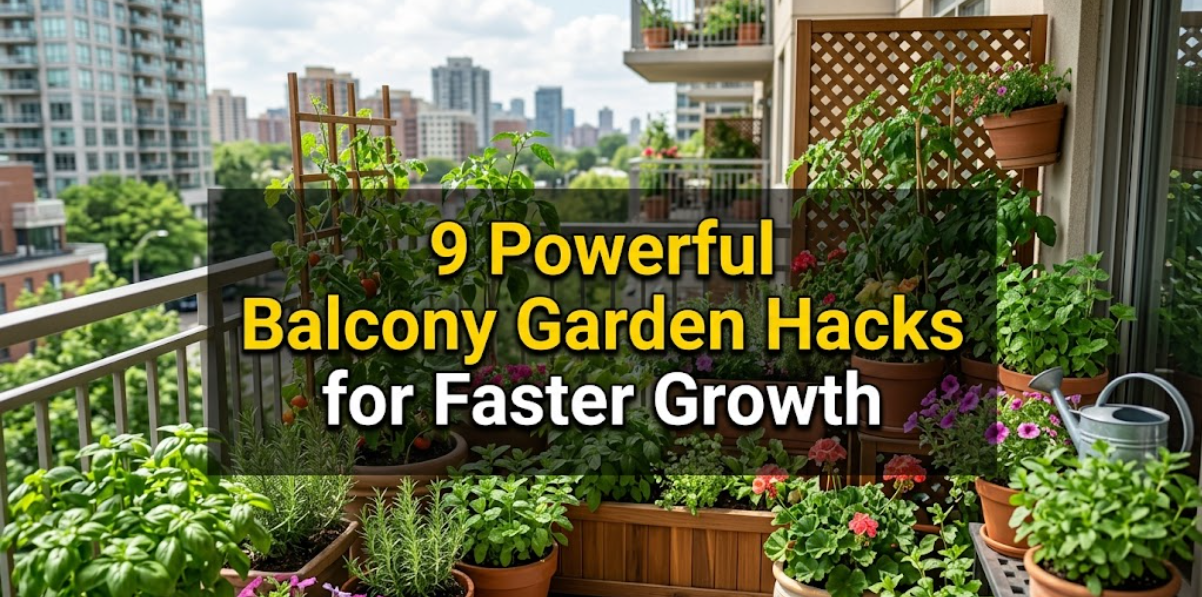
Balcony gardening has quietly transformed from a hobby into a practical lifestyle solution for people living in compact spaces. Whether you’re in a busy city apartment or a small suburban flat, the desire to grow something green—faster, healthier, and more productive—remains universal. Yet many balcony gardeners struggle with slow growth, weak plants, or limited yields.
The truth is, faster plant growth isn’t about luck. It’s about understanding a handful of high-impact techniques and applying them consistently. This guide dives deep into nine powerful balcony garden hacks that accelerate plant growth while maximizing your limited space. Along the way, you’ll also find useful tables, practical comparisons, and structured insights to help you act—not just read.
hack 1: optimize sunlight like a strategist
Sunlight is the engine behind plant growth. Without enough of it, even the best soil and fertilizers won’t matter.
Most balcony gardeners make one of two mistakes: either they underestimate how much light their plants need or they don’t adapt to changing light patterns throughout the year.
Start by mapping your balcony’s sunlight exposure. Observe how many hours of direct sunlight your space receives daily.
Here’s a simple reference:
| Sunlight Level | Hours per Day | Suitable Plants |
|---|---|---|
| Full Sun | 6–8 hours | Tomatoes, peppers, basil |
| Partial Sun | 3–5 hours | Spinach, lettuce, mint |
| Shade | <3 hours | Ferns, parsley, microgreens |
If your balcony doesn’t get enough direct sunlight, reflective surfaces can make a surprising difference. Light-colored walls, mirrors, or reflective sheets can redirect sunlight toward your plants.
Another trick is rotating pots every few days so all sides of the plant receive equal exposure. This prevents uneven growth and weak stems.
hack 2: use the right soil mix (not just “any” soil)
Soil is not just dirt—it’s a living system. Fast-growing plants depend on soil that drains well, retains moisture, and supplies nutrients consistently.
A powerful balcony soil mix typically includes:
- 40% garden soil or coco peat
- 30% compost
- 20% sand or perlite
- 10% organic matter (like vermicompost)
Here’s how different components affect growth:
| Component | Function | Impact on Growth Speed |
|---|---|---|
| Compost | Nutrient supply | High |
| Coco peat | Moisture retention | Medium |
| Perlite | Aeration | High |
| Vermicompost | Microbial activity | Very High |
The presence of microbes in soil is often overlooked. Healthy microbial activity helps roots absorb nutrients faster, directly accelerating growth.
hack 3: master watering timing (not just frequency)
Overwatering and underwatering are both growth killers. But beyond quantity, timing plays a critical role.
Watering early in the morning allows plants to absorb moisture before the heat of the day. Evening watering can sometimes lead to fungal issues, especially in humid environments.
A useful watering guideline:
| Plant Type | Frequency (Summer) | Frequency (Winter) |
|---|---|---|
| Leafy greens | Daily | Every 2–3 days |
| Fruiting plants | Daily | Every 2 days |
| Herbs | Every 1–2 days | Every 3 days |
Always check the top inch of soil before watering. If it’s still moist, wait.
hack 4: container size matters more than you think
Small pots restrict root growth. Restricted roots mean restricted plant growth.
Choosing the right container size can significantly boost plant development speed.
| Plant Type | Minimum Pot Size |
|---|---|
| Herbs | 6–8 inches |
| Leafy greens | 8–10 inches |
| Tomatoes | 12–18 inches |
| Peppers | 10–12 inches |
Larger containers hold more soil, which means better moisture retention and nutrient availability. This reduces stress on plants and promotes faster growth.
hack 5: feed plants consistently with liquid fertilizers
Solid fertilizers work slowly. Liquid fertilizers, on the other hand, deliver nutrients quickly—almost like an instant energy boost.
A simple feeding schedule:
| Week | Fertilizer Type |
|---|---|
| 1 | Compost tea |
| 2 | Seaweed extract |
| 3 | Balanced liquid NPK |
| 4 | Rest (water only) |
Then repeat.
Liquid fertilizers are absorbed faster through roots and leaves, making them ideal for accelerating growth.
hack 6: prune strategically to encourage growth
It might seem counterintuitive, but cutting parts of your plant can actually make it grow faster.
Pruning removes dead or weak growth, allowing the plant to redirect energy toward healthier parts.
Key pruning benefits:
- Encourages bushier growth
- Improves air circulation
- Reduces disease risk
- Boosts fruit production
For example, pinching the top of basil plants encourages side shoots, resulting in a fuller plant.
hack 7: use vertical space for better airflow and light
Balcony space is limited, but vertical gardening solves that problem while improving plant health.
Climbing plants like beans, cucumbers, and tomatoes benefit from vertical support. When plants grow upward:
- They receive more light
- Air circulation improves
- Risk of pests decreases
Vertical setup ideas:
| Method | Best For |
|---|---|
| Trellis | Tomatoes, beans |
| Hanging baskets | Strawberries, herbs |
| Wall planters | Leafy greens |
Vertical gardening not only increases yield but also speeds up growth by reducing competition for light.
hack 8: boost growth with natural stimulants
Certain natural ingredients act as growth boosters. These are easy to prepare and surprisingly effective.
Examples include:
- Banana peel tea (rich in potassium)
- Rice water (contains starch and minerals)
- Eggshell powder (adds calcium)
Here’s a quick comparison:
| Natural Booster | Key Nutrient | Best For |
|---|---|---|
| Banana peel tea | Potassium | Flowering plants |
| Rice water | Starch | Leaf growth |
| Eggshell powder | Calcium | Root strength |
Using these regularly can noticeably speed up plant development.
hack 9: control pests early before they slow growth
Pests don’t just damage plants—they slow growth by stressing them.
Early detection is critical. Check leaves (especially undersides) for signs of insects or eggs.
Simple organic pest control methods:
- Neem oil spray
- Soap water solution
- Garlic spray
Pest impact chart:
| Pest Type | Damage Level | Growth Impact |
|---|---|---|
| Aphids | Moderate | Slows growth |
| Spider mites | High | Severe damage |
| Whiteflies | Moderate | Weakens plant |
Healthy plants grow faster, and pest control is a major part of maintaining plant health.
growth acceleration summary chart
Here’s a quick overview of how each hack contributes to faster growth:
| Hack | Growth Impact Level |
|---|---|
| Sunlight optimization | Very High |
| Soil quality | Very High |
| Watering timing | High |
| Container size | High |
| Liquid fertilizers | Very High |
| Pruning | Medium |
| Vertical gardening | High |
| Natural boosters | Medium |
| Pest control | Very High |
combining hacks for maximum results
Individually, these hacks are powerful. Combined, they create a compounding effect.
For example:
- Good soil + proper watering = stronger roots
- Strong roots + liquid feeding = faster leaf growth
- Faster leaf growth + sunlight optimization = rapid overall development
This synergy is what separates average balcony gardens from highly productive ones.
practical weekly balcony garden routine
Here’s a simple weekly routine to apply everything effectively:
| Day | Task |
|---|---|
| Monday | Check soil moisture |
| Tuesday | Inspect for pests |
| Wednesday | Rotate pots |
| Thursday | Apply liquid fertilizer |
| Friday | Prune if needed |
| Saturday | Clean and rearrange plants |
| Sunday | Rest / observation |
Consistency is what turns these hacks into real results.
common mistakes that slow growth
Even with the best intentions, certain mistakes can undo your efforts:
- Using garden soil alone without amendments
- Ignoring drainage holes in pots
- Overcrowding plants
- Inconsistent watering
- Skipping fertilization
Avoiding these mistakes is just as important as applying the right techniques.
final thoughts
Balcony gardening isn’t limited by space—it’s limited by strategy. When you understand how plants grow and what they truly need, even a small balcony can become a thriving, fast-growing garden.
The nine hacks covered here aren’t complicated, but they are powerful when used consistently. Think of them not as separate tricks, but as parts of a system designed to support rapid, healthy plant growth.
The difference between slow and fast growth often comes down to attention to detail—and now you know exactly where to focus.
frequently asked questions
- how can I make my balcony plants grow faster naturally?
Focus on sunlight, soil quality, and regular feeding with natural fertilizers like compost tea or banana peel water. Consistency matters more than anything. - is it better to water plants daily or less frequently?
It depends on the plant and weather. Always check the soil first. Overwatering can be more harmful than underwatering. - which plants grow fastest in a balcony garden?
Leafy greens like lettuce, spinach, and herbs such as basil and mint tend to grow quickly in balcony conditions. - do bigger pots really make a difference?
Yes. Larger pots allow roots to expand, which directly supports faster and healthier plant growth. - how often should I fertilize balcony plants?
Using liquid fertilizer once a week is generally effective for maintaining fast growth without overfeeding. - can I grow vegetables on a small balcony successfully?
Absolutely. With vertical gardening, proper sunlight, and good soil, even a small balcony can produce a surprising amount of vegetables.