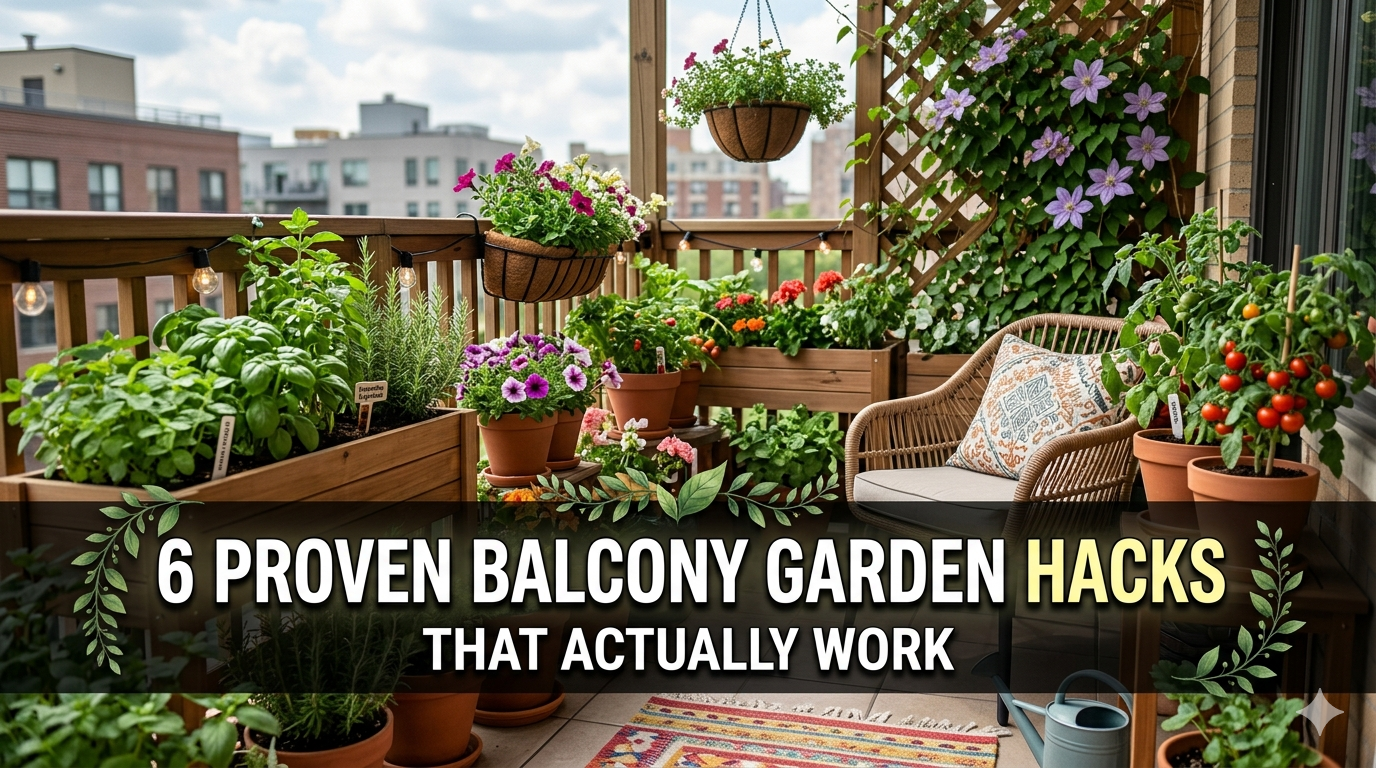
Balcony gardening often starts as a hopeful experiment: a few pots, a handful of seeds, and the quiet expectation that something green will take hold. What many people quickly discover, however, is that balcony spaces behave differently than open gardens. Wind tunnels between buildings, reflected heat from walls, inconsistent sunlight, and limited soil volume all introduce challenges that traditional gardening advice doesn’t always address.
Yet, despite these constraints, balcony gardens can become remarkably productive. The key lies not in doing more, but in doing a few things differently. The following six proven hacks aren’t theoretical—they come from real-world practice, trial and error, and patterns that consistently deliver better growth, healthier plants, and higher yields in small elevated spaces.
hack 1: control microclimate instead of fighting it
One of the biggest mistakes balcony gardeners make is trying to replicate ground-level gardening conditions. A balcony is its own ecosystem. It can be hotter, windier, and drier than nearby gardens. Rather than resisting that, the smarter approach is to shape it.
Start by observing your balcony throughout the day. Notice when sunlight hits, how long it stays, and where shadows fall. Pay attention to wind direction and strength—especially if you’re in a high-rise building.
Simple adjustments can dramatically shift plant performance:
- Use light-colored walls or reflective surfaces to bounce sunlight into shaded corners
- Install a thin shade cloth during peak afternoon heat
- Position taller plants as windbreaks for smaller, delicate ones
- Place containers on stands to reduce heat absorption from flooring
microclimate adjustment table
| Condition Issue | Simple Fix | Result |
|---|---|---|
| Excess heat | Shade cloth or bamboo blinds | Reduced leaf burn |
| Strong wind | Group pots together | Improved moisture retention |
| Low sunlight | Reflective surfaces (white board) | Increased light exposure |
| Dry air | Water trays or pebble humidity | Healthier foliage |
The goal isn’t perfection. It’s moderation. Once extremes are softened, plants spend less energy surviving and more energy growing.
hack 2: upgrade soil structure, not just fertilizer
Many beginners think growth problems come from lack of nutrients. In reality, the bigger issue is often poor soil structure. Balcony containers are closed systems. If the soil is too dense, roots suffocate. If it drains too quickly, plants struggle to stay hydrated.
A balanced mix should hold moisture while still allowing air pockets for roots.
A reliable mix formula looks like this:
- 40% coco coir or peat (moisture retention)
- 30% compost (nutrients)
- 20% perlite or sand (aeration)
- 10% vermicompost (microbial activity boost)
soil performance comparison
| Soil Type | Water Retention | Aeration | Root Health | Yield Potential |
|---|---|---|---|---|
| Garden soil only | Medium | Low | Poor | Low |
| Potting mix basic | Medium | Medium | Moderate | Moderate |
| Structured mix | High | High | Excellent | High |
Healthy soil doesn’t just feed plants—it stabilizes them. You’ll notice fewer issues like yellowing leaves, stunted growth, or sudden wilting.
hack 3: use vertical layering for space and light efficiency
Balconies are limited in square footage but unlimited in vertical potential. Most people underutilize this dimension, leaving valuable growing space untouched.
Vertical layering isn’t just about stacking pots—it’s about strategic plant placement:
- Top layer: sun-loving plants (tomatoes, chilies, herbs)
- Middle layer: partial shade plants (spinach, lettuce)
- Lower layer: shade-tolerant varieties (mint, parsley)
By arranging plants this way, you maximize both space and light distribution.
vertical layout example
| Layer Position | Light Exposure | Ideal Plants |
|---|---|---|
| Top | Full sun | Tomatoes, peppers |
| Middle | Partial sun | Leafy greens |
| Bottom | Indirect light | Herbs like mint |
This approach mimics natural ecosystems, where plants coexist at different heights instead of competing in a flat arrangement.
hack 4: water smarter, not more often
Overwatering is one of the most common causes of plant failure in balcony gardens. Ironically, many gardeners water frequently because plants look stressed—when the real problem is root suffocation.
Instead of watering on a fixed schedule, water based on soil condition.
A simple method:
Insert your finger about 2–3 cm into the soil. If it feels dry, water deeply. If it’s still moist, wait.
Better yet, implement slow watering techniques:
- Use self-watering containers
- Add mulch (dry leaves, straw, coco husk)
- Water early morning to reduce evaporation
watering efficiency chart
| Method | Water Usage | Plant Health | Maintenance |
|---|---|---|---|
| Daily light watering | High | Low | High |
| Deep watering | Moderate | High | Moderate |
| Self-watering pots | Low | Very high | Low |
Plants prefer consistency over frequency. Deep, infrequent watering encourages stronger root systems.
hack 5: choose compact and fast-growing varieties
Not all plants are suited for balcony life. Some require deep soil, expansive roots, or long growing seasons. Choosing the right varieties dramatically increases success rates.
Look for:
- Dwarf or compact varieties
- Fast-growing crops
- Plants labeled “container-friendly”
examples of high-performing balcony crops
| Plant Type | Variety Type | Growth Time | Suitability |
|---|---|---|---|
| Tomatoes | Cherry/dwarf | 60–80 days | Excellent |
| Spinach | Quick harvest | 30–40 days | Excellent |
| Chili peppers | Compact | 70–90 days | Very good |
| Herbs | Basil, mint | 20–30 days | Excellent |
Faster-growing plants also provide psychological momentum—you see results quickly, which keeps the gardening habit alive.
hack 6: rotate crops and refresh containers regularly
Container soil loses vitality over time. Nutrients get depleted, and pests or diseases can build up if the same plant type is grown repeatedly.
A simple rotation system helps:
- After harvesting leafy greens, switch to fruiting plants
- After fruiting plants, grow legumes or soil-restoring crops
- Refresh soil partially between cycles
crop rotation benefits table
| Practice | Benefit |
|---|---|
| Rotating crops | Prevents nutrient depletion |
| Soil refreshing | Restores microbial balance |
| Changing plant type | Reduces pest buildup |
Even replacing the top 20–30% of soil between plantings can make a noticeable difference.
putting it all together
When combined, these six hacks transform a balcony from a passive space into an active growing environment. The changes are not dramatic individually, but their cumulative effect is powerful.
summary chart of impact
| Hack | Difficulty | Impact Level | Time to See Results |
|---|---|---|---|
| Microclimate control | Easy | High | Immediate |
| Soil structure improvement | Moderate | Very high | 1–2 weeks |
| Vertical layering | Easy | High | Immediate |
| Smart watering | Easy | Very high | Days |
| Plant selection | Easy | High | 2–3 weeks |
| Crop rotation | Moderate | Medium | Long-term |
What becomes clear is that successful balcony gardening isn’t about expensive tools or rare techniques. It’s about understanding constraints and working intelligently within them.
common mistakes to avoid
Even with the best hacks, a few common missteps can slow progress:
- Using decorative pots without drainage holes
- Ignoring wind exposure on higher floors
- Overcrowding plants in small containers
- Expecting large crops from tiny pots
- Skipping observation and relying on guesswork
Gardening rewards attention more than effort. The more you observe, the more intuitive it becomes.
a realistic expectation
It’s worth acknowledging that balcony gardening won’t always produce massive harvests. Space is limited. Conditions fluctuate. Some plants will fail.
But what it consistently offers is control, learning, and steady improvement. Over time, yields increase—not because conditions change, but because your understanding deepens.
faqs
- how much sunlight does a balcony garden need
Most edible plants need at least 4–6 hours of direct sunlight daily. Leafy greens can tolerate less, while fruiting plants like tomatoes require more. - can i grow vegetables in very small balconies
Yes. Focus on vertical gardening and compact varieties. Even a small railing can support herbs and leafy greens. - how often should i fertilize container plants
Light feeding every 2–3 weeks works well. Organic options like compost tea or diluted liquid fertilizer are effective and safer for beginners. - what is the best container size for balcony plants
It depends on the plant. Herbs can grow in small pots (15–20 cm), while tomatoes need larger containers (25–40 cm). - how do i prevent pests on a balcony garden
Regular inspection is key. Neem oil spray, proper spacing, and healthy soil reduce pest problems significantly. - is balcony gardening expensive to start
It can be very affordable. Recycled containers, homemade compost, and seeds cost far less than buying mature plants or fancy equipment.
In the end, balcony gardening works best when approached as a system rather than a set of isolated actions. Each small improvement supports another. Better soil improves watering efficiency. Smart layout improves light exposure. Thoughtful plant selection reduces maintenance.
That’s what makes these six hacks reliable—not because they’re complex, but because they align with how plants naturally grow, even in the smallest spaces.