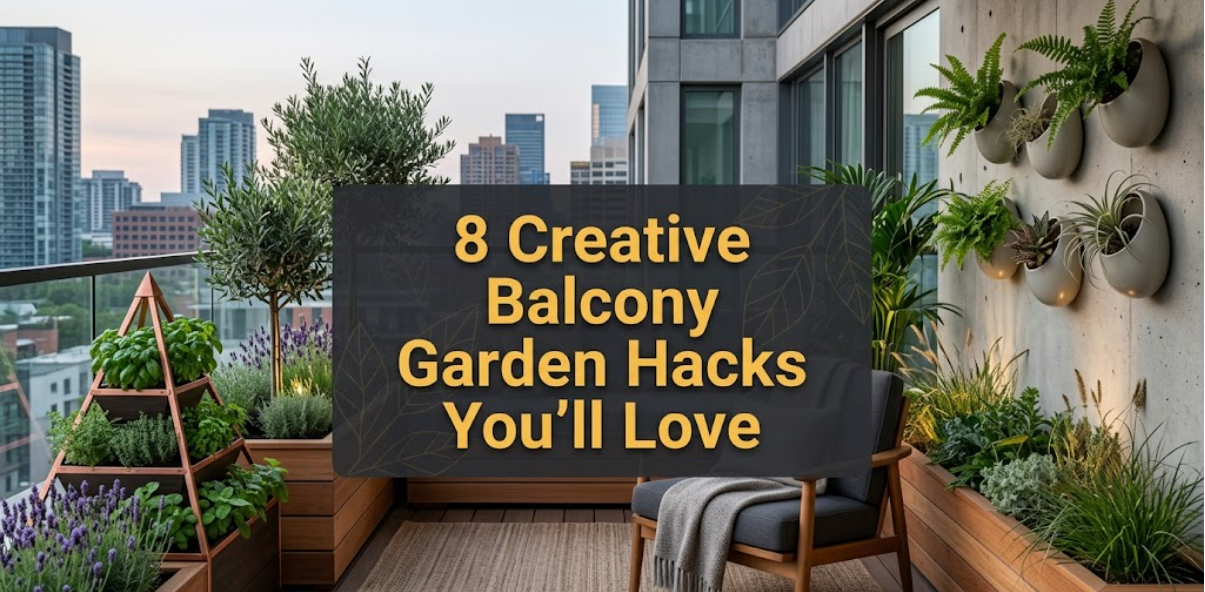
There’s something quietly magical about stepping out onto a balcony and being greeted by greenery instead of concrete. Even in the middle of a crowded city, a small outdoor space can become a personal oasis—part garden, part retreat, part experiment. The challenge, of course, is space. Balconies aren’t known for their generosity. But with a little creativity and a willingness to rethink the ordinary, even the smallest balcony can bloom into something remarkable.
This guide walks through eight creative balcony garden hacks that are practical, visually appealing, and surprisingly effective. Along the way, you’ll find tables, planning charts, and insights that go beyond basic advice, helping you turn your balcony into a thriving ecosystem.
hack 1: vertical layering instead of horizontal clutter
Most beginners make the same mistake—they try to fit everything on the floor. Pots pile up, space disappears, and maintenance becomes frustrating. The smarter approach is to think vertically.
Instead of lining pots along the balcony floor, build layers. Use railings, walls, and hanging structures. Install tiered plant stands or create DIY shelves using wooden planks and brackets. Hanging baskets can turn empty air into productive space.
Here’s a quick comparison of layout efficiency:
| Layout Type | Space Usage Efficiency | Accessibility | Aesthetic Appeal |
|---|---|---|---|
| Floor-only arrangement | Low | Easy | Basic |
| Vertical layering | High | Moderate | High |
| Mixed (floor + vertical) | Very High | High | Premium |
Vertical layering not only maximizes space but also improves airflow and sunlight distribution. Plants at different heights receive varying light intensities, which allows you to grow a wider variety.
hack 2: self-watering systems using recycled bottles
Watering can be tedious, especially in hot climates where soil dries quickly. A simple self-watering system can save time and reduce plant stress.
Take a plastic bottle, cut it in half, and invert the top into the bottom portion. Fill the lower section with water and place the soil and plant in the top half. The roots will draw water gradually.
Benefits include:
- Consistent moisture levels
- Reduced watering frequency
- Lower risk of overwatering
Water retention comparison:
| Container Type | Water Retention Duration | Maintenance Frequency |
|---|---|---|
| Standard pot | 1–2 days | High |
| Self-watering bottle | 3–5 days | Low |
| Ceramic reservoir pot | 4–7 days | Very Low |
This hack is particularly useful for herbs and small vegetables that prefer steady hydration.
hack 3: companion planting in compact containers
Instead of growing one plant per pot, combine compatible plants in a single container. This method, known as companion planting, increases yield and improves plant health.
For example:
- Basil + tomatoes: basil repels pests and enhances flavor
- Mint + cabbage: mint discourages insects
- Marigold + almost anything: natural pest control
Companion pairing chart:
| Primary Plant | Companion Plant | Benefit |
|---|---|---|
| Tomato | Basil | Pest control + flavor boost |
| Carrot | Onion | Repels carrot flies |
| Lettuce | Radish | Efficient space use |
| Pepper | Marigold | Insect deterrent |
Be mindful of root depth and growth habits. Mixing plants with similar needs ensures harmony rather than competition.
hack 4: using reflective surfaces to amplify sunlight
Balconies often suffer from uneven lighting, especially if surrounded by taller buildings. Reflective surfaces can help redirect sunlight into shaded areas.
You can use:
- Mirrors (placed carefully to avoid overheating)
- White-painted walls
- Aluminum foil panels behind plants
Light distribution improvement:
| Surface Type | Reflection Efficiency | Cost | Ease of Setup |
|---|---|---|---|
| Plain wall | Low | None | Easy |
| White paint | Medium | Low | Easy |
| Mirror panel | High | Medium | Moderate |
| Foil backing | Medium-High | Very Low | Easy |
This hack can significantly improve growth rates for sun-loving plants like peppers and cherry tomatoes.
hack 5: rotating crop cycles in small spaces
Even a tiny balcony can support crop rotation. Instead of growing the same plant continuously, switch between plant types to maintain soil health.
A simple cycle:
- Leafy greens → fruiting plants → root vegetables → rest/compost phase
Rotation benefits:
- Prevents nutrient depletion
- Reduces pest buildup
- Improves soil structure
Mini crop rotation plan:
| Cycle Phase | Plant Type | Duration |
|---|---|---|
| Phase 1 | Spinach, lettuce | 3–4 weeks |
| Phase 2 | Tomatoes, peppers | 6–8 weeks |
| Phase 3 | Radish, carrots | 4–5 weeks |
| Phase 4 | Compost/rest | 2–3 weeks |
Even if you only have a few containers, rotating what you grow in them makes a noticeable difference over time.
hack 6: microclimate control with simple barriers
Balconies are exposed environments. Wind, heat, and sudden rain can stress plants. Creating a microclimate helps stabilize conditions.
Use:
- Bamboo screens for wind protection
- Shade cloth for intense sun
- Transparent plastic sheets during heavy rain
Microclimate adjustment chart:
| Condition | Solution | Effectiveness |
|---|---|---|
| Strong wind | Bamboo screen | High |
| Excess heat | Shade cloth | High |
| Heavy rain | Plastic cover | Medium-High |
| Cold nights | Fabric wrap | Medium |
This hack is particularly useful for delicate plants like herbs and flowering species.
hack 7: soil upgrading with kitchen waste composting
Good soil is the foundation of a healthy garden. Instead of buying expensive mixes repeatedly, create your own enriched soil using kitchen waste.
A small compost bin can fit easily in a balcony corner. Add:
- Vegetable peels
- Coffee grounds
- Eggshells
Avoid:
- Meat
- Dairy
- Oily food
Compost nutrient contribution:
| Waste Type | Nutrient Contribution | Benefit |
|---|---|---|
| Vegetable scraps | Nitrogen | Leaf growth |
| Coffee grounds | Nitrogen | Soil texture improvement |
| Eggshells | Calcium | Root strength |
| Dry leaves | Carbon | Balance compost mix |
Mix compost into your soil every few weeks to maintain fertility.
hack 8: modular garden design for flexibility
Instead of fixed arrangements, design your balcony garden in modules. Use movable pots, stackable containers, and portable racks.
Advantages:
- Easy rearrangement
- Seasonal adaptability
- Simplified cleaning and maintenance
Modular vs fixed setup comparison:
| Feature | Modular Garden | Fixed Garden |
|---|---|---|
| Flexibility | High | Low |
| Maintenance | Easy | Moderate |
| Customization | High | Limited |
| Initial setup | Moderate | Easy |
A modular design allows you to experiment. If one setup doesn’t work, you can change it without starting over.
sample balcony garden layout plan
Here’s a simple layout concept combining multiple hacks:
| Zone | Elements | Purpose |
|---|---|---|
| Railing | Hanging pots | Herbs and trailing plants |
| Wall | Vertical shelves | Leafy greens |
| Corner | Compost bin | Soil enrichment |
| Floor center | Modular containers | Vegetables |
| Upper space | Hanging baskets | Decorative plants |
This layout ensures efficient use of every inch while maintaining accessibility.
weekly maintenance schedule
| Day | Task | Time Required |
|---|---|---|
| Monday | Check soil moisture | 10 minutes |
| Wednesday | Light pruning | 15 minutes |
| Friday | Fertilize/compost | 15 minutes |
| Sunday | Full inspection | 20 minutes |
Consistency matters more than intensity. A little care each week keeps the garden thriving.
common mistakes to avoid
| Mistake | Impact | Solution |
|---|---|---|
| Overcrowding | Poor growth | Use vertical space |
| Overwatering | Root rot | Use drainage + self-watering systems |
| Ignoring sunlight | Weak plants | Track light patterns |
| Poor soil quality | Low yield | Add compost regularly |
A balcony garden doesn’t need to be perfect—it just needs to be thoughtful.
closing thoughts
A balcony garden is more than a collection of plants. It’s a living system shaped by creativity, observation, and small daily decisions. These hacks aren’t about shortcuts—they’re about working smarter with limited space.
What makes balcony gardening special is its adaptability. You don’t need acres of land or expensive tools. With a few clever adjustments, even a narrow balcony can become a place of growth, both literal and personal.
Over time, you’ll start noticing patterns—how sunlight shifts, how plants respond, how seasons change your setup. That awareness is what transforms a simple balcony into something alive and meaningful.
frequently asked questions
- how many plants can I realistically grow on a small balcony?
It depends on how you use the space. With vertical layering and hanging systems, even a small balcony can support 15–30 plants comfortably without overcrowding. - what are the easiest plants for beginners?
Herbs like basil, mint, and parsley are very forgiving. Leafy greens such as lettuce and spinach also grow quickly and require minimal care. - how do I deal with pests naturally?
Use companion planting, neem oil sprays, and maintain good airflow. Regular inspection helps catch problems early. - can I garden on a balcony with little sunlight?
Yes, but focus on shade-tolerant plants like ferns, lettuce, and certain herbs. Reflective surfaces can also help increase available light. - how often should I fertilize my balcony plants?
Every 2–3 weeks is usually sufficient, especially if you’re adding compost regularly. Avoid over-fertilizing, as it can harm plants. - is balcony gardening expensive to start?
It doesn’t have to be. Using recycled materials, DIY containers, and homemade compost can significantly reduce costs while still producing great results.
With the right mindset and a few creative strategies, your balcony can become a thriving green space that feels far bigger than it actually is.