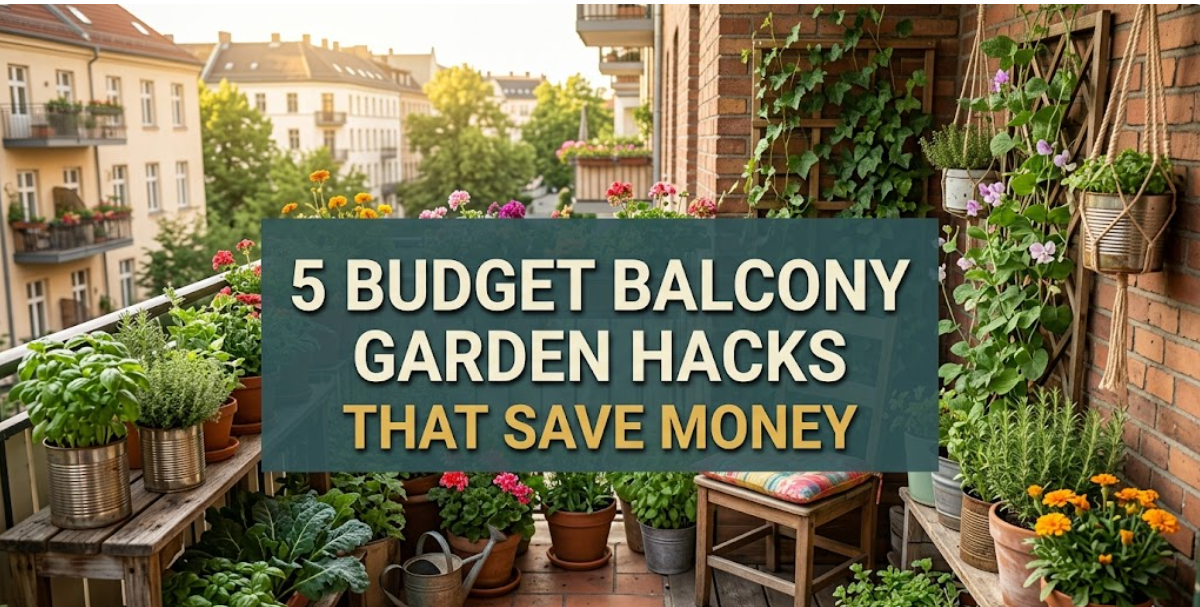
A small balcony can quietly turn into one of the most cost-effective spaces in your home. It doesn’t demand expensive landscaping or professional help—just a bit of planning, reuse, and smart choices. Many people assume gardening is costly, but in reality, balcony gardening can cut grocery bills, reduce waste, and even lower stress without draining your wallet.
This guide walks through five practical, budget-friendly balcony garden hacks that genuinely save money over time. Along the way, you’ll find tables, comparisons, and small planning charts to make the ideas easier to apply in real life.
hack 1: grow what you actually eat (and grow it smart)
It sounds obvious, but most beginners waste money by growing plants they don’t use. A pot of exotic herbs might look appealing, but if you’re not cooking with them, they’re just decorative expenses.
Instead, focus on high-usage, high-return plants. Think of ingredients you buy weekly—those are your targets.
common high-value balcony crops
| Plant | Avg Store Cost per Month | Growth Time | Harvest Frequency | Savings Potential |
|---|---|---|---|---|
| Mint | Medium | Fast | Continuous | High |
| Coriander | Medium | Fast | Weekly | High |
| Spinach | Medium | Moderate | Bi-weekly | Medium |
| Chili | Low | Moderate | Continuous | Medium |
| Tomatoes | Medium | Moderate | Seasonal | High |
The trick is succession planting—planting small batches every couple of weeks instead of all at once. That way, you avoid buying produce while your plants are still growing.
quick planting cycle example
Week 1: Sow coriander
Week 2: Sow spinach
Week 3: Sow coriander again
Week 4: Start harvesting early leaves
This rotation keeps your kitchen supplied without sudden gaps.
Another cost-saving detail: harvest properly. Cutting outer leaves instead of uprooting the plant extends its life, giving you more yield from the same soil and seeds.
hack 2: use recycled containers instead of buying pots
Pots can quietly become one of the biggest expenses in balcony gardening. The good news is that almost anything can be turned into a planter with minimal effort.
common household items that work as planters
| Item | Preparation Needed | Best For |
|---|---|---|
| Plastic bottles | Cut and add drainage holes | Herbs, small greens |
| Old buckets | Drill holes | Tomatoes, peppers |
| Food cans | Clean + hole at bottom | Succulents, herbs |
| Broken containers | Patch or line | Decorative planting |
| Wooden crates | Line with plastic | Mixed plants |
Using recycled materials not only saves money but also reduces waste. You can even stack or hang them to maximize vertical space.
simple vertical layout idea
Top row: herbs (lightweight containers)
Middle row: leafy greens
Bottom row: heavier plants like tomatoes
This layering keeps your balcony organized and ensures every plant gets enough sunlight.
cost comparison: store pots vs recycled
| Option | Cost per Unit | Lifespan | Total Cost (10 pots) |
|---|---|---|---|
| Plastic pots | Medium | Long | Medium-High |
| Ceramic pots | High | Long | High |
| Recycled items | Free | Moderate | Free |
Even if recycled containers don’t last forever, replacing them costs nothing.
hack 3: make your own compost from kitchen waste
Buying fertilizer regularly adds up. A simple compost system can eliminate that cost entirely while improving plant health.
balcony-friendly compost basics
You don’t need a large compost bin. A small covered bucket works fine.
what to add
| Kitchen Waste | Use in Compost | Notes |
|---|---|---|
| Vegetable peels | Yes | Chop for faster breakdown |
| Fruit scraps | Yes | Avoid citrus in excess |
| Coffee grounds | Yes | Adds nitrogen |
| Eggshells | Yes | Crush before adding |
| Cooked food | No | Attracts pests |
Layer green waste (fresh scraps) with dry material like paper or dried leaves. This keeps the compost balanced and odor-free.
simple compost layering chart
Layer 1: Dry leaves or paper
Layer 2: Kitchen scraps
Layer 3: Soil
Repeat
Within a few weeks, you’ll have nutrient-rich compost ready to mix into your pots.
cost savings estimate
| Item | Monthly Cost Without Compost | With Compost | Savings |
|---|---|---|---|
| Fertilizer | Medium | Low/Zero | High |
Beyond saving money, compost improves soil structure, which means healthier plants and higher yields—another indirect saving.
hack 4: collect and reuse water efficiently
Water bills can creep up, especially in warmer climates. Balcony gardening doesn’t require excessive water if you manage it wisely.
easy water-saving methods
- reuse leftover water from washing vegetables
- collect rainwater in containers
- water early morning or late evening
- use drip-style watering (slow release)
water reuse chart
| Water Source | Suitable for Plants | Notes |
|---|---|---|
| Vegetable wash water | Yes | Avoid soap contamination |
| Rice rinse water | Yes | Contains nutrients |
| Rainwater | Yes | Ideal natural source |
| AC condensation | Yes | Clean and reusable |
A simple drip system can be made using a plastic bottle with tiny holes. This reduces water waste and ensures plants absorb moisture slowly.
example DIY drip setup
Step 1: Fill bottle with water
Step 2: Poke small holes in the cap
Step 3: Place upside down in soil
This setup can keep plants hydrated for longer periods, especially useful if you’re away.
monthly water usage comparison
| Method | Water Use | Efficiency | Cost Impact |
|---|---|---|---|
| Manual watering | Medium | Moderate | Medium |
| Drip bottle | Low | High | Low |
| Rainwater use | Very Low | High | Minimal |
hack 5: propagate plants instead of buying new ones
Buying new plants frequently can get expensive. Propagation allows you to multiply plants for free.
easy plants to propagate
| Plant | Method | Time to Root |
|---|---|---|
| Mint | Stem cutting | 1–2 weeks |
| Basil | Stem cutting | 1–2 weeks |
| Money plant | Water cutting | 2–3 weeks |
| Chili | Seeds | 2–3 weeks |
simple propagation process
Cut a healthy stem
Place it in water or soil
Wait for roots to develop
Transfer to a container
You can also exchange cuttings with friends or neighbors, expanding your garden without spending anything.
propagation vs buying plants
| Option | Cost per Plant | Growth Time | Long-Term Value |
|---|---|---|---|
| Buying plants | Medium | Instant | Moderate |
| Propagation | Free | Slight delay | High |
over time, propagation dramatically reduces gardening expenses while increasing plant variety.
putting it all together: a sample low-budget balcony plan
Here’s how all five hacks can work together in a practical setup.
sample balcony layout plan
| Area | Setup | Cost Level |
|---|---|---|
| Left wall | Hanging recycled bottles (herbs) | Free |
| Floor | Buckets with tomatoes/chili | Low |
| Corner | Compost bucket | Free |
| Railing | Vertical greens setup | Free |
| Storage | Water collection container | Free |
estimated monthly savings
| Category | Without Hacks | With Hacks | Savings |
|---|---|---|---|
| Vegetables | Medium | Low | High |
| Pots | Medium | Free | High |
| Fertilizer | Medium | Low | High |
| Water | Medium | Low | Medium |
The overall effect is a system that pays for itself quickly and continues to reduce costs over time.
common mistakes that reduce savings
Even budget gardening can become expensive if certain habits creep in.
overbuying seeds
Seed packets often contain more than you need. Share or store them properly.
ignoring sunlight
Plants placed incorrectly may fail, leading to replanting costs.
using too much water
Overwatering not only wastes water but can damage plants.
buying decorative items too early
Focus on function first. Decoration can come later, often using recycled materials.
small seasonal adjustment chart
| Season | Focus Crops | Water Needs | Sunlight Strategy |
|---|---|---|---|
| Summer | Chili, basil | High | Partial shade in midday |
| Winter | Spinach, coriander | Moderate | Full sunlight exposure |
| Monsoon | Mint, leafy greens | Low | Ensure drainage |
adapting your garden to seasons ensures consistent yield and avoids unnecessary losses.
long-term financial impact
A balcony garden might seem small, but over a year, the savings add up.
annual savings estimate
| Expense Category | Annual Without Garden | With Garden | Savings |
|---|---|---|---|
| Herbs | Medium | Low | High |
| Leafy greens | Medium | Low | High |
| Fertilizer | Medium | Minimal | High |
| Containers | Medium | Minimal | High |
Beyond money, there’s also value in freshness, convenience, and control over what you grow.
faqs
- how much money can I realistically save with a balcony garden
Savings depend on what you grow and how consistently you use it. For frequently used herbs and greens, you can reduce those grocery costs significantly within a few months. - do recycled containers harm plants
Not if prepared properly. Just ensure they are clean and have proper drainage holes. - how often should I water balcony plants
It depends on the season and plant type, but generally once a day in hot weather and less in cooler conditions. Always check soil moisture first. - is composting on a balcony safe
Yes, if done correctly. Keep it covered, balance wet and dry materials, and avoid adding cooked food to prevent odors and pests. - what is the easiest plant for beginners
Mint is one of the easiest. It grows quickly, requires minimal care, and can be harvested frequently. - can I garden without direct sunlight
You can grow shade-tolerant plants like mint and some leafy greens, but most vegetables need at least a few hours of sunlight daily.
A balcony garden doesn’t have to be an expensive hobby. With a bit of creativity and patience, it can become a small but powerful system that saves money, reduces waste, and brings a steady supply of fresh food right outside your door.