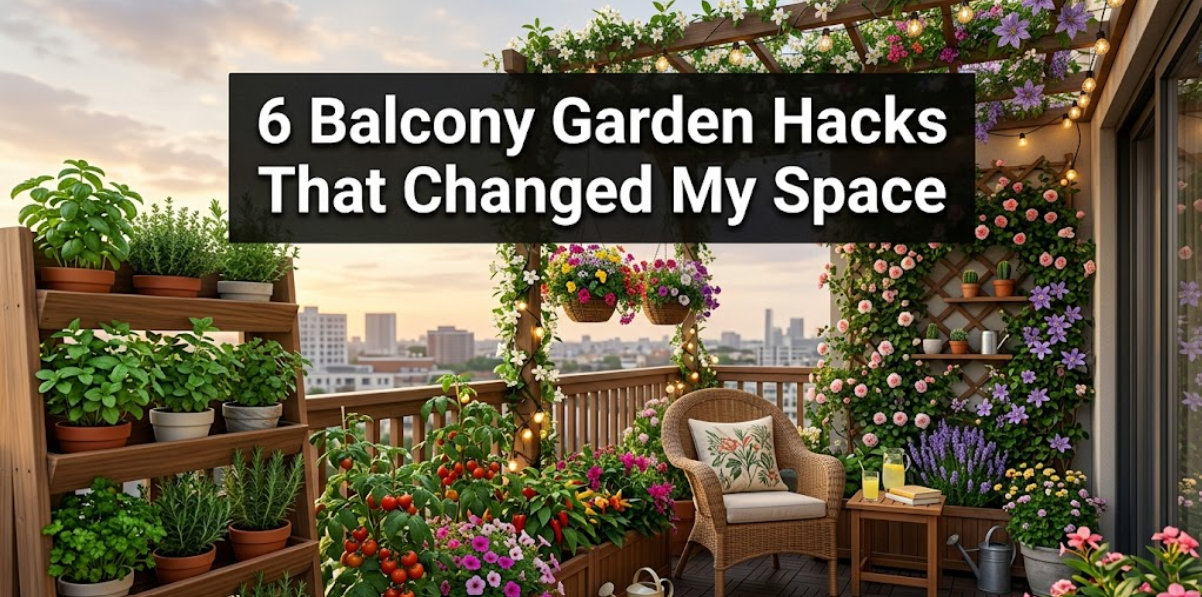
I didn’t plan to become someone who talks to plants. It just… happened. Somewhere between a half-dead basil plant and a stubborn mint that refused to grow, my small, forgettable balcony slowly turned into a place I actually wanted to spend time in. Not perfect, not magazine-worthy—but alive, functional, and surprisingly calming.
What made the difference wasn’t expensive equipment or rare plants. It was a handful of practical tweaks—small hacks that solved real problems. Limited sunlight. Lack of time. Tight space. Budget constraints. These six balcony garden hacks didn’t just improve my plants—they changed how I used my space.
Let me walk you through them.
hack 1: vertical layering instead of horizontal clutter
My first mistake was treating the balcony floor like it had unlimited space. I lined up pots along the edges, added a few in the center, and before I knew it, walking outside felt like navigating an obstacle course.
The fix was simple: go vertical.
Instead of spreading out, I started stacking upward. I used wall-mounted shelves, hanging baskets, and even a repurposed wooden ladder as a plant stand. This instantly freed up walking space and allowed more plants to fit comfortably.
What surprised me most was how much healthier the plants became. Better airflow, more balanced sunlight exposure, and less crowding made a noticeable difference.
Here’s a comparison of before and after:
| Feature | Before (Horizontal Layout) | After (Vertical Layout) |
|---|---|---|
| Walking space | Limited | Open and usable |
| Number of plants | 8–10 | 15–18 |
| Sunlight distribution | Uneven | More balanced |
| Maintenance effort | Higher | Easier access |
Tip: Use lightweight pots for higher placements. Gravity is not forgiving.
hack 2: self-watering system for busy days
I used to underestimate how inconsistent watering could affect plants. One missed day in the heat, and everything looked stressed. Overwatering on weekends didn’t help either.
So I created a simple self-watering system using plastic bottles.
I filled bottles with water, poked tiny holes in the caps, and inserted them upside down into the soil. The water slowly seeped out, keeping the soil consistently moist.
Eventually, I upgraded to basic self-watering pots, but honestly, the DIY version worked just fine.
Here’s a rough comparison:
| Method | Cost | Maintenance | Effectiveness |
|---|---|---|---|
| Manual watering | Low | High | Inconsistent |
| Bottle system | Very low | Low | Good |
| Self-watering pots | Medium | Very low | Excellent |
This hack alone reduced plant stress and saved me time. It also gave me peace of mind during busy weeks.
hack 3: choosing plants that match the balcony, not trends
I made the mistake of buying plants because they looked good online. Some needed full sun. Others required constant attention. My balcony offered neither.
So I changed my approach. Instead of forcing the environment to match the plant, I chose plants that naturally suited my balcony conditions.
For a partially shaded balcony like mine, these worked best:
| Plant Type | Sunlight Needs | Maintenance Level | Growth Speed |
|---|---|---|---|
| Mint | Partial sun | Low | Fast |
| Snake plant | Low light | Very low | Slow |
| Spinach | Partial sun | Medium | Medium |
| Coriander | Partial sun | Medium | Fast |
| Aloe vera | Full/partial | Low | Slow |
Once I aligned plant choices with reality, things became easier. Less frustration. Fewer dead plants.
hack 4: soil upgrade that changed everything
For a long time, I treated soil as an afterthought. I used whatever was cheap and available. The result? Poor drainage, weak growth, and occasional root rot.
Then I experimented with mixing my own soil blend.
Here’s what worked best:
- 40% garden soil
- 30% compost
- 20% coco peat
- 10% sand or perlite
This mix improved drainage while retaining enough moisture for steady growth.
Comparison of soil performance:
| Factor | Regular Soil | Custom Mix |
|---|---|---|
| Drainage | Poor | Excellent |
| Moisture balance | Unstable | Balanced |
| Root health | Weak | Strong |
| Plant growth | Slow | Noticeable |
Healthy soil reduced the need for constant intervention. Plants started looking after themselves more.
hack 5: microclimate control using shade and reflection
Balconies can be unpredictable. Some spots get harsh sunlight, while others stay cool and shaded. Instead of fighting this, I started managing it.
I used simple tools:
- A thin shade cloth for harsh afternoon sun
- Reflective surfaces (like light-colored walls or trays) to bounce light into darker corners
- Grouping plants based on their needs
This created micro-zones within the balcony.
Example layout:
| Zone Type | Conditions | Plants Placed Here |
|---|---|---|
| Sunny corner | Direct sunlight | Aloe, herbs |
| Shaded wall | Indirect light | Snake plant, spinach |
| Middle section | Mixed light | Mint, coriander |
This hack helped me use every inch of space more effectively.
hack 6: making the space usable, not just decorative
At one point, my balcony looked like a mini jungle—but I didn’t actually use it. There was nowhere to sit, no space to relax.
So I made one small change: I added a compact chair and a narrow table.
That was it.
Suddenly, the balcony wasn’t just a plant area—it became a living space. Morning tea, evening breaks, even short work sessions started happening there.
Here’s a simple space allocation idea:
| Element | Space Needed | Purpose |
|---|---|---|
| Plants | 60–70% | Gardening |
| Seating | 20–30% | Relaxation |
| Walking space | 10–15% | Accessibility |
A balcony garden should support your life, not just look good in photos.
what changed overall
Looking back, these six hacks didn’t require major investment or expertise. But together, they created a noticeable shift.
| Aspect | Before | After |
|---|---|---|
| Plant health | Inconsistent | Stable and thriving |
| Time required | High | Manageable |
| Space usability | Limited | Comfortable |
| Stress level | Frustrating | Relaxing |
It stopped feeling like a project and started feeling like a habit.
common mistakes to avoid
While experimenting, I also learned what not to do:
- Overcrowding plants too early
- Ignoring drainage holes in pots
- Using decorative pots without practicality
- Watering based on routine instead of soil condition
- Expecting instant results
Gardening has its own pace. Once you accept that, everything becomes easier.
quick starter checklist
If you’re just starting, here’s a simple plan:
| Step | Action |
|---|---|
| 1 | Observe sunlight patterns |
| 2 | Choose 3–4 suitable plants |
| 3 | Set up vertical supports |
| 4 | Prepare a good soil mix |
| 5 | Add basic watering system |
| 6 | Leave space for yourself |
Start small. Expand gradually.
faqs
- how much sunlight does a balcony garden need
Most plants do well with 4–6 hours of sunlight, but many options like mint and snake plants can survive with less. It depends more on plant selection than forcing sunlight conditions. - can i grow vegetables in a small balcony
Yes, leafy greens, herbs, and some compact vegetables grow well in limited space. Spinach, coriander, and chilies are good starting options. - how often should i water balcony plants
Instead of following a strict schedule, check the soil. If the top inch feels dry, it’s time to water. Weather and pot size affect frequency. - what is the easiest plant for beginners
Mint is one of the easiest. It grows quickly, adapts well, and gives quick feedback if something is wrong. - do i need expensive pots and tools
No. Many effective setups use recycled containers, DIY watering systems, and basic soil mixes. Function matters more than appearance. - how long before i see results
Some herbs show growth within weeks, while others take longer. Consistency matters more than speed.
In the end, the biggest change wasn’t the plants—it was how I felt about the space. What used to be an ignored corner became part of my daily routine. Not because it was perfect, but because it worked.
And that’s really the goal.