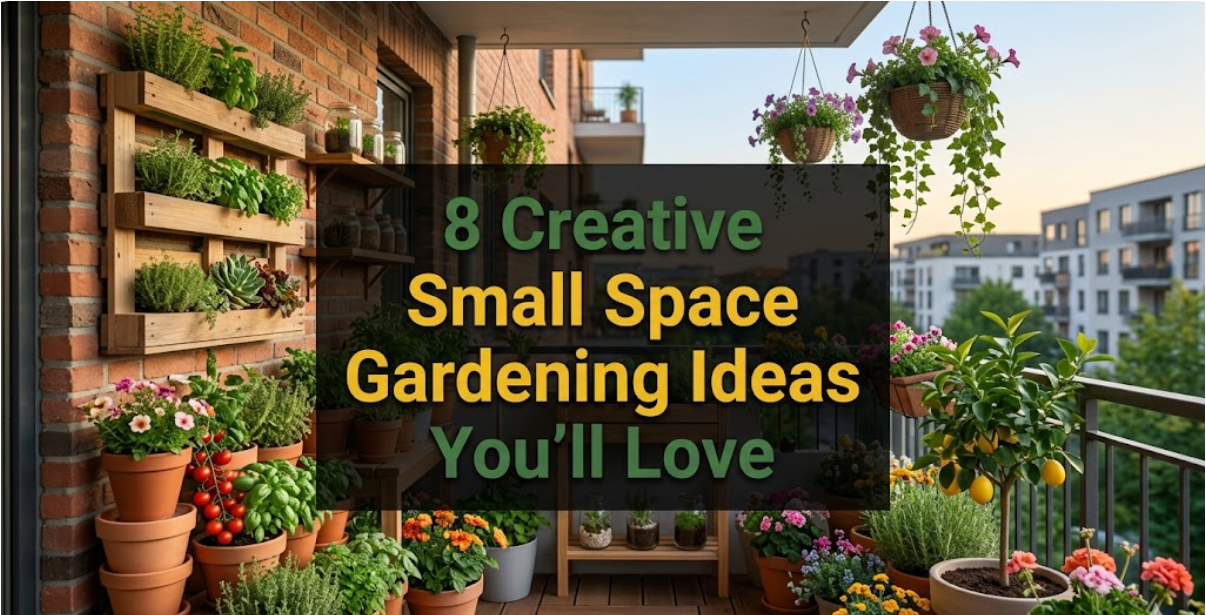
Small-space gardening has become more than just a trend—it’s a practical response to how people live today. Apartments, compact homes, rented rooms, and urban settings rarely offer traditional garden plots. Yet the desire to grow something alive—herbs for cooking, flowers for beauty, or vegetables for health—has not diminished. If anything, it has grown stronger.
The interesting part is that limited space often leads to better creativity. When you cannot expand outward, you begin to build upward, inward, and smarter. Small space gardening is not about what you lack; it is about how you reimagine what you already have.
This guide explores eight creative small space gardening ideas that are practical, visually appealing, and adaptable to almost any environment. Each idea includes real-world applications, simple planning insights, and structured comparisons to help you make decisions based on your space, time, and budget.
idea 1: vertical wall gardening systems
When floor space is limited, walls become your most valuable asset. Vertical gardening transforms unused wall surfaces into productive green zones. This approach works especially well in balconies, kitchens, and narrow outdoor corridors.
You can use modular pocket planters, wooden pallet systems, or stackable pots mounted on frames. The key is layering plants in a way that maximizes sunlight exposure without overcrowding.
Vertical gardens are particularly effective for herbs and leafy greens like mint, coriander, spinach, and lettuce.
Vertical system comparison:
| System Type | Cost Level | Maintenance | Ideal Plants | Space Efficiency |
|---|---|---|---|---|
| Fabric pocket wall | Low | Medium | Herbs, greens | High |
| Wooden pallet garden | Medium | Medium | Mixed plants | Very High |
| Metal frame shelving | Medium-High | Low | Vegetables | Very High |
| DIY PVC vertical setup | Low | Medium | Herbs | High |
One of the biggest advantages of vertical gardening is improved airflow, which reduces fungal issues and increases plant health. It also makes harvesting easier since plants are at eye level.
idea 2: container stacking for layered growth
Instead of spreading pots across a surface, stacking containers vertically allows you to grow multiple crops in a single footprint. This method works by placing larger pots at the bottom and progressively smaller ones on top, often supported by a central rod or stand.
You can even create a “plant tower” where each level supports different root depths.
Layered stacking structure:
| Level | Container Size | Suitable Plants |
|---|---|---|
| Top | Small | Herbs, flowers |
| Middle | Medium | Lettuce, peppers |
| Bottom | Large | Tomatoes, eggplant |
Stacking is especially useful for balconies where floor space is limited but vertical clearance is available. It also helps create natural shading—upper plants protect lower ones from harsh sunlight.
Another benefit is water efficiency. When you water the top layer, excess moisture naturally trickles down to lower levels, reducing waste.
idea 3: kitchen-to-garden recycling systems
One of the most sustainable approaches to small-space gardening involves reusing kitchen waste and everyday household materials. This method turns your kitchen into a supply source for your garden rather than a separate system.
Examples include growing scallions from leftover roots, regrowing lettuce stems in water, and using eggshells as calcium boosters.
Simple kitchen recycling growth cycle:
| Item | Regrowth Method | Time to Sprout | Usefulness |
|---|---|---|---|
| Green onions | Root base in water | 3–5 days | Continuous harvest |
| Lettuce stump | Water then soil | 7–10 days | Leaf regrowth |
| Potato eyes | Soil planting | 2–3 weeks | Full crop |
| Ginger root | Soil planting | 2–4 weeks | Fresh supply |
This method reduces waste while also providing continuous micro-harvests. It is ideal for beginners because it requires almost no initial investment.
idea 4: balcony railing farming setups
Balcony railings are often overlooked as usable space. However, they are ideal for hanging planters, railing boxes, and clamp-on containers. This approach turns the outer edge of your balcony into a productive garden strip.
Herbs, strawberries, trailing flowers, and compact vegetables thrive in these setups because they receive maximum sunlight exposure.
Railing garden options:
| Setup Type | Stability | Cost | Plant Capacity | Suitability |
|---|---|---|---|---|
| Hanging pots | Medium | Low | Small | Herbs, flowers |
| Railing boxes | High | Medium | Medium | Vegetables, herbs |
| Clamp planters | High | Medium | Medium | Strawberries, greens |
| DIY bottle planters | Low | Very Low | Small | Herbs |
One key advantage is accessibility. Railing gardens are easy to maintain and water, and they do not interfere with indoor living space. They also create a natural privacy barrier.
idea 5: micro herb corners in indoor spaces
Even the smallest kitchen or room corner can become a micro herb garden. Unlike outdoor setups, indoor herb corners focus on convenience and accessibility. You can place small pots near windowsills, countertops, or shelves with adequate light.
Herbs like basil, thyme, rosemary, and parsley grow well indoors with minimal maintenance.
Indoor herb growth conditions:
| Factor | Ideal Condition | Adjustment Tips |
|---|---|---|
| Light | 4–6 hours daily | Use window light or LED grow lights |
| Water | Moderate | Avoid overwatering |
| Temperature | 18–26°C | Keep away from AC vents |
| Airflow | Mild circulation | Open windows occasionally |
Micro herb corners are especially useful for cooking enthusiasts because fresh herbs are always within reach. They also improve indoor air quality and add subtle fragrance to living spaces.
idea 6: movable mobile garden carts
A mobile garden cart is essentially a portable garden on wheels. It allows you to move plants based on sunlight, weather, or indoor/outdoor needs. This is particularly useful for renters or people with changing space conditions.
You can use multi-tier rolling carts, repurposed shelves, or wheeled plant stands.
Mobility comparison:
| Feature | Fixed Garden | Mobile Garden Cart |
|---|---|---|
| Flexibility | Low | High |
| Sunlight optimization | Limited | Excellent |
| Maintenance ease | Moderate | Easy |
| Space usage | Static | Dynamic |
Mobile gardens allow you to rotate plants for even growth. They also make cleaning and rearranging easier, especially in compact apartments.
idea 7: self-watering compact ecosystems
Water management is one of the biggest challenges in small space gardening. Self-watering systems solve this problem by creating a reservoir-based hydration method.
These systems can be made using plastic bottles, storage containers, or specialized self-watering pots. The soil draws water as needed through wicking systems or capillary action.
Water efficiency comparison:
| System Type | Water Retention | Maintenance Frequency | Plant Health Stability |
|---|---|---|---|
| Traditional pots | Low | High | Medium |
| Self-watering bottles | Medium | Low | High |
| Wick systems | High | Very Low | Very High |
| Reservoir planters | Very High | Very Low | Excellent |
These systems are especially helpful in hot climates or for people with busy schedules.
idea 8: seasonal rotation micro-gardens
Even in small spaces, seasonal rotation can dramatically improve soil health and yield. Instead of growing the same plants continuously, rotate between categories: leafy greens, fruiting plants, and root vegetables.
Seasonal rotation structure:
| Season | Plant Type | Examples |
|---|---|---|
| Spring | Leafy greens | Lettuce, spinach |
| Summer | Fruiting plants | Tomatoes, peppers |
| Autumn | Root vegetables | Carrots, radish |
| Winter | Soil rest/compost | Enrichment phase |
Rotation prevents nutrient depletion and reduces pest buildup. It also keeps your small garden productive throughout the year instead of being seasonal.
overall small space gardening efficiency comparison
| Approach | Space Use Efficiency | Cost | Maintenance Effort | Yield Potential |
|---|---|---|---|---|
| Vertical gardening | Very High | Medium | Medium | High |
| Container stacking | High | Low-Medium | Medium | High |
| Kitchen recycling | Medium | Very Low | Low | Medium |
| Railing systems | High | Low | Low | Medium-High |
| Indoor herb corners | Medium | Low | Low | Medium |
| Mobile garden carts | High | Medium | Low | High |
| Self-watering systems | High | Medium | Very Low | High |
| Seasonal rotation | Medium | Low | Medium | Very High |
combining multiple ideas for best results
The most effective small-space gardens rarely rely on just one method. Instead, they combine several approaches. For example:
- Vertical wall + railing planters = full balcony utilization
- Mobile carts + self-watering systems = flexible hydration setup
- Indoor herb corner + kitchen recycling = continuous food cycle
A layered approach creates redundancy, meaning if one system fails or slows down, others continue functioning.
maintenance rhythm for small space gardens
| Day | Activity | Duration |
|---|---|---|
| Daily | Water check | 5–10 min |
| Alternate days | Light inspection | 5 min |
| Weekly | Pruning and cleaning | 20–30 min |
| Monthly | Soil enrichment | 30–40 min |
Consistency matters more than intensity. Small gardens thrive on regular attention rather than occasional heavy maintenance.
frequently asked questions
- what is the easiest small space gardening method for beginners?
Container gardening and micro herb corners are the easiest starting points because they require minimal setup and allow quick results with herbs like basil and mint. - how do I maximize yield in a very small balcony?
Combine vertical gardening with railing planters and use fast-growing crops like lettuce, spinach, and herbs. Rotation also helps increase long-term productivity. - can I grow vegetables indoors without sunlight?
Yes, but you will need grow lights. Leafy greens and herbs adapt well to indoor conditions when supplemented with artificial lighting. - how often should I water small space gardens?
It depends on plant type and climate, but generally every 1–2 days in warm conditions and 2–3 days in cooler environments. Self-watering systems reduce this frequency. - what is the cheapest small space gardening setup?
Kitchen recycling systems combined with reused containers (like bottles and jars) are the most budget-friendly way to start. - how do I prevent overcrowding in small gardens?
Use vertical layering, limit plants per container, and choose compact or dwarf plant varieties. Regular pruning also helps maintain balance.
small space gardening is ultimately about creativity over size
A small space does not limit gardening potential—it shapes it. When space is limited, every decision becomes intentional: what to grow, where to place it, and how to maintain it. This constraint often leads to more efficient, thoughtful, and rewarding gardening systems.
With vertical designs, recycled systems, mobile setups, and seasonal awareness, even the smallest balcony or corner can evolve into a productive, living environment that grows with you over time.