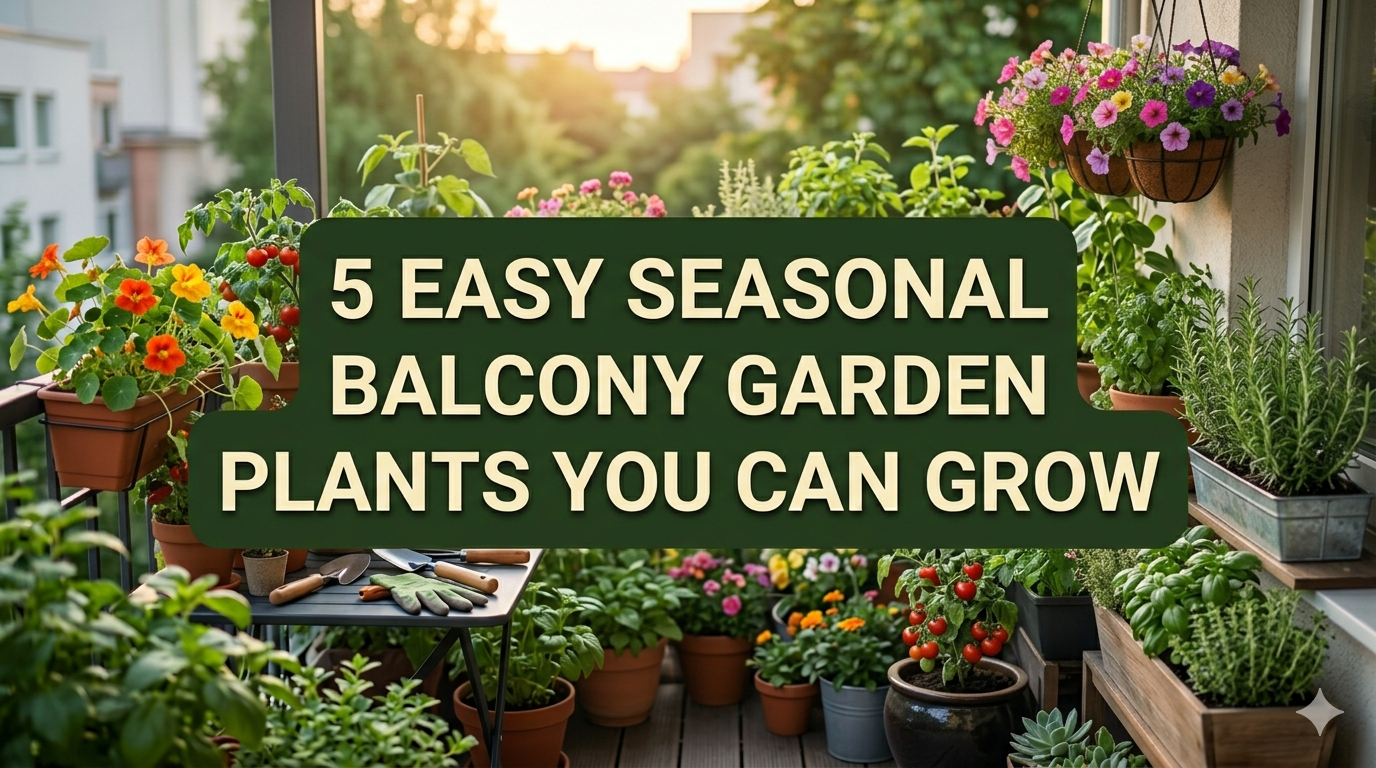
A balcony garden changes with the seasons. What thrives in winter may struggle in summer, and what flourishes in monsoon might fail in dry heat. Understanding seasonal plant behavior is the key to keeping your balcony green all year round without constant replacement or frustration.
Instead of treating gardening as a fixed setup, think of it as a rotating system—like a wardrobe for plants. You change plants based on season, temperature, and sunlight conditions.
This guide covers five easy seasonal balcony garden plants that are beginner-friendly, low-maintenance, and highly adaptable.
plant 1: mint – the all-season survivor with seasonal bursts
Mint is one of the most forgiving plants you can grow. While it performs best in cooler months, it can survive across seasons if properly managed.
It grows quickly, spreads easily, and requires minimal care.
why mint works for balconies
- grows in small containers
- tolerates partial sunlight
- survives seasonal changes
- regenerates quickly after cutting
table: mint seasonal performance
| Season | Growth Rate | Water Needs | Sun Tolerance | Suitability |
|---|---|---|---|---|
| Winter | Fast | Medium | Medium | Excellent |
| Summer | Medium | High | Partial | Good |
| Monsoon | Fast | Medium | Low | Excellent |
care insight
Regular trimming actually boosts mint growth, making it fuller and bushier.
balcony tip
Keep mint in a separate pot because it spreads aggressively and can overtake other plants.
plant 2: marigold – the seasonal color booster
Marigold is one of the easiest flowering plants for balcony gardeners. It is especially popular in warmer seasons and adds instant brightness to small spaces.
It is commonly grown in spring and summer, but in mild climates, it can extend longer.
why marigold is beginner-friendly
- grows from seeds easily
- blooms quickly
- repels insects naturally
- requires minimal maintenance
table: marigold seasonal behavior
| Season | Flowering Level | Maintenance | Water Needs | Performance |
|---|---|---|---|---|
| Spring | High | Low | Medium | Excellent |
| Summer | High | Medium | High | Good |
| Monsoon | Medium | Medium | High | Moderate |
practical insight
Deadheading (removing old flowers) encourages continuous blooming.
design use
Place marigolds at balcony edges for bright visual framing.
plant 3: spinach – the cool-season edible green
Spinach is one of the best seasonal edible plants for balconies, especially during cooler months. It grows fast, doesn’t need deep soil, and can be harvested multiple times.
It is ideal for beginners who want edible gardening without complexity.
why spinach is perfect for small spaces
- shallow root system
- fast harvest cycle
- high nutritional value
- low maintenance
table: spinach seasonal guide
| Season | Growth Speed | Harvest Time | Water Needs | Suitability |
|---|---|---|---|---|
| Winter | Fast | 25–40 days | Medium | Excellent |
| Summer | Slow | 40–60 days | High | Poor |
| Monsoon | Medium | 30–50 days | Medium | Good |
harvesting tip
Cut outer leaves first so the plant continues producing new growth.
balcony insight
Spinach grows well in partial shade, making it ideal for balconies with limited sunlight.
plant 4: petunia – seasonal flowering for visual impact
Petunias are popular ornamental plants that bring color and softness to balcony spaces. They thrive in cooler to mild weather and produce continuous blooms when cared for properly.
They are often used to create hanging baskets or railing planters.
why petunias stand out
- long blooming period
- wide color variety
- ideal for hanging pots
- visually dense flowering
table: petunia seasonal performance
| Season | Bloom Quality | Water Needs | Sunlight Needs | Maintenance |
|---|---|---|---|---|
| Winter | High | Medium | Full sun | Medium |
| Spring | Very high | Medium | Full sun | Medium |
| Summer | Low | High | Partial shade | High |
care insight
Regular removal of faded flowers keeps the plant blooming longer.
design tip
Mix multiple colors in one hanging basket for a layered visual effect.
plant 5: basil – the aromatic seasonal essential
Basil is a culinary herb that grows best in warm weather but can be extended into cooler months indoors or in protected balconies.
It is highly rewarding because it serves both decorative and practical purposes.
why basil is ideal for beginners
- grows quickly
- used in cooking daily
- improves with pruning
- adapts to containers
table: basil seasonal growth pattern
| Season | Growth Rate | Water Needs | Sunlight | Yield |
|---|---|---|---|---|
| Summer | Very fast | High | Full sun | High |
| Monsoon | Fast | Medium | Partial | Medium |
| Winter | Slow | Low | Partial | Low |
maintenance insight
Pinching off top leaves encourages bushy growth instead of tall stems.
balcony benefit
Basil also helps repel certain insects naturally.
seasonal planting strategy for balconies
Instead of growing all plants at once, smart gardeners rotate plants based on season.
seasonal planting chart
| Season | Best Plants | Focus Type |
|---|---|---|
| Winter | Spinach, basil, mint | Edibles |
| Spring | Marigold, basil, petunia | Flowers |
| Summer | Basil, marigold (limited) | Heat-tolerant |
| Monsoon | Mint, spinach, basil | Hardy greens |
key idea
A rotating system keeps your balcony productive and visually fresh year-round.
balcony layout planning chart
| Balcony Size | Plant Strategy | Number of Plants | Difficulty |
|---|---|---|---|
| Small | Vertical + herbs | 5–8 | Easy |
| Medium | Mixed flowers + edibles | 8–15 | Medium |
| Large | Seasonal rotation + zones | 15–25 | Medium |
maintenance routine for seasonal plants
| Task | Frequency | Time Required |
|---|---|---|
| Watering | 2–4 times/week | 10–15 min |
| Pruning | Weekly | 10 min |
| Fertilizing | Every 2–3 weeks | 10 min |
| Seasonal switch | Every 2–3 months | 30–60 min |
common mistakes beginners make
- planting summer crops in winter conditions
- overwatering during monsoon season
- ignoring sunlight changes between seasons
- not rotating plants seasonally
- overcrowding balcony space
avoiding these mistakes improves plant survival significantly.
how to make your balcony look lush year-round
A lush balcony isn’t about planting everything—it’s about timing and layering.
simple formula:
- seasonal rotation (50%)
- vertical gardening (20%)
- flowering plants (15%)
- edible greens (15%)
This balance ensures both productivity and aesthetics.
faqs
- what are the easiest seasonal balcony plants for beginners
Mint, basil, spinach, and marigold are among the easiest due to their adaptability and low maintenance needs. - can I grow the same plant all year round
Some plants like mint and basil can survive across seasons, but most plants perform best in specific conditions. - how do I know which plant suits my season
Check temperature tolerance and sunlight requirements. Cool-season plants prefer winter, while herbs like basil prefer summer. - how often should seasonal plants be replaced
Most seasonal plants should be rotated every 2–3 months depending on growth cycle and weather conditions. - can I mix flowers and vegetables in the same balcony
Yes, but group them based on sunlight and watering needs to avoid imbalance. - what is the biggest factor affecting seasonal plant growth
Temperature and sunlight are the two most important factors influencing plant success across seasons.