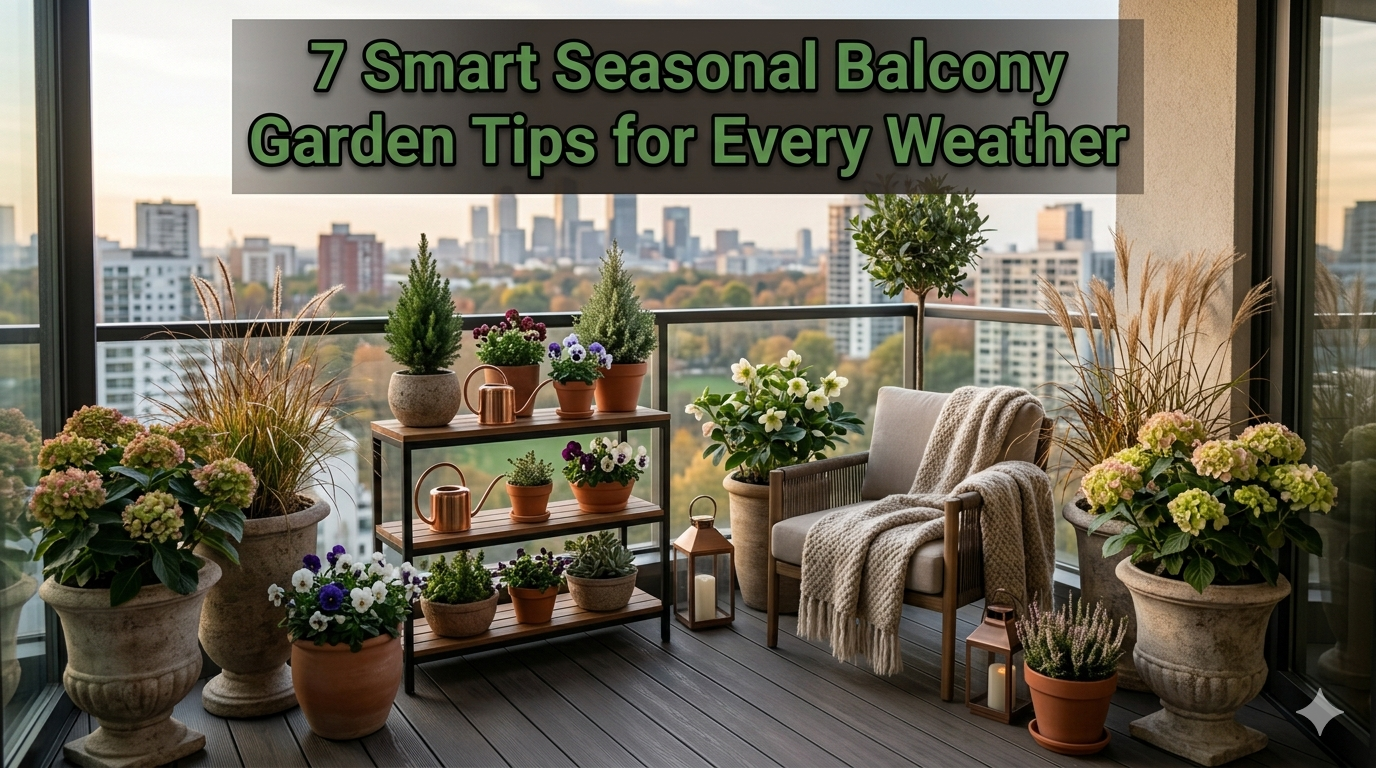
Balcony gardening becomes truly successful only when it adapts to changing seasons. Many people start strong in spring, only to see their plants weaken in summer heat, struggle during monsoon humidity, or disappear in winter chill. The issue is rarely effort—it is timing. Plants don’t fail because they are weak; they fail because the care routine stays the same while weather keeps changing.
Seasonal gardening is about adjusting your small balcony ecosystem like a living system rather than treating it as a fixed setup. A plant that thrives in April may struggle in July if watering, shade, or soil conditions remain unchanged.
This guide breaks the process into seven practical seasonal strategies that work across apartments, small balconies, and even indoor-outdoor hybrid spaces. Each tip is designed to help you stabilize plant health throughout the year instead of restarting your garden every season.
understanding seasonal behavior in balcony gardens
Before jumping into specific tips, it helps to understand how seasons affect container plants differently than ground gardens.
In balconies:
- soil dries faster
- heat reflects from walls
- wind exposure is stronger
- rain impact is more direct
- root space is limited
This makes seasonal adaptation more important than in traditional gardening.
seasonal impact overview:
| Season | Temperature Effect | Humidity | Plant Behavior | Main Risk |
|---|---|---|---|---|
| Spring | Moderate warming | Medium | active growth | pests increase |
| Summer | High heat | Low/High | fast drying stress | dehydration |
| Monsoon | warm + humid | Very high | fungal growth risk | root rot |
| Autumn | cooling | medium | stabilizing growth | nutrient imbalance |
| Winter | cold | low | slow growth/dormancy | stunted growth |
Once you understand this cycle, gardening becomes less reactive and more planned.
tip 1: prepare your balcony garden for spring growth explosion
Spring is the most active season for balcony gardens. Plants recover, seeds germinate faster, and growth accelerates. But this is also when pests return and soil nutrients deplete quickly.
spring strategy focus:
- soil renewal
- pruning old growth
- early fertilization
- pest prevention setup
spring preparation checklist:
| Task | Purpose | Frequency |
|---|---|---|
| pruning old leaves | stimulate new growth | once |
| soil mixing | restore nutrients | start of season |
| compost addition | boost fertility | every 2–3 weeks |
| pest inspection | early detection | weekly |
plant performance in spring:
| Plant Type | Growth Response | Care Level Needed |
|---|---|---|
| herbs | fast growth | medium |
| leafy greens | very fast | medium-high |
| flowers | strong bloom | medium |
important insight:
Spring is not about planting more—it is about stabilizing soil health before rapid growth begins.
simple spring soil refresh mix:
- 40% existing pot soil
- 30% fresh compost
- 20% coco peat
- 10% vermicompost
This resets nutrient balance without repotting everything.
tip 2: surviving summer heat with controlled micro-shade systems
Summer is the most stressful season for balcony gardens. Heat reflects off concrete walls and intensifies drying.
The goal is not to fight heat but to reduce its direct impact.
summer protection strategies:
- shade layering
- moisture retention
- watering control
- pot insulation
shade effectiveness comparison:
| Shade Method | Heat Reduction | Cost | Effectiveness |
|---|---|---|---|
| balcony umbrella | medium | low | medium |
| shade net | high | low | high |
| wall plants | medium-high | medium | high |
watering adjustment in summer:
| Plant Type | Frequency | Best Time |
|---|---|---|
| vegetables | daily | early morning |
| herbs | once per day | morning/evening |
| succulents | every 2–3 days | morning |
heat stress warning signs:
- curled leaves
- dry soil within hours
- drooping even after watering
simple cooling trick:
Place pots inside larger decorative containers with gaps filled with coco peat. This reduces heat transfer to roots.
tip 3: managing monsoon humidity and fungal growth
Monsoon is unpredictable in balcony gardening. While plants receive natural water, excess humidity often causes more harm than dryness.
The main issue is not water—it is lack of airflow.
monsoon risks:
| Problem | Cause | Effect |
|---|---|---|
| fungal growth | stagnant air | leaf rot |
| root rot | overwatering + rain | plant death |
| pests | humidity | infestation |
monsoon protection checklist:
- increase spacing between pots
- avoid overwatering entirely
- ensure drainage holes are clear
- prune dense leaves
airflow improvement methods:
| Method | Effectiveness |
|---|---|
| spacing pots | high |
| vertical elevation | high |
| rotating plants | medium |
ideal monsoon plant behavior:
| Plant Type | Suitability |
|---|---|
| mint | high |
| basil | medium |
| succulents | low |
| tomatoes | medium |
key insight:
In monsoon, less watering but more airflow is the winning formula.
tip 4: stabilizing growth during autumn transition
Autumn is often ignored but it is one of the most important seasons. It is the bridge between growth (summer) and dormancy (winter).
autumn focus areas:
- nutrient balancing
- pruning summer growth
- preparing for cooler temperatures
soil nutrient adjustment table:
| Nutrient Type | Function | Source |
|---|---|---|
| nitrogen | leaf growth | compost |
| phosphorus | root strength | bone meal |
| potassium | plant immunity | banana peel compost |
plant behavior in autumn:
| Plant Type | Behavior | Action Needed |
|---|---|---|
| vegetables | steady growth | moderate care |
| herbs | stable | light pruning |
| flowers | reduced bloom | fertilize |
autumn gardening insight:
This is the best time to repair soil without stress from extreme weather.
tip 5: protecting plants during winter slowdown
Winter is not a failure season—it is a slow phase. Plants conserve energy, and growth reduces significantly.
winter care priorities:
- reduce watering
- maximize sunlight
- protect roots
watering adjustment:
| Plant Type | Frequency |
|---|---|
| herbs | 2–3 days |
| vegetables | 3–4 days |
| succulents | weekly |
sunlight strategy:
- move pots closer to balcony edge
- remove unnecessary shade blockers
- rotate pots weekly
insulation trick:
Wrap pots with jute cloth or cardboard to protect roots from cold exposure.
winter plant behavior:
| Plant Type | Growth Level |
|---|---|
| leafy greens | slow |
| herbs | moderate |
| flowering | minimal |
important insight:
Winter gardening is about survival, not expansion.
tip 6: adjusting watering systems across seasons
Watering is not constant throughout the year. A fixed routine is one of the biggest mistakes in balcony gardening.
seasonal watering matrix:
| Season | Water Need | Method Focus |
|---|---|---|
| Spring | medium-high | balanced watering |
| Summer | high | frequent hydration |
| Monsoon | low | drainage focus |
| Autumn | medium | controlled schedule |
| Winter | low | minimal watering |
smart watering tools:
| Tool | Benefit |
|---|---|
| drip bottles | slow release |
| self-watering pots | consistency |
| moisture meter | accuracy |
key principle:
Never water based on calendar. Always water based on soil condition.
tip 7: seasonal fertilization and soil rotation system
Soil loses nutrients over time, especially in container gardens. Seasonal fertilization ensures long-term productivity.
fertilizer schedule:
| Season | Fertilizer Type | Frequency |
|---|---|---|
| Spring | nitrogen-rich | bi-weekly |
| Summer | balanced fertilizer | weekly |
| Monsoon | light organic compost | monthly |
| Autumn | potassium-rich | bi-weekly |
| Winter | minimal feeding | once/month |
soil rotation strategy:
Instead of replacing soil completely:
- remove top 20% soil
- replace with compost mix
- mix gently without disturbing roots
soil health chart:
| Time Period | Soil Quality Trend |
|---|---|
| 0–3 months | high fertility |
| 3–6 months | medium decline |
| 6–12 months | needs refresh |
seasonal pest control strategy
Pests behave differently across seasons.
pest activity chart:
| Season | Pest Activity | Type of Pest |
|---|---|---|
| Spring | high | aphids, mites |
| Summer | medium | whiteflies |
| Monsoon | very high | fungus, gnats |
| Winter | low | occasional insects |
natural pest control methods:
- neem oil spray
- garlic water solution
- companion planting
companion planting table:
| Plant Pair | Benefit |
|---|---|
| basil + tomato | pest reduction |
| mint + cabbage | insect control |
| marigold + any plant | universal deterrent |
balcony seasonal layout strategy
Your balcony should not stay static year-round.
seasonal layout idea:
| Season | Layout Focus |
|---|---|
| Spring | expansion |
| Summer | shade + cooling |
| Monsoon | drainage + airflow |
| Autumn | balance |
| Winter | protection |
faqs
- what is the best season to start a balcony garden
Spring is the best season because plants grow faster and adapt more easily to new soil and containers. - how do i protect balcony plants from extreme summer heat
Use shade nets, water in early morning, and insulate pots to reduce root temperature. - can balcony plants survive heavy monsoon rain
Yes, if drainage is proper and airflow is maintained to prevent fungal growth. - should watering change in every season
Yes, watering must be adjusted according to temperature, humidity, and soil moisture levels. - what plants grow best year-round in apartments
Herbs like mint, basil, and coriander can survive multiple seasons with proper care. - how often should soil be replaced in balcony pots
Partial soil refresh every 3–6 months and full replacement once a year is ideal.