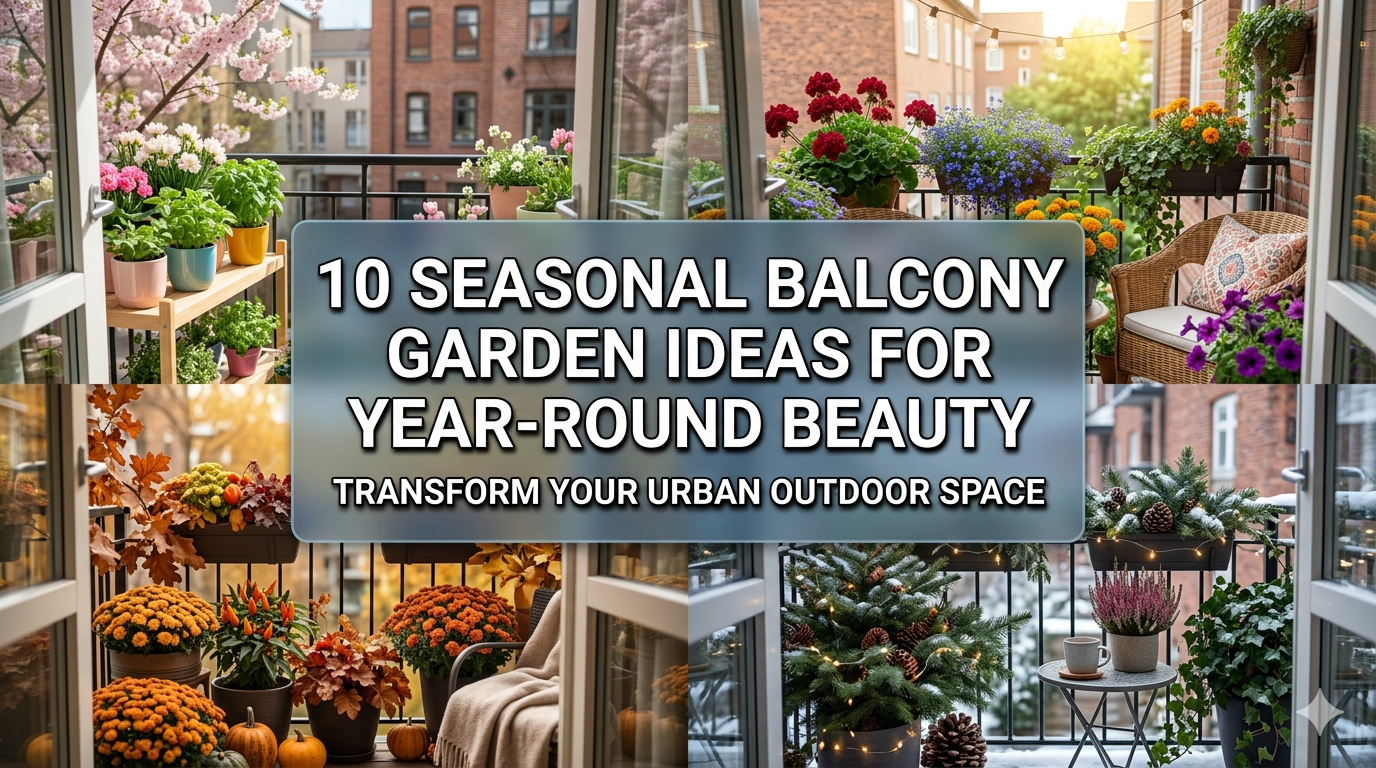
A balcony garden changes character with every season. What looks lush in spring can struggle in peak summer heat, and what thrives in winter may fail during monsoon humidity. The real secret to maintaining year-round beauty is not planting everything at once, but designing a seasonal rhythm that keeps your balcony alive, changing, and productive all year long.
Instead of treating gardening as a one-time setup, think of it as a rotating system—like a living calendar. Each season brings new colors, textures, and plant behaviors. If you learn how to align your plants with these natural shifts, your balcony will never look dull or empty again.
This guide explores 10 seasonal balcony garden ideas that work together as a full-year system. Each idea is practical, beginner-friendly, and designed for real small-space conditions.
- spring awakening garden: fresh greens and rapid growth phase
Spring is the most forgiving season for balcony gardening. Temperatures are moderate, sunlight is balanced, and plants grow quickly.
This is the best time to reset your garden and introduce fast-growing varieties.
ideal spring plants:
- lettuce
- spinach
- coriander
- basil
- marigold (for pest control)
spring growth chart:
| plant type | growth speed | sunlight need | maintenance |
|---|---|---|---|
| leafy greens | fast | medium | low |
| herbs | fast | medium | low |
| flowers | medium | high | low |
spring balcony focus:
- refresh soil
- remove dead winter plants
- introduce compost mix
- start seed trays
why it works:
Spring gives plants the strongest natural growth boost, so even small containers produce visible results quickly.
- summer heat survival garden: drought-tolerant setup
Summer is the most challenging season for balcony gardens, especially in hot regions. High temperatures can dry out soil quickly and stress plants.
The goal is survival + hydration efficiency.
best summer plants:
- chili peppers
- tomatoes (heat-tolerant varieties)
- mint
- okra
- succulents
heat tolerance chart:
| plant | heat resistance | watering need | survival ease |
|---|---|---|---|
| mint | medium | high | easy |
| chili | high | medium | medium |
| succulents | very high | very low | very easy |
| tomatoes | medium | high | medium |
summer strategies:
- mulch soil to reduce evaporation
- use self-watering containers
- shift plants away from direct afternoon sun
- group pots together for shade sharing
key insight:
In summer, survival depends more on water control than plant variety.
- monsoon lush growth garden: humidity advantage setup
Monsoon season brings heavy rain and high humidity. While this can cause fungal issues, it also creates ideal conditions for lush green growth.
best monsoon plants:
- ferns
- money plant
- basil
- leafy greens
- flowering vines
monsoon risk vs benefit chart:
| factor | benefit | risk |
|---|---|---|
| humidity | fast growth | fungal disease |
| rainfall | natural watering | overwatering |
| cloud cover | stable temp | low sunlight |
monsoon tips:
- ensure drainage holes are open
- avoid waterlogging
- elevate pots slightly
- use anti-fungal organic sprays
why it matters:
Monsoon can turn your balcony into a jungle-like green space if managed correctly.
- autumn transition garden: restructuring phase
Autumn is a transitional season where summer plants slow down and cooler-weather crops begin to emerge.
This is the “reset and reorganize” period.
ideal autumn plants:
- spinach
- kale
- parsley
- chrysanthemums
- carrots (deep containers)
transition chart:
| task | purpose |
|---|---|
| prune old plants | remove weak growth |
| enrich soil | restore nutrients |
| rearrange pots | optimize sunlight |
autumn strategy:
- remove exhausted summer plants
- compost leftover soil
- prepare for winter crops
insight:
Autumn is less about growth and more about preparation.
- winter compact garden: slow growth optimization
Winter slows down plant growth but improves flavor in many leafy vegetables.
best winter plants:
- lettuce
- cabbage
- radish
- coriander
- peas
winter growth table:
| plant | growth speed | cold tolerance | yield |
|---|---|---|---|
| lettuce | medium | high | high |
| radish | fast | medium | medium |
| peas | medium | high | high |
winter tips:
- maximize sunlight exposure
- reduce watering frequency
- protect plants from frost winds
- use dark-colored pots to absorb heat
key idea:
Winter gardens grow slower but often produce more flavorful crops.
- vertical seasonal rotation system
Instead of replanting everything, vertical systems allow seasonal swapping without redesigning the entire garden.
structure types:
- wall grids
- hanging racks
- tiered shelves
rotation efficiency chart:
| system type | seasonal flexibility | space usage |
|---|---|---|
| wall grid | very high | very low |
| tier shelves | high | medium |
| hanging setup | medium | low |
benefit:
You can replace only selected plants per season without disturbing the entire setup.
- seasonal color rotation with flowers
Balcony beauty is not just about greenery—it’s also about color cycles.
spring colors:
- pink, yellow, light green
summer colors:
- red, orange, bright green
monsoon colors:
- deep green, purple tones
winter colors:
- white, violet, soft yellow
flower rotation chart:
| season | dominant colors | flower types |
|---|---|---|
| spring | pastel | marigold, petunia |
| summer | bright | hibiscus, zinnia |
| monsoon | deep green | ferns, vines |
| winter | soft tones | daisies, pansy |
why it works:
Color rotation keeps your balcony visually fresh year-round.
- seasonal container switching strategy
Not all containers perform equally in all seasons. Switching containers helps regulate temperature and moisture.
container performance:
| material | summer use | winter use | monsoon use |
|---|---|---|---|
| plastic | high | medium | high |
| clay | medium | high | low |
| metal | low | medium | low |
| fabric bags | high | medium | medium |
strategy:
- use breathable pots in summer
- switch to heat-retaining pots in winter
- ensure drainage in monsoon
- seasonal soil refresh system
Soil loses nutrients over time. Each season should begin with a soil refresh cycle.
soil improvement method:
- add compost
- mix coco peat
- include organic fertilizer
- aerate compacted soil
soil condition chart:
| season | soil condition goal | action needed |
|---|---|---|
| spring | nutrient-rich | compost addition |
| summer | moisture stable | mulch layer |
| monsoon | well-drained | sand/perlite mix |
| winter | balanced | light fertilizing |
insight:
Healthy soil matters more than plant variety.
- year-round balcony cycle planning system
The most powerful idea is treating your balcony like a cycle, not a fixed garden.
annual rotation plan:
| season | focus | outcome |
|---|---|---|
| spring | growth explosion | fresh harvest |
| summer | survival mode | heat resistance |
| monsoon | lush expansion | dense greenery |
| autumn | restructuring | system reset |
| winter | slow production | steady harvest |
balcony performance overview:
| factor | best season | lowest season |
|---|---|---|
| growth rate | spring | winter |
| plant density | monsoon | summer |
| maintenance | winter | monsoon |
seasonal maintenance calendar
| day | task |
|---|---|
| monday | watering adjustment |
| tuesday | plant rotation |
| wednesday | pruning and trimming |
| thursday | pest and fungus check |
| friday | fertilization |
| saturday | layout optimization |
| sunday | observation and planning |
common seasonal mistakes
- keeping same plants all year
- ignoring temperature shifts
- overwatering in monsoon
- under-watering in summer
- not rotating containers
impact chart:
| mistake | severity | fix difficulty |
|---|---|---|
| overwatering | high | medium |
| poor plant choice | high | low |
| no seasonal rotation | very high | medium |
faqs
- how often should I change plants in a balcony garden?
Ideally, you should rotate plants seasonally—four times a year—to match temperature and sunlight changes. - what is the easiest season for balcony gardening?
Spring is the easiest because temperatures are moderate and most plants grow quickly with minimal care. - how do I protect plants during extreme summer heat?
Use shade cloths, mulch soil, water early morning or evening, and choose heat-tolerant plants. - can balcony gardens survive monsoon rains?
Yes, but only with proper drainage, elevated pots, and careful watering control to avoid root rot. - what plants grow best year-round?
Herbs like mint and coriander can adapt across seasons with proper care, but no plant thrives equally in all conditions. - how do I keep my balcony garden looking good all year?
Use seasonal rotation, mix flowers with greens, and adjust containers, soil, and plant types every few months.
A balcony garden becomes truly beautiful not when it is packed with plants, but when it evolves with time. Each season brings a new version of your space—fresh in spring, resilient in summer, lush in monsoon, balanced in autumn, and steady in winter. Once you learn to work with these cycles instead of against them, your balcony stops being a static corner and becomes a living, changing landscape throughout the year.