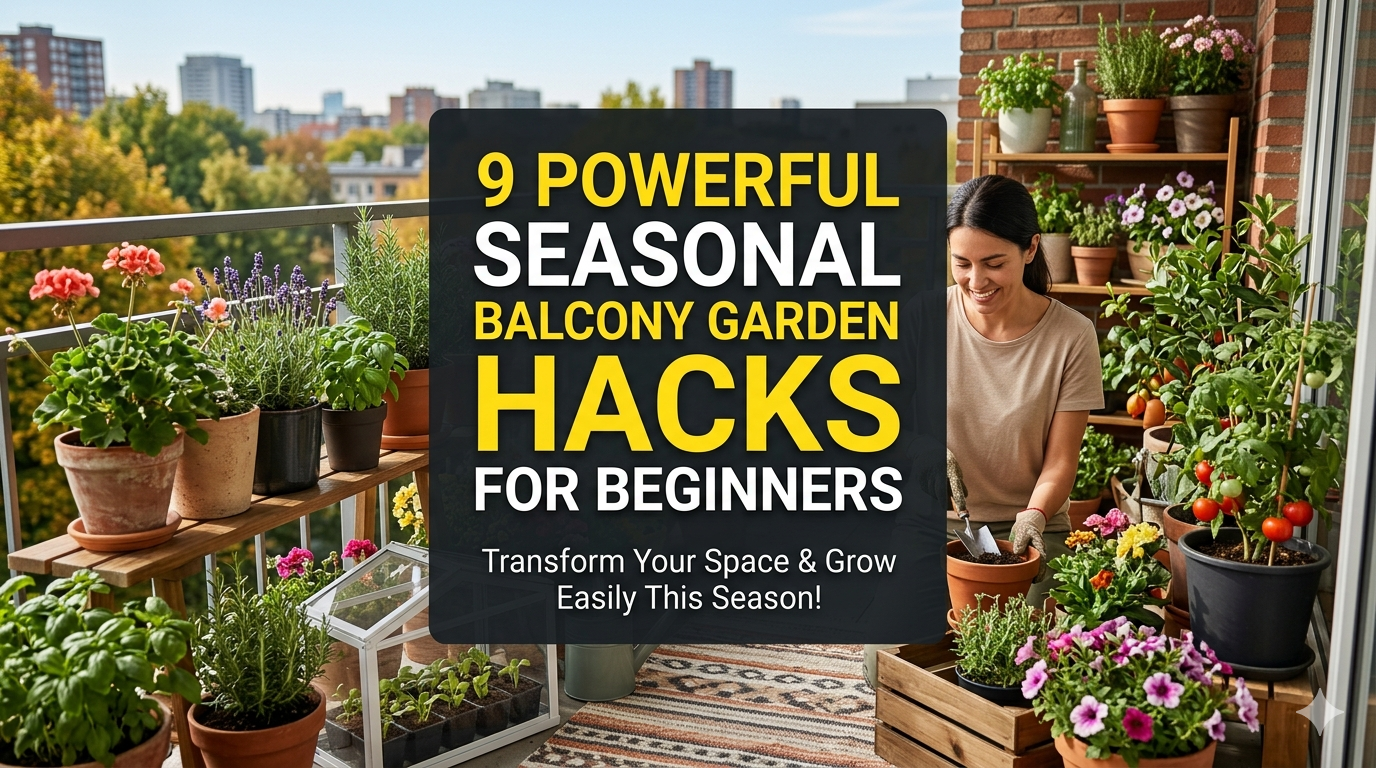
A balcony garden behaves differently from a traditional ground garden. It heats up faster, cools down quicker, dries out sooner, and responds more sharply to seasonal changes. That’s exactly why beginners often feel like their plants “randomly” thrive in one season and fail in another.
The truth is simple: balcony gardening is seasonal engineering in a small space.
Once you understand how to adjust your plants, soil, watering style, and layout with each season, your balcony stops being unpredictable and starts behaving like a controlled mini ecosystem.
This guide breaks down 9 powerful seasonal balcony garden hacks designed specifically for beginners. Each one is practical, tested in real balcony conditions, and structured so you can apply it immediately—even if you’ve never grown anything before.
Along the way, you’ll find tables, seasonal charts, and comparison systems that make planning easier and more visual.
hack 1: learn seasonal sunlight shifts before planting anything
Most beginners make the same mistake: they assume sunlight stays constant throughout the year. In reality, the angle, intensity, and duration of sunlight changes dramatically across seasons.
A balcony that gets strong winter sun may become partially shaded in summer due to sun angle shifts or nearby structures casting shadows.
seasonal sunlight behavior chart
| Season | Sun Strength | Duration | Plant Impact |
|---|---|---|---|
| Spring | Medium-High | Balanced | Ideal growth |
| Summer | Very High | Long | Risk of burning |
| Autumn | Medium | Decreasing | Stable growth |
| Winter | Low | Short | Slow growth |
beginner action plan:
- observe your balcony for 3–5 days per season
- mark sunny vs shaded zones
- adjust plant positions every season
Even moving a pot 1–2 feet can significantly change plant health.
hack 2: switch soil mix seasonally instead of using one mix all year
Soil is not static. It reacts to heat, moisture, and plant demand differently in each season.
A common beginner mistake is using the same soil mix year-round, which leads to compaction, nutrient imbalance, or poor drainage during extreme weather.
seasonal soil adjustment table
| Season | Soil Focus | Recommended Adjustment |
|---|---|---|
| Summer | Moisture retention | Add coco peat + mulch |
| Winter | Drainage + warmth | Add sand + compost |
| Spring | Balanced growth | Compost-rich mix |
| Autumn | Recovery | Organic matter boost |
simple base soil formula:
- 40% garden soil
- 30% compost
- 20% coco peat
- 10% perlite or sand
Then adjust seasonally instead of replacing completely.
hack 3: adapt watering patterns instead of following fixed schedules
Watering is the biggest seasonal variable in balcony gardening. Temperature, humidity, and wind directly affect how fast soil dries.
beginners often water on a fixed schedule (like “daily in the evening”), which leads to overwatering in winter and underwatering in summer.
seasonal watering guide
| Season | Watering Frequency | Best Time of Day |
|---|---|---|
| Summer | Daily or twice/day | Early morning + evening |
| Spring | Every 1–2 days | Morning |
| Autumn | Every 2–3 days | Morning |
| Winter | Every 3–5 days | Midday |
quick rule:
Always check the top 1–2 inches of soil before watering.
If it’s moist, skip watering—even if the schedule says otherwise.
hack 4: rotate plant placement with seasons, not just aesthetics
Plants should not stay in fixed positions year-round. Balcony microclimates shift with seasons.
example:
- summer sun may burn basil on the west side
- winter sun may not reach shaded corners at all
seasonal plant placement strategy
| Plant Type | Summer Position | Winter Position |
|---|---|---|
| Herbs | Partial shade | Full sun |
| Leafy greens | Shade corners | Sunny edges |
| Fruiting plants | Full sun | Protected sun |
beginner tip:
Think of your balcony like a stage where lighting changes every season.
hack 5: use seasonal container strategies for better root health
Container choice affects temperature more than most beginners realize. In summer, pots can overheat roots; in winter, they can become too cold.
container performance by season
| Material | Summer Use | Winter Use | Overall Suitability |
|---|---|---|---|
| Plastic | Good | Moderate | Basic |
| Clay | Poor | Good | Seasonal |
| Ceramic | Excellent | Excellent | Year-round |
| Fabric grow bags | Excellent | Good | Flexible |
seasonal container hack:
- use light-colored pots in summer to reflect heat
- use darker or insulated pots in winter to retain warmth
hack 6: grow season-specific crops instead of forcing year-round growth
Not all plants are meant for all seasons. Beginners often try to grow tomatoes in winter or lettuce in peak summer, leading to weak plants.
seasonal crop guide
| Season | Best Crops |
|---|---|
| Spring | Lettuce, coriander, peas |
| Summer | Tomatoes, peppers, basil |
| Autumn | Spinach, kale, carrots |
| Winter | Mint, parsley, microgreens |
crop success comparison
| Crop Type | Seasonal Fit | Growth Speed |
|---|---|---|
| Seasonal crop | High | Fast |
| Off-season | Low | Slow/failure |
working with seasons instead of against them increases success rate dramatically.
hack 7: manage humidity shifts for plant stability
Humidity changes are subtle but powerful. Balcony plants often suffer not from water shortage, but from incorrect humidity levels.
humidity effects chart
| Condition | Effect on Plants |
|---|---|
| Low humidity | Leaf curling, dryness |
| Balanced | Stable growth |
| High humidity | Fungal growth risk |
seasonal humidity patterns:
- summer: low humidity + heat stress
- winter: moderate humidity but low evaporation
- monsoon: high humidity + fungal risk
solutions:
- use pebble trays in dry seasons
- improve airflow in humid seasons
- avoid overcrowding pots
hack 8: build a seasonal fertilization cycle instead of random feeding
Plants don’t need the same nutrients all year. Their growth behavior changes with seasons.
seasonal fertilization chart
| Season | Nutrient Focus | Fertilizer Type |
|---|---|---|
| Spring | Growth boost | Nitrogen-rich compost |
| Summer | Flower/fruit | Balanced NPK |
| Autumn | Recovery | Organic compost |
| Winter | Maintenance | Light feeding |
simple beginner cycle:
- compost tea every 2 weeks
- liquid fertilizer once a month
- skip feeding during plant dormancy
over-fertilizing in winter is a very common beginner mistake.
hack 9: create seasonal protection systems for extreme weather
Balcony gardens are exposed. Unlike ground gardens, they have no natural buffering from wind, heat, or cold.
seasonal protection strategies
| Season | Risk | Protection Method |
|---|---|---|
| Summer | Heat scorch | Shade nets, cloth cover |
| Winter | Cold stress | Wall insulation, covers |
| Monsoon | Overwatering | Drainage improvement |
| Windy seasons | Breakage | Wind barriers |
simple protective tools:
- retractable shade cloth
- plastic wind shields
- movable plant racks
- waterproof covers
These systems prevent sudden seasonal damage that often kills beginner gardens.
seasonal balcony gardening system overview
When combined, all nine hacks form a complete seasonal management system.
system breakdown table
| System Layer | Function |
|---|---|
| Sunlight tracking | Plant positioning |
| Soil adaptation | Nutrient + moisture balance |
| Watering control | Hydration stability |
| Crop rotation | Seasonal productivity |
| Container strategy | Root temperature control |
| Humidity management | Plant health stability |
| Fertilization cycle | Nutrient timing |
| Protection systems | Weather safety |
| Seasonal planting | Growth optimization |
This system transforms a simple balcony into a responsive garden that adapts automatically across seasons.
common beginner mistakes in seasonal balcony gardening
Even with good intentions, beginners often repeat avoidable errors:
- using one soil mix for all seasons
- ignoring seasonal sunlight changes
- watering on fixed schedules
- growing wrong crops in wrong seasons
- overcrowding plants in peak summer
- skipping winter protection
Avoiding these mistakes alone can improve plant survival rates significantly.
simple weekly seasonal maintenance plan
| Day | Task |
|---|---|
| Monday | Soil check + watering review |
| Tuesday | Pest inspection |
| Wednesday | Plant rotation adjustment |
| Thursday | Fertilizer (if needed) |
| Friday | Pruning + trimming |
| Saturday | Seasonal protection check |
| Sunday | Observation + planning |
final thoughts
Seasonal balcony gardening is not about fighting nature—it’s about adjusting to it intelligently. When you stop treating your balcony like a fixed space and start treating it like a changing environment, everything becomes easier.
Plants don’t fail because balconies are small. They fail because conditions change faster in small spaces, and those changes are often ignored.
Once you learn to adapt sunlight exposure, soil composition, watering habits, and plant selection with each season, your balcony stops being unpredictable and becomes a stable, productive system.
Even beginners can achieve consistent growth year-round—not by doing more work, but by doing the right seasonal adjustments at the right time.
frequently asked questions
- what is the easiest plant to grow in all seasons on a balcony?
Mint is one of the most adaptable plants and can survive across most seasons with proper care and partial shade. - how do I protect balcony plants in extreme summer heat?
Use shade nets, move pots away from direct afternoon sun, and water early in the morning. - can I grow vegetables in winter on a balcony?
Yes, leafy greens like spinach, coriander, and kale perform very well in cooler temperatures. - how often should I change soil in seasonal gardening?
Instead of fully replacing soil, refresh it with compost each season and only replace it if it becomes compacted or unhealthy. - why do my balcony plants die in different seasons?
Most failures happen due to ignoring seasonal changes in sunlight, watering needs, and temperature stress. - what is the most important factor in seasonal balcony gardening?
Adaptability—adjusting watering, soil, and plant placement according to seasonal conditions is the key to success.