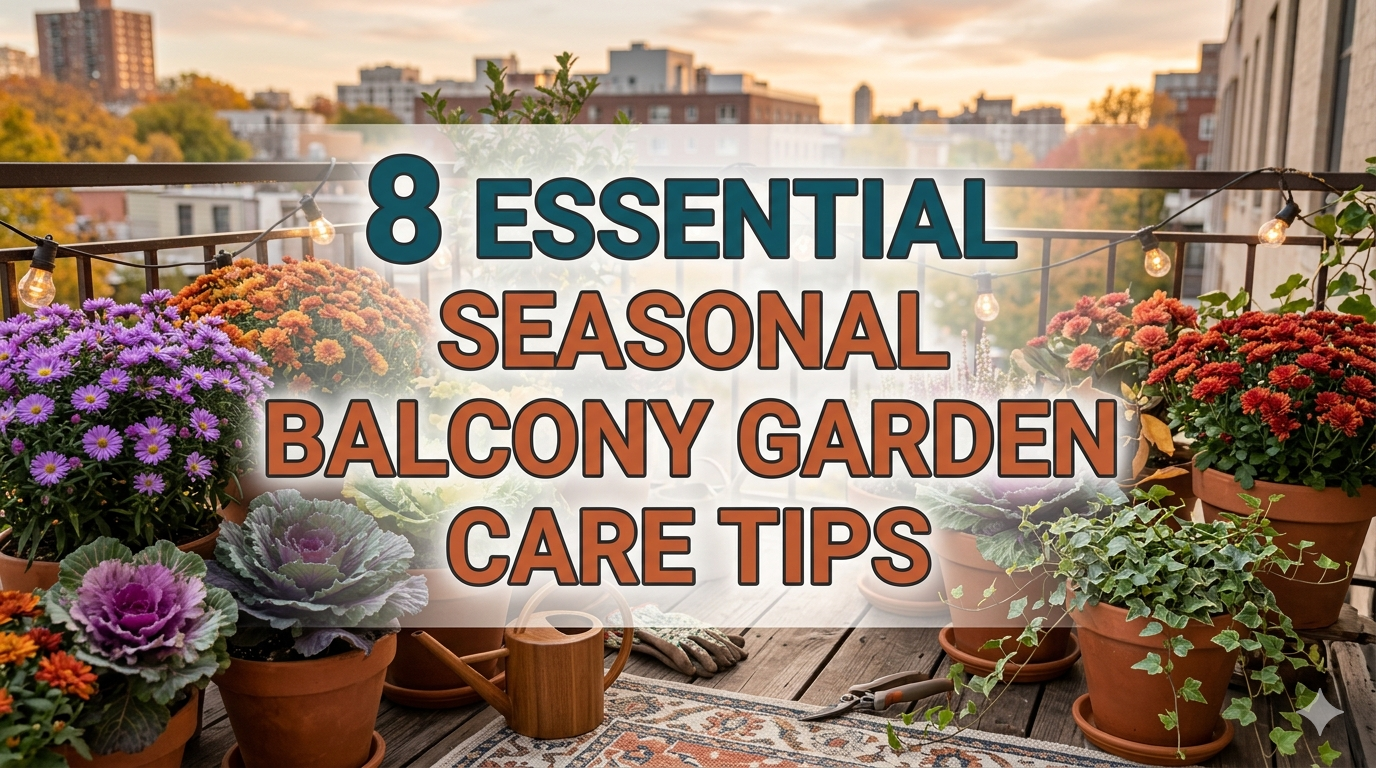
A balcony garden is never really static. It changes with the weather, the sunlight, the humidity in the air, and even the direction of the wind. What thrives in one season may struggle in another. This constant shift is what makes balcony gardening both rewarding and challenging.
Unlike traditional gardens, balcony spaces are more exposed. Concrete surfaces heat up quickly, winds can be stronger, and water can evaporate faster. Seasonal care is not optional here—it is the difference between a thriving green space and a struggling one.
What follows are eight essential seasonal balcony garden care tips designed to help you adjust your garden throughout the year. These are practical, experience-based strategies supported by structured tables and real-world patterns you can actually follow.
tip 1: adjust watering frequency with seasonal temperature shifts
Watering is not a fixed routine in balcony gardening. It changes constantly with temperature, humidity, and wind conditions. Overwatering in cooler months and underwatering in summer are both common mistakes.
The simplest rule: the hotter and windier it gets, the faster your soil dries.
Seasonal watering guide:
| Season | Temperature Condition | Watering Frequency | Best Time to Water |
|---|---|---|---|
| Summer | Hot & dry | Once daily or twice for small pots | Early morning / evening |
| Monsoon | Humid & wet | Every 2–4 days | Morning only |
| Winter | Cool & dry | Every 3–5 days | Mid-morning |
| Spring | Moderate | Every 2–3 days | Morning |
In balcony gardens, pots dry faster than ground soil because they are exposed on all sides. Hanging pots and railing planters dry even faster than floor containers.
A useful habit is the “finger test”: insert your finger 2–3 cm into the soil. If it feels dry, water immediately. If it feels moist, wait.
tip 2: seasonal plant rotation for healthier growth cycles
Plants have natural growth cycles that align with seasons. Forcing the same plants to grow year-round in unsuitable conditions leads to weak growth and pest problems.
Instead, rotate your balcony plants based on seasonal suitability.
Seasonal plant suitability chart:
| Season | Best Leafy Plants | Best Fruiting Plants | Herbs |
|---|---|---|---|
| Summer | Amaranth, spinach (heat-tolerant types) | Tomatoes, chilies | Basil, mint |
| Monsoon | Malabar spinach, coriander | Okra, beans | Mint, lemongrass |
| Winter | Lettuce, cabbage, kale | Peas, carrots | Parsley, dill |
| Spring | Lettuce, herbs mix | Strawberries, peppers | Basil, thyme |
Rotation benefits:
- Prevents soil nutrient depletion
- Reduces pest cycles
- Improves yield quality
- Keeps soil biologically active
A simple rotation rule: never grow the same plant family in the same pot consecutively without at least one “rest or change” cycle.
tip 3: seasonal sunlight management for balcony conditions
Sunlight changes dramatically across seasons. In summer, the sun is harsh and direct. In winter, it is softer and lower in angle. Balcony gardeners need to adjust plant placement accordingly.
Sunlight exposure guide:
| Condition | Risk | Adjustment Strategy |
|---|---|---|
| Summer direct sun | Leaf burn, dehydration | Use shade cloth or reposition plants |
| Monsoon low light | Slow growth | Remove obstructions, clean leaves |
| Winter weak sun | Leggy growth | Move plants closer to edge or railing |
| Spring balanced light | Optimal growth | Minimal adjustment needed |
Practical balcony adaptation methods:
- Use shade nets (30–50%) during peak summer
- Rotate pots weekly for even sunlight exposure
- Clean balcony railings and glass to maximize reflection
- Use white walls or reflective surfaces to increase brightness
Sunlight is not just about intensity—it is also about duration. Some plants need 4 hours, others need 8+. Matching plants to seasonal sun patterns improves survival dramatically.
tip 4: seasonal fertilization and soil feeding schedule
Soil in containers depletes nutrients faster than ground soil. Seasonal feeding ensures plants continue growing without deficiency symptoms.
Fertilizer schedule overview:
| Season | Soil Condition | Fertilizer Type | Frequency |
|---|---|---|---|
| Summer | Rapid depletion | Liquid organic fertilizer | Every 10–14 days |
| Monsoon | Nutrient leaching | Slow-release compost | Every 2–3 weeks |
| Winter | Slow metabolism | Light compost mix | Once a month |
| Spring | Active growth | Balanced NPK or compost tea | Every 2 weeks |
Common organic options:
- Compost tea (fast nutrient boost)
- Vermicompost (long-term soil health)
- Banana peel fertilizer (potassium boost)
- Eggshell powder (calcium support)
Soil quality chart:
| Soil Condition | Plant Response | Action Required |
|---|---|---|
| Loose & dark | Healthy growth | Maintain current feeding |
| Dry & pale | Nutrient deficiency | Add compost |
| Compact & hard | Poor drainage | Aerate soil + mix organic matter |
| Smelly soil | Overwatering | Reduce watering + improve drainage |
A key seasonal rule: feed more during active growth seasons (spring and summer), and less during dormant or slow-growth periods.
tip 5: pest control changes across seasons
Pest activity is not constant. It increases during warm, humid conditions and decreases in cooler months. Balcony gardens, because of their enclosed environment, can sometimes amplify pest cycles.
Seasonal pest pattern chart:
| Season | Common Pests | Risk Level | Control Strategy |
|---|---|---|---|
| Summer | Aphids, whiteflies | High | Neem oil spray every 7 days |
| Monsoon | Fungal gnats, mildew | Very High | Improve airflow, reduce watering |
| Winter | Minimal pests | Low | Occasional inspection |
| Spring | Aphids, caterpillars | Medium | Manual removal + neem spray |
Natural pest control options:
- Neem oil spray (weekly preventive)
- Garlic spray (strong repellent)
- Soap water solution (soft-bodied insects)
- Companion planting (marigold, basil)
Airflow is one of the most underrated pest control methods. Plants in stagnant air develop more fungal issues. Even a small fan or repositioning pots can reduce pest problems significantly.
tip 6: seasonal pruning and plant shaping techniques
Pruning is not just about aesthetics—it is about controlling plant energy. Seasonal pruning helps plants redirect energy toward new growth or fruit production.
Pruning schedule:
| Season | Pruning Intensity | Focus |
|---|---|---|
| Summer | Light pruning | Remove dead leaves, shape growth |
| Monsoon | Minimal pruning | Avoid disease spread |
| Winter | Moderate pruning | Prepare for regrowth |
| Spring | Heavy pruning | Encourage new shoots |
Plant response chart:
| Action | Effect on Growth |
|---|---|
| Light trimming | Maintains shape |
| Top pruning | Encourages bushier growth |
| Deadheading flowers | Extends flowering cycle |
| Root trimming (seasonal repotting) | Improves long-term health |
A common mistake is over-pruning during monsoon season, which can expose plants to fungal infections.
tip 7: protecting balcony gardens from seasonal weather stress
Balconies are exposed environments. Rain, wind, heat waves, and cold spells all directly affect plant health.
Seasonal protection guide:
| Weather Condition | Risk | Protective Measure |
|---|---|---|
| Heatwaves | Drying, leaf scorch | Shade cloth, extra watering |
| Heavy rain | Root rot | Elevate pots, drainage holes |
| Strong winds | Plant breakage | Wind barriers, heavier pots |
| Cold spells | Slow growth | Cover plants at night |
Simple protective tools:
- Bamboo screens (wind break)
- Plastic covers (rain protection)
- Mulch layer (soil temperature control)
- Pot risers (improves drainage)
A balcony garden that survives weather stress is always more stable and productive long-term.
tip 8: seasonal reorganization and space optimization
Each season is an opportunity to reorganize your balcony layout. Plants grow differently depending on temperature and light, so static arrangements often become inefficient.
Seasonal layout optimization:
| Season | Layout Priority | Adjustment Strategy |
|---|---|---|
| Summer | Shade optimization | Move sensitive plants inward |
| Monsoon | Drainage priority | Elevate pots, reduce clustering |
| Winter | Sun exposure | Move plants toward light sources |
| Spring | Growth expansion | Add new containers and layers |
Space efficiency chart:
| Layout Type | Efficiency | Best Season |
|---|---|---|
| Vertical stacking | Very High | Year-round |
| Rail hanging | High | Summer/Spring |
| Floor clustering | Medium | Winter |
| Modular mobile setup | Very High | All seasons |
A flexible layout ensures plants always sit in their optimal micro-environment rather than being forced into one fixed arrangement.
combined seasonal balcony care overview
| Care Area | Summer | Monsoon | Winter | Spring |
|---|---|---|---|---|
| Watering | High | Medium-Low | Low | Medium |
| Fertilizing | High | Medium | Low | High |
| Pest control | High | Very High | Low | Medium |
| Sunlight management | Critical | Moderate | Important | Balanced |
| Pruning | Light | Minimal | Medium | Heavy |
This overview shows that balcony gardening is not about repeating the same routine—it is about adapting rhythms throughout the year.
building a seasonal habit system
The most successful balcony gardeners do not rely on memory. They build simple seasonal habits.
Example weekly structure:
| Day | Task |
|---|---|
| Monday | Watering check + inspection |
| Wednesday | Pest check + light cleaning |
| Friday | Fertilizer or compost application (seasonal) |
| Sunday | Pruning or rearrangement |
Consistency builds resilience in plants. Even small, repeated actions have stronger effects than occasional large interventions.
frequently asked questions
- how often should I change my balcony garden setup?
Ideally, you should adjust your setup every season. Small changes like plant repositioning and watering adjustments should be done weekly. - what is the most critical season for balcony gardening?
Summer and monsoon seasons are the most challenging due to heat stress and excess moisture issues. - can I keep the same plants all year round?
Some herbs like mint and rosemary can survive year-round, but most vegetables and flowering plants perform best when rotated seasonally. - how do I know if my balcony plants are stressed by weather?
Signs include yellowing leaves, slow growth, wilting despite watering, or fungal spots on leaves. - what is the easiest way to protect plants from seasonal changes?
Using movable pots, shade nets, and proper drainage systems are the simplest and most effective methods. - do balcony gardens need more care than ground gardens?
Yes, because containers dry faster, nutrients deplete quicker, and exposure to weather is more intense.
closing reflection
A balcony garden is not a fixed space—it is a living system that changes with every season. Success comes from observation and adjustment rather than rigid routines.
When you understand how temperature, sunlight, water, and soil behave differently throughout the year, your balcony stops being a challenging space and becomes a responsive ecosystem. Over time, even a small balcony can feel like a complete seasonal landscape—constantly shifting, yet always alive.