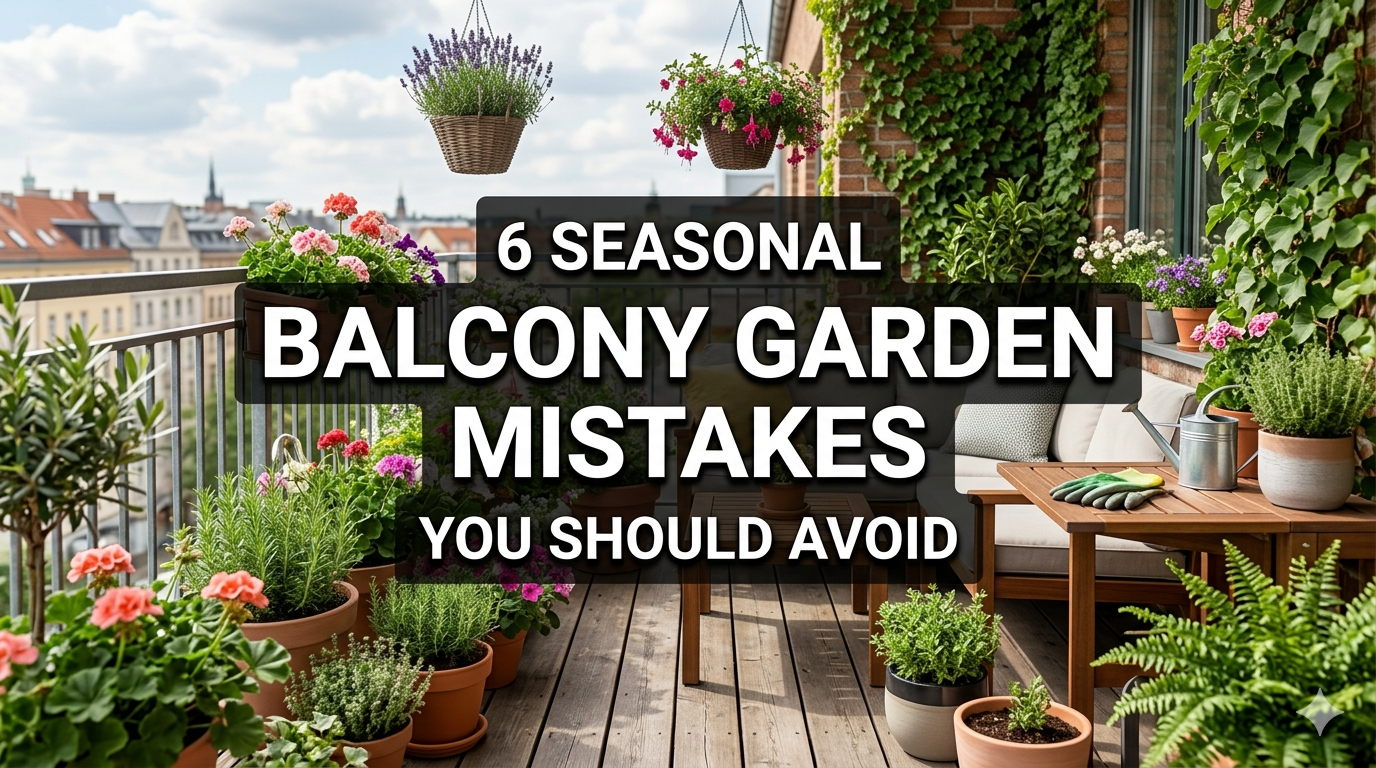
A balcony garden looks simple when you first imagine it. A few pots, some greenery, maybe a flowering plant or two that changes with the seasons. But once you actually start living with it through heatwaves, monsoon humidity, winter dryness, and unpredictable wind, you realize something important: balcony gardening is not static. It shifts constantly with the seasons, and most of the problems people face come from ignoring that reality.
The same plant that thrives in spring can struggle in summer. A watering routine that worked in October can quietly destroy roots in July. Even soil behaves differently depending on temperature and moisture in the air.
Over time, I noticed something interesting: most failures in balcony gardens weren’t caused by lack of effort, but by repeating seasonal mistakes without realizing it.
This article breaks down six of those mistakes in detail, along with practical ways to avoid them, supported by tables, seasonal comparisons, and real-world adjustments that make a noticeable difference.
understanding seasonal pressure in balcony gardens
Before going into the mistakes, it helps to understand what actually changes throughout the year in a balcony environment.
Unlike open gardens, balconies experience amplified conditions:
- hotter heat reflection from walls and floors
- stronger wind currents
- faster soil drying
- limited shade movement
Here’s a simple breakdown of seasonal stress factors:
| Season | Main Stress Factor | Impact on Plants |
|---|---|---|
| Spring | Rapid growth fluctuations | uneven watering needs |
| Summer | Heat + evaporation | dehydration, leaf burn |
| Monsoon | Excess humidity | fungal growth, root rot |
| Winter | Low light + dry air | slow growth, dormancy stress |
The mistake most people make is treating the garden the same all year round. That assumption quietly leads to most seasonal failures.
mistake 1: not adjusting watering habits with temperature changes
Watering is usually the first thing people get wrong when seasons shift.
A common pattern looks like this:
- summer arrives → plants dry faster → watering increases randomly
- monsoon arrives → soil stays wet → watering continues anyway
- winter arrives → growth slows → watering stays unchanged
Plants don’t need consistent schedules; they need responsive care.
seasonal watering behavior chart:
| Season | Soil Drying Speed | Recommended Watering Frequency |
|---|---|---|
| Spring | Moderate | 2–3 times/week |
| Summer | Very fast | 3–5 times/week (deep watering) |
| Monsoon | Very slow | 1–2 times/week |
| Winter | Slow | 1–2 times/week (minimal) |
what goes wrong:
Overwatering in monsoon or underestimating evaporation in summer.
better approach:
Instead of fixed schedules, base watering on soil moisture. Seasonal awareness should guide frequency, not habit.
A simple rule that helped me: if the top 2–3 cm of soil feels dry in summer, water immediately; in monsoon, wait longer than you think necessary.
mistake 2: ignoring seasonal light shift on balconies
Light is not constant throughout the year. Even if your balcony faces the same direction, sun angle and intensity change significantly.
For example:
- summer sun is harsh and vertical
- winter sun is softer and lower
- monsoon brings diffused light
This changes how plants behave in the same spot.
seasonal light comparison:
| Season | Light Intensity | Plant Response |
|---|---|---|
| Spring | Balanced | steady growth |
| Summer | Intense | leaf burn risk |
| Monsoon | Diffused | fungal susceptibility |
| Winter | Weak | slow growth or dormancy |
common mistake:
Keeping plants in the same exact positions all year.
what happens:
- sun-loving plants suffer in shade-heavy winters
- shade-tolerant plants burn in summer reflections
better solution:
Rotate plant positions seasonally. Even a small shift (left to right side of balcony) can make a difference.
I started doing a “season swap” every 2–3 months, and plant health improved noticeably without adding anything new.
mistake 3: using the same soil mix all year without renewal
Soil is often treated as permanent, but in balcony containers, it behaves more like a consumable resource.
Each season affects soil differently:
- summer dries and hardens it
- monsoon saturates and compacts it
- winter slows microbial activity
soil condition breakdown:
| Season | Soil Condition Change | Result on Plants |
|---|---|---|
| Spring | reactivates nutrients | strong growth |
| Summer | nutrient depletion | dryness stress |
| Monsoon | oxygen reduction | root rot risk |
| Winter | microbial slowdown | weak nutrient uptake |
mistake pattern:
Using the same compacted soil for multiple seasons without amendment.
better approach:
Seasonal soil refresh:
- spring: add compost boost
- summer: improve water retention (coco peat)
- monsoon: increase drainage (sand/perlite)
- winter: add organic matter slowly
soil adjustment table:
| Season | Soil Additive Focus |
|---|---|
| Spring | Compost + nutrients |
| Summer | Moisture retention |
| Monsoon | Drainage improvement |
| Winter | Organic enrichment |
mistake 4: overprotecting plants during seasonal transition
When weather changes, many gardeners react too strongly. They move all plants indoors, reduce watering drastically, or suddenly change everything.
But plants don’t respond well to abrupt transitions.
example scenario:
A healthy plant suddenly moved from balcony sun to indoor shade → shock response → leaf drop.
seasonal transition stress:
| Action Taken | Plant Reaction |
|---|---|
| sudden relocation | shock, wilting |
| abrupt watering cut | dehydration stress |
| rapid pruning | growth slowdown |
better approach:
Gradual transition.
For example:
- reduce sunlight exposure slowly over 7–10 days
- adjust watering in steps, not instantly
- move plants in phases, not all at once
Plants adapt better to slow environmental change than sudden protection.
mistake 5: ignoring seasonal pests and fungal cycles
Each season brings different pests and diseases. Many gardeners only react when damage becomes visible.
seasonal pest chart:
| Season | Common Issue | Trigger Condition |
|---|---|---|
| Spring | aphids | new soft growth |
| Summer | spider mites | dry heat |
| Monsoon | fungal infections | humidity + poor airflow |
| Winter | mealybugs | weak plant immunity |
mistake:
Using the same treatment strategy all year.
what happens:
Pests return because conditions are not addressed, only symptoms.
better strategy:
Seasonal prevention:
- improve airflow in monsoon
- mist leaves carefully in summer (not excessive)
- inspect new growth in spring
- reduce overfertilization in winter
simple comparison:
| Approach | Result |
|---|---|
| reactive care | recurring infestations |
| seasonal care | reduced pest cycles |
mistake 6: not redesigning layout seasonally
Most balcony gardens are designed once and never adjusted. That works poorly because plant needs shift throughout the year.
example:
A sun-exposed corner in summer may become too harsh, while the same corner becomes ideal in winter.
layout adjustment chart:
| Season | Ideal Layout Focus |
|---|---|
| Spring | growth expansion |
| Summer | shade optimization |
| Monsoon | airflow and spacing |
| Winter | light maximization |
common mistake:
Treating layout as permanent structure.
better approach:
Seasonal micro-redesign:
- move hanging pots for shade or sun balance
- rearrange dense plants for airflow in monsoon
- cluster plants in winter for warmth retention
This doesn’t mean rebuilding everything. Even small shifts matter.
seasonal balcony gardening overview
Here’s how a balanced seasonal care system looks when all adjustments are combined:
| Season | Watering | Soil Care | Light Adjustment | Pest Focus |
|---|---|---|---|---|
| Spring | Medium | Nutrient boost | moderate rotation | aphids |
| Summer | High | moisture retention | shade protection | mites |
| Monsoon | Low | drainage improvement | airflow focus | fungus |
| Winter | Low | organic enrichment | light exposure | mealybugs |
This table alone explains why fixed routines fail in balcony gardening.
common mistakes summary
Across all seasons, most issues come from predictable patterns:
- treating gardening as static instead of seasonal
- relying on fixed watering schedules
- ignoring environmental shifts
- overreacting to weather changes
- reusing soil without adjustment
- keeping permanent plant layouts
Once these are understood, gardening becomes less about effort and more about observation.
quick seasonal adjustment checklist
| Task | Frequency |
|---|---|
| check soil condition | weekly |
| rotate plant positions | seasonal |
| inspect pests | weekly |
| refresh soil components | seasonal |
| adjust watering habits | seasonal |
| reorganize balcony layout | seasonal |
faqs
- how often should i change my balcony garden setup
You don’t need a full redesign often, but small seasonal adjustments every 2–3 months help maintain plant health and balance. - what is the most damaging seasonal mistake
Overwatering during monsoon is one of the most common and harmful mistakes because it leads to root rot quickly in containers. - should all plants be moved indoors during winter
Not necessarily. Only sensitive plants should be moved. Many balcony plants actually adapt well to cooler outdoor conditions. - how do i know when to change watering habits
Check soil moisture and observe weather changes. If temperatures rise or humidity drops, plants usually need more frequent watering. - why do plants suddenly die after seasonal change
Usually due to shock from abrupt changes in light, temperature, or watering routines. Gradual adjustment prevents this. - can one soil mix work for all seasons
A basic mix can work, but it performs better when lightly adjusted seasonally for drainage, moisture, or nutrients.