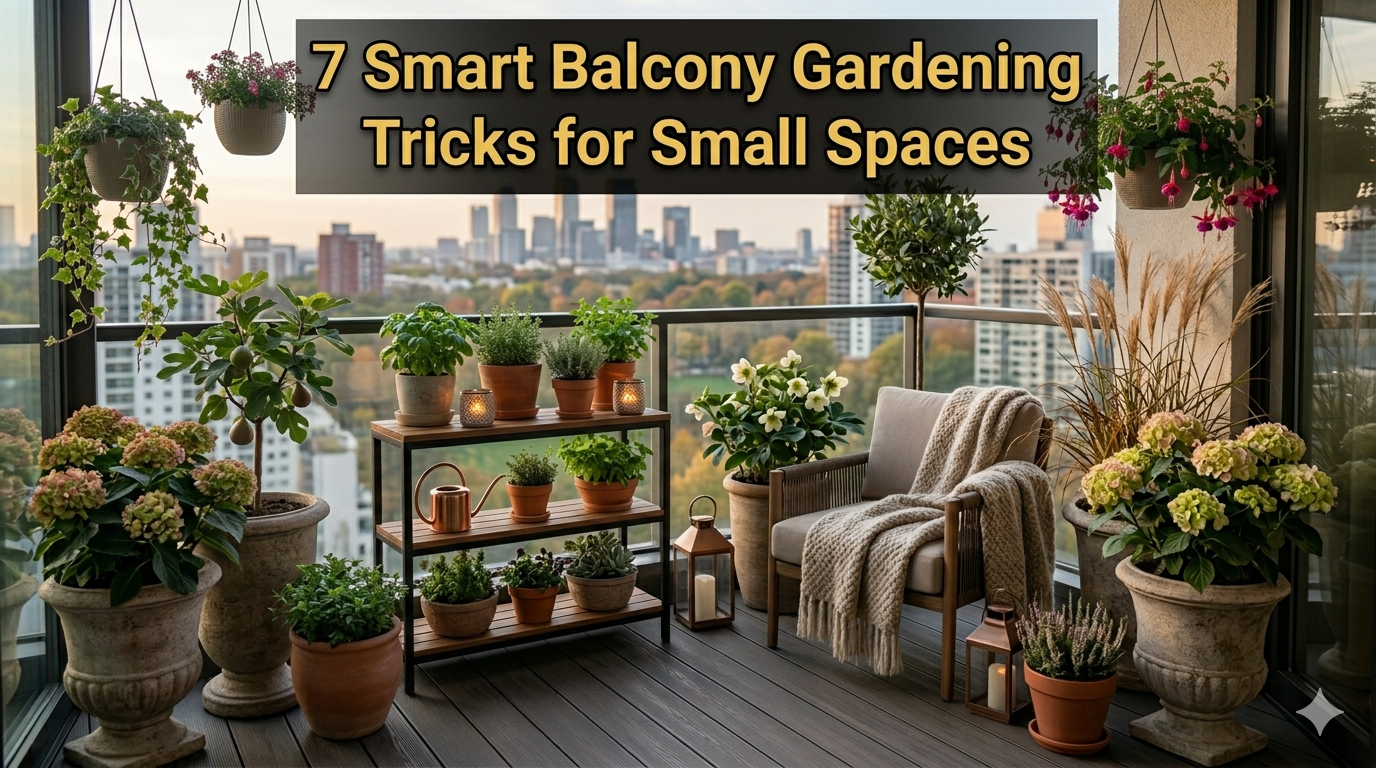
Balcony gardening has quietly become one of the most practical ways to bring greenery into urban life. Apartments are getting smaller, cities are getting denser, and open soil space is becoming rare. Yet the desire to grow plants—whether herbs for cooking, flowers for beauty, or vegetables for freshness—has not disappeared.
The challenge is simple: how do you turn a few square feet of balcony space into something productive, balanced, and visually pleasing without it becoming cluttered or overwhelming?
The answer is not more effort, but smarter structure.
This guide breaks down seven practical balcony gardening tricks that focus on efficiency, plant health, space optimization, and long-term sustainability. Each idea is designed for real apartment conditions—limited sunlight, restricted floor space, and inconsistent weather exposure.
Alongside explanations, you’ll find tables, structured comparisons, and planning charts that help you apply these ideas directly instead of treating them as abstract advice.
understanding small-space balcony gardening logic
Before diving into techniques, it helps to understand how balcony gardening behaves differently from traditional gardening.
In ground gardens:
- soil is stable
- roots expand freely
- moisture retention is natural
- temperature changes are slower
In balcony gardens:
- soil dries quickly
- heat reflects from walls and floors
- wind exposure is stronger
- root space is limited
- containers control everything
core limitation model:
| Factor | Balcony Impact | Resulting Challenge |
|---|---|---|
| Space | very limited | overcrowding risk |
| Water | evaporates fast | frequent watering need |
| Soil | container-bound | nutrient depletion |
| Light | uneven exposure | uneven growth |
Once these constraints are understood, gardening becomes a system of optimization rather than trial and error.
trick 1: use vertical layering instead of horizontal spreading
One of the biggest mistakes beginners make is spreading plants across the floor. In small balconies, floor space is the most valuable and the most limited.
Vertical layering solves this by using height instead of width.
vertical structure breakdown:
| Layer Level | Placement Area | Ideal Plants |
|---|---|---|
| Level 1 | ceiling/hanging | trailing plants, ivy |
| Level 2 | wall shelves | herbs, leafy greens |
| Level 3 | railing | flowers, small herbs |
| Level 4 | floor pots | tomatoes, peppers |
space efficiency comparison:
| Setup Type | Number of Plants | Space Usage Efficiency |
|---|---|---|
| flat layout | 5–8 plants | low |
| vertical system | 15–30 plants | high |
vertical gardening tools:
- wall-mounted planters
- tiered plant stands
- hanging baskets
- railing boxes
design principle:
Think of your balcony as a bookshelf, not a field.
practical layout example:
| Zone | Plants |
|---|---|
| top hanging | strawberries |
| wall | basil, coriander |
| railing | marigold, mint |
| floor | tomato, chili |
trick 2: match plants with growth behavior, not appearance
Many balcony gardens fail because plants are chosen based on looks or preference instead of behavior.
Plants behave differently in confined spaces, and understanding this prevents overcrowding.
growth behavior categories:
- compact growers (stay small, stable)
- vertical growers (grow upward, high yield)
- spreaders (expand fast, need control)
plant behavior table:
| Category | Examples | Best Usage |
|---|---|---|
| compact | thyme, parsley, lettuce | shelves, tight spaces |
| vertical | tomato, chili, beans | floor pots |
| spreaders | mint, oregano | controlled containers |
ideal distribution:
| Category | Percentage |
|---|---|
| compact | 40% |
| vertical | 35% |
| spreaders | 25% |
why this matters:
Without control, spreaders take over space, compact plants get shaded, and vertical plants dominate airflow.
balanced micro-garden example:
| Area | Plants |
|---|---|
| shelf | lettuce + parsley |
| corner | tomato + chili |
| railing | basil + marigold |
| pot | mint (contained) |
trick 3: treat watering as a system, not a routine
Watering is the most misunderstood part of balcony gardening. Most plant problems—wilting, root rot, fungal growth—come from inconsistent watering rather than lack of care.
Instead of manual guesswork, use structured watering systems.
watering methods comparison:
| Method | Efficiency | Maintenance | Suitability |
|---|---|---|---|
| manual watering | low | high | beginners |
| bottle drip system | medium | low | small setups |
| self-watering pots | high | very low | long-term gardens |
DIY bottle drip method:
- take plastic bottle
- make small holes in cap
- fill with water
- insert upside down in soil
watering frequency guide:
| Plant Type | Summer | Winter |
|---|---|---|
| herbs | daily | 2–3 days |
| vegetables | daily | 1–2 days |
| succulents | 3–5 days | weekly |
| flowers | 1–2 days | 3–4 days |
key insight:
Plants respond better to consistency than intensity.
common mistake:
watering based on habit instead of soil condition.
trick 4: use engineered lightweight soil mixes
Soil is the foundation of plant health, but in balcony gardening, it also affects weight, drainage, and airflow.
regular garden soil is too dense for containers.
ideal balcony soil mix:
| Component | Purpose | Ratio |
|---|---|---|
| coco peat | moisture retention | 40% |
| compost | nutrients | 30% |
| perlite | aeration | 20% |
| sand | drainage | 10% |
soil comparison:
| Soil Type | Drainage | Weight | Root Health |
|---|---|---|---|
| garden soil | poor | heavy | medium |
| potting mix | excellent | light | high |
why coco peat matters:
It retains water while allowing airflow, making it ideal for hot climates.
structural safety factor:
| Soil Type | Balcony Load Risk |
|---|---|
| heavy soil | high |
| lightweight mix | low |
benefits of engineered soil:
- better root expansion
- reduced watering frequency
- improved plant stability
trick 5: create micro-zones for structure and clarity
Random placement leads to chaos in small balconies. Micro-zoning solves this by assigning function-based areas.
basic zones:
- edible zone
- decorative zone
- relaxation zone
- utility zone
zone structure table:
| Zone Type | Purpose | Elements Included |
|---|---|---|
| edible | food production | herbs, vegetables |
| decorative | visual appeal | flowers, vines |
| relaxation | comfort | chair, table |
| utility | storage | tools, soil bags |
example layout (small balcony 4×6 ft):
| Area | Setup |
|---|---|
| left wall | vertical herb garden |
| railing | flowering plants |
| corner | tomato plant |
| center | chair |
| under rack | tools + watering kit |
design principle:
Keep at least 20–30% of space open for movement and airflow.
trick 6: optimize sunlight instead of just chasing it
Sunlight in apartments is often uneven and indirect. Instead of fighting it, optimize how it is distributed.
light optimization methods:
- reflective surfaces
- pot rotation
- height adjustment
- grouping plants by light need
light requirement chart:
| Plant Type | Light Requirement |
|---|---|
| vegetables | 5–8 hours direct |
| herbs | 3–6 hours partial |
| leafy greens | 2–4 hours filtered |
| shade plants | indirect light |
reflection trick:
Placing a white wall, foil sheet, or mirror behind plants can increase light exposure by up to 20–30%.
rotation schedule:
| Frequency | Action |
|---|---|
| weekly | rotate pots |
| monthly | reposition plants |
why this matters:
Uneven light causes weak stems and uneven growth direction.
trick 7: adopt modular gardening systems for flexibility
A balcony garden should not be static. Plants grow, seasons change, and space requirements evolve.
modular systems allow rearrangement without redesigning everything.
modular components:
- stackable pots
- movable stands
- detachable hooks
- foldable shelves
system comparison:
| System Type | Flexibility | Maintenance | Efficiency |
|---|---|---|---|
| fixed setup | low | medium | medium |
| modular setup | high | easy | high |
modular gardening layout:
| Module | Purpose |
|---|---|
| herb module | daily cooking |
| veg module | seasonal harvest |
| flower module | decoration |
benefits:
- seasonal reshuffling
- easy expansion
- reduced maintenance stress
common balcony gardening mistakes
| Mistake | Effect | Solution |
|---|---|---|
| overcrowding | poor airflow | spacing control |
| wrong sunlight | weak plants | plant-light match |
| overwatering | root rot | drainage + schedule |
| heavy soil | stress on balcony | lightweight mix |
cost efficiency comparison
| Item | Store Cost | DIY Cost |
|---|---|---|
| planters | high | low |
| irrigation system | high | very low |
| soil mix | medium | low |
| vertical rack | medium | low |
seasonal adaptability chart
| Season | Focus Area |
|---|---|
| spring | growth expansion |
| summer | cooling/shade |
| monsoon | drainage control |
| autumn | balance |
| winter | protection |
faqs
- what is the easiest plant for balcony gardening beginners
Mint, basil, and coriander are easiest because they grow quickly and tolerate container environments well. - how can i increase space in a small balcony garden
Use vertical systems like wall planters, hanging pots, and tiered shelves instead of floor-only layouts. - how often should balcony plants be watered
It depends on plant type and season, but most need watering every 1–3 days in warm conditions. - what soil is best for balcony gardening
A mix of coco peat, compost, perlite, and sand works best for drainage and root health. - can vegetables grow in small balconies with limited sunlight
Yes, leafy vegetables like lettuce and spinach can grow in partial or indirect light. - what is the biggest mistake in balcony gardening
Overcrowding plants without considering light, airflow, and root space is the most common failure point.
A successful balcony garden is not built by adding more plants, but by organizing space, light, water, and soil into a structured system. When these elements work together, even a very small apartment balcony can become a stable, productive, and visually balanced green space throughout the year.