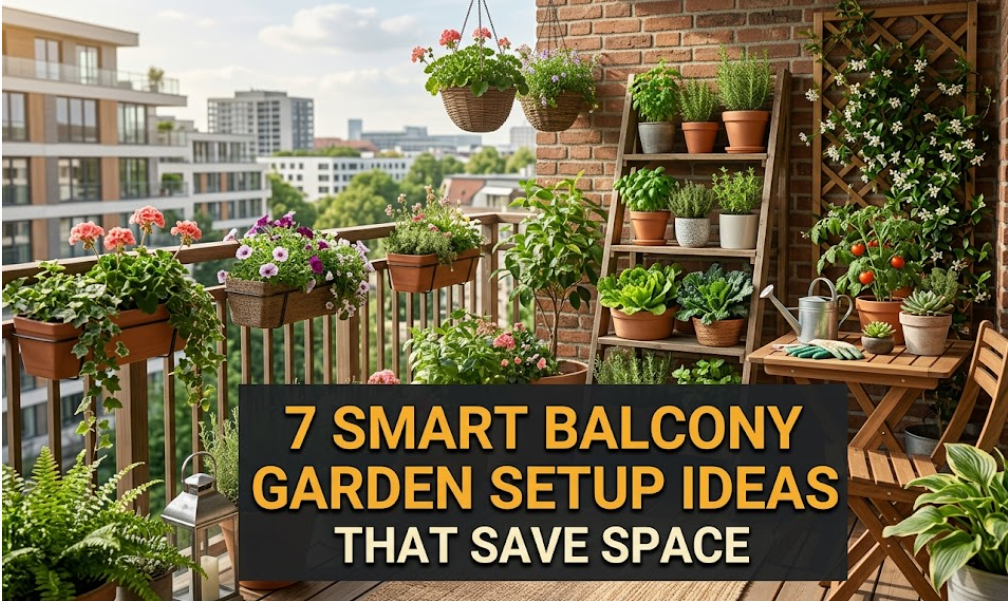
Introduction
Balcony gardening has become more than just a hobby for people living in apartments and compact urban homes. It is now a practical way to bring greenery into tight living spaces, improve air quality, grow herbs and vegetables, and even create a peaceful corner for relaxation. However, the biggest challenge most people face is space limitation. Balconies are often narrow, oddly shaped, or already partially occupied by utility items like air conditioning units, storage racks, or seating.
The good news is that limited space does not mean limited gardening potential. With smart planning and the right setup strategies, even a small balcony can transform into a productive green zone. The key is to think vertically, use multi-functional structures, and choose plants and containers that maximize output without overcrowding the area.
This article explores seven practical balcony garden setup ideas that are designed specifically for space-saving efficiency. These ideas are not just theoretical; they are widely used in urban gardening setups and can be adapted to different climates, balcony sizes, and budgets. Along the way, you’ll also find comparison tables, planning charts, and practical insights that help you design your own optimized balcony garden.
Idea 1: Vertical wall gardening system
One of the most effective ways to save space in a balcony garden is to go vertical. A vertical wall gardening system uses the height of your balcony walls instead of floor space. This allows you to grow multiple plants in stacked layers without reducing walking or seating area.
Vertical systems can be created using wall-mounted pockets, wooden pallets, metal racks, or modular planting panels. These systems are especially useful for herbs, leafy greens, and small flowering plants.
Benefits:
- Maximizes unused wall space
- Keeps plants organized and accessible
- Improves air circulation between plants
- Reduces clutter on the floor
Best plants for vertical systems:
- Mint
- Basil
- Spinach
- Strawberries
- Small ornamental flowers
Maintenance tips:
- Install a drip irrigation line if possible to avoid manual watering stress
- Ensure wall strength can support weight when soil is wet
- Rotate plants every few weeks for even sunlight exposure
Space efficiency comparison:
| Setup Type | Floor Space Used | Plant Capacity | Maintenance Level |
|---|---|---|---|
| Pots on floor | High | Low | Easy |
| Vertical wall system | Very low | High | Medium |
| Hanging baskets | Low | Medium | Medium |
Vertical gardening works best for balconies that receive partial to full sunlight. If your wall faces direct sun, consider using heat-resistant plant varieties or adding a light shade mesh.
Idea 2: Railing planter optimization
Balcony railings are often underused, yet they offer one of the most convenient planting opportunities. Railing planters attach directly to the balcony edge, freeing up floor space completely.
These planters come in adjustable hooks, clamp systems, or custom-built boxes. They are ideal for small herbs, decorative flowers, and trailing plants that naturally hang downward.
Advantages:
- Zero floor space usage
- Easy access for watering and harvesting
- Aesthetic enhancement from outside view
- Ideal for narrow balconies
Best plant choices:
- Petunias
- Marigolds
- Coriander
- Thyme
- Creeping vines like ivy
Setup considerations:
- Ensure strong railing grip to prevent accidents
- Avoid overwatering as drainage may fall outside
- Use lightweight soil mixtures to reduce load
Space utilization chart:
| Balcony Feature | Usage Efficiency |
|---|---|
| Floor pots | 30% |
| Railing planters | 80% |
| Wall shelves | 70% |
Railing gardens are especially effective in apartments where interior balcony space is extremely limited. They also improve the exterior appearance of the building, adding greenery to urban landscapes.
Idea 3: Tiered shelving plant arrangement
Tiered shelving is one of the simplest yet most effective space-saving gardening solutions. It uses a step-like structure where each level holds multiple pots, allowing sunlight to reach all plants evenly.
These shelves can be made from metal, wood, or even durable plastic. They can also be portable, making rearrangement easy depending on sunlight direction.
Key benefits:
- Vertical stacking increases plant count
- Easy organization of plant types
- Flexible design for small or medium balconies
Best plant arrangement strategy:
- Top tier: sun-loving plants (tomatoes, peppers)
- Middle tier: herbs and leafy greens
- Bottom tier: shade-tolerant plants (ferns, mint)
Maintenance tips:
- Rotate shelves occasionally to balance sunlight
- Clean lower tiers to avoid mold buildup
- Secure structure to prevent tipping in strong wind
Comparison table:
| Feature | Tiered Shelving | Single-Level Pots |
|---|---|---|
| Plant capacity | High | Low |
| Space usage | Efficient | Inefficient |
| Cost | Moderate | Low |
| Visual appeal | High | Medium |
Tiered shelving is ideal for gardeners who want both productivity and aesthetics in one setup.
Idea 4: Hanging garden systems
Hanging gardens make use of ceiling space, hooks, and overhead beams. This approach is highly effective for balconies that have limited floor and wall space but sufficient overhead support.
Hanging gardens can include baskets, bottle planters, macrame holders, or modular hanging tubes.
Advantages:
- Uses unused vertical air space
- Creates layered green aesthetic
- Keeps floor completely free
- Ideal for trailing plants
Best plants:
- Spider plants
- Strawberries
- Money plant
- Trailing petunias
- Fern varieties
Setup guidelines:
- Use strong ceiling anchors
- Ensure even weight distribution
- Avoid overcrowding hanging clusters
Space impact chart:
| Method | Floor Usage | Visual Density | Maintenance Ease |
|---|---|---|---|
| Hanging baskets | Very low | High | Medium |
| Floor pots | High | Low | Easy |
| Wall mounts | Low | Medium | Medium |
Hanging systems work best when combined with railing or vertical gardens to create a layered greenery effect.
Idea 5: Foldable furniture with integrated planters
A more modern approach to balcony gardening involves combining furniture with planting spaces. Foldable chairs, tables, or benches can be designed with built-in planter sections, allowing functionality and greenery to coexist.
This idea is especially useful for balconies that also serve as relaxation or work spaces.
Benefits:
- Dual-purpose use of space
- Easy transformation between garden and seating area
- Modern aesthetic appeal
Examples:
- Bench with side planter boxes
- Foldable table with herb center
- Wall-mounted folding desk with planter strip
Maintenance considerations:
- Ensure waterproof sealing
- Choose lightweight plants
- Clean soil spillage regularly
Space efficiency comparison:
| Setup | Space Saved | Functionality |
|---|---|---|
| Separate furniture + pots | Low | High |
| Integrated planter furniture | High | High |
| No furniture setup | High | Low |
This approach is ideal for people who want a balance between lifestyle comfort and gardening.
Idea 6: Hydroponic vertical towers
Hydroponic systems are soil-less gardening setups where plants grow in nutrient-rich water. Vertical hydroponic towers are particularly effective for balconies because they use minimal space while producing high yields.
These systems are slightly more technical but extremely efficient for growing vegetables and herbs.
Advantages:
- No soil required
- Faster plant growth
- High yield in small space
- Cleaner setup with less mess
Best plants:
- Lettuce
- Basil
- Kale
- Spinach
- Mint
Setup requirements:
- Water pump system
- Nutrient solution
- Vertical tower frame
- Light management
Efficiency comparison:
| Factor | Hydroponic Tower | Soil Pots |
|---|---|---|
| Growth speed | Fast | Moderate |
| Space usage | Very low | High |
| Maintenance | Medium | Easy |
| Yield | High | Medium |
Hydroponics is ideal for tech-savvy gardeners or those interested in high productivity in limited space.
Idea 7: Modular stackable containers
Modular containers are flexible planting units that can be stacked, rearranged, or expanded based on available space. They are one of the most adaptable balcony gardening solutions.
These containers often come in interlocking designs that prevent spillage and improve stability.
Benefits:
- Highly flexible arrangement
- Easy expansion or reduction
- Suitable for all plant types
- Portable and lightweight
Best usage strategy:
- Stack sun-loving plants on top
- Place herbs in middle layers
- Use bottom layers for moisture-retaining plants
Maintenance tips:
- Check drainage alignment between layers
- Avoid over-stacking beyond stability limit
- Rotate modules seasonally
Space optimization table:
| Configuration | Flexibility | Stability | Plant Capacity |
|---|---|---|---|
| Fixed pots | Low | High | Medium |
| Stackable modules | High | Medium | High |
| Ground layout | Low | High | Low |
This system is ideal for renters or people who frequently redesign their balcony space.
Combined space-saving strategy overview
To achieve maximum efficiency, most experienced balcony gardeners combine multiple systems rather than relying on just one. For example, vertical walls can be combined with railing planters and hanging baskets to create a multi-layered garden ecosystem.
Integrated efficiency chart:
| Combination Type | Space Use | Visual Appeal | Yield |
|---|---|---|---|
| Single system | Medium | Medium | Medium |
| Dual system | High | High | High |
| Multi-layer system | Very high | Very high | Very high |
Conclusion
Balcony gardening is not limited by size but by imagination and planning. By using vertical structures, railing planters, tiered shelving, hanging systems, multifunctional furniture, hydroponic towers, and modular containers, even the smallest balcony can be transformed into a thriving green space.
The key principle behind all these ideas is simple: use vertical space, reduce floor clutter, and combine multiple functions into single structures. When applied thoughtfully, these setups not only save space but also create a visually appealing and highly productive garden environment.
FAQs
- What is the best balcony garden setup for very small spaces?
Vertical wall gardening combined with railing planters is the most efficient setup for extremely small balconies because it eliminates floor usage almost completely. - Can I combine different balcony gardening systems together?
Yes, combining systems like vertical gardens, hanging pots, and tiered shelves creates a layered setup that maximizes both space and plant variety. - Which plants are easiest to grow in space-saving balcony gardens?
Herbs like mint, basil, coriander, and thyme are easiest, along with leafy greens like spinach and lettuce. - How do I prevent overwatering in balcony container gardens?
Use containers with proper drainage holes, avoid excessive watering schedules, and consider drip irrigation systems for controlled moisture. - Is hydroponic balcony gardening worth it for beginners?
It can be worth it if you are willing to learn the basics of nutrient management, but traditional soil systems are easier for complete beginners. - How often should I rearrange or maintain my balcony garden setup?
A light maintenance check should be done weekly, while major rearrangements or seasonal plant rotations can be done every 2–3 months.