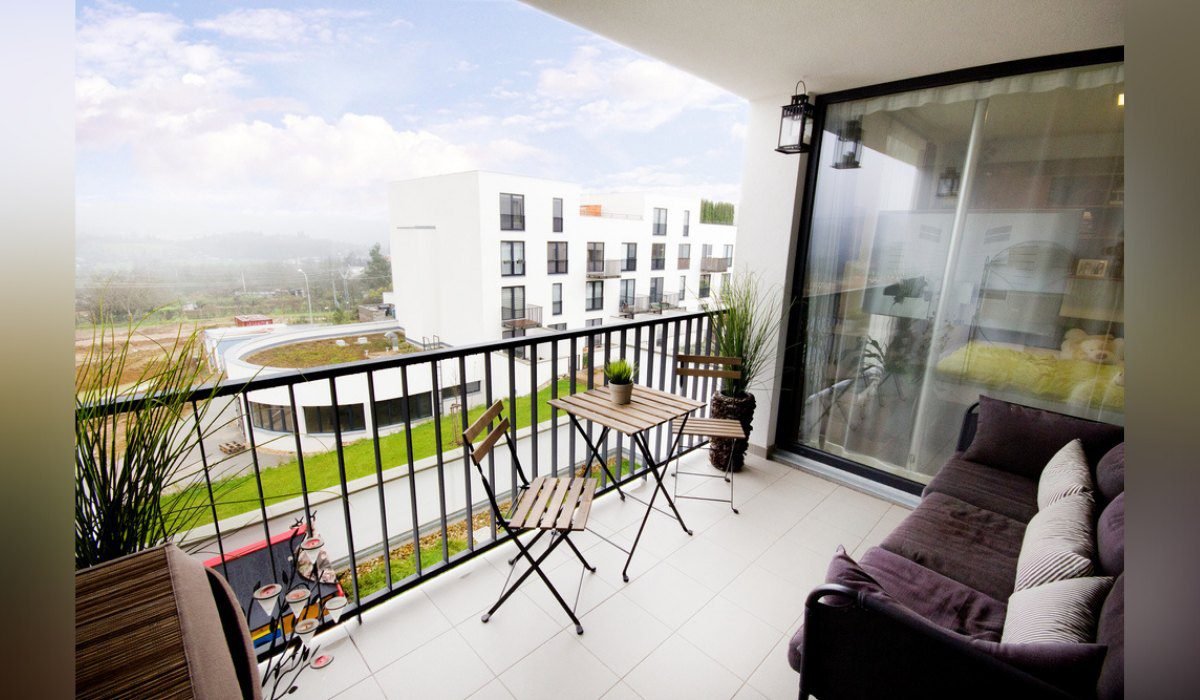
I’ll be honest with you — I used to think “minimal” meant boring. Like, a few plain pots and a folding chair and calling it a day. That was before I actually started paying attention to what people were doing with their small outdoor spaces and realized that minimalism, done right, is genuinely one of the most livable aesthetics you can go for on a balcony.
My turning point was visiting a friend’s apartment last year. Her balcony was tiny — maybe 6 feet by 8 feet — but it felt like a proper retreat. No clutter, no mismatched pots, no sad plastic furniture. Just a few carefully chosen pieces, some greenery, and a vibe that made you want to sit down and never leave. I spent the entire afternoon out there and went home slightly jealous.
That visit sent me down a deep rabbit hole of balcony setups, and what I found is that minimal doesn’t mean empty. It means intentional. And right now, there are four distinct styles of minimal balcony setups that are genuinely having a moment — and all of them are actually achievable without spending a fortune or hiring a designer.
Let me walk you through each one, including what works, what to watch out for, and how to pull it off in a real apartment with real constraints.
1. The Japandi Balcony — Where Japan Meets Scandinavia
If you haven’t come across the term “Japandi” yet, it’s basically the design lovechild of Japanese minimalism and Scandinavian simplicity. Think natural wood tones, muted earthy colors, clean lines, and a very deliberate “less is more” approach to everything.
I tried a version of this on my own balcony earlier this year, and it’s become my favorite setup so far.
The core elements of a Japandi balcony:
The palette is everything here. You’re working with warm grays, soft whites, warm beige, sage green, and natural wood — that’s pretty much it. No bright colors, no patterns, no visual noise.
For furniture, a low wooden bench or a couple of floor cushions works better than traditional chairs. The low-to-the-ground approach is very Japanese in feel, and it makes even a small balcony feel more spacious because you’re not blocking sightlines with tall furniture backs.
Plants in Japandi setups are chosen deliberately. You’re not going for abundance — you’re going for presence. One or two well-placed plants in simple ceramic or concrete pots make more impact than ten mismatched ones. Bonsai (or bonsai-style plants like Ficus or Jade), bamboo in a sleek planter, and ornamental grasses all work beautifully.
Step-by-step to get the look:
Start by clearing everything off the balcony. Seriously, everything. Then only bring back what you actually need and love. This is the step most people skip, and it’s the most important one.
Choose one or two furniture pieces max. A slatted wooden bench with a thin cushion in linen or cotton — neutral colored — is the Japandi staple. Pair it with a small side table at the same height.
Add one statement plant in a concrete or matte ceramic pot. Place it deliberately, not just wherever it fits.
Use natural fiber accessories — a small jute rug, a bamboo tray for your coffee cup. These textures add warmth without adding color chaos.
Where people go wrong: Buying furniture in too many different wood tones. Japandi works because everything coordinates. Pick one wood finish — whether that’s light ash, warm teak, or dark walnut — and stick to it throughout.
2. The Biophilic Green Wall Setup — Nature as the Main Feature
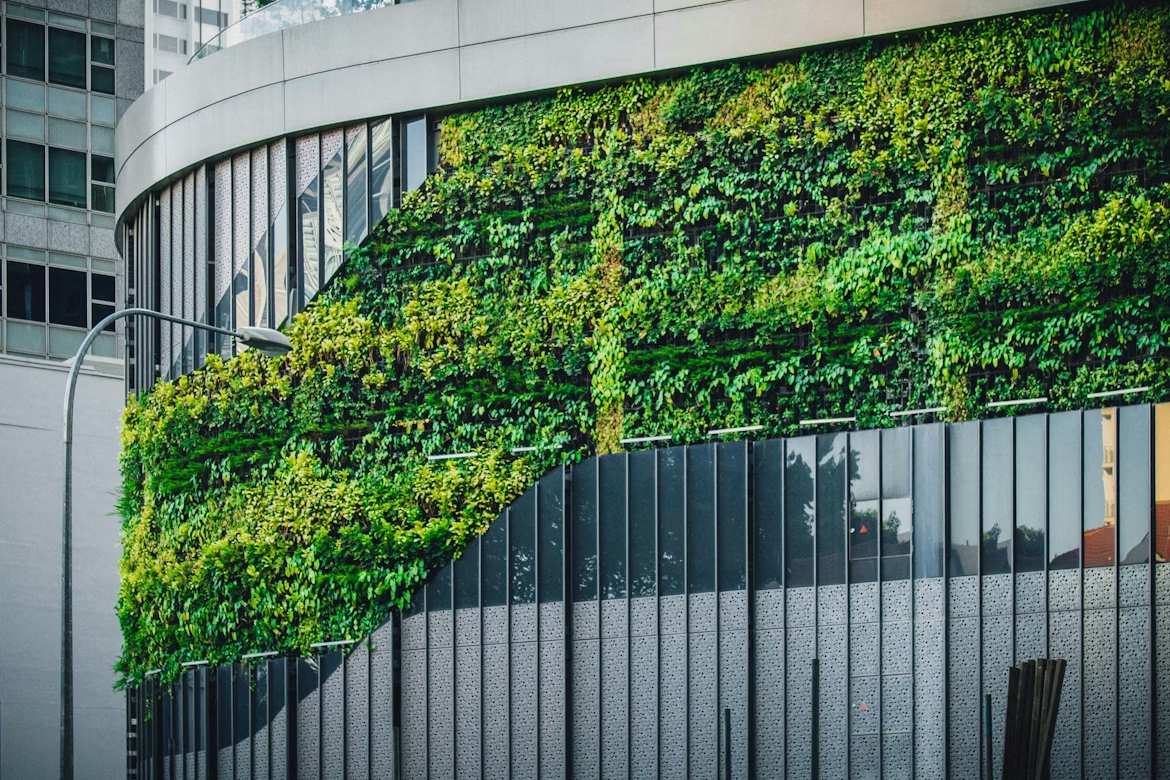
This one surprised me when I started seeing it everywhere. The idea behind biophilic design is that humans have an innate connection to nature, and designing spaces that reflect this makes them genuinely more calming and enjoyable to be in. And on a balcony, the most impactful way to do this is through a green wall — but done minimally, so it looks intentional rather than chaotic.
The difference between a cluttered plant balcony and a biophilic minimal one is structure. In a minimal green wall setup, the plants are the main design element, and everything else steps back.
What this looks like in practice:
One full wall — usually the back wall of the balcony — becomes a vertical garden. Everything else on the balcony is simple and understated: a single chair, maybe a small table, neutral-colored flooring tiles or decking.
I visited a rooftop apartment where the owner had installed a modular panel system (she used a brand called Urbalive for her indoor setup and adapted a similar panel system for outdoors) on her back balcony wall. Floor-to-ceiling greenery on one wall, a single rattan chair and a white side table for the rest of the space. The contrast was stunning — lush living wall, clean and spare everything else.
Plants that work well for a minimal green wall:
| Plant | Why It Works | Light Needed |
|---|---|---|
| Pothos | Trails beautifully, very forgiving | Low to medium |
| Ferns | Lush texture, stays compact | Indirect light |
| Succulents | Low maintenance, sculptural | Full sun |
| Mint/Thyme | Functional AND decorative | Partial sun |
| String of Pearls | Unusual trailing look | Bright indirect |
For more ideas on pairing plants effectively so they actually thrive together, this guide on 11 Clever Plant Pairings That Make Your Garden Flourish is worth a read before you start planting.
The key mistake to avoid here: Going too wild with plant variety. Minimal biophilic works because it feels cohesive. Pick two or three plant varieties and repeat them across the wall rather than using twenty different species. Repetition creates that calm, intentional look. Variety creates visual chaos.
Budget note: You don’t need an expensive panel system. A simple wooden pallet leaned against the wall with pocket planters attached costs almost nothing and looks great if the plants are the right ones.
3. The Monochrome Outdoor Room — One Color, Total Intention
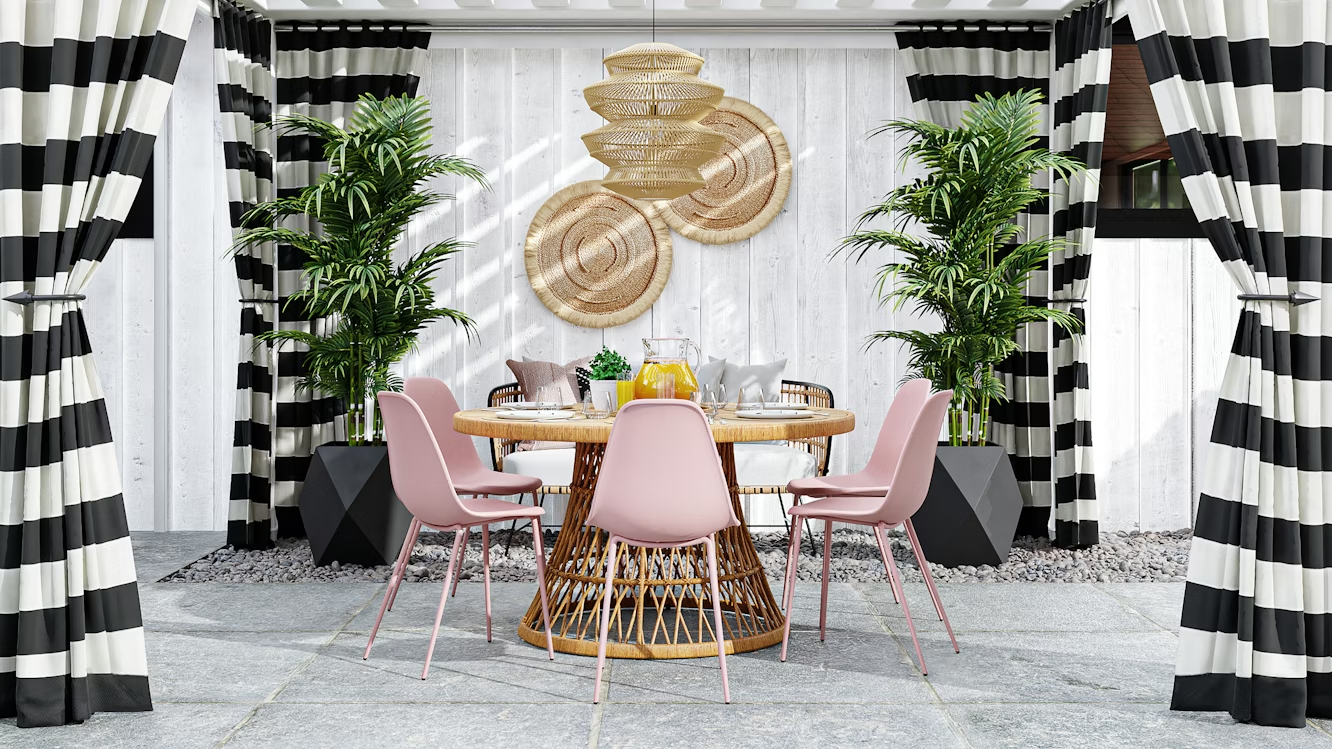
This one is bold in its restraint, if that makes sense. The monochrome balcony setup takes a single color palette — usually all white, all black, all terracotta, or all sage green — and applies it to everything. Furniture, pots, cushions, even the plant choices lean toward colors that work within the palette.
When it’s done well, it looks like a page from an architectural magazine. When it’s done poorly, it looks like someone bought everything in one shopping trip without thinking about it.
The difference is texture. In a monochrome setup, texture is what creates visual interest since you’ve removed color variety. Different materials — matte ceramic next to rough concrete next to smooth wood — keep things from feeling flat.
All-White Monochrome (the most popular right now):
White or off-white furniture, white planters, pale wood tones, white or light gray decking tiles. Plants with dark green or deep colored foliage (like Elephant Ear, Black-Eyed Susan, or even deep green Monstera) actually pop beautifully against an all-white backdrop.
The practical downside I discovered: white shows dirt. If your balcony gets dust, wind, or rain, white furniture needs wiping down more often than you’d think. I switched from pure white to a warm off-white/cream for exactly this reason — it hides dust much better and still gives that clean minimal look.
All-Terracotta (having a huge moment right now):
Warm orange-brown tones, clay pots in various sizes, rattan furniture in amber tones, earthy linen cushions. This palette is warmer and more inviting than white, and it photographs incredibly well (if you’re someone who likes sharing their space online).
The plants that work best here are those with silvery-blue or dusty green foliage — lavender, eucalyptus, succulents, and sage all contrast beautifully against terracotta tones.
Step-by-step for the monochrome setup:
Pick your base color first — this becomes your non-negotiable anchor.
Choose furniture in that color or a tone within two shades of it.
Select two or three textures to work with: maybe matte ceramic, rough jute, and smooth painted metal for a white scheme.
Add plants whose foliage contrasts with your base color rather than blending into it.
Resist the urge to add an accent color. That’s the whole point — mono means one.
If you’re working with a tight space and want to figure out how to make the layout work within these color constraints, these 5 Very Clever Small Space Layouts That Make Tiny Rooms Feel Larger have some ideas that translate well to balconies too.
4. The Functional Minimalist — Designed Around How You Actually Live
This last style is probably my personal favorite because it starts from a completely different question than the others. Instead of asking “what does this look like?”, it asks “what do I actually do out here?”
The functional minimalist balcony is designed around one or two specific activities — morning coffee, evening reading, container gardening, yoga, remote work — and everything on it serves that purpose. Nothing decorative for decoration’s sake. Nothing that doesn’t earn its place.
I know someone who redesigned her balcony around her morning routine specifically. She drinks coffee outside every morning before work and wanted that to feel like a proper ritual rather than just standing in a cluttered space. Her setup: one good quality folding chair (she chose a Helinox Chair Zero, which folds completely flat and stores inside when not in use), a small side table with a shelf underneath, one large succulent in a handmade ceramic pot, and outdoor string lights above. That’s it. The whole thing takes five minutes to set up in the morning and five to pack away when it rains.
The result is a space that’s used every single day because it’s built for exactly one thing she loves. Contrast that with a balcony full of aspirational stuff she never uses.
How to design your own functional minimal setup:
Write down the one or two things you most want to do on your balcony. Be honest — not aspirational.
List only the furniture and objects you’d need to do those specific things comfortably.
Now halve that list. Seriously. You probably listed more than you need.
Buy quality over quantity for whatever makes the cut. One good chair beats three mediocre ones every time.
For plants in a functional minimal setup, think about whether your plants serve a purpose beyond aesthetics. Herbs you actually cook with, vegetables you eat, or aromatics like lavender or rosemary that make the space smell amazing — these all earn their place. A decorative plant you never interact with is just another thing to maintain.
This is also where smart organization tools come in. If you’re growing edibles, a simple app like Planta or even just Google Calendar reminders for watering and fertilizing keeps things low-effort. The whole point of functional minimalism is that it should work for your life, not add to your to-do list.
If pests or plant diseases are on your mind (they sneak up on you when you least expect it), it’s worth knowing a few basics before they become a problem. These 5 Simple Pest Control Tips to Keep Bugs Out for Good are practical and quick to implement.
Mistakes That’ll Ruin Any Minimal Balcony (Regardless of Style)
After going through a few iterations of my own balcony and watching others do the same, here are the mistakes that consistently derail otherwise great setups:
Buying before planning. The excitement of starting a new setup makes people buy things before they’ve figured out the overall look. Then you end up with three mismatched pieces that don’t work together. Sketch it out first, even roughly.
Too many focal points. Minimalism needs one clear anchor — a statement plant, a beautiful chair, a textured wall. When everything is trying to be the focal point, nothing is.
Ignoring weather protection. Outdoor furniture and plants take a beating from sun, rain, and wind. Choosing materials that aren’t rated for outdoor use means your setup looks great for one season and awful for the rest.
Forgetting about storage. Minimal looks clean partly because there’s nowhere to dump stuff. If you don’t have a plan for where the watering can, gardening gloves, and plant food live, they end up cluttering the space. A small outdoor storage box or a bench with hidden storage inside solves this completely.
Comparing your Phase 1 to someone else’s Phase 5. The most beautiful balconies you see online took years and many iterations to reach that state. Start simple, live with it, adjust over time.
Putting It All Together
The four styles — Japandi, biophilic green wall, monochrome, and functional minimalist — all share the same underlying principle: every element is chosen on purpose, and the space has room to breathe. They just express that principle differently depending on your personality and how you want to use the space.
If you love calm, natural textures and quiet mornings — Japandi. If plants genuinely make you happy and you want them to be the star — biophilic green wall. If you love a strong visual identity and cohesion feels satisfying — monochrome. If you just want your balcony to work for your actual life — functional minimalist.
You don’t have to pick just one, either. Most great setups borrow from two or more of these. My current balcony is mostly functional minimalist with strong biophilic elements — a few very intentional plants, everything else stripped back to serve my morning coffee habit.
Start with one clear direction, commit to it for a season, and see what you want to adjust from there. That’s genuinely the best advice I can give.