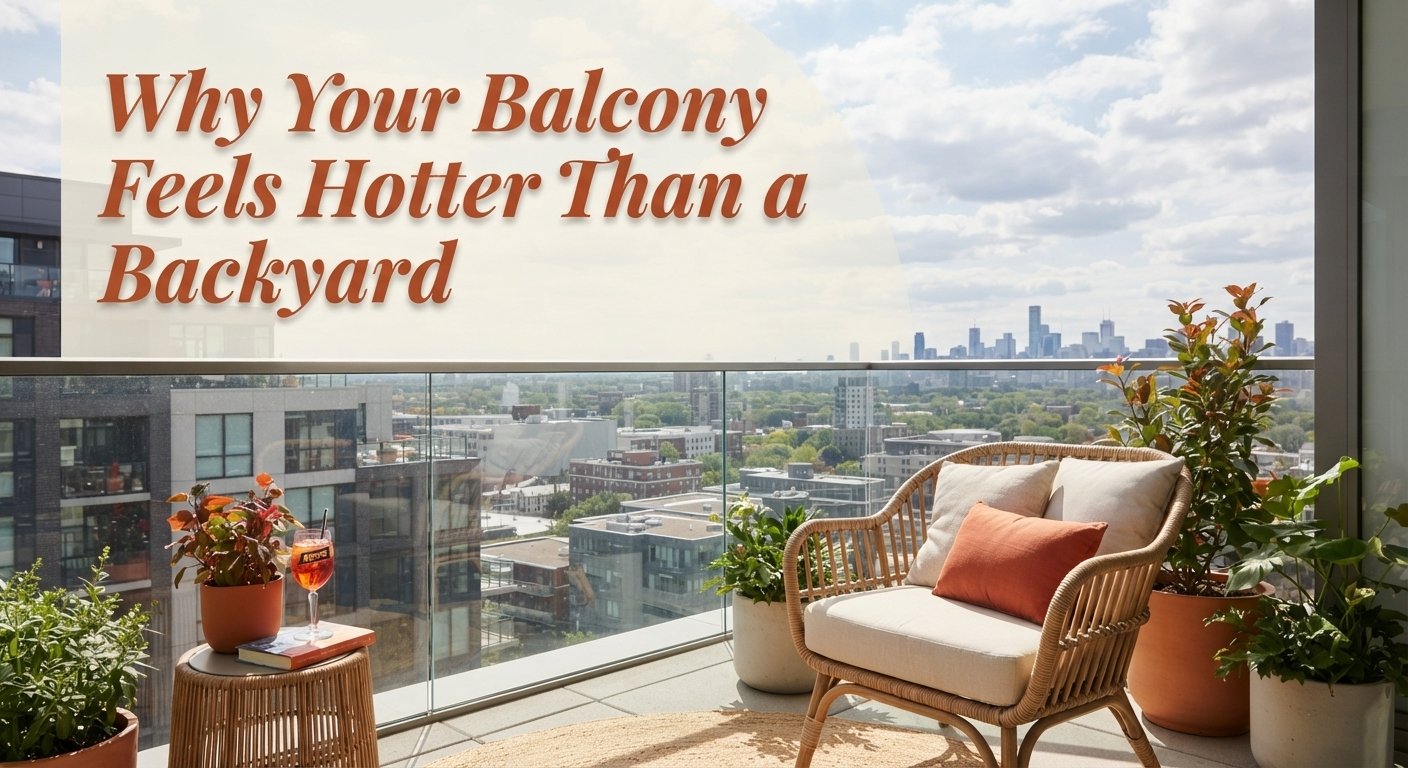
Concrete holds heat. Glass bounces it. Metal railings absorb it and then hand it right back to you the moment you touch them. Put all three within ten feet of each other, add a few hours of direct sun, and you’ve built something closer to a small oven than a garden.
That’s not an exaggeration. It’s just physics most people never think about until their tomatoes start curling at two in the afternoon.
1. The Materials Around You Are Doing More Than You Realize
A backyard has soil, grass, mulch, maybe a tree canopy. All of that absorbs heat slowly and releases it slowly too. A balcony has none of that buffering. Instead it has hard, dense, reflective surfaces, and every one of them is working against your plants in summer.
Concrete and stone flooring can run considerably hotter than the surrounding air temperature once the sun has been on them for a few hours. Dark-colored railings and metal fixtures get even hotter, hot enough to burn skin on contact in peak summer. Your plants aren’t just sitting in warm air. They’re sitting a few inches above a surface that’s radiating heat back up at them from below, which is a completely different situation than growing the same plant in a backyard bed.
Glass railings and windows compound this by reflecting and sometimes concentrating sunlight onto specific spots. I’ve had readers describe a section of their balcony that scorches every plant placed there, while eighteen inches to the left, nothing burns at all. Nine times out of ten, it traces back to a glass panel or a light-colored wall throwing extra light and heat onto that one spot.
2. Height and Wind Change the Equation Too
Ground-floor balconies and patios tend to run cooler simply because they’re closer to soil, shade from nearby structures, and general air movement patterns at street level. Go up eight, ten, fifteen floors, and you’re dealing with something closer to rooftop conditions. Less humidity buffer, more direct exposure, and often significantly stronger wind.
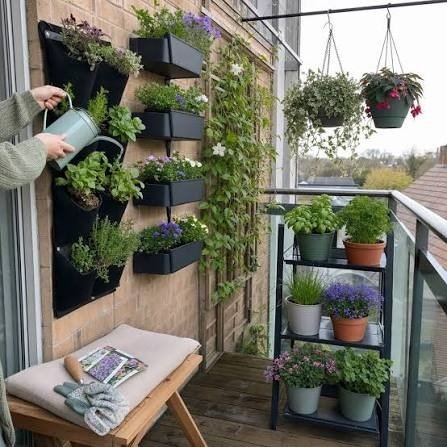
Wind gets overlooked constantly in this conversation, and it shouldn’t. Strong, consistent wind pulls moisture out of soil and leaves fast, which means a high-rise balcony can feel brutally hot to plants even on a day that isn’t particularly warm by the thermometer. Combine that with reflective heat from glass and concrete, and you end up with soil drying out twice as fast as a backyard bed would under the same air temperature.
Here’s where people usually go wrong. They check the weather app, see seventy-eight degrees, and water accordingly. But the surface temperature of their balcony floor might be pushing well past a hundred, and the plant’s root zone is heating up from below while losing moisture from above. The app number and the actual growing conditions are two different stories.
3. What Actually Helps, Ranked by How Much Difference It Makes
Not every fix carries equal weight. Some genuinely change the outcome for your plants. Others help a little but won’t save a struggling container on their own.
| Strategy | Impact | Why |
|---|---|---|
| Elevating pots off the floor | High | Breaks direct contact with radiant heat from hot flooring |
| Light-colored or terracotta pots | Medium-High | Reflects more heat than dark plastic containers |
| Shade cloth during peak hours | High | Cuts the harshest 2 to 4 hour window of direct heat |
| Grouping pots together | Medium | Plants shade each other’s soil and slow moisture loss |
| Mulching container surface | Medium | Slows evaporation, moderates soil temperature swings |
| Misting foliage midday | Low | Feels helpful but does little for root temperature |
Elevating containers is the one I push people toward first, because it’s cheap, it’s fast, and it directly addresses the radiant heat problem instead of just managing symptoms. A couple of pot feet or even bricks under each container breaks that direct transfer from scorching concrete into the root ball.
Shade cloth is the other big one, and it doesn’t need to be complicated. A simple 30 to 50 percent shade cloth rigged up during the worst two to four hours of afternoon sun can be the difference between a plant that survives July and one that doesn’t.
4. Choosing Plants That Handle This Kind of Heat Without a Fight
Some plants shrug off balcony heat conditions that would flatten others. Mediterranean herbs like rosemary, thyme, and oregano evolved for exactly this kind of hot, reflective, well-drained environment, so they tend to do better on a scorching balcony than they would in a shadier backyard bed. Peppers, especially hot pepper varieties, also handle radiant heat reasonably well once established.
On the other end, lettuce, spinach, and most leafy greens will bolt or wilt fast under these conditions, no matter how much you water. They’re better suited to a balcony with morning sun and afternoon shade, or grown in the cooler shoulder seasons rather than peak summer. If you’re still working out your specific light pattern before choosing plants, our piece on reading your balcony’s sun exposure before planting covers how to track that properly, and it pairs directly with the heat considerations here since sun hours and surface heat tend to compound each other.
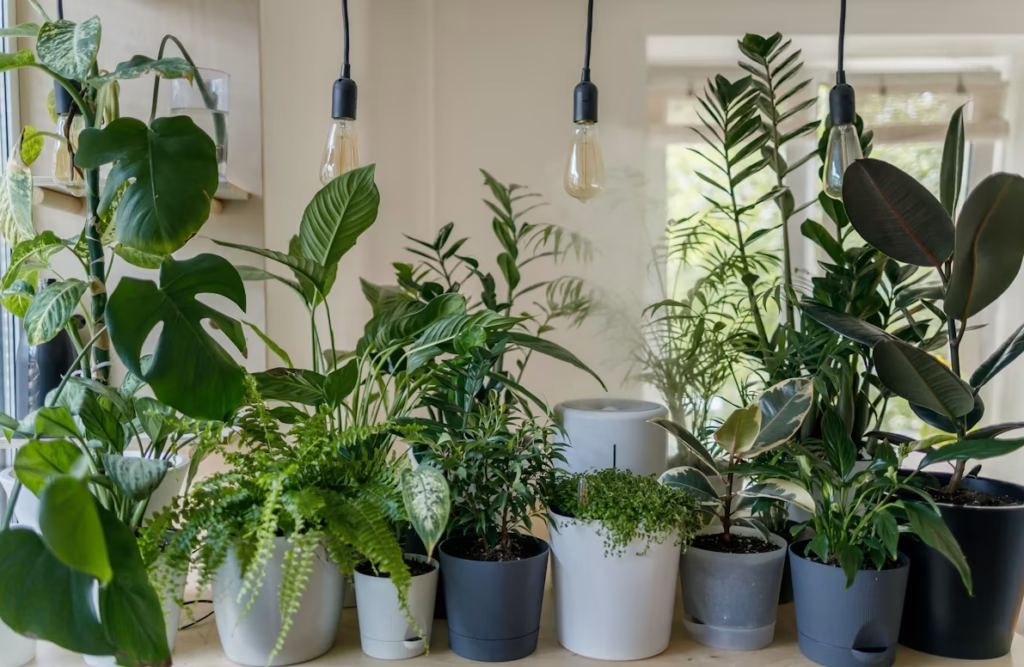
Container material matters more on a hot balcony than people expect too. Unglazed terracotta breathes and releases some heat, but it also dries out faster, so it’s a tradeoff rather than a clear win. Thick-walled ceramic or double-walled plastic containers insulate roots from surface heat more effectively, which on a high-rise balcony can matter as much as your plant selection.
Once you’ve adjusted for surface heat and airflow, watering rhythm usually needs a second look too. A container that needed water every other day in a backyard setting might need it daily, sometimes twice, on a reflective high-rise balcony in August. Our guide on watering schedules for container plants in small spaces breaks that down by container size and material if you want to get more precise about it.
Common Questions
Why do my plants wilt by afternoon even though I watered them that morning? Radiant heat from hot flooring and reflective surfaces raises root zone temperature faster than morning watering can compensate for. It’s rarely a lack of water at that point and more a heat stress response, so moving the container off direct floor contact usually helps more than adding another watering session.
Does painting my balcony floor a lighter color actually make a difference? Yes, noticeably. Lighter surfaces reflect more solar radiation instead of absorbing and re-radiating it, and readers who’ve switched from dark tile or dark composite decking to a lighter finish report a real drop in how hot their containers run.
Is shade cloth worth the hassle for a small balcony? For anything facing intense afternoon sun, generally yes. A basic clip-on or tension-rod shade cloth setup takes under an hour to install and can extend your growing options considerably, especially for plants that would otherwise scorch by midsummer.
Should I avoid dark-colored pots entirely? Not entirely, but be strategic about it. Dark pots absorb more heat, which can help in cooler shoulder seasons but works against you in peak summer, so many balcony gardeners keep a mix and rotate based on the season rather than committing to one pot color for everything.
Why does my balcony seem hotter than my neighbor’s even though we’re on the same floor? Orientation, glass exposure, and what’s directly behind or beside the balcony all vary block to block and even unit to unit. A neighbor with more shade from an adjacent building, less glass reflection, or better airflow will run noticeably cooler even with an identical floor plan.
For a deeper technical look at how urban surfaces trap and release heat, the EPA’s overview of urban heat island effects is a useful reference, since a lot of what happens on a balcony is a miniature version of the same phenomenon.