Nobody’s first balcony garden fails because they picked the wrong tomato variety. It fails because they picked a pot that was never going to hold that tomato in the first place.
That’s the blunt version. The longer version is that most beginner advice spends all its energy on which plant to choose and almost none on the container it’s going into, and that ordering is backwards. Pick the container size first. Let the plant list follow from there.
1. Roots Don’t Care About Your Plant Preferences
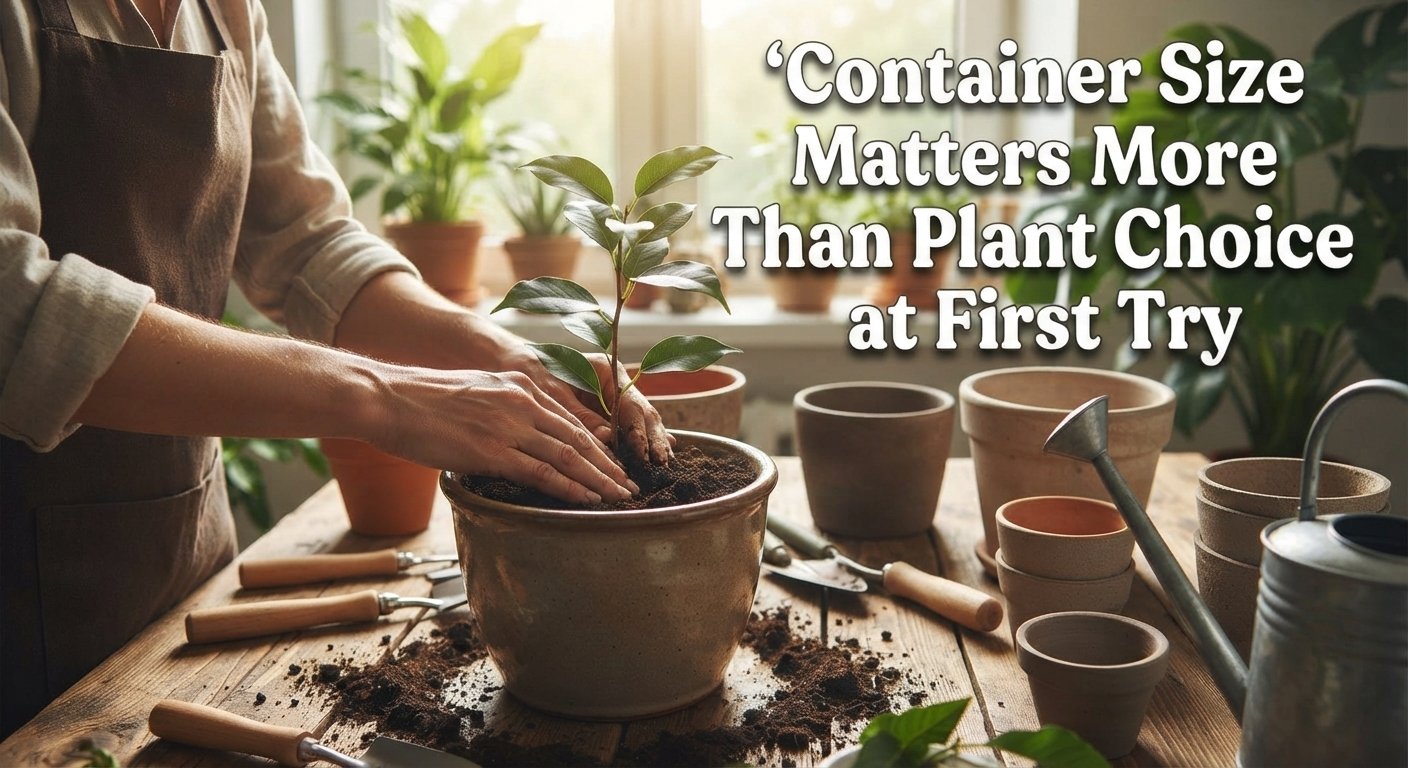
A plant’s root system has a shape and a volume it needs to reach before it can support real top growth. That’s not a flexible number you can negotiate down by watering more often or fertilizing harder. It’s closer to a hard requirement, and container size is the thing that either allows it or blocks it from day one.
Shallow-rooted plants like lettuce, spinach, and most herbs can genuinely thrive in something as small as 6 to 8 inches deep. Fruiting vegetables like tomatoes and peppers are a different situation entirely, needing something closer to 12 to 16 inches of depth and real soil volume around the roots, not just below them.
Miss that by a lot and you don’t get a smaller version of the plant. You get a stressed one. Stunted growth, yellowing leaves, and a plant that seems to need constant watering and feeding just to limp along, none of which actually fixes the underlying problem.
2. The Undersized Container Trap
Here’s where nearly everyone goes wrong on their first attempt, and it’s rarely because the advice wasn’t available. It’s because a small pot looks proportionate on a small balcony, and a large pot looks like it’s going to eat the whole space.
So people buy small. A 10-inch pot for a full-size tomato plant. A shallow window box for something that actually wants to send roots down eight inches or more. And for the first few weeks, it looks fine, because young plants haven’t hit their root ceiling yet.
Then the plant hits that ceiling, and everything changes fast. Growth slows. Leaves that were healthy start yellowing from the bottom up. The soil dries out within hours instead of over a day or two, because there’s simply not enough volume in there to hold moisture. At that point, most people assume they’ve done something wrong with watering or feeding, when the actual problem was decided the moment they picked the container.
Here’s a rough comparison worth keeping in mind before you buy anything:
Undersized container for the plant
- Roots circle the container walls within weeks, unable to grow outward
- Soil dries out fast, sometimes needing water twice a day in summer heat
- Growth stalls even with regular fertilizing, because feeding can’t fix a volume problem
- Plant becomes top-heavy and prone to tipping in wind
Properly sized container for the plant
- Roots spread and develop normally, supporting real top growth
- Soil retains moisture longer, meaning more forgiving watering schedules
- Fertilizer actually reaches enough root mass to make a visible difference
- Plant sits stable and balanced, less vulnerable to wind on an exposed balcony
3. Matching Depth to What You Actually Want to Grow
This part doesn’t need to be complicated, and it’s not really about memorizing exact numbers for every plant. It’s about grouping plants by root habit and matching that to what your balcony can realistically hold.
Leafy greens and most culinary herbs are the forgiving group. Basil, parsley, chives, lettuce, and spinach are all comfortable in the 6 to 8 inch depth range, and several can share a single wider container without competing much for root space.
Medium vegetables sit in the middle. Peppers, eggplant, and compact bean varieties generally want something in the 8 to 12 inch range, with enough width that roots aren’t just going straight down into a narrow column of soil.
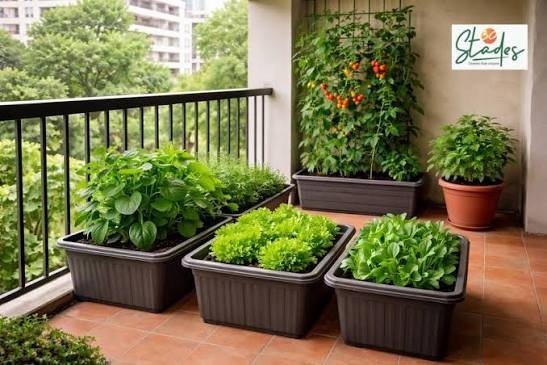
Large fruiting vegetables are where people most often underbuy. Tomatoes, cucumbers, and squash want 12 to 16 inches of depth at minimum, and indeterminate tomato varieties do better with even more room than that. One plant per container at this size, not several crammed together.
Root vegetables deserve their own mention because the mistake here is so specific. Carrots grown in a shallow 6-inch pot don’t just grow slowly, they grow stunted and misshapen, curling around whatever they hit at the bottom. If you want carrots, you need real depth, closer to 12 inches or more, or you’ll end up with something closer to carrot fragments than carrots.
4. When Bigger Isn’t Automatically Better
It’s tempting to read all this and swing hard the other direction, buying the largest container available for everything on principle. That’s not quite right either, and it’s worth saying plainly.
Oversized containers for small, shallow-rooted plants hold more soil than the roots can use, which means that soil stays wet longer than it should. For young seedlings especially, that extra unused moisture becomes a real risk for damping off and root rot, not a safety margin.
The goal is matching, not maximizing. A herb that wants 6 inches doesn’t benefit from being planted in an 18-inch tub. It just means more soil sitting around unused roots, staying damp, and creating exactly the fungal conditions you’re trying to avoid.
5. Working Backward From Your Actual Balcony
Once you know your balcony’s dimensions and roughly how much floor space and weight capacity you’re working with, and if you haven’t worked that out yet, it’s genuinely worth doing before you buy containers, the plant list should follow the containers you can realistically fit and support.
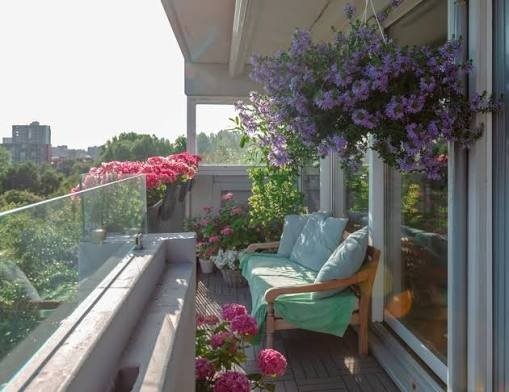
A narrow balcony might only reasonably hold two or three medium-depth containers plus a row of shallow ones along the rail. That’s fine. That’s actually a complete little garden if the containers are sized correctly for what’s in them, rather than a compromise version of a garden you originally imagined with six tomato plants.
We’ve covered how to think through balcony weight limits over on small balcony garden online, and it pairs directly with this decision, since container size and container weight are really the same conversation from two different angles.
A Quiet Recommendation
If you’re standing in a garden center trying to decide between two container sizes for the same plant, size up rather than down. Undersized containers cause more failed balcony gardens than any pest, disease, or weather event combined, and it’s the one variable that’s entirely within your control before a single seed goes in.
FAQs
My tomato plant looks healthy but isn’t producing much fruit. Could container size be the issue? Yes, this is a common cause. If the container is under 12 inches deep or holds less than 8 to 10 gallons of soil, the root system may be too restricted to support heavy fruit production, even if the top growth looks fine.
Can I start seeds in a small pot and move up to a bigger one later? Yes, and for many plants this is actually the standard approach. Just don’t wait too long. Once you see roots circling the bottom of a small pot, it’s time to transplant into the next size up.
Do herbs need less container depth than vegetables in general? Mostly yes. Most culinary herbs are comfortable in 6 to 8 inches of depth, though a few, like rosemary, develop larger root systems over time and eventually want more room than a small starter pot provides.
Is it better to use one big container with several plants or several smaller ones? It depends on what you’re growing together. Shallow-rooted herbs and greens generally share space well in one wider container. Larger fruiting plants usually do better with one dedicated container each, since they compete hard for both root space and nutrients.
How do I know if my plant has actually become root-bound? The clearest sign is rapid soil drying, sometimes needing water more than once a day even in mild weather. If you gently lift the plant and see roots circling tightly around the bottom of the pot, that confirms it, and it’s time to move up a container size.
For more detail on matching container volume to specific plants, the University of Maryland Extension’s guide to container types for vegetables is a solid technical reference worth bookmarking.