
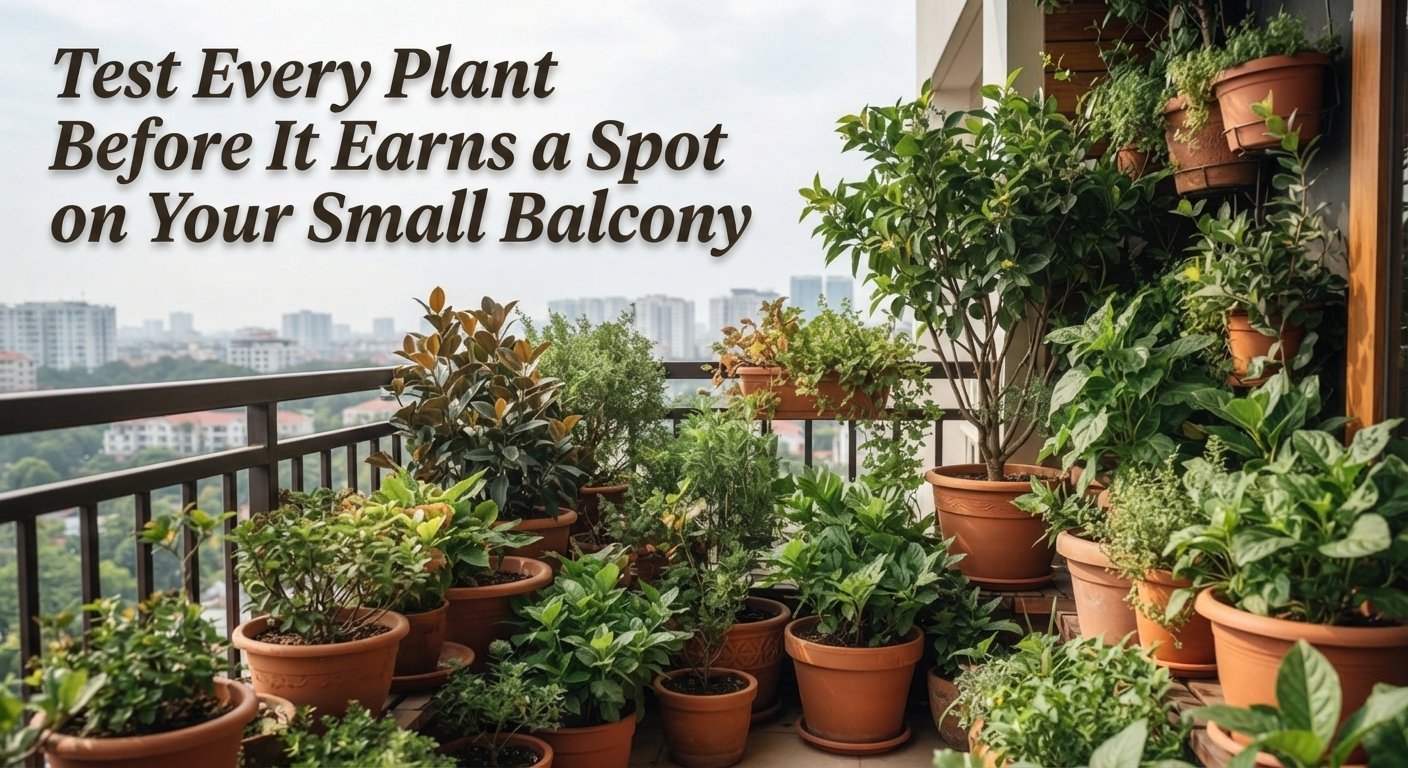
A friend once asked why I wouldn’t just buy whatever looked good at the nursery and figure it out later. Fair question. The honest answer is that a small balcony doesn’t forgive guesswork the way a big backyard does. One bad plant choice in a garden bed is a wasted corner. One bad plant choice on a 40-square-foot balcony is a third of your growing space gone for a season.
So here’s the actual process worth running through before any plant, however tempting it looks in its little nursery pot, gets a permanent spot.
1. Start With Space, Not Species
Most people fall in love with a plant first and then try to force it into their layout. Flip that order. Measure what you’re actually working with before you shop.
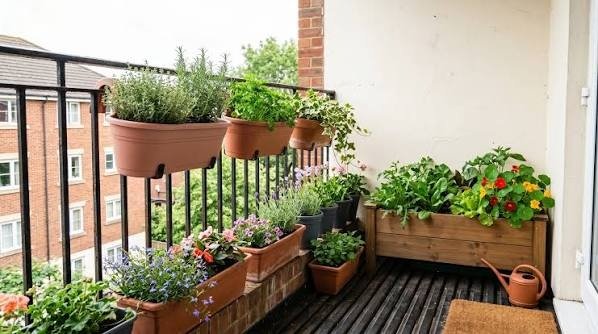
Walk your balcony and note the true usable footprint, not the total square footage but the parts that can actually hold a pot without blocking a door, a chair, or your ability to walk through. Note the height available too. A trellis-loving vine needs vertical room that a lot of balconies simply don’t have without a railing planter or wall mount.
Once you know the real dimensions, you’re shopping with constraints instead of shopping on impulse. That single shift eliminates most of the plants that would have failed anyway.
2. Run the Light and Wind Check First
Before buying anything, spend a day, ideally a full week if you can manage it, tracking how much direct sun your specific spot gets and how exposed it is to wind. Both of these matter more on a balcony than in a garden bed, since containers heat up and dry out faster, and upper-floor balconies often catch wind that never registers at street level.
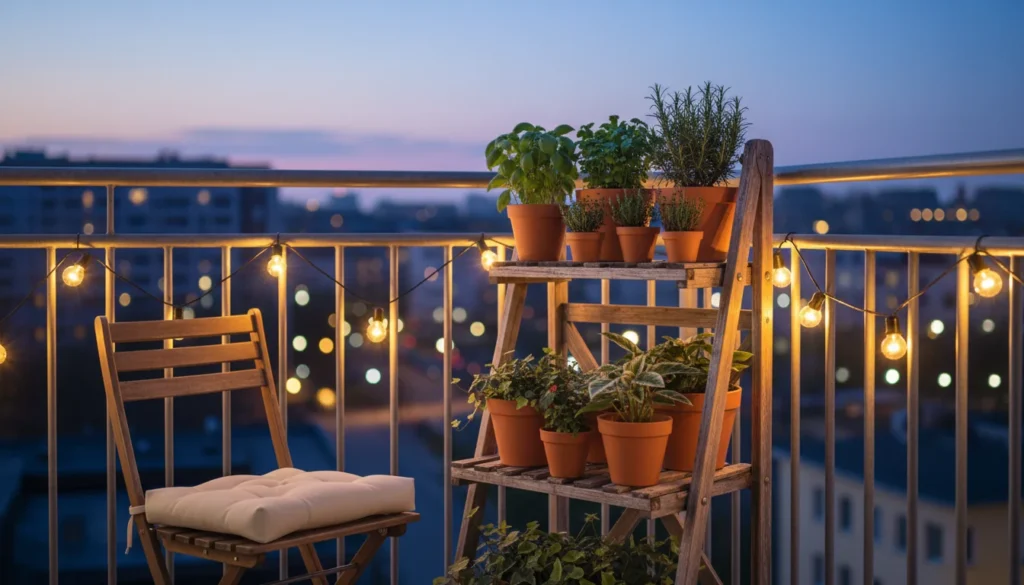
This is not a step to skip because it feels tedious. It’s the single biggest predictor of whether a plant survives its first month.
| Balcony Condition | What to Test For | Plants That Fit Well |
|---|---|---|
| High sun, low wind | 6+ hours direct light, sheltered corner | Tomatoes, peppers, most flowering annuals |
| High sun, high wind | 6+ hours direct light, exposed railing | Herbs, ornamental grasses, sedums |
| Partial sun, sheltered | 3-6 hours light, calm air | Leafy greens, compact peppers |
| Low light, any wind | Under 3 hours direct light | Ferns, hostas, shade-tolerant herbs like mint |
3. Buy One, Not Three
Here’s where people usually go wrong, and it’s an easy mistake to make when a plant is inexpensive and the nursery has a whole flat of them. Buying multiples of a new plant before confirming it actually works in your specific spot means multiplying a possible failure by three or four.
Buy a single specimen first. Give it three to four weeks in the actual spot you’re planning to use, not a temporary staging area, since light and wind conditions can shift even a few feet apart on the same balcony. Watch how it responds. If it’s thriving, then it’s worth scaling up. If it’s struggling, you’ve only lost one plant’s worth of time and money instead of a whole flat’s worth.
This single habit alone has saved more of my balcony space over the years than any other piece of advice I give.
4. Watch the Signs, Not the Calendar
A lot of gardening advice tells you to water on a schedule or fertilize by the calendar. Testing a new plant works better by observation instead.
Check the leaves in the first week. Curling, yellowing, or a dull, flat color usually points to a light mismatch, either too much or too little for what the plant actually needs versus what its label claimed. Check the soil daily for the first two weeks by hand, an inch down, rather than guessing. A plant that dries out faster than expected is telling you something about its exposure to wind or heat that the tag never mentioned.
And watch growth rate against expectation. A plant that’s supposed to be a fast grower and is sitting stagnant after three weeks isn’t being patient, it’s struggling with something in its current spot. Better to catch that early than to keep watering and hoping.
5. Give It a Fair Trial Before Judging
One thing worth being honest about: not every plant that struggles in week one is doomed. Transplant shock is real, and a plant moved from a nursery greenhouse into balcony conditions needs a short adjustment period regardless of how well matched the spot actually is. The trick is telling the difference between temporary shock and a genuine mismatch.
Shock usually shows up as mild wilting or slight leaf drop in the first few days that then stabilizes. A genuine mismatch keeps getting worse week over week, or the plant simply stalls and never resumes active growth. If you’re three weeks in and still seeing decline rather than stabilization, that’s your answer, and it’s fine to move the plant, adjust its spot, or accept it wasn’t right for that particular corner.
I’ll admit I’ve kept struggling plants going out of stubbornness longer than I should have. Sometimes the more useful skill isn’t finding the perfect plant, it’s knowing when to let one go and try something better suited to the space.
Frequently Asked Questions
How long should I actually trial a new plant before deciding if it works? Three to four weeks is usually enough to see past initial transplant shock and into genuine growth patterns. Fast growers like herbs and leafy greens can show clear signs within two weeks, while slower plants like perennial shrubs may need closer to six.
What if I don’t have room to trial plants one at a time? Even on a tiny balcony, you can rotate a single testing spot, trying one new plant type there before committing the rest of your space to it. It takes more patience but avoids wasting limited square footage on something that doesn’t work out.
Is it worth testing plants that are labeled specifically for containers or balconies? Yes, still worth it. Container-friendly labeling tells you about root space tolerance, not about your specific light and wind conditions, which vary enormously from one balcony to the next even in the same building.
Can I skip the testing process for plants I’ve grown successfully before? If you’re growing the same plant in the same spot with the same conditions, prior success is a reasonable predictor. Moving to a new balcony, a new corner, or even a new season with different sun angles resets a lot of those assumptions.
What’s the biggest sign a plant just isn’t going to work in a spot, no matter how long I wait? Consistent decline past the three-week mark, especially combined with soil drying out far faster or slower than expected for that plant type. At that point it’s usually more productive to relocate the plant or try something else than to keep adjusting watering and hoping it turns around.
There’s no shortcut that replaces actually watching how a plant behaves in your own specific conditions. Labels and general guides get you close, but the final answer only comes from giving something a real trial in the actual spot you’re planning to use.