A lot of people think starting seeds indoors is only for gardeners with a backyard and a greenhouse. It isn’t. If anything, it matters more for balcony growers, because a small container garden doesn’t have the luxury of wasted time. Every week you spend waiting for a direct-sown seed to germinate outside is a week your tomato won’t fruit before the season runs out.
1. Why Indoor Starting Changes the Math for a Balcony
Balconies, especially ones without full southern sun, run on a tighter growing window than a backyard bed does. Starting seeds indoors six to eight weeks before your last frost date gives you a plant that’s already established by the time it moves outside, instead of one that’s just cracking its seed coat while the calendar is already working against you.
This matters even more for anyone growing in a climate with a short true summer. A tomato started indoors in March and moved out in May will often be flowering by June. The same seed sown directly into a balcony pot in May might not flower until August, and by then you’re racing the first cool nights of fall instead of enjoying a full harvest.
2. What Actually Grows Well From an Indoor Start
Not everything benefits from starting indoors. Root vegetables like carrots and radishes hate having their roots disturbed during transplant and generally do better sown directly into their final pot. But a good number of balcony staples respond extremely well to an indoor head start.
- Tomatoes, especially cherry and dwarf determinate varieties suited to containers
- Peppers, which are naturally slow to germinate and benefit from the controlled warmth indoors
- Basil and most other tender herbs
- Marigolds and zinnias, if you want flowers established before pests show up outside
- Cucumbers, though they transplant a little more delicately than the others on this list
Peppers deserve a specific mention here because they’re the one most beginners give up on too early. They can take two to three weeks just to germinate, which feels like forever compared to a radish popping up in five days. That’s normal. It’s not a failed seed, it’s just a slow one.
3. Setting Up a Realistic Indoor Start Without a Grow Room
You don’t need a dedicated grow room or expensive equipment to do this properly, though a lot of gardening content makes it sound that way. A sunny south-facing windowsill works for germination, but once seedlings sprout, most homes don’t actually provide enough light to keep them from getting leggy and weak. A simple LED grow light on a timer, set 12 to 16 hours a day and positioned two to three inches above the seedlings, solves this without a major investment.
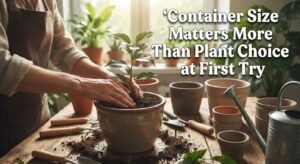
Here’s a mistake worth naming directly: people start seeds in containers that are too small, then wait too long to move them up a size, and the roots end up circling and stressed before they ever reach the balcony. A seed starting cell works fine for the first two to three weeks, but after that, most seedlings need to move into a 3 to 4 inch pot before their final transplant outside.
| Stage | Container Size | Typical Timing |
|---|---|---|
| Germination | Seed tray or small cell | Week 1-2 |
| Early growth | 3-4 inch pot | Week 3-5 |
| Hardening off | Same pot, moved outdoors part-time | Week 6-7 |
| Final transplant | Full balcony container | Week 7-8+ |
4. Hardening Off Is the Step Everyone Rushes
This is where most indoor-started seedlings actually die, not indoors, and not right after transplant, but during the transition between the two. A seedling raised entirely indoors has never dealt with real wind, direct sun intensity, or temperature swings, and moving it straight from a windowsill to a balcony railing in full sun is a shock most young plants can’t handle.
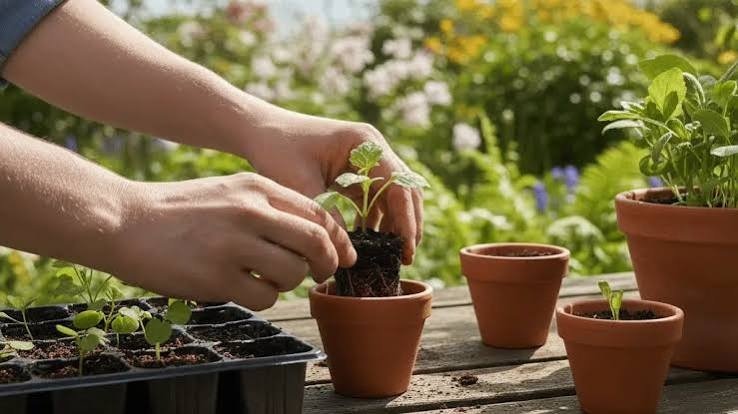
Hardening off means gradually introducing the seedling to outdoor conditions over seven to ten days. Start with an hour or two in a shaded, sheltered spot on day one, and increase both the time and the sun exposure a little each day. By day seven or eight, the plant should be able to handle a full day outside without wilting. Skip this step, and even a healthy, well-grown seedling can collapse within hours of being placed outside for the first time.
A Simple Timeline to Work Backward From
If your last frost date is in early May, working backward looks something like this. Start peppers indoors in early March, since they’re the slowest. Start tomatoes and basil about two weeks later, in mid-March. Begin hardening off everything around the last week of April. Move plants to their final balcony containers by mid-May, once nights are reliably above 50 degrees for anything heat-sensitive like tomatoes and peppers.
Adjust the whole timeline earlier or later depending on your actual last frost date, which varies significantly by region. And if this is your first year doing an indoor start at all, it’s worth reading through the seed starting checklist on smallbalconygarden.online before buying supplies, since it walks through exactly which trays and lighting setups are worth the money and which aren’t.
FAQs
Do I really need a grow light, or will a windowsill work? A windowsill can get seeds to germinate, but most seedlings will stretch and lean toward the light source and end up weak and leggy without supplemental lighting. A basic LED grow light is a low-cost fix that makes a noticeable difference in how sturdy the plants are by transplant time.
How do I know when a seedling is ready to move outside? Look for at least two sets of true leaves (not the initial seed leaves, which look different) and a stem sturdy enough that it doesn’t flop over on its own. If it’s been through a full hardening off period and meets both of those, it’s ready.
Can I skip starting seeds and just buy starter plants from a garden center? Absolutely, and for a first-time grower it’s often the smarter choice. Nursery starts skip the germination and hardening off risk entirely, though you’ll have far fewer variety choices than growing from seed.
Why did my seedlings die right after I moved them outside? This is almost always a skipped or rushed hardening off period. A seedling that goes from a stable indoor environment straight into full outdoor sun and wind usually can’t cope with the sudden change, even if it looked perfectly healthy the day before.
What’s the single biggest mistake first-timers make with indoor starts? Starting too early relative to their actual last frost date. An overgrown, root-bound seedling sitting indoors for an extra month waiting for the weather to catch up is often worse off than one started on the correct schedule, even if it looks bigger at first.
Get the timing right and the rest of this becomes mostly routine, watering, light, patience. For more detail on frost dates and regional planting windows, the National Gardening Association’s planting calendar is a useful cross-reference before locking in your own schedule.