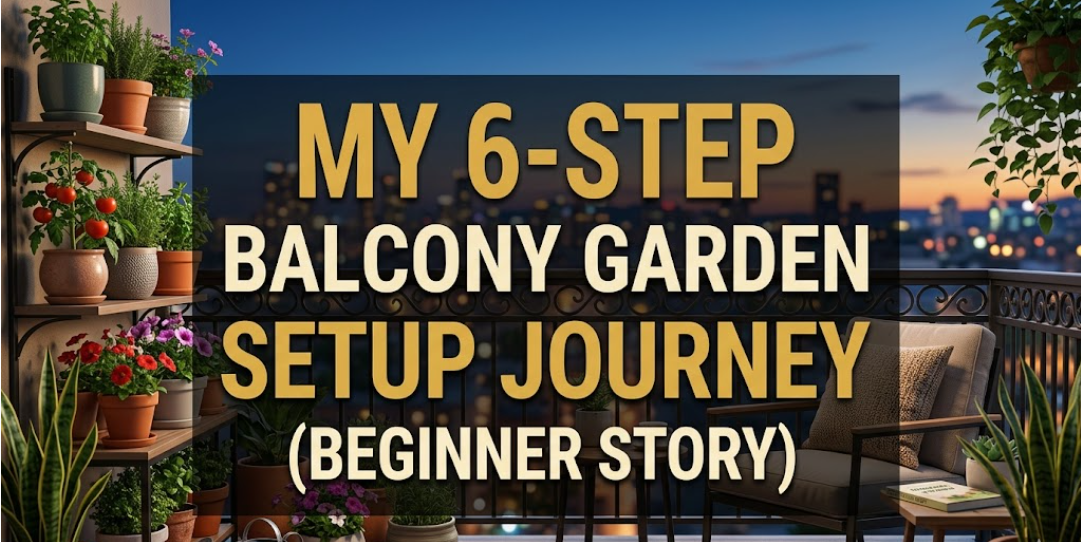
Introduction: how a boring balcony became my favorite place
I never planned to become someone who talks about plants like they’re family members. But a few months ago, my balcony was just a dusty, unused corner where old buckets and broken chairs went to “rest.” Every time I stepped outside, I felt like I was wasting potential space.
Then one evening, while scrolling through my phone, I saw a small balcony garden setup. It wasn’t fancy—just a few pots, some greens, and warm lights. That image stuck in my head longer than I expected.
The next weekend, I decided to try something simple: turn my empty balcony into a green space.
I didn’t know anything about gardening. I killed a cactus once (which is supposed to be impossible). But I followed a 6-step process that slowly changed everything.
Step 1: Understanding my balcony conditions
Before buying anything, I just stood in my balcony for two full days at different times—morning, noon, and evening.
I noticed three things:
- Sunlight was strongest between 10 AM to 2 PM
- One side stayed shaded all day
- Wind direction changed in the evening
That observation changed everything later.
Here’s the simple chart I made:
Balcony Condition Study Table
| Factor | Observation | Impact on Plants |
|---|---|---|
| Sunlight | 4–5 hours direct sun | Good for vegetables/herbs |
| Shade area | One corner always shaded | Best for ferns, mint |
| Wind | Moderate evening breeze | Needed wind-resistant pots |
I didn’t realize it then, but this step saved me from killing plants unnecessarily.
Step 2: Planning a small but realistic setup
At first, I wanted everything: tomatoes, roses, strawberries, hanging vines, decorative lights, and maybe even a mini fountain.
Reality check hit fast.
My balcony was only medium-sized. So I decided to divide it into zones:
My Balcony Layout Plan
| Zone | Purpose | Plants Selected |
|---|---|---|
| Sunny Zone | Edible plants | Tomatoes, chilies |
| Shaded Zone | Low light plants | Mint, ferns |
| Corner Zone | Storage + tools | Water can, soil bags |
| Rail Area | Hanging pots | Money plant, ivy |
This simple zoning idea made everything feel organized instead of chaotic.
Step 3: Choosing the right containers and soil
This step was where I made my first mistake.
I initially bought cheap plastic pots without drainage holes. Within a week, water started collecting and the soil smelled terrible.
That’s when I learned:
Drainage is not optional. It’s essential.
I replaced everything with proper pots.
Container comparison table:
| Container Type | Pros | Cons | Best Use |
|---|---|---|---|
| Plastic pots | Lightweight, cheap | Poor airflow | Hanging plants |
| Clay pots | Natural cooling | Heavy, breakable | Herbs, vegetables |
| Ceramic pots | Decorative | Expensive | Indoor balcony decor |
| Grow bags | Excellent drainage | Less aesthetic | Vegetables |
For soil, I mixed:
- 40% garden soil
- 30% compost
- 20% coco peat
- 10% sand
This mix turned out to be a game changer for plant health.
Step 4: First planting attempt (and early mistakes)
I still remember planting my first batch:
- Mint
- Chili plant
- Basil
- Money plant
I overwatered everything.
I thought “more water = more growth,” which is completely wrong.
Within days:
- Mint survived (it’s basically unkillable)
- Basil struggled
- Chili plant drooped
- Money plant started yellowing
That was my first real gardening lesson: plants don’t need love in the form of constant watering—they need balance.
I adjusted my watering schedule:
Watering chart I followed:
| Plant Type | Frequency | Water Amount |
|---|---|---|
| Herbs | 2–3 times/week | Light watering |
| Vegetables | 3–4 times/week | Moderate |
| Indoor plants | 1–2 times/week | Minimal |
Step 5: Adding structure, support, and aesthetics
Once plants stabilized, I focused on making the balcony look good.
I added:
- Wooden plant stands
- Hanging hooks
- Small LED warm lights
- Vertical plant shelf
That’s when the balcony stopped looking like a “setup” and started feeling like a space.
Vertical gardening helped a lot in saving space.
My vertical arrangement chart:
| Level | Plant Type |
|---|---|
| Top shelf | Hanging plants |
| Middle shelf | Herbs |
| Ground pots | Vegetables |
This layering effect made even a small balcony feel like a mini garden.
Step 6: Maintenance routine and long-term care
The hardest part of gardening isn’t setting it up—it’s maintaining it.
I created a simple weekly routine:
Weekly maintenance schedule:
| Day | Task |
|---|---|
| Monday | Water plants |
| Wednesday | Check pests & trim leaves |
| Friday | Fertilize lightly |
| Sunday | Clean balcony & rearrange |
I also learned to:
- Rotate plants for sunlight balance
- Remove dead leaves immediately
- Check soil moisture before watering
Over time, this routine became natural.
Monthly progress comparison
Here’s how my balcony changed over 3 months:
Growth progress chart:
| Month | Plant Health | Balcony Look | Effort Level |
|---|---|---|---|
| 1 | 40% survival | Messy | High |
| 2 | 70% survival | Semi-organized | Medium |
| 3 | 90% thriving | Lush green space | Low |
The biggest surprise was how relaxing it became. Instead of scrolling on my phone, I started spending mornings outside.
Unexpected benefits I didn’t expect
After a few weeks, I noticed things I never planned for:
- My stress levels reduced
- Air in the balcony felt fresher
- I started eating more herbs and home-grown chilies
- I felt more connected to routine
Even small tasks like watering plants felt grounding.
Common mistakes I made (so you don’t repeat them)
Here are mistakes I made as a beginner:
- Overwatering plants
- Ignoring sunlight requirements
- Using poor soil mix
- Mixing incompatible plants in one pot
- Not checking drainage
Fixing these early saved my entire garden.
Final reflection
Looking back, I didn’t build a “perfect balcony garden.” I built a learning space.
Every plant taught me something:
- Mint taught resilience
- Basil taught patience
- Chili plant taught balance
- Money plant taught adaptability
Now my balcony isn’t just a space—it’s a small ecosystem I take care of daily.
FAQs
- How much space do I need for a balcony garden?
Even a small 4×6 feet balcony is enough if you use vertical gardening and compact pots. - What are the easiest plants for beginners?
Mint, basil, money plant, aloe vera, and chilies are very beginner-friendly. - How often should I water balcony plants?
It depends on the plant, but most balcony plants need watering 2–4 times per week. - What is the best soil mix for balcony gardening?
A balanced mix of garden soil, compost, coco peat, and sand works best. - Do balcony gardens attract pests?
Yes, but regular cleaning, neem oil spray, and proper spacing help control them. - Is balcony gardening expensive?
It can be very budget-friendly if you start small and reuse containers.