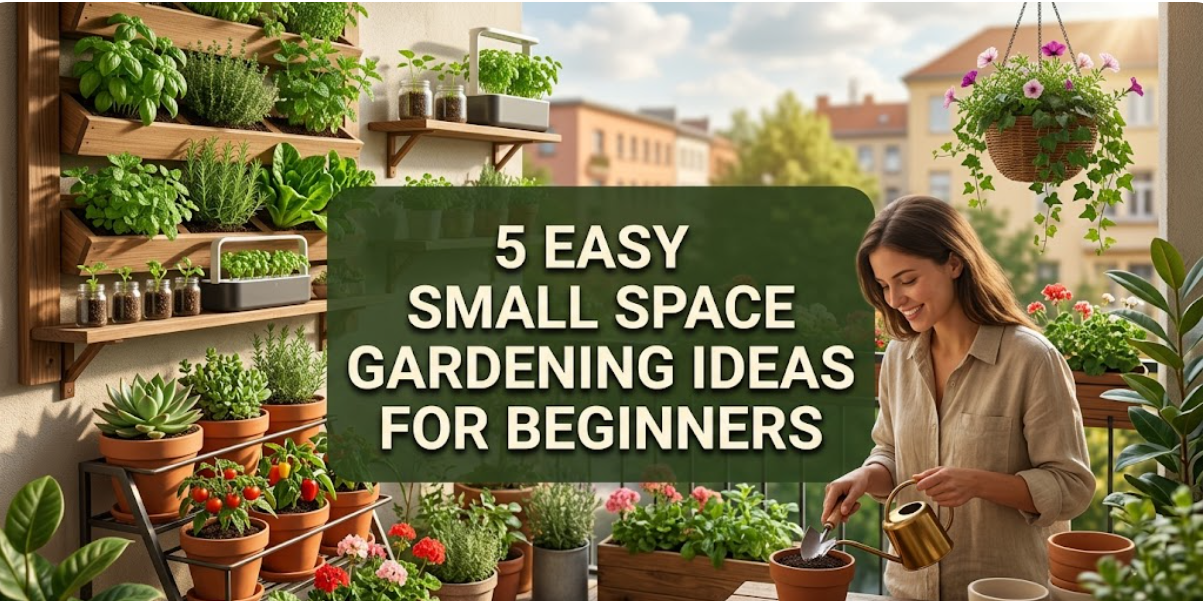
Small space gardening is one of those hobbies that looks complicated from the outside but becomes surprisingly simple once you understand a few core principles. You don’t need a backyard, expensive tools, or advanced gardening knowledge. What you really need is smart use of space, the right plant choices, and a system that fits your lifestyle.
Whether you live in an apartment, a small house, or a rented room with a balcony or windowsill, you can still grow herbs, vegetables, and decorative plants successfully. The goal is not to grow everything—it’s to grow efficiently within limited space.
This guide explores five beginner-friendly small space gardening ideas that are practical, low-maintenance, and highly effective.
idea 1: container gardening for absolute flexibility
Container gardening is the most beginner-friendly way to start growing plants in small spaces. Instead of planting directly into soil beds, you use pots, buckets, or any container that can hold soil.
The biggest advantage is flexibility. You can move plants around depending on sunlight, weather, or space constraints.
why container gardening works for small spaces
- no fixed garden area required
- easy to rearrange layout
- suitable for balconies, rooftops, and indoors
- beginner-friendly maintenance
You can grow almost anything in containers: herbs, vegetables, flowers, and even small fruit plants.
table: container types and usage
| Container Type | Best For | Difficulty Level | Mobility |
|---|---|---|---|
| Plastic pots | Herbs, flowers | Easy | High |
| Clay pots | Decorative plants | Easy | Medium |
| Grow bags | Vegetables | Medium | High |
| Buckets | Tomatoes, peppers | Easy | Medium |
| Recycled bottles | Herbs, microgreens | Very easy | Very high |
beginner tip
Start with 2–3 containers only. Expanding slowly helps you understand watering and sunlight needs without overwhelm.
idea 2: vertical gardening to multiply your space
When floor space is limited, the only direction left is upward. Vertical gardening allows you to grow more plants without expanding your footprint.
This method is especially useful in apartments where balconies or patios are small.
vertical gardening methods
- wall-mounted pots
- hanging planters
- tiered shelves
- railing planters
- ladder plant stands
Instead of spreading plants horizontally, you stack them vertically to create layers of greenery.
chart: space efficiency comparison
| Gardening Style | Space Used | Plant Capacity | Visual Impact |
|---|---|---|---|
| Floor gardening | High | Low | Medium |
| Container only | Medium | Medium | Medium |
| Vertical setup | Low | High | High |
why beginners love vertical gardening
It instantly makes a small area feel fuller without requiring more ground space or soil work.
design tip
Mix trailing plants (like pothos) with upright plants to create a natural cascading effect.
idea 3: kitchen gardening for daily use herbs
One of the most rewarding small space gardening ideas is growing herbs you actually use in cooking. Kitchen gardening is practical, low-maintenance, and saves money over time.
best herbs for beginners
- mint
- basil
- coriander
- parsley
- green chili
These herbs grow quickly and don’t require large containers.
table: herb care basics
| Herb | Water Needs | Sunlight Needs | Growth Speed | Difficulty |
|---|---|---|---|---|
| Mint | Medium | Partial sun | Fast | Easy |
| Basil | Medium | Full sun | Fast | Easy |
| Coriander | Medium | Partial sun | Medium | Easy |
| Parsley | Medium | Partial sun | Medium | Easy |
| Chili | Low-medium | Full sun | Medium | Medium |
practical insight
Place your kitchen herbs near a window or balcony door so you can harvest them quickly while cooking.
bonus benefit
Fresh herbs taste significantly stronger and more aromatic than store-bought ones.
idea 4: self-watering systems for low maintenance gardening
One of the biggest challenges beginners face is forgetting to water plants consistently. Self-watering systems solve this problem by automating moisture delivery.
These systems can be store-bought or DIY.
simple DIY self-watering methods
- plastic bottle drip system
- wick-based watering setup
- reservoir pot system
- cotton rope irrigation
how it works
Water is stored in a lower reservoir and slowly absorbed into the soil as needed.
chart: watering effort comparison
| Method | Weekly Effort | Risk of Overwatering | Reliability |
|---|---|---|---|
| Manual watering | High | High | Medium |
| Drip irrigation | Medium | Low | High |
| Self-watering pots | Very low | Very low | Very high |
why this is ideal for beginners
It removes the most common cause of plant failure: inconsistent watering.
time-saving advantage
You can go 5–10 days without worrying about watering depending on plant type.
idea 5: mix-and-match micro gardening zones
Instead of creating one large garden space, beginners often succeed more by dividing their space into small “micro zones.”
Each zone has a purpose and plant type.
example of micro zones
- herb corner (kitchen herbs)
- decorative corner (flowers and foliage)
- vertical wall (climbers and hanging plants)
- propagation zone (new cuttings and seedlings)
This approach makes gardening more organized and easier to maintain.
table: micro zone layout example
| Zone Type | Plants Used | Purpose | Maintenance |
|---|---|---|---|
| Herb corner | Basil, mint | Cooking use | Low |
| Decorative zone | Ferns, flowers | Visual appeal | Medium |
| Vertical wall | Pothos, ivy | Space saving greenery | Low |
| Propagation zone | Cuttings, seedlings | Plant growth cycle | Medium |
benefit of zoning
You avoid overcrowding and confusion, making plant care more predictable.
design insight
Even a 1–2 square meter space can feel like multiple garden areas when zoned properly.
bonus idea: soil quality matters more than space
Beginners often focus on space and forget soil quality, but soil is the foundation of every successful garden.
ideal soil mix for small space gardening:
- 40% potting soil
- 30% compost
- 20% coco peat
- 10% perlite or sand
table: soil function breakdown
| Component | Role | Benefit |
|---|---|---|
| Potting soil | Structure | Root support |
| Compost | Nutrients | Healthy growth |
| Coco peat | Moisture retention | Less watering needed |
| Perlite | Drainage | Prevents root rot |
good soil = fewer problems
Better soil reduces watering frequency and plant stress significantly.
simple weekly beginner routine
You don’t need daily effort. A structured routine is enough.
| Day | Task | Time Needed |
|---|---|---|
| Monday | Quick plant check | 5–10 min |
| Wednesday | Watering if needed | 10–15 min |
| Friday | Remove dry leaves | 10 min |
| Sunday | General inspection | 15–20 min |
total weekly time: under 1 hour
common beginner mistakes
- overwatering plants
- choosing high-maintenance plants too early
- ignoring sunlight direction
- overcrowding containers
- using poor soil mix
avoiding these mistakes matters more than buying expensive tools.
summary mindset shift
Small space gardening is less about size and more about strategy. Once you shift from “I need more space” to “I need better use of space,” everything becomes easier.
The most successful beginners don’t do more—they do less, but smarter.
faqs
- what is the easiest small space gardening method for beginners
Container gardening is the easiest because it requires minimal setup and allows full control over soil, water, and placement. - can I grow vegetables in a small apartment
Yes, vegetables like tomatoes, chilies, spinach, and lettuce grow well in containers and vertical setups. - how much sunlight do small space plants need
Most edible plants need 4–6 hours of sunlight daily, while decorative plants can survive with less. - do I need expensive tools to start gardening
No. Basic pots, soil, and watering cans are enough for beginners. Many systems can even be DIY. - how often should I water small space plants
It depends on plant type and weather, but most container plants need watering 2–3 times per week. - what is the biggest mistake beginners make
Overwatering and overcrowding are the most common mistakes that lead to plant failure.