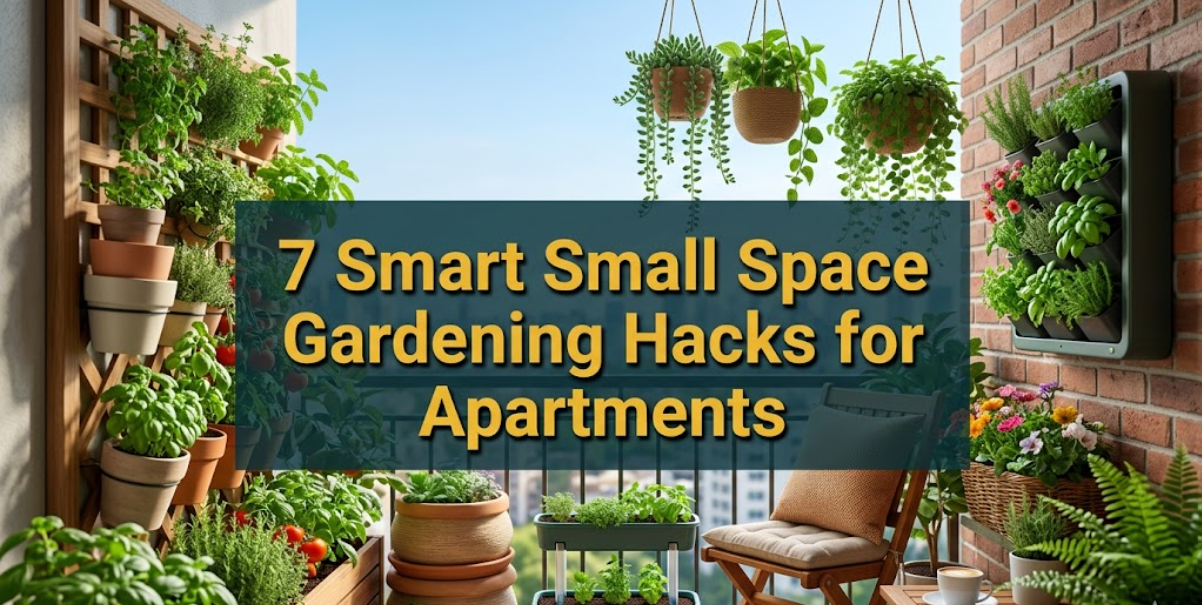
Small apartment living often comes with a trade-off: you get convenience, location, and lower maintenance—but you lose access to a real garden. Many people assume that gardening requires a backyard, open soil, or at least a terrace with plenty of space. That assumption is outdated.
Modern small-space gardening is less about square footage and more about systems, structure, and smart resource use. A 2–5 square meter balcony, window ledge, or even an indoor corner can become a productive mini-garden if designed properly.
This guide explores seven smart, practical gardening hacks specifically tailored for apartment living. These are not decorative ideas—they are functional systems that improve yield, reduce maintenance, and maximize limited space.
Along the way, you’ll find tables, structured comparisons, and planning charts to help you actually apply these ideas rather than just read about them.
understanding small-space gardening logic
Before diving into hacks, it helps to understand a simple principle:
In small-space gardening, efficiency matters more than expansion.
Instead of asking:
“How can I grow more plants?”
You should ask:
“How can I make each square inch produce more value?”
There are three core constraints in apartment gardening:
- Space (horizontal and vertical)
- Light (natural availability)
- Maintenance time
Everything in this guide is designed around optimizing these three factors.
constraint analysis table:
| Constraint | Common Problem | Smart Solution Approach |
|---|---|---|
| Space | overcrowding | vertical layering |
| Light | uneven plant growth | plant-light matching |
| Maintenance | inconsistent care | automation systems |
Once you align your gardening approach with these constraints, results improve dramatically.
hack 1: vertical stacking systems instead of flat layouts
Most beginners use floor space first, which is the fastest way to hit limitations. The smarter approach is vertical stacking—treating your garden like a bookshelf rather than a field.
Vertical gardening allows you to multiply usable growing surfaces without increasing footprint.
vertical structure layers:
| Layer Level | Placement Area | Suitable Plants |
|---|---|---|
| Top | Hanging zone | trailing plants, ivy |
| Upper mid | wall shelves | herbs, leafy greens |
| Lower mid | railing | flowers, small herbs |
| Ground | floor pots | tomatoes, peppers |
vertical efficiency comparison:
| Setup Type | Plants Supported | Space Usage Efficiency |
|---|---|---|
| Flat arrangement | 5–8 plants | Low |
| Vertical system | 15–30 plants | High |
practical setup components:
- wall-mounted planters
- tiered plant stands
- railing boxes
- hanging baskets
important design insight:
Do not stack randomly. Always ensure sunlight reaches all layers. Otherwise, lower plants suffer.
space-saving layout example:
| Zone | Plant Type |
|---|---|
| Wall | herbs + lettuce |
| Railing | flowers |
| Floor corner | tomatoes |
| Ceiling | hanging plants |
This approach turns a “small balcony” into a layered ecosystem.
hack 2: plant selection based on growth behavior (not aesthetics)
Most people choose plants based on looks or food preference. In small spaces, that leads to imbalance and overcrowding.
Instead, plants should be chosen based on how they grow.
three growth behavior categories:
- compact growers – stay small, low maintenance
- vertical growers – grow upward, high yield per pot
- spreaders – expand horizontally, require control
plant classification table:
| Type | Examples | Best Use Case |
|---|---|---|
| Compact | thyme, parsley, lettuce | shelves, tight spaces |
| Vertical | tomato, beans, chili | floor pots |
| Spreaders | mint, oregano | controlled containers |
ideal ratio for small apartments:
| Category | Percentage |
|---|---|
| Compact plants | 40% |
| Vertical plants | 35% |
| Spreaders | 25% |
why this matters:
Without control, fast-spreading plants dominate space and reduce biodiversity.
example balanced mini-garden:
| Area | Plants |
|---|---|
| Shelf | lettuce + parsley |
| Floor | tomato + chili |
| Hanging pot | strawberries |
| Corner pot | mint (contained) |
This balance ensures productivity without chaos.
hack 3: smart irrigation instead of manual watering
Watering is one of the biggest failure points in apartment gardening. The problem is not effort—it’s inconsistency.
Smart irrigation systems solve this by regulating moisture automatically or semi-automatically.
watering method comparison:
| Method | Consistency | Effort | Suitability |
|---|---|---|---|
| Manual watering | Low | High | Small setups |
| Bottle drip | Medium | Low | Beginners |
| Self-watering pots | High | Very low | Long-term systems |
simple DIY drip system:
- take a plastic bottle
- poke small holes in cap
- fill with water
- insert upside down into soil
watering frequency guide:
| Plant Type | Summer Cycle | Winter Cycle |
|---|---|---|
| Herbs | daily | 2–3 days |
| Vegetables | daily | 1–2 days |
| Succulents | 3–5 days | weekly |
| Flowers | 1–2 days | 3–4 days |
key insight:
Plants respond better to consistency than intensity.
bonus improvement:
Group plants with similar water needs together to avoid overwatering mistakes.
hack 4: engineered soil mixes instead of garden soil
Soil is often ignored, but it determines plant survival more than any other factor.
Using regular garden soil in containers leads to compaction, poor drainage, and root stress.
Instead, use engineered potting mix designed for containers.
optimal soil composition:
| Ingredient | Function | Ratio |
|---|---|---|
| Coco peat | moisture retention | 40% |
| Compost | nutrients | 30% |
| Perlite | aeration | 20% |
| Sand | drainage balance | 10% |
soil performance comparison:
| Soil Type | Drainage | Weight | Root Health |
|---|---|---|---|
| Garden soil | Poor | Heavy | Medium |
| Potting mix | Excellent | Light | High |
why coco peat is essential:
It holds moisture while keeping soil airy, which is critical in container gardening.
structural benefit:
| Soil Type | Balcony Load Impact |
|---|---|
| Heavy soil | high risk |
| Light mix | safe |
This becomes important in apartment buildings with weight restrictions.
hack 5: micro-zone planning for organized layouts
One major issue in small apartment gardens is visual and functional chaos.
Micro-zoning solves this by dividing the space into functional areas, similar to room design.
basic micro-zones:
- edible zone
- decorative zone
- relaxation zone
- utility zone
zone structure table:
| Zone Type | Purpose | Elements Included |
|---|---|---|
| Edible | food production | herbs, vegetables |
| Decorative | aesthetics | flowers, vines |
| Relaxation | comfort | chair, table |
| Utility | storage | tools, soil, fertilizer |
example layout (small balcony 4×6 ft):
| Area | Setup |
|---|---|
| Left wall | vertical herb garden |
| Right side | flowers in railing boxes |
| Corner | tomato plant |
| Center | seating stool |
| Under shelf | tools + watering kit |
benefits of zoning:
- reduces clutter
- improves maintenance flow
- enhances visual appeal
design rule:
Leave at least 20–30% space open. Overfilling reduces usability.
hack 6: light optimization instead of just plant placement
Light is often misunderstood. It is not just “sun or shade”—it varies by angle, intensity, and reflection.
In apartments, light is uneven and limited.
light optimization techniques:
- reflective surfaces (white walls, mirrors)
- rotating pots weekly
- placing tall plants away from light blockers
- grouping plants by light needs
light requirement chart:
| Plant Type | Light Needs |
|---|---|
| Vegetables | 5–8 hours direct |
| Herbs | 3–6 hours partial |
| Leafy greens | 2–4 hours filtered |
| Shade plants | indirect light |
simple reflection trick:
Placing a white board or reflective panel behind plants can increase light exposure by up to 20–30%.
rotation schedule:
| Frequency | Action |
|---|---|
| Weekly | rotate pots 90° |
| Monthly | reposition plants |
why this matters:
Uneven light causes weak stems and lopsided growth.
hack 7: modular gardening systems for flexibility
Apartment gardening should never be static. Plants grow, seasons change, and space needs shift.
Modular systems allow flexibility—containers and structures that can be rearranged easily.
modular components:
- stackable pots
- movable plant stands
- detachable wall hooks
- foldable shelves
comparison:
| System Type | Flexibility | Maintenance | Efficiency |
|---|---|---|---|
| Fixed setup | Low | Medium | Medium |
| Modular setup | High | Easy | High |
modular layout strategy:
| Module | Function |
|---|---|
| Herb module | daily cooking plants |
| Veg module | seasonal crops |
| Flower module | aesthetics |
benefits:
- easy seasonal rotation
- scalable design
- stress-free maintenance
budget efficiency breakdown
Small-space gardening can be expensive if done with retail systems—but modular and DIY approaches reduce costs significantly.
| Item | Retail Cost | DIY Cost |
|---|---|---|
| Planter system | high | low |
| irrigation setup | high | very low |
| vertical rack | medium | low |
| soil mix | medium | low |
common mistakes in apartment gardening
| Mistake | Effect | Fix |
|---|---|---|
| overcrowding | poor airflow | spacing control |
| wrong plant grouping | uneven growth | zoning system |
| overwatering | root rot | irrigation control |
| ignoring light | weak plants | light mapping |
faqs
- what is the easiest plant to grow in an apartment garden
Herbs like mint, basil, and coriander are easiest because they adapt quickly to containers and small spaces. - how do i maximize space in a small balcony
Use vertical stacking systems, hanging pots, and wall-mounted planters instead of only floor pots. - what soil is best for container gardening
A mix of coco peat, compost, perlite, and sand provides the best drainage and aeration. - how often should i water apartment plants
It depends on plant type, but most require watering every 1–3 days in warm weather. - can vegetables grow in low-light apartments
Yes, leafy greens like spinach and lettuce can grow with 2–4 hours of indirect light. - what is the biggest mistake in small-space gardening
Overcrowding plants without considering light and airflow is the most common failure point.
Small-space gardening is not about limitations—it is about systems. When you treat your apartment garden as a structured environment rather than a collection of pots, even the smallest space becomes productive, efficient, and visually balanced.