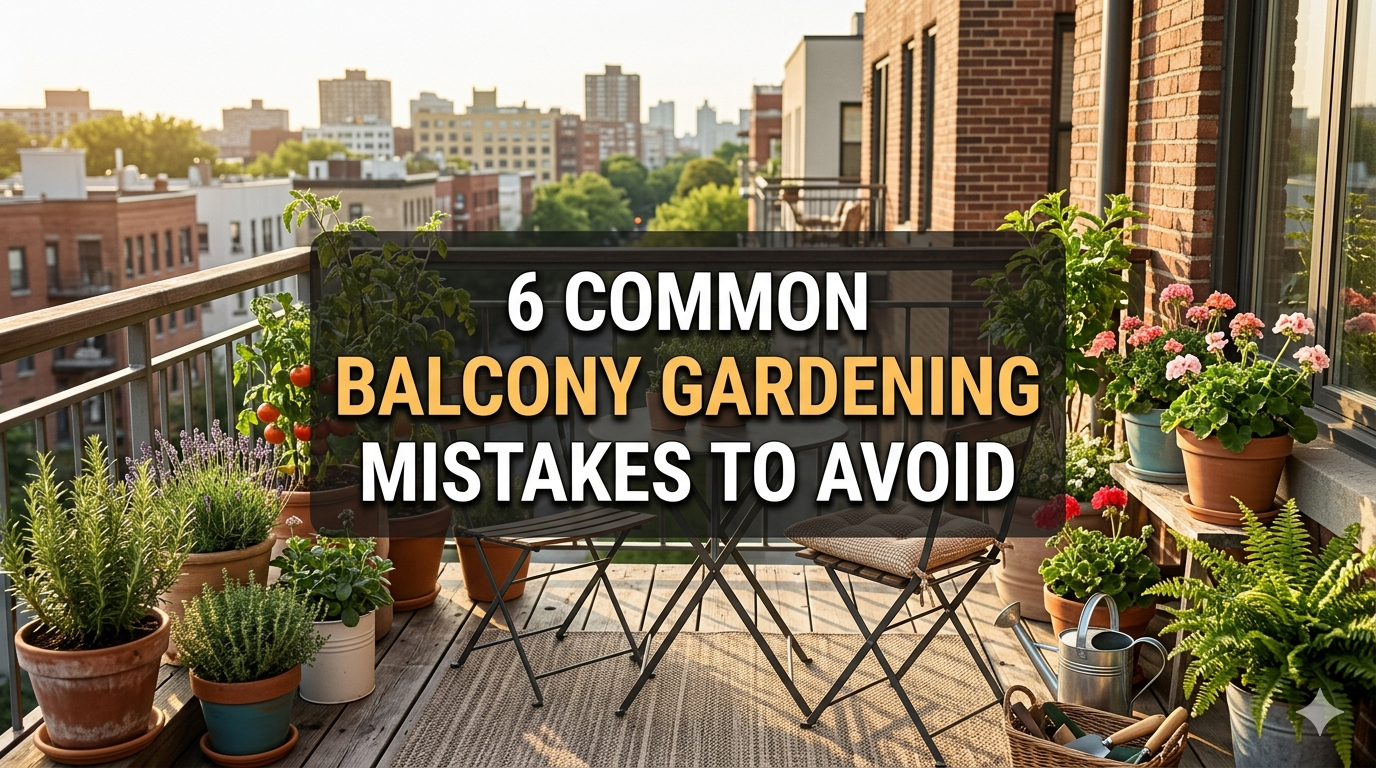
Balcony gardening looks easy at first glance. A few pots, some green leaves, maybe a flowering plant or two, and suddenly you imagine a peaceful green corner in your home. But once you actually start, reality shows up quickly—plants dry out faster than expected, some refuse to grow, others suddenly wilt, and what looked like a simple hobby turns into a confusing cycle of trial and error.
The truth is, most balcony gardening problems don’t come from lack of effort. They come from repeated, very common mistakes that almost every beginner makes without realizing it. The good news is that once you understand these mistakes, your garden becomes significantly easier to manage.
This guide breaks down six of the most common balcony gardening mistakes, why they happen, and how to fix them in a practical way.
understanding why balcony gardening is different
Before going into mistakes, it helps to understand one thing clearly: a balcony is not a natural garden.
It behaves more like a controlled micro-environment where conditions change faster and more sharply than in open soil.
Here’s what makes balconies unique:
| Factor | Balcony Garden Impact |
|---|---|
| Limited soil volume | faster drying and nutrient loss |
| Concrete heat | higher temperature stress on roots |
| Wind exposure | rapid moisture evaporation |
| Fixed sunlight angle | uneven plant growth |
| Space constraints | higher competition between plants |
Because of these conditions, small mistakes have bigger consequences.
mistake 1: choosing plants without checking balcony conditions
One of the first mistakes people make is buying plants based on appearance instead of suitability. A plant might look beautiful in a nursery or online, but that doesn’t mean it will survive your balcony environment.
For example:
- A plant that needs full sunlight may struggle in a shaded balcony
- A moisture-loving plant may rot in a windy, dry area
- A delicate flowering plant may not survive heat reflection from walls
plant suitability comparison:
| Plant Type | Needs Full Sun | Needs Shade | Maintenance Level |
|---|---|---|---|
| Basil | Yes | No | Medium |
| Mint | Partial | Yes | Low |
| Snake Plant | No | Yes | Very low |
| Rose | Yes | No | High |
| Fern | No | Yes | Medium |
common mistake pattern:
People buy plants first, then try to adjust conditions later.
better approach:
Always analyze your balcony first:
- how many hours of sunlight it gets
- whether it is windy or sheltered
- how quickly soil dries
Then choose plants that naturally fit.
mistake 2: overwatering or underestimating drainage
Watering is where most balcony gardens struggle the most. It often comes from good intentions—people think more water means healthier plants.
But in containers, water behaves differently. It has nowhere to spread or drain naturally unless the setup allows it.
watering impact chart:
| Watering Type | Result on Plants |
|---|---|
| Overwatering | root rot, fungus growth |
| Underwatering | dry, brittle leaves |
| Irregular | stress, slow growth |
| Balanced | steady development |
what usually goes wrong:
- pots without proper drainage holes
- watering on a fixed schedule instead of soil condition
- ignoring seasonal changes
better method:
Check soil before watering. Insert your finger 2–3 cm into the soil:
- dry → water
- moist → wait
Also ensure pots always have drainage holes.
mistake 3: ignoring soil quality after initial setup
Many people think soil is a one-time setup. Once filled, it should last indefinitely. But in balcony gardening, soil degrades faster than expected.
Why?
- frequent watering washes nutrients away
- limited space prevents natural decomposition cycles
- roots quickly absorb available nutrients
soil condition breakdown:
| Soil State | Plant Effect |
|---|---|
| Fresh mix | strong growth |
| Compacted soil | weak roots |
| Nutrient-depleted | yellowing leaves |
| Aerated soil | stable growth |
common mistake:
Never refreshing soil for months or even years.
better solution:
Every 2–3 months:
- add compost
- loosen soil gently
- mix in coco peat or organic matter
Even a small refresh improves plant health significantly.
mistake 4: overcrowding plants in a small space
Balcony gardeners often feel the urge to maximize space. Every empty corner looks like wasted potential, so more pots get added.
But plants don’t just need space to sit—they need space to breathe.
overcrowding effects:
| Problem | Cause |
|---|---|
| weak growth | light competition |
| fungal issues | poor airflow |
| pest spread | plants too close |
| uneven watering | blocked access |
what usually happens:
Plants look fine initially, then slowly start declining.
better strategy:
Leave breathing space between pots. Think in layers instead of density.
spacing guide:
| Plant Size | Recommended Spacing |
|---|---|
| Small herbs | 4–6 inches |
| Medium pots | 8–12 inches |
| Large pots | 12+ inches |
Less clutter often leads to healthier growth.
mistake 5: ignoring sunlight movement throughout the day
Sunlight in balconies is not fixed. It changes direction, intensity, and duration depending on season and time of day.
Many gardeners place plants once and never adjust them again.
But plants have different light needs.
sunlight pattern table:
| Time of Day | Light Type | Best Plant Type |
|---|---|---|
| Morning | soft light | herbs, greens |
| Afternoon | harsh sunlight | succulents, chili |
| Evening | warm light | flowering plants |
common mistake:
Putting all plants in one fixed position.
better approach:
Rotate plants every few weeks based on their response:
- stretch = needs more light
- burnt leaves = needs shade
Small adjustments matter more than big changes.
mistake 6: not planning for maintenance reality
Many balcony gardens fail not because of setup, but because of unrealistic expectations.
People imagine:
- daily watering
- perfect attention
- constant care
But real life includes:
- travel
- busy workdays
- weather changes
- forgetfulness
maintenance reality comparison:
| Expectation | Reality |
|---|---|
| daily care | 2–3 times per week |
| perfect timing | irregular schedules |
| instant response | delayed attention |
better approach:
Design your garden for your lifestyle:
- choose low-maintenance plants if busy
- use self-watering methods
- reduce plant count if needed
A sustainable garden fits your life, not the other way around.
quick balcony gardening health chart
| Factor | Healthy Setup | Problem Setup |
|---|---|---|
| Watering | balanced | inconsistent |
| Soil quality | enriched | depleted |
| Plant spacing | moderate | overcrowded |
| Sunlight use | optimized | ignored |
| Maintenance | realistic | overambitious |
how to fix most balcony gardening problems quickly
If your garden already has issues, here’s a simple recovery approach:
| Step | Action |
|---|---|
| 1 | reduce overcrowding |
| 2 | check drainage in pots |
| 3 | refresh soil lightly |
| 4 | adjust plant positions |
| 5 | fix watering habits |
Most gardens improve noticeably within a few weeks of correction.
faqs
- what is the most common balcony gardening mistake
Overwatering is the most common issue, usually caused by watering on a fixed schedule instead of checking soil conditions. - how many plants should I keep in a small balcony
It depends on space, but leaving at least 20–30% open space is ideal for airflow and maintenance. - how often should soil be replaced or refreshed
Soil should be refreshed every 2–3 months with compost or organic matter to maintain nutrients. - why do balcony plants die faster than garden plants
Because containers limit root space, water drainage, and nutrient availability, making plants more sensitive to mistakes. - can I grow different types of plants together
Yes, but only if they have similar sunlight and water needs. Otherwise, one group will suffer. - what is the easiest way to improve a balcony garden
Fix watering habits, improve soil quality, and reduce overcrowding—these three changes alone make a big difference.