Introduction
In modern cities, especially where apartments and compact housing dominate, having access to a personal green space feels like a luxury. But even in the smallest homes, a balcony can be transformed into a thriving garden that adds freshness, beauty, and even food to your daily life.
A balcony garden is not just about placing a few pots randomly. It is about designing a system that works with limited space, sunlight direction, wind exposure, and maintenance time. The right setup can turn a dull balcony into a productive mini-ecosystem.
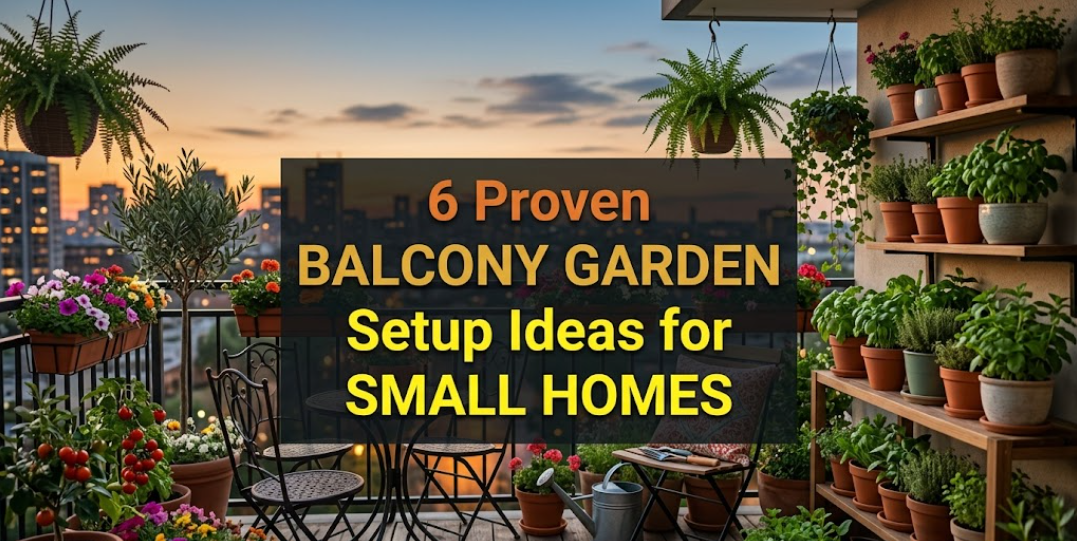
This article explores six proven balcony garden setup ideas specifically designed for small homes. Each idea is practical, space-efficient, and adaptable whether you live in an apartment, studio, or compact urban house.
We will also include comparison tables, layout charts, and practical breakdowns so you can directly plan your own balcony garden without guesswork.
Idea 1: Vertical Wall Garden System
One of the most efficient ways to maximize small balcony space is to go vertical. Instead of spreading pots on the floor, you use walls as growing surfaces.
A vertical garden uses stacked planters, wall-mounted pots, hanging pockets, or modular panels to grow plants upward.
Best plants for this setup:
- Herbs (mint, basil, coriander)
- Leafy greens (lettuce, spinach)
- Small flowers (petunias, marigolds)
- Strawberries
Why it works:
Small balconies often lack floor space but have unused vertical surfaces. This method increases planting capacity by up to 3–5 times.
Setup breakdown:
| Component | Purpose | Cost Range |
|---|---|---|
| Wall planters | Hold plants vertically | Low–Medium |
| Drip irrigation kit | Automated watering | Medium |
| Mounting brackets | Secure structure | Low |
| Potting mix panels | Lightweight growing medium | Medium |
Space efficiency chart:
Floor use vs Vertical use:
- Traditional pots: ██████████ 100% floor usage
- Vertical system: ████ 30–40% floor usage
Maintenance tips:
- Water from top to bottom to ensure even distribution
- Use lightweight soil mix to reduce wall load
- Avoid overwatering to prevent leakage issues
A vertical system is ideal for people who want greenery without sacrificing walking space.
Idea 2: Rail-Hanging Garden Setup
Balcony railings are often overlooked but are perfect for planting systems. Rail-hanging planters attach directly to the balcony edge, keeping the floor completely free.
Best plants:
- Herbs
- Small flowering plants
- Hanging vines like ivy
- Compact vegetables like chilies and cherry tomatoes
Advantages:
- Zero floor usage
- Easy access for watering
- Good sunlight exposure
Setup components:
| Item | Function |
|---|---|
| Railing planters | Main planting containers |
| Hook clamps | Secure attachment |
| Water trays | Prevent dripping |
| Lightweight soil | Avoid railing stress |
Layout chart:
Top view balcony setup:
[Rail Planters]
| Walking Space |
| |
| Small chair/table |
Key insight:
Rail gardens are especially useful in narrow balconies where movement space is already limited.
Idea 3: Container Cluster Garden (Zoned Pots System)
This is the most traditional but still highly effective setup. Instead of random pot placement, containers are grouped into functional zones.
You divide your balcony into:
- Green zone (leafy vegetables)
- Flower zone (aesthetic plants)
- Utility zone (tools, compost, watering station)
Plant suggestions:
- Tomatoes
- Peppers
- Basil
- Roses
- Jasmine
Zoning structure:
| Zone | Plants | Light Needs |
|---|---|---|
| Green zone | Vegetables, herbs | High |
| Flower zone | Decorative plants | Medium |
| Utility zone | Storage, compost | Low |
Space distribution chart:
Green zone: ██████ 40%
Flower zone: ████ 30%
Utility zone: ███ 20%
Walk space: ██ 10%
Why this works:
Instead of chaos, zoning creates order, improves plant health, and simplifies maintenance.
Idea 4: Hanging Basket Garden System
If your balcony has a ceiling or overhead structure, hanging baskets can dramatically increase planting capacity.
Plants grow downward or at eye level, creating a layered garden effect.
Best plants:
- Trailing flowers (petunias, fuchsia)
- Herbs (thyme, oregano)
- Strawberries
- Ornamental vines
Setup essentials:
| Component | Purpose |
|---|---|
| Ceiling hooks | Support baskets |
| Hanging pots | Plant containers |
| Coir liners | Moisture retention |
| Light chains | Adjustable height system |
Vertical layering chart:
Top layer: Hanging flowers
Middle layer: Herbs
Bottom layer: Small pots or storage
Benefits:
- Uses unused overhead space
- Creates natural shading
- Adds visual depth to balcony
Important note:
Ensure structural safety—avoid overloading ceiling anchors.
Idea 5: Foldable Multi-Tier Stand Garden
This setup uses tiered racks or foldable shelves to create multiple plant levels on a single footprint.
Ideal for:
- People who want flexibility
- Renters who move frequently
- Seasonal gardening
Best plants:
- Succulents
- Herbs
- Small vegetables
Structure overview:
| Tier Level | Recommended Plants |
|---|---|
| Top | Sun-loving herbs |
| Middle | Vegetables |
| Bottom | Shade-tolerant plants |
Space efficiency comparison:
Single layer pots: ██████████
Three-tier system: ███████████████████ (2.5x capacity)
Advantages:
- Portable
- Expandable
- Easy rearrangement
Idea 6: Smart Irrigation Balcony Garden
This modern approach integrates technology with gardening. It uses drip irrigation systems or self-watering planters.
Best for:
- Busy individuals
- Hot climates
- Frequent travelers
System components:
| Device | Function |
|---|---|
| Drip irrigation kit | Automated watering |
| Moisture sensors | Soil condition monitoring |
| Self-watering pots | Water reserve system |
| Timer controller | Scheduling irrigation |
Water usage comparison:
Manual watering: ██████████ (100%)
Drip system: ████ (40–50% reduction)
Benefits:
- Saves water
- Prevents overwatering
- Ensures consistent plant health
Comparison Table of All 6 Balcony Garden Ideas
| Setup Type | Space Usage | Maintenance | Cost | Best For |
|---|---|---|---|---|
| Vertical garden | Excellent | Medium | Medium | Small balconies |
| Rail hanging system | Excellent | Low | Low | Narrow spaces |
| Zoned container system | Good | Medium | Low | Beginners |
| Hanging baskets | Good | Medium | Medium | Decorative gardens |
| Multi-tier stand | Very good | Low | Medium | Flexible setups |
| Smart irrigation setup | Excellent | Very low | High | Busy lifestyle |
Maintenance Timeline Chart
Weekly care routine:
Watering: ██████████ (daily/alternate)
Pruning: ████ (2x per week)
Fertilizing: ██ (weekly/biweekly)
Pest control: █ (weekly check)
Monthly care:
- Soil refresh
- Plant rotation
- Structural check
Common Mistakes to Avoid
- Overcrowding plants in small areas
- Ignoring sunlight direction
- Using heavy soil in hanging systems
- Poor drainage setup
- Neglecting wind protection
Conclusion
Creating a balcony garden in a small home is less about space and more about strategy. By choosing the right setup—whether vertical systems, rail planters, tiered stands, or smart irrigation—you can turn even a tiny balcony into a productive green zone.
The key is to match your lifestyle with the garden system. If you are busy, automation helps. If you enjoy aesthetics, hanging or vertical gardens work best. If you want food production, zoned containers are ideal.
A well-planned balcony garden is not just decoration—it becomes a functional extension of your home.
FAQs
- Which balcony garden setup is best for beginners?
Zoned container gardening is best because it is simple, flexible, and low cost. - Can I grow vegetables in a small balcony garden?
Yes, leafy greens, tomatoes, chilies, and herbs grow very well in small spaces. - How much sunlight do balcony gardens need?
Most edible plants need at least 4–6 hours of sunlight daily. - What is the cheapest balcony garden setup?
Rail-hanging systems and basic container setups are the most affordable options. - How do I prevent water leakage in balcony gardens?
Use drip trays, waterproof mats, and proper drainage holes in pots. - Can I automate my balcony garden?
Yes, smart drip irrigation systems can fully automate watering schedules.