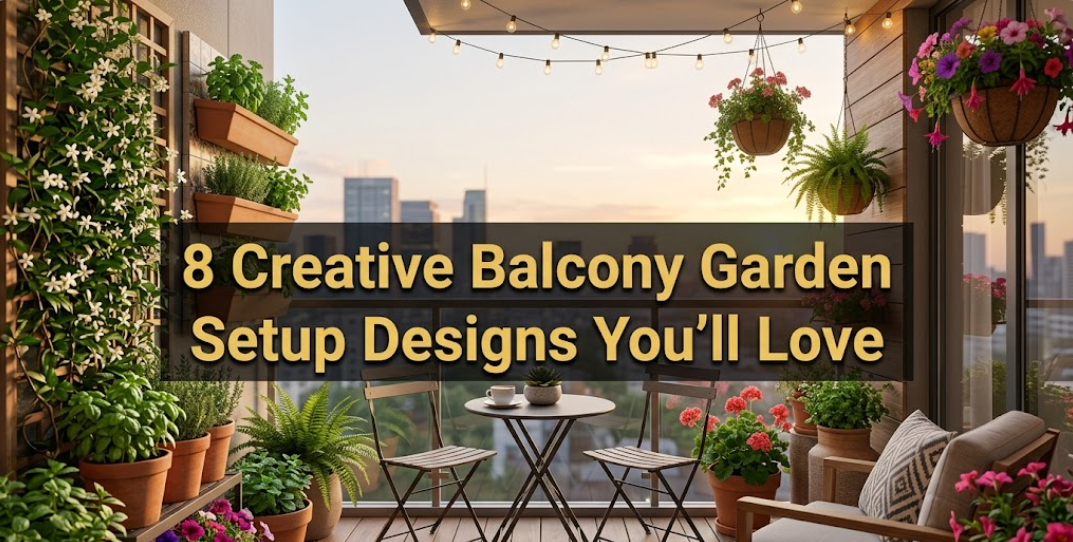
Introduction
A balcony is often one of the most underutilized spaces in a home, especially in urban apartments where outdoor land is limited. Yet, with the right design approach, even a small balcony can be transformed into a lush, productive, and visually appealing garden. Whether you want a calming green retreat, a space to grow herbs, or a vibrant floral display, balcony gardening offers endless creative possibilities.
The key lies in choosing a setup design that matches your space, sunlight exposure, maintenance capacity, and personal style. In this article, we explore 8 creative balcony garden setup designs that are practical, beautiful, and adaptable for different home types. Each design includes setup guidance, plant recommendations, material suggestions, and a structured breakdown to help you plan effectively.
We also include comparison tables, budget charts, and a practical FAQ section at the end.
- Minimalist Vertical Balcony Garden Design
Overview
This design focuses on simplicity, clean lines, and efficient use of vertical space. It is ideal for small balconies where floor space is limited but wall space is available.
Setup Concept
Plants are arranged vertically using wall-mounted planters, railing pots, or tiered shelves. The goal is to keep the balcony uncluttered while still introducing greenery.
Best Plants
- Snake plant
- Pothos
- Ferns
- Spider plant
- Peace lily
Materials Needed
- Wall-mounted planters
- Metal or wooden shelves
- Hanging hooks
- Lightweight pots
- Drip irrigation line (optional)
Setup Steps
- Select a wall with good light exposure.
- Install vertical shelving or planter panels.
- Arrange plants based on sunlight needs.
- Ensure proper drainage.
- Keep floor area clear for seating or walking space.
Pros and Cons
Table: Minimalist Vertical Garden
| Feature | Advantage | Limitation |
|---|---|---|
| Space use | Excellent vertical efficiency | Limited plant variety |
| Maintenance | Easy to clean and manage | Needs structured watering |
| Aesthetics | Clean, modern look | May feel less lush |
Maintenance Tips
- Water twice or thrice weekly depending on climate.
- Rotate plants for even sunlight exposure.
- Clean wall planters monthly.
- Bohemian Lush Balcony Garden Design
Overview
This design is all about abundance, color, and relaxed aesthetics. It creates a cozy, artistic outdoor space filled with hanging plants, patterned textiles, and mixed greenery.
Setup Concept
Plants are layered in hanging baskets, floor pots, and railing planters. Decorative rugs and fairy lights enhance the atmosphere.
Best Plants
- Money plant
- Boston fern
- Areca palm
- Ivy
- Petunias
Materials Needed
- Macramé hangers
- Colorful pots
- Outdoor rug
- String lights
- Mixed-size planters
Setup Steps
- Layer plants at different heights.
- Mix textures and pot designs.
- Add seating cushions or floor seating.
- Use hanging plants for vertical density.
- Add lighting for nighttime ambience.
Pros and Cons
| Feature | Advantage | Limitation |
|---|---|---|
| Aesthetic | Rich, cozy atmosphere | Can become visually cluttered |
| Flexibility | Highly customizable | Requires regular rearrangement |
| Plant diversity | Supports many plant types | Higher maintenance |
- Edible Herb Balcony Garden Design
Overview
This setup focuses on growing fresh herbs and vegetables in a compact and functional arrangement. Perfect for cooking enthusiasts.
Setup Concept
Plants are arranged in organized rows or modular containers for easy harvesting.
Best Plants
- Basil
- Mint
- Coriander
- Tomatoes (dwarf varieties)
- Green chili
- Rosemary
Materials Needed
- Rectangular planters
- Grow bags
- Organic soil mix
- Small watering can
- Fertilizer trays
Setup Steps
- Divide balcony into planting zones.
- Place herbs closer to kitchen access.
- Ensure 4–6 hours of sunlight.
- Use labeled containers.
- Maintain watering schedule.
Pros and Cons
| Feature | Advantage | Limitation |
|---|---|---|
| Functionality | Fresh kitchen produce | Requires regular care |
| Cost saving | Reduces grocery expenses | Seasonal limitations |
| Learning curve | Beginner friendly | Needs pest control |
- Japanese Zen Balcony Garden Design
Overview
This design focuses on peace, balance, and minimal natural elements inspired by traditional Japanese gardens.
Setup Concept
Uses stones, bonsai plants, bamboo elements, and clean open space for meditation or relaxation.
Best Plants
- Bonsai trees
- Bamboo
- Moss
- Ferns
- Dwarf juniper
Materials Needed
- Pebbles or gravel
- Wooden decking tiles
- Small water feature
- Bonsai pots
- Bamboo screens
Setup Steps
- Clear space and create zones.
- Add gravel base layer.
- Place focal bonsai plant.
- Add stones and bamboo elements.
- Keep design symmetrical and minimal.
Pros and Cons
| Feature | Advantage | Limitation |
|---|---|---|
| Ambience | Highly calming | Less plant variety |
| Maintenance | Low watering needs | Requires design discipline |
| Space use | Very efficient | Not visually dense |
- Urban Jungle Balcony Garden Design
Overview
This design creates a dense, rainforest-like feel using a large number of leafy plants packed together.
Setup Concept
Floor-to-ceiling greenery with overlapping leaves and rich textures.
Best Plants
- Monstera
- Rubber plant
- Philodendron
- Calathea
- Ferns
Materials Needed
- Large pots
- Floor stands
- Hanging baskets
- Moisture trays
- Plant humidifier (optional)
Setup Steps
- Start with large anchor plants.
- Fill gaps with medium and small plants.
- Layer plants in height order.
- Maintain humidity.
- Avoid empty visual gaps.
Pros and Cons
| Feature | Advantage | Limitation |
|---|---|---|
| Visual impact | Very lush and tropical | High maintenance |
| Air quality | Excellent improvement | Needs humidity control |
| Space feel | Feels like a forest | Can be overcrowded |
- Smart Hydroponic Balcony Garden Design
Overview
A modern, technology-driven gardening system that grows plants without soil using nutrient-rich water.
Setup Concept
Plants are placed in hydroponic towers or wall systems with controlled water flow.
Best Plants
- Lettuce
- Spinach
- Basil
- Mint
- Strawberries
Materials Needed
- Hydroponic system kit
- Water reservoir
- LED grow lights (if needed)
- Nutrient solution
- Timer system
Setup Steps
- Install hydroponic frame.
- Add water reservoir and nutrients.
- Place seedlings in net cups.
- Set automated watering cycle.
- Monitor nutrient levels.
Pros and Cons
| Feature | Advantage | Limitation |
|---|---|---|
| Growth speed | Faster plant growth | Setup cost is high |
| Cleanliness | No soil mess | Requires technical learning |
| Efficiency | High yield in small space | Power dependency |
- Mediterranean Sunny Balcony Garden Design
Overview
Inspired by coastal Mediterranean homes, this design emphasizes sun-loving plants, terracotta pots, and warm tones.
Setup Concept
Open layout with drought-resistant plants and earthy textures.
Best Plants
- Lavender
- Olive tree (dwarf)
- Rosemary
- Succulents
- Bougainvillea
Materials Needed
- Terracotta pots
- Gravel soil mix
- Wooden furniture
- Sunshade
- Clay decor
Setup Steps
- Arrange plants in sunny direction.
- Use warm-toned containers.
- Maintain dry soil conditions.
- Add rustic seating.
- Keep design airy.
Pros and Cons
| Feature | Advantage | Limitation |
|---|---|---|
| Maintenance | Low watering needs | Needs strong sunlight |
| Aesthetic | Warm and elegant | Limited plant types |
| Durability | Heat resistant plants | Not shade friendly |
- Compact Modular Folding Balcony Garden Design
Overview
Perfect for extremely small balconies, this design uses foldable and movable elements to maximize flexibility.
Setup Concept
Modular shelves, foldable tables, and movable pots allow dynamic space usage.
Best Plants
- Herbs
- Small flowering plants
- Succulents
- Lettuce
- Mini roses
Materials Needed
- Foldable plant stands
- Stackable pots
- Wall hooks
- Lightweight containers
- Rolling plant carts
Setup Steps
- Install foldable furniture.
- Use mobile plant containers.
- Stack plants vertically when needed.
- Clear floor space when unused.
- Rearrange seasonally.
Pros and Cons
| Feature | Advantage | Limitation |
|---|---|---|
| Flexibility | Highly adaptable | Less permanent structure |
| Space saving | Excellent for tiny balconies | Limited large plants |
| Convenience | Easy rearrangement | Requires frequent shifting |
Overall Comparison of Balcony Garden Designs
| Design Type | Space Efficiency | Maintenance | Cost | Best For |
|---|---|---|---|---|
| Vertical Minimalist | High | Low | Medium | Small apartments |
| Bohemian Lush | Medium | High | Medium | Decorative lovers |
| Herb Garden | Medium | Medium | Low | Cooking enthusiasts |
| Japanese Zen | High | Low | Medium | Meditation spaces |
| Urban Jungle | Medium | High | High | Nature lovers |
| Hydroponic | High | Medium | High | Tech users |
| Mediterranean | Medium | Low | Medium | Sunny balconies |
| Modular Folding | Very High | Medium | Medium | Tiny balconies |
Budget Overview Chart
| Setup Type | Estimated Budget (PKR) |
|---|---|
| Minimalist Vertical | 10,000 – 25,000 |
| Bohemian Lush | 15,000 – 40,000 |
| Herb Garden | 8,000 – 20,000 |
| Japanese Zen | 12,000 – 35,000 |
| Urban Jungle | 20,000 – 60,000 |
| Hydroponic | 30,000 – 120,000 |
| Mediterranean | 15,000 – 45,000 |
| Modular Folding | 10,000 – 30,000 |
Frequently Asked Questions
- What is the easiest balcony garden setup for beginners?
The herb garden and minimalist vertical garden setups are easiest due to low maintenance and simple plant selection. - How much sunlight do balcony gardens need?
Most plants require at least 4–6 hours of sunlight, but shade-loving plants like ferns can survive with less. - Can I grow vegetables in a small balcony?
Yes, compact vegetables like tomatoes, chilies, lettuce, and herbs grow very well in containers. - How do I prevent pests in balcony gardens?
Use neem oil spray, ensure good air circulation, and avoid overwatering to prevent pest infestations. - Is hydroponic gardening worth it for small spaces?
Yes, especially if you want high yield in limited space and are comfortable with a slightly technical setup. - How often should I water balcony plants?
It depends on plant type and weather, but most container plants need watering 2–4 times per week.