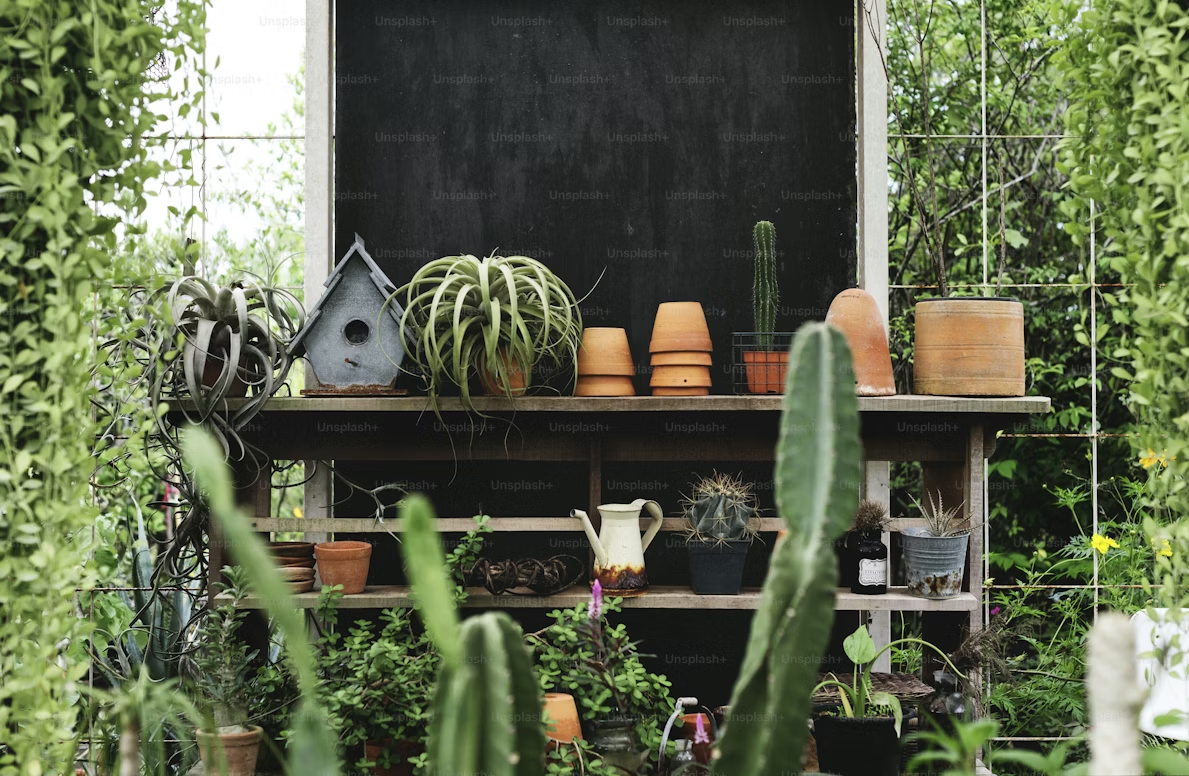
My neighbor has a balcony roughly the same size as mine. We’re talking maybe 5 by 8 feet. But while mine used to look like a forgotten corner with two sad pots and a folded-up camping chair, hers looked like a page out of a gardening magazine.
Same space. Completely different results.
I asked her about it one afternoon, half expecting some complicated answer involving expensive planters or a professional setup. Instead, she said something that stuck with me: “I just stopped wasting the parts I couldn’t see.”
That was the moment I started actually thinking about my small space differently — not as a limitation, but as a puzzle. And once you start solving that puzzle, it’s kind of addictive.
Here are the 9 ideas that genuinely changed how I use every inch of my small garden space.
1. Map Your Space Before You Plant Anything
I know, I know — this sounds boring. You want to get your hands in the soil, not draw diagrams. But skipping this step is exactly why most small-space gardens end up looking chaotic.
Spend one full day just observing your space. Not planting, not buying — just watching. Where does the sun hit in the morning? Where does shade fall by afternoon? Which corner gets wind? Where does water pool after rain?
I did this properly for the first time two seasons ago and it completely changed my planting decisions. I’d been putting sun-loving herbs in a spot that only got about three hours of direct light. No wonder they were struggling.
A simple space-mapping method:
- Take a photo of your space at 9am, 12pm, and 3pm on a sunny day
- Note which areas are in sun vs shade at each time
- Mark any wind-exposed spots (plants there need to be sturdy or sheltered)
- Identify your “prime real estate” — the spots with the most sun and least wind
This takes maybe 15 minutes of active effort across a whole day. And it tells you more about your space than any gardening book can.
Once you know your zones, matching plants to spots becomes intuitive rather than guesswork.
2. Go Vertical — Every Wall and Railing Is Growing Space
Floor space in a small garden is finite. Vertical space is basically infinite, and most people leave almost all of it unused.
When I finally committed to going vertical, I gained what felt like double the growing area without adding a single square foot to the floor.
Here’s what actually works for vertical growing in small spaces:
Wall-mounted pocket planters are great for herbs and small lettuces. A single fabric pocket panel about 60cm wide can hold 12–15 plants and takes up zero floor space. I have one on the inside face of my balcony wall and it’s the most productive piece of growing space I own.
Tiered plant stands let you stack plants in layers. A three-tier stand turns one square foot of floor into three levels of planting. I use mine for a mix of trailing plants on top (they cascade down beautifully), medium herbs in the middle, and compact flowers at the base.
Trellis panels turn climbers into living walls. Climbing beans, peas, small cucumbers, or flowering nasturtiums can cover a trellis panel in a matter of weeks and completely transform a bare wall.
For deeper inspiration on making vertical space work beautifully, these 12 vertical gardens to smarten up any space cover some really creative approaches — including options that work for renters who can’t drill into walls.
3. Use Containers Strategically, Not Just Randomly
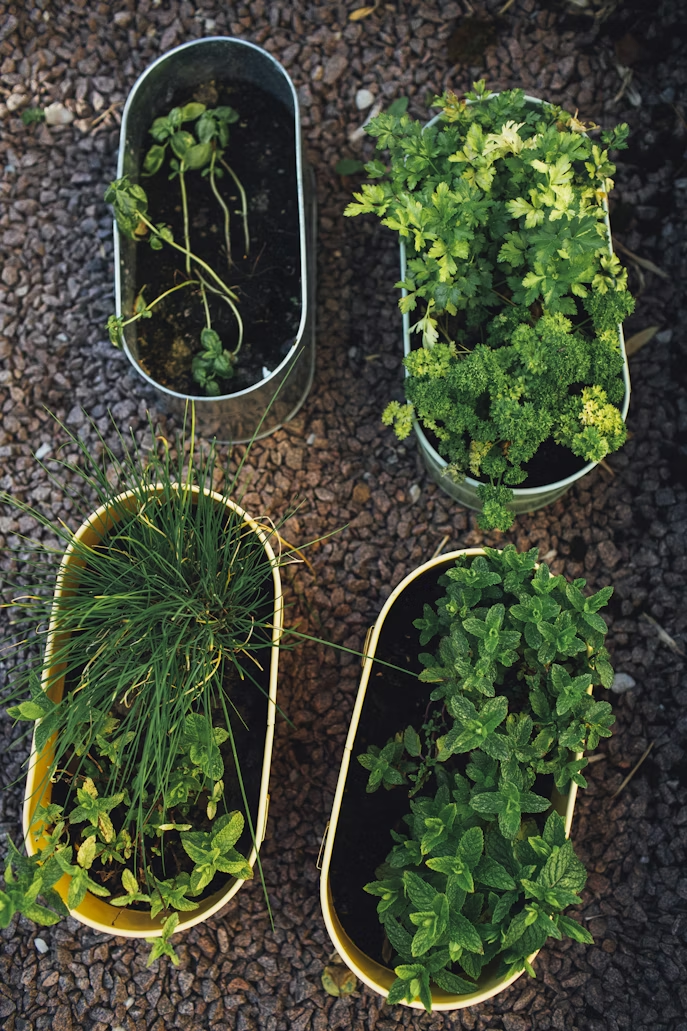
This was one of my biggest early mistakes. I bought pots whenever I liked the look of them and arranged them however they fit. The result was a mismatched jumble that felt cramped even though it wasn’t particularly full.
Container strategy in a small space comes down to three things: size, material, and placement.
On size: The instinct is to use small pots in small spaces to “keep things proportional.” This is actually backwards. A few larger containers look less cluttered than many small ones, and they’re better for plant health because roots have room to grow and moisture is more stable. I replaced eight small pots with three large ones and the space immediately felt bigger and looked more intentional.
On material: Heavy ceramic looks beautiful but is a nightmare on weight-limited balconies. Lightweight fabric grow bags and resin pots can look just as good and weigh a fraction of the equivalent ceramic. If you’re on an upper-floor balcony, this matters more than aesthetics.
On placement: Group containers together rather than spacing them evenly around the perimeter. Clusters create visual “rooms” within the space and also create a slightly more humid microclimate around the plants — both a design win and a growing win.
| Container Type | Weight | Drainage | Best Use | Approx. Cost |
|---|---|---|---|---|
| Terracotta | Heavy | Excellent | Herbs, small plants | Low |
| Ceramic glazed | Very heavy | Good | Statement plants | Medium-high |
| Resin/plastic | Light | Good | Any plant | Low |
| Fabric grow bag | Very light | Excellent | Vegetables, tomatoes | Very low |
| Self-watering pot | Medium | Controlled | Busy gardeners | Medium |
| Hanging basket | Light | Good | Trailing plants, flowers | Low |
4. Grow Up, Not Out: Climbing and Trailing Plants Are Your Best Friends
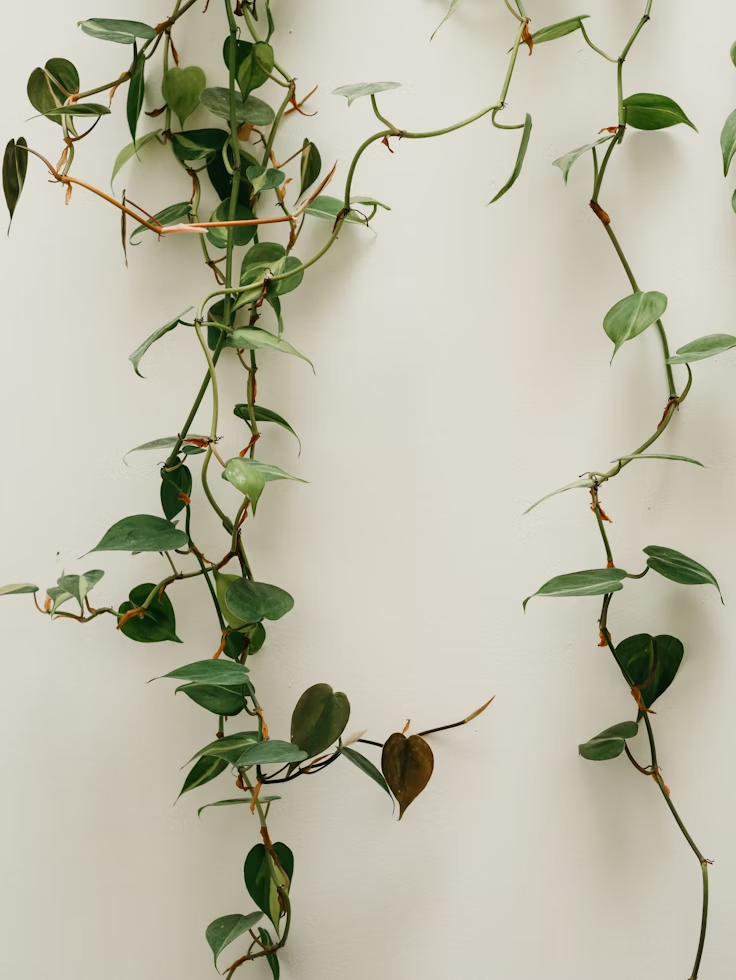
A climbing or trailing plant is basically a small-space gardener’s cheat code. You plant one thing in a relatively small pot, and it fills vertical or horizontal space that no other plant type can reach.
Climbers that work brilliantly in containers:
- Climbing French beans — productive, fast-growing, and the flowers are actually pretty
- Sweet peas — incredible scent, long season, and they look stunning against a trellis
- Small-flowered clematis — perennial, so they come back each year, and the coverage is remarkable
- Nasturtiums — technically a trailing plant, but give them something to climb and they will; bonus: the flowers and leaves are edible
Trailers that fill space beautifully:
- Lobelia — cascades over pot edges in waves of blue or purple
- Sweet potato vine — huge ornamental leaves, grows incredibly fast, and fills gaps in arrangements
- String of pearls (indoors or sheltered balconies) — unusual, eye-catching, and very easy to grow
- Trailing rosemary — useful AND beautiful as it spills over the edge of a raised container
The key with climbers in containers is giving them a deep enough pot (at least 30cm) and a sturdy support structure. A bamboo cane tied to a railing works fine. You don’t need anything elaborate.
5. Think in Layers: High, Mid, and Low Plantings
This is a design principle borrowed from landscape architecture, and it applies just as much to a five-foot balcony as it does to a large garden.
When everything in your space is the same height, the eye has nowhere to travel. It reads as flat and crowded. When you create layers — something tall at the back or center, medium-height plants in the middle zone, and low or trailing plants at the edges — the space feels organized, dynamic, and larger than it actually is.
My current balcony layout follows a simple three-layer rule:
- Back layer (tallest): A dwarf tomato on a stake, a trellis with climbing beans, or a tall ornamental grass
- Mid layer: Herbs, compact pepper plants, medium flowering plants like geraniums
- Front/edge layer: Low-growing herbs like thyme, trailing plants, or compact annuals that spill over the edge
This costs nothing to implement — it’s just a different way of arranging what you already have. But the visual difference is remarkable.
6. Double Up With Companion Planting in Shared Containers
Most people give each plant its own pot. In a small space, that’s an inefficient use of container real estate.
Companion planting — growing two or more compatible plants in the same container — lets you get multiple plants out of a single pot’s worth of soil and space. Done right, the plants actually help each other.
Some combinations that work well and I’ve personally used:
Tomato + Basil + Marigold in one large pot. The basil may help deter whitefly from the tomatoes, the marigold deters other pests, and all three love similar sun and watering conditions. It looks great too — green, red, and orange all in one container.
Lettuce understory beneath tall herbs. Tall herbs like dill or fennel provide partial shade that lettuce actually appreciates in summer heat. The lettuce uses space the tall herb leaves empty at the base.
Strawberries + Thyme at the edge of a container. Thyme is said to deter certain pests that bother strawberries, and both like well-drained soil and full sun. The trailing strawberries spill over the edge of the pot while thyme fills the center.
For more companion planting combinations that actually produce results, these 11 clever plant pairings that make your garden flourish are worth checking out — several of them are specifically designed for container and small-space growing.
7. Use Every Microclimate in Your Space
Even in a tiny garden, you have multiple microclimates — small zones with slightly different conditions. Most small-space gardeners treat their whole area as one uniform environment. Once you start recognizing the differences, you can place plants far more precisely.
The typical microclimates in a small balcony or patio space:
- Sunny, south-facing corner: Hottest spot, ideal for peppers, basil, tomatoes, sun-loving flowers
- Shadier north-facing wall: Cooler and shadier, perfect for ferns, mint, parsley, and shade-tolerant flowers like impatiens
- Windy outer edge: Tougher conditions — use robust, wind-tolerant plants like lavender, ornamental grasses, or anything with tough or small leaves
- Sheltered inner corner: Warmer and calmer, great for more tender plants or seedlings that need protection
Mapping these microclimates (back to point 1) gives you a placement guide that takes all the guessing out of plant selection.
One unexpected result I had from paying attention to microclimates: my sheltered corner near the sliding door runs noticeably warmer than the rest of the balcony, probably because of heat escaping through the glass. I now use that spot to overwinter slightly tender plants that wouldn’t survive in more exposed positions. Free heating.
8. Make the Most of Succession Planting
In a small space, you can’t afford to have empty containers for half the year. Succession planting — replacing spent plants with new ones as the season changes — keeps your space productive and looking good twelve months of the year rather than just during peak season.
It sounds more complicated than it is. The basic idea: as one plant finishes, something else is ready to take its place.
A simple succession planting calendar for a small space:
| Season | What Goes In | What Comes Out |
|---|---|---|
| Early spring | Cool-season salads, pansies, snapdragons | — |
| Late spring | Herbs, summer flowers, tomato/pepper seedlings | Spring bedding as it fades |
| Summer | Fruiting plants, climbing beans, summer annuals | Cool-season salads (bolted) |
| Late summer | Kale, spinach, Swiss chard, autumn flowers | Summer annuals as they slow |
| Autumn | Chrysanthemums, ornamental kale, heuchera | Spent summer crops |
| Winter | Evergreen structure plants, hellebores, winter pansies | Spent autumn plants |
The secret to making this work without stress is starting the next season’s plants in a sheltered spot (a windowsill, a small indoor grow light setup, or a mini greenhouse shelf) while the current plants are still in place. By the time you need the container space, the next plant is ready to go in.
9. Use Mirrors, Light Colors, and Reflective Surfaces to Visually Expand the Space
This last one is more design than gardening, but in a small space, visual expansion matters as much as physical expansion.
Light-colored walls and surfaces reflect light back into the space, making it feel brighter and larger. If you have a dark wall behind your garden area, painting it white or pale grey (or simply leaning a white-painted board against it) can dramatically change the feel of the space.
Outdoor mirrors are something I resisted for a long time because they seemed like an interior design gimmick. Then I tried a small weatherproof mirror positioned between two plant groups on my balcony wall. The reflected greenery genuinely made the space feel like it extended further than it did. It works.
Reflective plant pots — metallic finishes, light-colored glazes — bounce light around in a way that dark pots absorb. In a shadier small space especially, this can make a real visual difference.
String lights aren’t just decorative. In the evening and through darker months, they extend the hours you actually use and enjoy your outdoor space. Solar-powered string lights woven through climbing plants or draped along a railing cost nothing to run and transform the atmosphere completely.
One thing to avoid: dark, heavy furniture in a small garden space. A bulky dark table and chairs can visually eat up half the space before you’ve put a single plant down. Slim metal or folding furniture in light colors keeps the space open and airy.
The Mistakes That Held Me Back Longest
A few honest ones worth mentioning:
Crowding plants to fill visual gaps faster. More plants in a small space doesn’t equal a better-looking space. Overcrowding leads to poor airflow, competition for nutrients, and a general feeling of chaos. Restraint is genuinely a skill in small-space gardening.
Buying plants without a plan for where they’ll go. I used to do this constantly — see something beautiful at the garden center, buy it, then figure out where it fits. This is how you end up with a sun-loving plant in a shady corner or a huge pot blocking the only path through your balcony.
Neglecting soil quality because the space is small and “it doesn’t matter as much.” It matters just as much. Actually more, because container plants have nowhere else to send their roots if the soil is poor.
Not using the 6 container secrets for game-changing gardening early enough — if you’re growing in containers (which in a small space you almost certainly are), the way you set up those containers is everything. Getting this right from the start saves a lot of frustration later.
Where to Go From Here
Small space gardening rewards curiosity more than knowledge. You don’t need to get everything right before you start — you need to start, pay attention to what works in your specific space, and make small adjustments as you go.
The nine ideas above aren’t a checklist to complete all at once. Pick the one or two that feel most relevant to where you are right now and start there. Maybe it’s finally going vertical. Maybe it’s mapping your space properly for the first time. Maybe it’s just trying companion planting in one pot to see what happens.
Every great small-space garden I’ve ever seen started the same way: one good decision, followed by another.