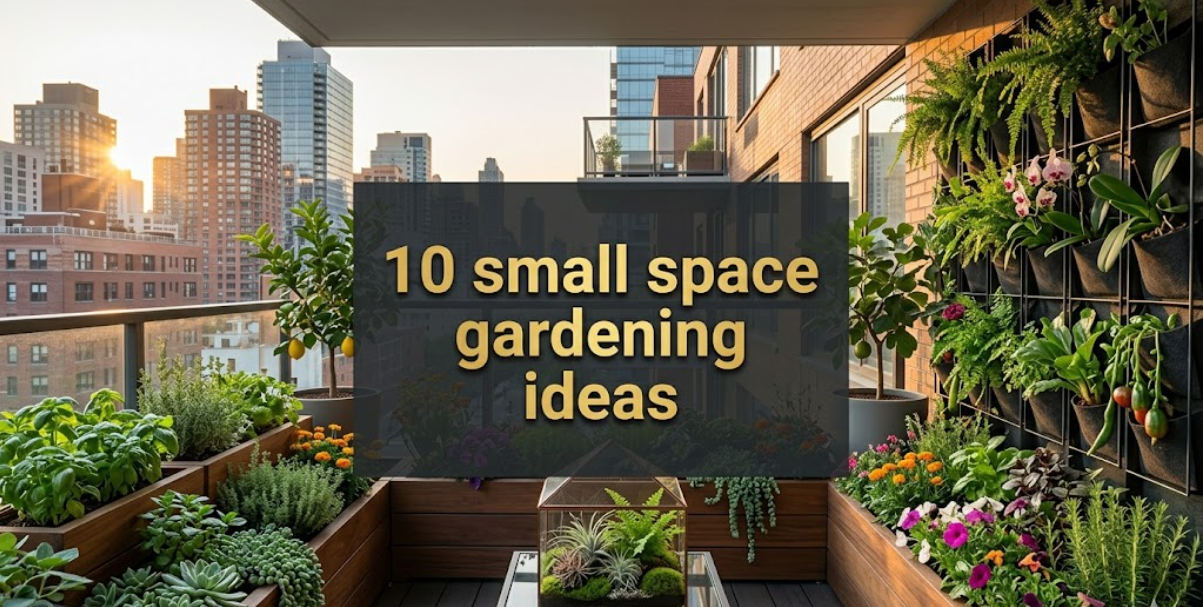
Small space gardening is less about how much room you have and more about how creatively you use it. A narrow balcony, tiny patio, or even a sunny window ledge can become a productive green space when designed with intention. The trick is not to “fit plants in,” but to build a system where every inch has a purpose.
Below are 10 practical, realistic, and highly efficient small-space gardening ideas that help you grow more in less space—without needing expensive setups or professional experience.
- vertical wall gardening to unlock unused height
Most people think of gardening as horizontal—pots on the floor, containers lined along edges. But walls are the most underused asset in small spaces.
Vertical gardening turns empty walls into growing surfaces using planters, shelves, or hanging systems.
common vertical setups:
- wall-mounted pots
- pocket planters
- wooden pallet gardens
- tiered plant shelves
vertical efficiency chart:
| setup type | space usage | plant capacity | installation effort |
|---|---|---|---|
| floor pots | high | low | low |
| wall planters | very low | high | medium |
| pallet garden | low | medium-high | medium |
| hanging pockets | low | medium | low |
why it works:
Vertical systems multiply planting space without expanding the footprint, making them ideal for apartments and small balconies.
- tiered shelving for multi-level planting
Instead of placing all pots on a single surface, tiered shelving creates layers. Think of it like stadium seating for plants.
benefits:
- better sunlight distribution
- improved airflow
- organized visual structure
You can use:
- metal racks
- wooden stands
- repurposed bookshelves
space gain comparison:
| arrangement | plant capacity | sunlight access | organization |
|---|---|---|---|
| single level | low | uneven | messy |
| two-tier shelf | medium | improved | moderate |
| multi-tier rack | high | optimized | structured |
pro tip:
Place sun-loving plants on top tiers and shade-tolerant ones below.
- railing planters for instant expansion
Balconies often have railings that go completely unused. Railing planters attach directly to these edges, instantly expanding your gardening zone.
best suited for:
- herbs
- flowers
- small vegetables
advantages:
- saves floor space
- easy access for harvesting
- improves balcony aesthetics
railing planter effectiveness:
| feature | rating (1–5) |
|---|---|
| space saving | 5 |
| ease of use | 5 |
| plant variety | 3 |
| stability | 4 |
important note:
Ensure proper fastening to avoid tipping in strong wind.
- hanging baskets for floating greenery
Hanging baskets add greenery at eye level or above, freeing up all floor space below.
ideal plants:
- trailing vines
- strawberries
- ivy
- cherry tomatoes (compact varieties)
benefits:
- creates layered visual effect
- improves airflow around plants
- reduces pest exposure from ground level
hanging basket comparison:
| plant type | growth success | maintenance |
|---|---|---|
| strawberries | high | medium |
| herbs | very high | low |
| vines | high | low |
| root vegetables | low | high |
- container stacking for maximum density
Stacking containers vertically is a simple but powerful trick for tight spaces.
You can stack:
- pots on stands
- modular stackable planters
- DIY plastic bottle towers
stacking efficiency chart:
| stack type | space saved | stability | watering ease |
|---|---|---|---|
| basic stacking | medium | low | easy |
| modular systems | high | high | medium |
| DIY bottle stacks | very high | medium | medium |
why it matters:
Stacking allows multiple plant layers without needing shelves or wall drilling.
- grow edible plants in narrow containers
Not all plants need wide pots. Many herbs and vegetables thrive in narrow, elongated containers.
perfect for:
- lettuce
- spring onions
- spinach
- herbs
container comparison:
| container shape | space use | crop suitability |
|---|---|---|
| wide pots | high | large plants |
| narrow trays | low | leafy greens |
| long boxes | medium | herbs/greens |
benefit:
You can line narrow containers along balcony edges or window sills.
- use reflective surfaces to boost sunlight
Small spaces often struggle with uneven light. Reflective surfaces help bounce sunlight onto shaded plants.
materials used:
- mirrors
- white walls
- aluminum sheets
- reflective foil
light improvement chart:
| method | light increase | cost |
|---|---|---|
| white walls | medium | free |
| mirrors | high | low |
| reflective foil | medium-high | low |
warning:
Avoid overheating by controlling reflection intensity.
- micro herb gardens for high yield in tiny space
Herbs are the most space-efficient plants you can grow. A small tray can produce continuous harvests.
best herbs for micro gardens:
- basil
- mint
- coriander
- parsley
micro garden yield table:
| herb | space needed | harvest frequency |
|---|---|---|
| mint | very low | high |
| basil | low | high |
| coriander | low | medium |
pro tip:
Harvest regularly to encourage regrowth.
- multi-use furniture gardening setup
In small spaces, furniture can double as gardening infrastructure.
examples:
- bench with planter boxes
- table with built-in pots
- storage boxes that hold soil and tools
efficiency comparison:
| furniture type | function | space saved |
|---|---|---|
| standard setup | single use | low |
| dual-purpose | seating + garden | high |
| storage hybrids | tools + plants | very high |
why it works:
Every item serves more than one purpose, reducing clutter.
- seasonal rotation system for continuous growth
Instead of planting everything at once, rotate crops seasonally to maximize output year-round.
rotation cycle example:
- winter: spinach, lettuce
- spring: herbs, peas
- summer: tomatoes, peppers
- autumn: leafy greens again
seasonal planning chart:
| season | best crops | difficulty |
|---|---|---|
| winter | greens | easy |
| spring | herbs, legumes | easy |
| summer | fruiting plants | medium |
| autumn | leafy greens | easy |
benefit:
Continuous harvest instead of one-time yield.
small space garden optimization overview
| strategy | space efficiency | cost | maintenance |
|---|---|---|---|
| vertical gardening | very high | medium | medium |
| stacking systems | high | low | medium |
| hanging systems | high | low | low |
| reflective surfaces | medium | very low | low |
| multi-use furniture | very high | medium | low |
weekly maintenance plan for small gardens
| day | task |
|---|---|
| monday | watering check |
| tuesday | rotate containers |
| wednesday | prune and trim |
| thursday | pest inspection |
| friday | light fertilizing |
| saturday | rearrange layout |
| sunday | harvest and observe |
common mistakes in small space gardening
- overcrowding pots too tightly
- ignoring sunlight direction
- using heavy soil mixes
- overwatering small containers
- choosing large plants for small areas
correction impact chart:
| mistake | impact level | fix difficulty |
|---|---|---|
| overcrowding | high | medium |
| poor lighting | high | low |
| heavy soil | medium | easy |
| overwatering | high | medium |
faqs
- what is the best plant for very small spaces?
Herbs like mint, basil, and coriander are ideal because they grow quickly, require little space, and can be harvested repeatedly. - how do I maximize sunlight in a small balcony garden?
Use reflective surfaces, vertical placement, and rotate plants regularly to ensure even exposure throughout the day. - can vegetables really grow in containers?
Yes, many vegetables like tomatoes, lettuce, spinach, and peppers grow well in containers when given proper soil and sunlight. - how often should small space plants be watered?
Usually every 1–3 days depending on weather, but small containers may dry faster in hot climates and need more frequent watering. - what is the biggest challenge in small space gardening?
The biggest challenge is managing limited sunlight and preventing overcrowding, which can reduce airflow and plant health. - do I need expensive equipment for small space gardening?
No. Many effective setups use recycled materials, simple shelves, and basic containers. Creativity matters more than budget.
Small space gardening is really about rethinking how space is used. Once you stop seeing walls, railings, and corners as “empty areas” and start seeing them as potential growing zones, even the smallest balcony can turn into a productive, green ecosystem.