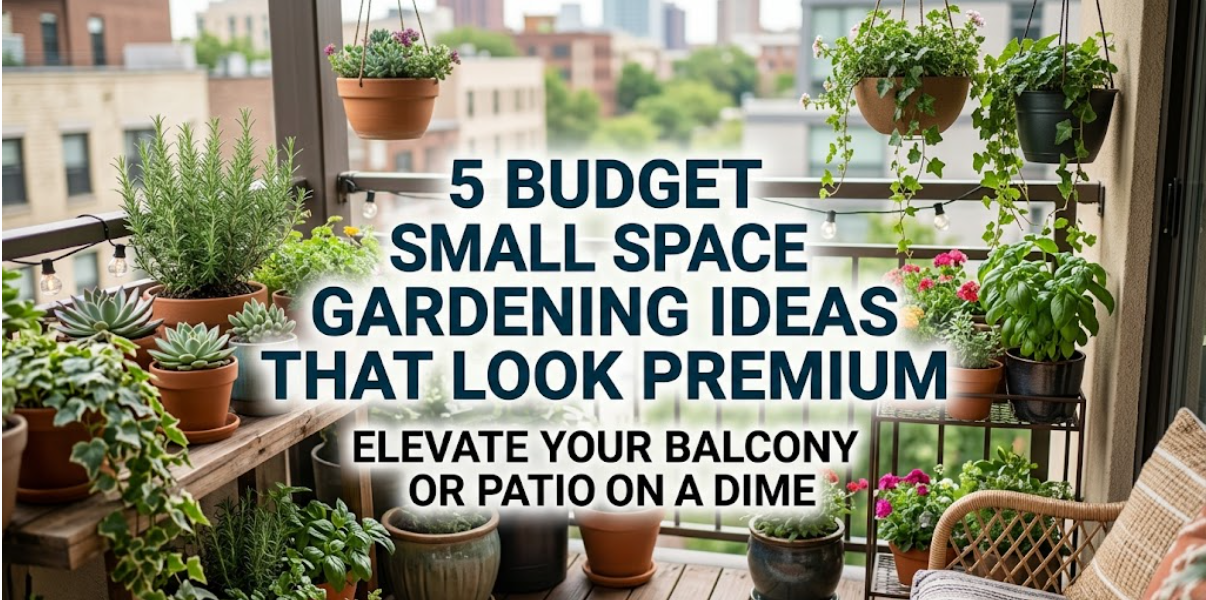
Small spaces often get treated like limitations, but in gardening they’re actually design opportunities. When space is tight, every pot, shelf, and hanging corner becomes intentional. The surprising part is that many “premium-looking” plant setups don’t come from expensive materials at all—they come from smart arrangement, repetition, and visual balance.
This guide breaks down five budget-friendly small space gardening ideas that look high-end without requiring high-end spending. Along the way, you’ll find tables, layout charts, and planning structures so you can actually build them, not just imagine them.
idea 1: vertical herb wall that looks like a living art panel
A vertical herb wall is one of the easiest ways to make a small garden look expensive. The trick is not the plants—it’s the structure and repetition.
Instead of scattering pots randomly, you create a grid. Even recycled bottles or low-cost plastic planters look premium when arranged symmetrically.
materials you can use (budget-friendly)
| Material | Cost Level | Appearance Impact | Durability |
|---|---|---|---|
| Plastic bottles | Very Low | Medium (if uniform) | Medium |
| Wooden pallet | Low | High | High |
| Metal rack | Medium | Very High | Very High |
| Hanging pots set | Medium | High | High |
plant selection for premium effect
| Plant Type | Visual Role | Maintenance |
|---|---|---|
| Basil | Full green texture | Easy |
| Mint | Hanging softness | Easy |
| Parsley | Fine leaf detail | Medium |
| Thyme | Structured filler | Easy |
design layout concept
Top row: uniform herbs (same pot size)
Middle row: alternating textures (basil + parsley)
Bottom row: trailing plants (mint, thyme)
The key to premium appearance is symmetry with variation. Too random looks messy; too uniform looks artificial. A balance between the two creates a “designed” feel.
cost vs visual impact
| Setup Type | Cost | Visual Rating (1–10) | Premium Feel |
|---|---|---|---|
| Random pots | Low | 4 | Low |
| Vertical grid | Low | 8 | High |
| Designer system | High | 9 | Very High |
idea 2: layered container garden (the “mini landscape” effect)
Layered gardening is about depth. Instead of placing everything at one height, you build levels. This instantly makes a small space look intentional and curated.
basic layering structure
| Level | Container Type | Plant Type |
|---|---|---|
| Top | Hanging pots | Trailing plants |
| Mid | Medium pots | Herbs/flowers |
| Base | Large containers | Vegetables |
This structure creates a “mini landscape” effect that feels like a boutique garden corner.
budget materials that still look premium
You don’t need expensive stands. You can use:
- stacked bricks
- wooden crates
- old stools
- inverted buckets
- metal trays
Even mismatched items look premium if they follow a clear height progression.
visual layering chart
High point: hanging greenery curtain
Mid point: dense herb cluster
Low point: structured vegetable pots
spacing rule
Leave 10–20% empty visual space between layers. Overcrowding kills the premium effect.
plant combination strategy
| Layer | Best Plants |
|---|---|
| Top | Ivy, money plant |
| Mid | Basil, marigold |
| Base | Tomato, chili |
idea 3: succulent tray garden (minimalist luxury aesthetic)
Succulents are the fastest way to create a “luxury garden” look on a budget. They naturally look sculptural, like design objects rather than plants.
The trick is not variety—it’s restraint.
design principle: odd-number grouping
| Group Size | Visual Effect |
|---|---|
| 2 plants | Unbalanced |
| 3 plants | Natural premium |
| 5 plants | Curated display |
| 7+ plants | Overcrowded look |
recommended container setup
| Container Type | Effect |
|---|---|
| Concrete tray | Modern premium |
| Ceramic bowl | Soft luxury feel |
| Wooden box | Rustic premium |
succulent arrangement chart
Center: tallest succulent
Sides: medium height symmetry
Edges: trailing or small rosettes
cost comparison
| Setup Type | Cost | Maintenance | Luxury Feel |
|---|---|---|---|
| Succulent tray | Low | Very low | High |
| Flower pots | Medium | Medium | Medium |
| Mixed garden | Medium | High | Medium |
idea 4: hanging garden curtain (space illusion hack)
A hanging garden instantly makes a small space feel bigger. It creates vertical movement, which tricks the eye into seeing depth.
You can create this effect using simple ropes, hooks, or recycled bottles.
budget hanging options
| Item | Cost | Visual Effect |
|---|---|---|
| Plastic bottles | Free | Modern DIY |
| Coconut shells | Low | Rustic chic |
| Metal tins | Low | Industrial |
| Fabric pockets | Medium | Soft aesthetic |
layout concept
Front layer: hanging herbs
Middle layer: trailing plants
Back layer: wall-mounted greenery
This creates a “green curtain effect” that feels like a café or boutique courtyard.
space optimization chart
| Setup Style | Space Used | Visual Expansion |
|---|---|---|
| Flat pots only | High | Low |
| Hanging system | Low | High |
| Mixed layers | Medium | Very High |
watering efficiency trick
Group hanging plants with similar water needs so you don’t overwater or underwater sections.
idea 5: repurposed furniture planter (premium illusion hack)
One of the most underrated ways to make a garden look expensive is using furniture as planting structures.
Instead of buying designer stands, you repurpose:
- old chairs
- broken drawers
- unused shelves
- wooden tables
furniture transformation examples
| Furniture Item | Transformation Idea | Aesthetic Style |
|---|---|---|
| Wooden chair | Seat cut for planter | Vintage garden |
| Drawer unit | Stackable plant boxes | Rustic modern |
| Table | Surface pot arrangement | Café style |
| Ladder | Tiered plant display | Industrial chic |
design rule: visible wear is okay
Small scratches or imperfections actually increase the premium “rustic” aesthetic. Perfect polish is not required—in fact, it can reduce authenticity.
layout idea
Top: small herbs in cups
Middle: medium leafy plants
Bottom: trailing vines or flowers
cost breakdown
| Approach | Cost | Visual Impact | Effort |
|---|---|---|---|
| New furniture setup | High | High | Low |
| Repurposed setup | Low | Very High | Medium |
| Mixed approach | Medium | Very High | Medium |
combining all 5 ideas into one small space system
A truly premium-looking small garden usually combines multiple techniques instead of relying on just one.
example combined layout plan
| Zone | Design Element |
|---|---|
| Wall | Vertical herb grid |
| Corner | Layered container stacks |
| Table area | Succulent tray centerpiece |
| Ceiling | Hanging garden curtain |
| Floor | Repurposed furniture pots |
This combination creates depth, texture, and visual hierarchy—all the elements of a “designed” space.
monthly maintenance effort chart
| Task | Time Needed | Frequency |
|---|---|---|
| Watering | Low | Daily/Alternate |
| Trimming | Low | Weekly |
| Compost feeding | Medium | Monthly |
| Rearranging look | Low | Monthly |
long-term cost comparison
| Setup Type | Initial Cost | Monthly Cost | Visual Quality |
|---|---|---|---|
| Store-bought set | High | Medium | High |
| DIY premium mix | Low | Low | Very High |
| Random planting | Low | Medium | Low |
The surprising takeaway is that “premium” gardening is not about spending more—it’s about reducing randomness.
faqs
- how can a small garden look expensive without spending much
Focus on symmetry, repetition, and vertical layering. Even cheap materials look premium when arranged in structured patterns. - what is the easiest idea for beginners
The succulent tray garden is the easiest because it requires minimal watering and maintenance. - do recycled materials really look good in gardens
Yes, if they are uniform and intentionally arranged. Random recycling looks messy, but structured reuse looks artistic. - how do I make my balcony look bigger with plants
Use vertical systems and hanging gardens. These draw the eye upward, creating the illusion of more space. - what plants give the most “premium” look
Succulents, basil, ivy, and trailing plants generally create the strongest visual impact with minimal effort. - how do I avoid clutter in a small garden
Stick to repeating shapes, limit plant varieties, and leave intentional empty space between groups.
If you want, I can also turn this into a visual layout plan or a step-by-step DIY setup for a real balcony size.