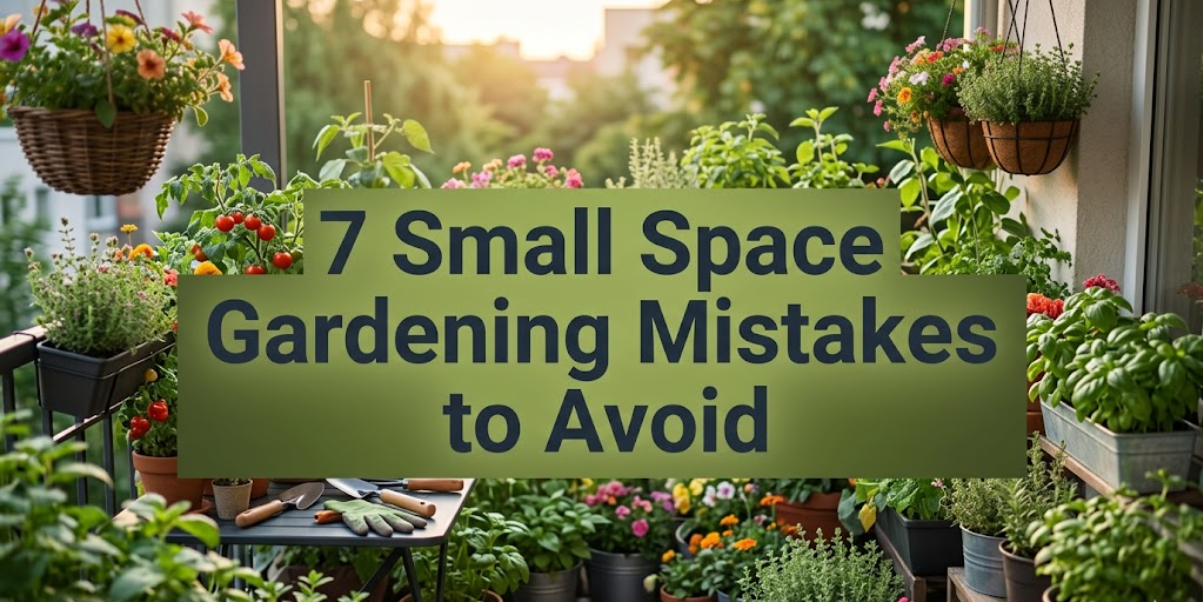
Small space gardening looks simple from the outside. A few pots on a balcony, some herbs on a kitchen shelf, maybe a vertical rack if you’re feeling organized. But once you actually start, you realize something unexpected: limited space doesn’t make gardening easier—it makes every decision more important.
In a small garden, there’s no room for “I’ll fix it later.” One wrong plant choice, one poorly placed pot, or one watering mistake can affect the entire setup. The margin for error is small, but the learning curve is surprisingly rich.
This guide is not about perfection. It’s about the most common mistakes people make in compact gardens, why they happen, and how to avoid them in a practical way. Whether you’re working with a balcony, a tiny backyard, or just a few windowsills, these insights can help you build something that actually works long-term.
why small space gardening feels harder than it is
At first glance, small gardens should be easier. Less soil, fewer plants, less maintenance. But in reality, constraints amplify every detail.
Think of it like this:
| Factor | Large Garden | Small Garden |
|---|---|---|
| Space for error | High | Very low |
| Plant diversity | Flexible | Limited |
| Water management | Natural drainage zones | Quick over/underwatering |
| Light control | Multiple angles | Fixed conditions |
In a small space, plants compete more directly with each other. Light, airflow, and water become shared resources instead of abundant ones.
That’s why avoiding mistakes matters more than chasing advanced techniques.
mistake 1: overcrowding plants too early
One of the most common beginner instincts is simple: fill every empty space.
It feels productive. A bare corner looks like wasted potential, so another pot goes in. Then another. Before long, the space looks “full,” but not necessarily functional.
The problem is not just aesthetic. Overcrowding leads to competition.
Plants compete for:
- Light
- Water
- Nutrients
- Airflow
And in small spaces, that competition becomes intense very quickly.
what usually goes wrong:
| Issue | Result |
|---|---|
| Too many pots close | Weak, stretched plants |
| Poor airflow | Fungal growth |
| Root competition | Slow or stunted growth |
| Uneven watering | Some plants dry out faster |
Better approach:
Start with fewer plants than you think you need. Let them grow into the space. Expansion should be gradual, not immediate.
A good rule: leave at least 20–30% of visible space open.
mistake 2: ignoring sunlight patterns
Many people assume “my balcony gets sunlight” is enough information. In reality, sunlight in small spaces is rarely uniform.
Even a tiny shift in angle can create:
- hot spots
- shaded corners
- reflective glare zones
Without understanding these differences, plants often end up in the wrong micro-environment.
sunlight breakdown example:
| Time of Day | Balcony Light Condition | Best Plant Type |
|---|---|---|
| Morning | Soft, indirect sunlight | Herbs, leafy greens |
| Noon | Harsh direct sunlight | Succulents, chili |
| Evening | Warm, low-angle light | Flowering plants |
common mistake pattern:
People place plants randomly or aesthetically instead of functionally.
result:
- sun-loving plants weaken in shade
- shade plants burn in direct sun
fix:
Observe your space for 2–3 days before placing anything. Light mapping is more important than design in small gardens.
mistake 3: choosing the wrong container size
In small space gardening, containers are not just aesthetic choices—they directly affect plant health.
A pot that is too small restricts roots. A pot that is too large holds excess moisture. Both create problems, just in different ways.
container impact table:
| Pot Size | Best For | Risk if Misused |
|---|---|---|
| Small (<6 inch) | herbs, seedlings | drying too fast |
| Medium (6–10) | most balcony plants | generally safe |
| Large (10+) | vegetables, shrubs | overwatering risk |
what often happens:
People prioritize appearance—matching pots, decorative styles, color themes—without checking root requirements.
what to do instead:
Match container size to plant maturity, not just current appearance. A growing plant needs room for future roots, not just current ones.
mistake 4: poor soil quality or reuse without refresh
Soil is often treated as a one-time purchase. Fill the pot once and forget it. But in small containers, soil depletes faster than in open ground.
Nutrients wash out quickly due to:
- frequent watering
- limited soil volume
- lack of natural decomposition cycles
soil condition comparison:
| Soil Condition | Plant Health Impact |
|---|---|
| Fresh mix | strong growth |
| Compacted soil | weak roots |
| Old depleted soil | yellowing leaves |
| Rejuvenated mix | stable recovery |
common mistake:
Reusing old soil without adding compost or organic matter.
fix:
Refresh soil every 2–3 months with:
- compost
- coco peat
- light aeration
Even a simple mix update can dramatically improve plant performance.
mistake 5: overwatering due to “care instinct”
If there is one mistake that destroys more small gardens than anything else, it is overwatering.
It usually comes from good intentions. The gardener wants to help. The soil looks dry on the surface. The plants seem “thirsty.”
But in containers, surface dryness is misleading.
what’s happening below:
The lower soil layers may still be moist.
overwatering effects:
| Symptom | Cause |
|---|---|
| yellow leaves | root oxygen deprivation |
| fungus on soil | excess moisture |
| drooping plants | root rot |
| slow growth | nutrient lockout |
simple rule:
Check soil 2–3 cm below surface before watering.
better approach:
Water deeply but less frequently.
A comparison:
| Method | Outcome |
|---|---|
| frequent small watering | weak roots |
| deep watering | strong root development |
mistake 6: ignoring vertical space
Many small gardens fail not because of lack of ground space, but because vertical space is unused.
Walls, railings, and hanging points often remain empty.
vertical utilization chart:
| Space Type | Usage Efficiency |
|---|---|
| Floor | High competition |
| Table surface | Medium |
| Wall space | Underused |
| Railings | Highly valuable |
common mistake:
Treating the garden as a flat layout instead of a 3D environment.
better strategy:
Think in layers:
- top: hanging plants
- middle: medium pots
- bottom: heavy or stable containers
This increases capacity without crowding.
mistake 7: not planning for maintenance reality
A small garden is often started with enthusiasm, not planning. People imagine ideal conditions: daily care, perfect weather, consistent time.
But real life is irregular.
what usually happens:
- watering gets skipped
- plants are forgotten during travel
- pests are noticed late
- pruning is delayed
maintenance reality table:
| Expectation | Reality |
|---|---|
| daily care | 2–3 times per week |
| perfect conditions | weather fluctuations |
| instant attention | delayed response |
solution:
Design your garden around your lifestyle, not your ideal schedule.
If you are busy:
- choose drought-tolerant plants
- use self-watering systems
- reduce plant variety
A sustainable garden is one that survives your routine, not one that depends on perfection.
quick comparison: healthy vs problematic small garden
| Element | Healthy Setup | Problem Setup |
|---|---|---|
| Plant spacing | balanced | overcrowded |
| Soil quality | refreshed | depleted |
| Watering | controlled | inconsistent |
| Light use | optimized | random |
| Vertical space | utilized | ignored |
building a better small space garden mindset
The biggest shift in small space gardening is not physical—it’s mental.
Instead of asking:
“What else can I add?”
Ask:
“What can actually thrive here long-term?”
That change alone prevents most mistakes.
Small spaces reward restraint, observation, and patience more than complexity.
faqs
- what is the biggest mistake beginners make in small space gardening
Overcrowding plants too early is the most common mistake. It leads to competition for light, nutrients, and airflow, which weakens overall growth. - how often should i water small container plants
There is no fixed schedule. Water only when the soil is dry a few centimeters below the surface. Weather and pot size also affect frequency. - can i reuse old soil for new plants
Yes, but only after refreshing it with compost or organic matter. Old soil without nutrients can slow plant growth significantly. - what plants are best for small spaces
Herbs like mint, coriander, and basil, along with snake plants and chili plants, perform well in limited areas. - why do plants die faster in small pots
Small pots hold less soil, which dries out or depletes nutrients faster. They also restrict root growth, making plants more sensitive to stress. - how can i improve a small balcony garden quickly
Start by fixing spacing, improving soil, and optimizing sunlight. These three changes usually create visible improvement within weeks.
Small space gardening is not about how much you can fit. It’s about how well what you choose actually survives and grows together.
When the mistakes are removed, even the smallest space starts to feel surprisingly complete.